Houseplant · Pteridaceae
Maidenhair Fern
Adiantum raddianum
Keep the soil moist and the air humid, and this lacy fern softens any shaded corner.
Bright indirect
Every 2–4 days
50–77°F · 10–25°C
USDA 10–11
Overview
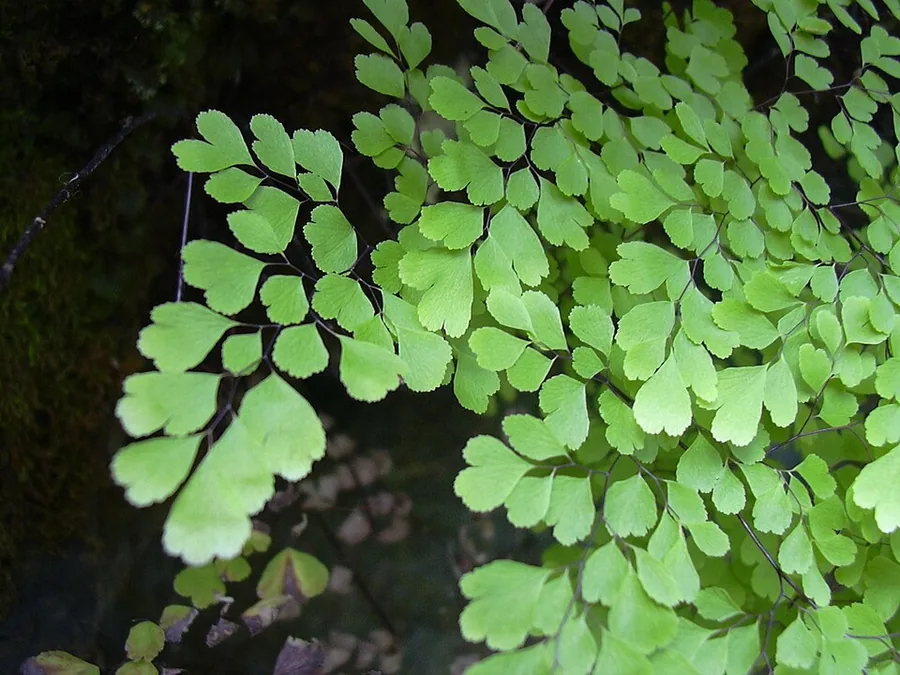
Adiantum raddianum earns its lace reputation through wiry black stalks and small fan-shaped pinnae that stir at the slightest movement of air. Its native range runs through the wet tropics of the Americas, where it grows as an understory plant in shaded, humid ground near streams and waterfalls. Those conditions set the entire brief for cultivation: shade, constant moisture at the roots, and humid air.
The fern's demanding reputation follows directly from its ecology. Adapted to soils that never dry, its thin fronds hold almost no water reserve, so a single missed watering can crisp them within a day and place it firmly at the demanding end of the scale. The useful point is that the failure mode is narrow, almost always water or humidity, so meeting those two variables resolves most problems at once.
Sited correctly, it develops into a soft, airy mound of green with few rivals among foliage houseplants. A humid bathroom or kitchen window supplies the moist air it needs, as does a grouping of plants whose combined transpiration raises local humidity.
Care
The short version: provide bright indirect light with no direct sun, hold the soil evenly moist at all times, and maintain humidity of 50% or more. Feed lightly through the growing season and keep it warm.
Light
Provide bright, indirect light and exclude direct sun from the fronds, because even a few hours of unfiltered light through glass will scorch the thin pinnae. A north-facing window, or a position set back from a brighter aspect, is ideal, and the plant will also tolerate medium light or partial shade.
Water
Water is the decisive factor. The substrate must stay evenly moist at all times and never dry out, since the low-reserve fronds crisp and die back almost as soon as the root ball dries. Water on roughly a 2 to 4 day cycle with room-temperature water, and confirm the pot drains so the mix stays damp rather than saturated.
Soil
Use a rich, humusy medium that retains moisture, such as a peat- or coir-based mix amended with compost. A pH of 6.0 to 7.0 suits it, and adequate drainage prevents the required constant moisture from progressing to root rot.
Temperature
Standard room temperatures serve well, within the 50°F to 77°F (10°C to 25°C) band. Keep the plant away from cold drafts and from the hot, desiccating air of radiators and heating vents, both of which stress it rapidly.
Humidity
Humidity is a more critical variable here than for most common houseplants. Target 50% to 80%, achieved with a humidifier, a pebble tray, a grouping of plants, or an inherently damp room such as a bathroom. Misting alone does not sustain the level long enough to be effective.
Feeding
Apply a balanced liquid houseplant fertilizer at half strength once monthly from spring through early autumn. Withhold feed in winter as growth slows, and keep applications light, since accumulated fertilizer salts manifest as yellowing fronds.
Pruning
Remove dead, crisped, or yellowed fronds at the base with clean scissors as they occur. If the whole plant browns, cut every frond back to soil level, hold the rhizomes evenly moist, and fresh fiddleheads typically re-emerge.
Repotting
Repot every 1 to 2 years in spring, advancing only one pot size, since this fern performs well when slightly pot-bound. The cue to repot is roots circling the pot or emerging through the drainage holes, or the mix drying within a day of watering.
Size & spacing
Under indoor conditions it forms a compact mound roughly 12 to 24 inches (30 to 60 cm) tall and 12 to 24 inches (30 to 60 cm) wide. Allow clearance on all sides so air circulates around the fronds and the foliage is not compressed against a wall or adjacent plant.
Troubleshooting
Nearly every disorder in this fern reduces to a water or air-quality problem. Crisp brown fronds indicate the root ball dried, limp yellow ones indicate saturation, and the small number of pests it attracts are readily identified. Match the symptom below and intervene early, while the rhizomes remain sound.
Total collapse and browning after a lapse in watering
A single episode of the root ball drying out completely can brown the entire canopy at once, and exposure to a cold windowsill below 50°F (10°C) produces the same collapse through chill injury. The visible fronds are lost, but the rhizomes below usually retain viable buds. Cut every dead frond to soil level, rehydrate by soaking the pot for 15 to 20 minutes, then hold it warm, moist, and in bright indirect light while the rhizomes regenerate new fiddleheads.
Fix:
- Cut all dead fronds back to soil level
- Rehydrate by watering thoroughly (or soaking the pot 15-20 minutes), then keep evenly moist
- Place in bright indirect light at 60-77°F and wait several weeks for new fiddleheads from the rhizomes
Fronds browning and crisping within a day
Rapid browning traces to a root ball that dried out, and because the fine fronds have little water reserve they crisp within a day of the mix going dry. Low humidity and direct sun drive the same scorching by pulling moisture from the leaflets faster than the roots can replace it. Water until the pot drains, remove it from sun and drafts, and cut the spent fronds to soil so the rhizomes can throw fresh fiddleheads.
Fix:
- Water thoroughly until it drains and resume keeping the soil evenly moist
- Cut fully crisped fronds back to soil level; new fiddleheads often regrow from the rhizomes
- Raise humidity with a pebble tray, humidifier, or by grouping plants
- Move out of direct sun to bright, diffused light
Gradual yellowing with soft, limp fronds
Slow yellowing and soft, floppy growth signal waterlogged soil, where saturated pores starve the roots of oxygen even though this fern demands constant moisture. A white crust on the surface or pot rim points instead to soluble fertilizer salts accumulating and drawing water back out of the roots. Restore free drainage and empty the saucer, leach the salts with a thorough flush, and raise light levels if the position is too dim to support growth.
Fix:
- Ensure the pot drains freely and discard water standing in the saucer
- Repot into fresh, humus-rich, well-draining mix if soil is sodden or compacted
- Flush the pot with plenty of plain water to leach salts and halve fertilizer strength
- Move to brighter indirect light if the spot is dim
Cottony tufts or brown bumps with sticky residue
White cottony masses identify mealybugs, while dome-shaped brown bumps identify soft scale, and both are sap-feeding insects that excrete the sticky honeydew you notice first. Confirm the culprit under magnification on the wiry black stalks and frond undersides. Treat each insect with an alcohol-charged swab and remove the worst fronds, keeping to spot treatment because ferns tolerate few insecticidal sprays.
Fix:
- Isolate the plant from other houseplants
- Dab pests with a cotton swab dipped in 70 percent isopropyl alcohol
- Remove heavily infested fronds at the base
- Repeat treatment weekly until no new pests appear; ferns are sensitive to many insecticidal sprays, so spot-treat rather than drenching foliage
Toxicity
For households with pets or children, the verdict is clear: the maidenhair fern is non-toxic in every category. The ASPCA records it as safe for cats and dogs, and as a true fern it lacks the toxic principles present in many popular houseplants. A large quantity eaten may cause a transient, self-limiting stomach upset, as any bulk of plant material can, but no toxic risk exists.
Safe for
People · Cats · Dogs · Horses · Rabbits · Livestock · Birds
Cats None
The ASPCA classifies this fern as non-toxic to cats, so ingestion carries no risk of poisoning. Where a cat consumes a large volume of foliage, the fibrous plant matter can provoke a brief, self-limiting gastric upset, which is a physical irritation rather than a toxic response.
Dogs None
Dogs face no toxic compounds in this species either. The practical concern is damage to the plant from chewing, though a large ingested mouthful may pass through the gut with transient loose stool.
Horses None
Members of the genus Adiantum contain no principles known to poison horses, so an incidental nibble presents no hazard.
Rabbits None
Rabbits can ingest the finely divided fronds without toxic effect. It is best offered only occasionally, since the rabbit gut is adapted to a fiber-rich diet of hay and familiar greens.
Livestock None
Ruminants such as goats and sheep are not poisoned by this fern. In practice they seldom encounter it, as the plant is cultivated indoors in containers and not in grazed pasture.
Birds None
Pet birds may perch on or peck at the fronds without harm, as neither the leaflets nor the stalks contain toxins.
People None
The plant is non-toxic to people, so handling and cultivation carry no exposure risk. It has no culinary use, but incidental tasting of a frond by a child produces no toxic effect.
No special handling precautions are needed; as with any plant, eating large amounts of foliage could cause mild, self-limiting stomach upset in pets.
Varieties
The maidenhair ferns offered in trade are almost all cultivars of this single species, selected for fuller fronds or greater tolerance of indoor conditions. The following selections are the ones worth recognizing.
'Fritz Luth'
This vigorous cultivar bears larger, slightly blue-green fronds and withstands indoor air more reliably than the type species, which accounts for its prevalence in cultivation.
'Fragrantissimum'
An established older selection whose dense, arching, finely divided fronds emit a faint sweet fragrance from the emerging growth.
'Pacific Maid'
It holds a compact, upright habit, with broad, overlapping fan-shaped pinnae borne on short fronds.
'Gracillimum'
The most finely divided selection in the group, its minute pinnae accumulate into an airy, lace-like mass of foliage.
'Microphyllum'
Its markedly reduced pinnae give each frond a distinctly fine, miniature texture.
How to propagate
The dependable method of increase is division of an established clump, which establishes new plants considerably faster and more predictably than spore culture.
DivisionModerate
Spring, ideally at repotting time · 4-8 weeks
The most reliable method is division of an established clump in spring, best carried out during a routine repot. Remove the plant and separate the rhizome mass into sections, each retaining sound roots and several fronds. Set the divisions into a moist, humus-rich mix and maintain warmth, high humidity, and even moisture, and the rhizomes push new fiddleheads over roughly 4 to 8 weeks. Spore culture from the frond undersides is also possible but slow, and best reserved for experienced growers.
Myths
A maidenhair fern that has dried out and gone completely brown is dead and should be thrown away.
The fronds do senesce quickly once the soil dries, but the rhizomatous crown below usually remains viable. Cut the dead fronds to soil level and reinstate consistent moisture, and the rhizomes regularly generate a full flush of new fronds within weeks.
Occasional misting is enough to keep a maidenhair fern happy in a dry room.
Misting elevates ambient humidity for only a few minutes before it dissipates and the reading falls again. This species requires sustained humidity of about 50% or higher, which is delivered by a humidifier, a pebble tray, a grouping of plants, or an inherently damp room such as a bathroom.
Like most houseplants, it should dry out a bit between waterings to prevent root rot.
This fern is a genuine exception to that guidance. Its substrate must remain evenly moist at all times, and allowing the surface layer to dry, the standard precaution for many houseplants, triggers near-immediate frond collapse in this species.