Herb · Verbenaceae
Lemon Verbena
Aloysia citriodora
One brushed leaf scents the air with lemon. Supply full sun and warmth, and this tender herb yields fragrant foliage all season.
Full sun
Every 3–7 days
USDA 8–11
2–6 ft · 0.6–1.8 m
Overview
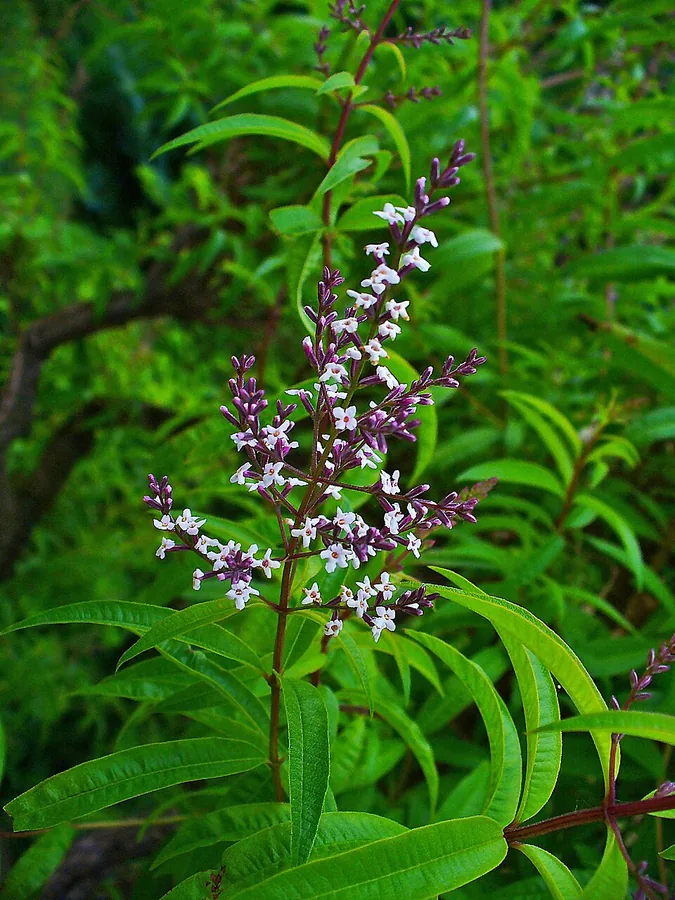
Lemon verbena carries one of the cleanest lemon scents of any herb, released the moment a leaf is bruised and stronger than most true citrus. That volatile oil is the reason the foliage is steeped for tea and used in syrups and cooking. The plant grows as a loose, woody shrub, originates in South America, and is cultivated worldwide chiefly for its aromatic leaves.
Classify it as a frost-tender perennial, dependably perennial outdoors only within zones 8 to 11. In colder regions growers container it and overwinter it under cover, or grow it as an annual and begin again each spring. Mature specimens reach 6 feet (180 cm) of open, leggy wood, so the plant needs space and periodic pinching to hold a bushy form.
Cultural success rests on stability. The plant responds to relocation or chilling by dropping its leaves, then reflushes once conditions settle, which is why abrupt change is worth avoiding. Provide sun, warmth, and even moisture and the shrub yields harvestable, fragrant foliage from spring through the growing season.
Care
The short version: site it in full sun and warmth, hold the soil evenly moist but never saturated, feed monthly through active growth, and shelter it or move it under cover before the first frost.
Light
Lemon verbena requires full sun, ideally 6 or more hours daily, since strong light drives the essential-oil production that keeps the leaves fragrant and the growth compact. It tolerates light afternoon shade, but heavy shade yields sparse, floppy stems and a diminished scent.
Water
Hold the soil evenly moist but well drained, watering more often in containers and during heat because pots dry faster and transpiration climbs. Both drought and waterlogging provoke leaf drop, so consistency is the operative goal.
Soil
Grow it in well-drained loam enriched with organic matter, which supplies both nutrition and the porosity the roots need. It accepts a fairly wide pH from 6.0 to 7.5, so drainage is the deciding factor rather than the precise reading.
Temperature
The plant grows across roughly 23°F to 86°F (-5°C to 30°C), but it is frost-tender at the low end and defoliates in cold. Below 40°F (4°C) it declines, so container specimens should come under cover ahead of the first hard chill.
Humidity
Average humidity of 40% to 60% suits it outdoors. The dry air of a heated interior over winter favors spider mites, so added moisture and steady airflow keep the foliage sound.
Feeding
Feed monthly through spring and summer during active growth with a balanced general-purpose fertilizer. Container plants warrant a lighter hand, as their confined volume cannot buffer excess nutrient the way open ground does.
Pruning
Prune in spring to shape the plant and remove dead or weak wood, and pinch the growing tips through the season to promote branching and a steady supply of leaves. After overwintering, cut it back hard once new growth resumes.
Repotting
Repot every 1 to 2 years in spring into the next size up. Roots circling the pot, water passing straight through, or rapid wilting between waterings indicate the plant is rootbound and due for fresh medium and volume.
Size & spacing
Expect a loose, woody shrub of 2 to 6 feet (60 to 180 cm) in height with a spread of 3 to 4 feet (90 to 120 cm). Allow that footprint so air circulates freely and the open habit has room to develop.
When to plant
Lemon verbena is governed by warmth and does not withstand frost. Transplant outdoors only once the cold has cleared and night temperatures have risen in late spring, harvest the aromatic leaves across the season, and expect small white to lilac flowers as summer closes.
Northern hemisphere
Southern hemisphere
Typical months for a temperate climate: start earlier in warm zones, later where spring frosts linger.
- Plant: After all danger of frost has passed and soil and nights are warm (late spring)
- Harvest: Tiny white to pale lilac flowers in open clusters in late summer; harvest fragrant leaves throughout the growing season, most aromatic just before flowering
Hardiness
USDA hardiness zones: 8–11
Temperature: down to -12°C
Troubleshooting
Lemon verbena signals stress mainly through leaf drop and loss of color. The majority of its disorders trace to cold, irregular watering, or low indoor humidity. Identify the symptom below and correct the underlying cause before the plant declines further.
Collapse with soft, discolored roots
Soil that remains saturated and sour long after irrigation starves the roots of oxygen, and root rot follows as they turn soft and brown. Withhold water, remove the plant from its pot, and excise the dead roots before setting it into fresh, fast-draining medium. A container with functional drainage holes prevents the saturation that caused it.
Fix:
- Reduce watering and improve drainage
- Repot into fresh, well-drained mix, trimming away rotted roots
- Use containers with drainage holes
Rapid, wholesale leaf drop
A plant that abruptly defoliates is usually reacting to transplant shock or to cold below 40°F (4°C), both of which the plant answers by shedding leaves to cut its losses. Moisture that swings from bone-dry to soggy triggers the same response. Hold the plant in a single location, water it evenly, and it regenerates foliage once the roots stabilize.
Fix:
- Stabilize the plant's environment and avoid further moves
- Keep soil evenly moist and out of cold drafts
- Be patient; new leaves usually flush once conditions stabilize
Stippled, yellowing foliage with fine webbing
Low indoor humidity favors spider mites, which pierce the leaf cells to feed and leave a pale stippling with fine webbing along the undersides. Whitefly and aphids feed the same way and produce a comparable yellowing. A forceful rinse dislodges the population, insecticidal soap on the undersides finishes it, and raising air movement and humidity indoors removes the dry conditions the mites depend on.
Fix:
- Rinse foliage with a strong spray of water
- Treat with insecticidal soap or horticultural oil, covering leaf undersides
- Increase air circulation and humidity for indoor plants
Toxicity
For a mixed household the verdict is clear: lemon verbena is safe throughout. It is a culinary herb grown for tea and flavoring, and it holds no compound in leaf or stem that harms pets, livestock, or people. It can be grown anywhere without risk.
Safe for
People · Cats · Dogs · Horses · Rabbits · Livestock · Birds
Cats None
The foliage and stems contain no compound toxic to cats, so the plant poses no poisoning risk. A curious bite may bring a brief, mild digestive upset, a nonspecific response common to most plant material.
Dogs None
No constituent in the plant is toxic to dogs. In practice the strong lemon volatiles deter most dogs from chewing it to any extent.
Horses Safe
Lemon verbena contains nothing that would harm a horse, so a grazing animal is under no risk.
Rabbits Safe
The plant is safe for rabbits, and the aromatic leaves serve as a suitable occasional addition to their normal forage.
Livestock Safe
Cattle, goats, and sheep can browse the foliage without injury, as it holds no toxin that affects ruminants.
Birds Safe
The plant presents no hazard to birds, whether they sample leaves outdoors or share indoor quarters with it.
People Safe
The leaves are established culinary material, steeped into a lemon-scented tea or used to flavor dishes, and are safe for consumption.
Leaves are edible and aromatic; no special handling precautions are needed beyond normal kitchen use.
Varieties
Lemon verbena reaches the trade almost entirely as the species, so the selection is minimal. The note below sets out what that means at purchase.
Lemon verbena (species)
The plant reaches the trade almost exclusively as the straight species rather than a named cultivar, and it carries the most concentrated lemon scent among the common culinary herbs.
How to propagate
Vegetative cuttings are the reliable route with lemon verbena, since its seed germinates poorly. Propagating from an existing plant reproduces its traits exactly.
Stem cuttingsModerate
Late spring through summer using softwood or semi-ripe growth · Roots typically form in about 3-4 weeks, with established plants in 1-2 months
Collect cuttings from non-flowering shoot tips across late spring through summer, remove the lower leaves to reduce moisture loss, and insert them in a moist, well-drained medium held warm and humid to drive rooting. Adventitious roots emerge in about 3 to 4 weeks, and the cuttings mature into established plants over the following month or two. Seed is impractical here, being seldom offered and germinating poorly.
Myths
Lemon verbena is a hardy herb that survives winter outdoors anywhere.
The species is frost-tender and overwinters reliably only within the mild range of roughly 8 to 11. Beyond that range, growers either shelter it indoors for the cold months or manage it as an annual and reestablish it each spring.