Ornamental · Verbenaceae
Verbena
Verbena canadensis
Under intense sun with rapid drainage, verbena sustains steady flower production from spring through the close of fall.
Full sun
Every 5–7 days
USDA 6–10
8–18 in · 20–46 cm
Overview
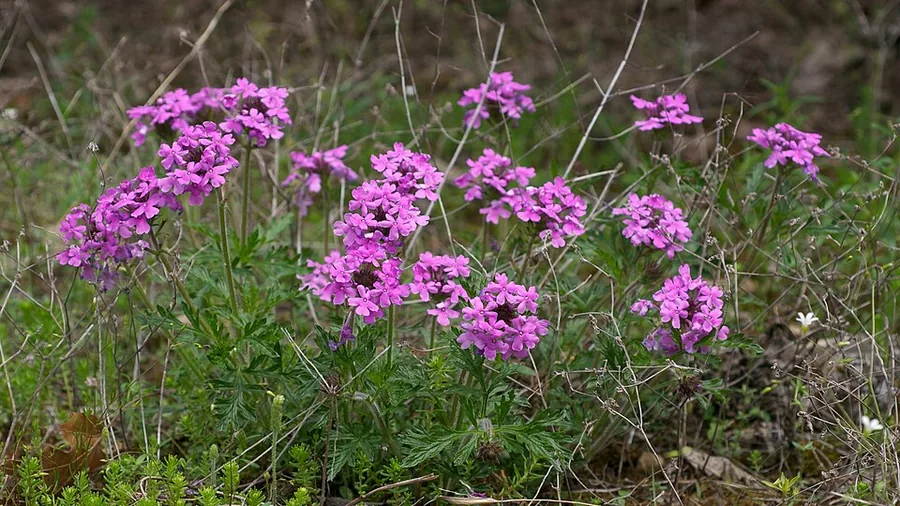
Verbena delivers months of bloom on durable, low-maintenance plants. Rose verbena is a low, spreading perennial native to North America that carries clusters of bright flowers from late spring well into fall. Its modest requirements once established explain its use in beds, borders, and as a trailing edge in containers.
The genus spans low groundcovers to the tall, wiry Verbena bonariensis, and the members share a common preference for heat, direct sun, and fast-draining soil. Because the flowers attract bees and butterflies across the season, a verbena planting serves both ornamental and pollinator functions. Many garden types perform as short-lived perennials, holding their display for a couple of years before they are replaced.
Verbena performs well under minimal intervention provided the cultural basics are met. Sited in strong sun with free drainage, it flowers steadily with little input. Placed in shade or on retentive, wet ground, it forfeits that bloom to mildew and rot.
Care
The short version: full sun and sharp drainage are the governing requirements. Supply about an inch of water a week to sustain bloom, feed a couple of times during the growing season, and deadhead or shear it back to keep it flowering.
Light
Verbena requires full sun and flowers most heavily under a long day of direct light. It tolerates limited afternoon shade, but heavier shade reduces flowering and raises the leaf-surface humidity that favors mildew.
Water
Once established, verbena is drought tolerant and withstands dry intervals, though bloom is maximized at about an inch of water a week. Water deeply once weekly when rainfall is short, delivering it at the base rather than overhead, and never allow the soil to remain saturated. Container plants transpire and drain faster, so monitor them more closely.
Soil
Verbena needs well-drained sandy or loamy soil, since impeded drainage is its principal weakness. It performs on poor and rocky substrates and across a broad pH range of 6.0 to 8.0, but a wet, poorly drained site induces root rot.
Humidity
Ambient outdoor air is sufficient, so humidity requires no management. Airflow is the operative factor, because still, humid conditions promote the onset of mildew and botrytis.
Feeding
Apply a complete fertilizer such as 16-4-8 in mid to late spring and again after trimming. Verbena has modest nutrient demands, and supplemental feeding returns a measurable benefit mainly on very sandy soils.
Pruning
Pinch the tips at planting to promote branching, and deadhead through the season to sustain bloom. When flowering declines in midsummer, shear the plant back by about a quarter, then water and feed lightly, and bloom resumes in 2 to 3 weeks. Prune only lightly in fall and reserve hard cutting for spring, since severe fall pruning can compromise cold hardiness.
Size & spacing
Rose verbena remains low, reaching 8 to 18 inches (20 to 46 cm) in height with a spread of 12 to 24 inches (30 to 61 cm). Space plants to that full spread to ensure air movement and allow the spreading habit to close the gaps.
When to plant
Verbena is a warm-season plant with no frost tolerance. Start seed indoors in late winter, or set transplants out only after the cold has passed and the soil has warmed, and flowering continues from spring through fall until the season closes.
Northern hemisphere
Southern hemisphere
Typical months for a temperate climate: start earlier in warm zones, later where spring frosts linger.
- Sow: Start seed indoors 6 to 8 weeks before the last spring frost
- Plant: Set plants out after the last spring frost once soil has warmed
- Harvest: Blooms spring through fall (April to September in North Carolina)
Hardiness
USDA hardiness zones: 6–10
Temperature: down to -23°C
Troubleshooting
Most verbena disorders originate in excess shade or excess moisture, the two conditions that undermine an otherwise trouble-free plant. Inspect the leaves, flowers, and crown early, since a prompt correction of the growing conditions generally reverses the problem. Match the symptom below, then act before it advances.
Plants wilting and decaying at the crown in saturated soil
Wilting in soil that remains wet indicates root rot from Pythium or Rhizoctonia, or southern bacterial wilt, both of which advance in waterlogged, oxygen-poor ground. Because the vascular and root tissue is already compromised, an affected plant cannot recover and should be removed and destroyed. Correcting drainage before replanting healthy stock breaks the conditions the pathogens depend on.
Fix:
- Improve drainage and stop overwatering
- Remove and discard affected plants
- Replant healthy stock in well-drained soil
Whitish fungal bloom developing across leaf and stem surfaces
The white film points to powdery mildew, a foliar fungus that establishes where low light, stagnant air, and drought stress leave the plant vulnerable. Increasing sun exposure and thinning for air movement lower the leaf-surface humidity the pathogen needs, while base watering keeps the canopy dry. Removing the most heavily coated foliage cuts the spore load that drives further infection.
Fix:
- Move or thin plants to improve sun and air flow
- Avoid overhead watering and water at the base
- Remove and discard severely affected foliage
Chlorotic, stippled foliage accompanied by fine mite webbing
Stippling and fine webbing are the signature of spider mites, which reproduce fastest in hot, dry weather and colonize drought-stressed plants preferentially. A forceful water spray dislodges the colonies, and maintaining even soil moisture removes the stress that makes foliage attractive to them. Where populations persist, insecticidal soap or horticultural oil provides contact control.
Fix:
- Rinse foliage with a strong spray of water
- Keep plants adequately watered to reduce stress
- Treat persistent infestations with insecticidal soap or horticultural oil
Gray, fuzzy mold overtaking browned blossoms
Browning blooms carrying a gray fuzz are showing botrytis blight, a fungus that sporulates readily in prolonged moisture and high humidity. Removing infected flowers and surrounding debris eliminates the tissue on which it colonizes, and consistent deadheading denies it the spent petals it favors. Better air movement and drier foliage limit further sporulation.
Fix:
- Remove and discard affected flowers and debris
- Improve air circulation and reduce overhead moisture
- Deadhead spent blooms promptly
Toxicity
For households with pets or children, the assessment is favorable: garden verbena is safe. The ASPCA does not list the genus Verbena as toxic to cats, dogs, or horses, so an incidental nibble warrants no concern. It should not be confused with lemon verbena or lantana, the so-called shrub verbena, which are separate and toxic plants.
Safe for
People · Cats · Dogs · Horses · Rabbits · Livestock · Birds
Cats None
The ASPCA does not classify garden verbena as toxic to cats, so exploratory browsing carries no risk of poisoning.
Dogs None
Garden verbena is absent from the ASPCA toxic list for dogs. The only likely response is transient gastrointestinal upset if a dog ingests a large quantity of any plant material.
Horses Safe
No toxic principle in verbena is known to affect horses grazing nearby.
Rabbits Safe
Garden verbena contains no compounds that harm rabbits, so browsing is safe.
Livestock Safe
Cattle, goats, and sheep can share pasture with verbena without exposure to any hazard from it.
Birds Safe
Verbena presents no risk to birds, and pollinators forage the flowers without harm.
People Safe
Garden verbena is non-toxic to people. It is grown as an ornamental rather than for consumption, so there is no reason to eat it.
Varieties
Verbena spans a broad range of habit, from trailing groundcovers to tall, open stems. The following are the types most commonly encountered.
Homestead Purple
A vigorous trailing rose verbena selection that produces glowing purple flowers from late spring through fall and shows strong resistance to most abiotic disorders.
Verbena bonariensis (Purpletop vervain)
A tall, open species reaching 2 to 5 feet on slender stems tipped with airy rose-violet clusters, a see-through habit that accounts for the name verbena-on-a-stick.
Verbena × hybrida (Garden verbena)
The bedding hybrids in pink, purple, red, and white, grown by most gardeners as warm-season annuals.
How to propagate
Verbena propagates readily, either by rooting a cutting to preserve a chosen cultivar or by raising it from seed.
Stem cuttingsEasy
Take softwood cuttings during the growing season · Roots in about 2 to 4 weeks
Softwood cuttings taken during the growing season form roots in about 2 to 4 weeks. This is the standard method for maintaining named cultivars true to type, since seed-grown plants do not reliably reproduce the parent.
SeedEasy
Start indoors 6 to 8 weeks before last frost or direct sow after last frost · Germinates and blooms the first season
Seed sown indoors 6 to 8 weeks before the last frost, or direct sown into warm soil after frost, germinates and flowers within the same season. The species types self-sow readily, and bonariensis reseeds vigorously enough to reestablish on its own.
Myths
All members of the verbena group carry compounds poisonous to household animals.
The genus Verbena does not appear anywhere on the ASPCA toxic plant list. The confusion arises from lemon verbena (Aloysia) and lantana (shrub verbena), two distinct taxa that the ASPCA does flag as toxic to dogs and cats. The true Verbena in your bed is safe.
Verbena performs as a dependable long-term perennial in every hardiness zone.
Most garden verbenas behave as short-lived perennials and are best replaced after two or three years. In climates with cold winters they do not overwinter at all, which is why growers there treat them as annuals.