Ornamental · Plantaginaceae
Angelonia
Angelonia angustifolia
Supply full sun and heat, and angelonia produces spires of bloom from summer to fall with minimal intervention.
Full sun
USDA 9–11
12–18 in · 30–46 cm
Overview
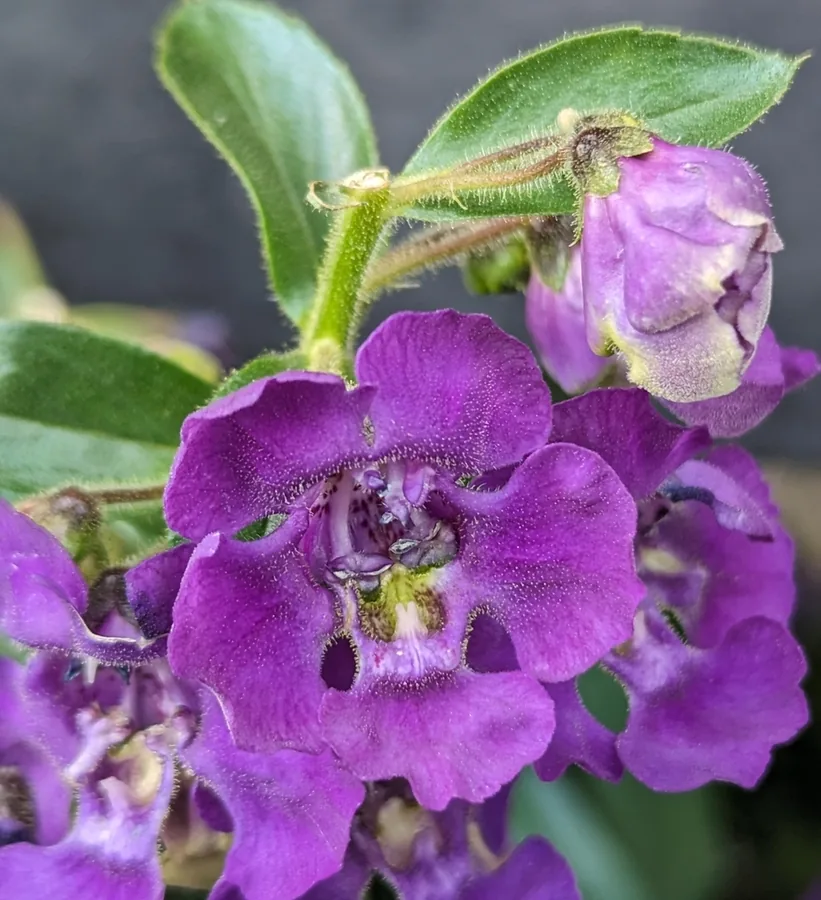
Angelonia, the summer snapdragon, performs in conditions that stall most bedding plants. Where heat and intense summer light cause many annuals to slow, this species continues producing slim spires of purple, pink, white, or blue flowers from early summer into fall. The common name reflects the snapdragon-like corolla, but the plant sits in the family Plantaginaceae and shows none of a snapdragon's sensitivity to heat.
Growth habit is a compact mound, 12 to 18 inches (30 to 46 cm) tall, well suited to a border, a mass planting, or a container. The plant is reliably perennial only in zones 9 to 11, so across most of the range it is cultivated as a warm season annual and replanted each spring. Given sun and warmth, its maintenance requirement is low.
Its principal merit is undemanding culture grounded in its physiology. Once the root system is established, the plant draws on good drought tolerance to withstand dry intervals and humidity alike, sets and sheds bloom without deadheading, and attracts few pests. Sited in full sun on freely draining soil, it sustains itself through the season with little input.
Care
The short version: full sun, warmth, and freely draining soil. Maintain even moisture during establishment, then rely on its drought tolerance through dry spells, and shear by half at midsummer if vigor declines.
Light
Angelonia requires full sun, and flowering responds directly to the amount it receives. Higher light intensity yields a denser habit and heavier bloom, because photosynthate supports more flowering shoots, whereas shade produces thin, lax growth and sparse flowers.
Water
Maintain even soil moisture during establishment while the root system develops, then reduce frequency once it has anchored. After that the plant tolerates dry intervals and the soil may dry between waterings, provided drainage remains sharp. Saturated ground is the single condition it will not tolerate, since the roots cannot respire in waterlogged soil.
Soil
Site it in moist, fertile, freely draining soil. Fertility sustains the extended bloom, but standing water excludes oxygen and invites root rot, so amend heavy ground with compost to open its structure and ensure excess water has a route away from the roots.
Humidity
Heat and humid air do not affect angelonia, so no target humidity applies. Air movement is the operative factor, because still, humid air within a crowded planting creates the leaf-surface conditions under which powdery mildew establishes.
Feeding
Incorporate a slow-release landscape fertilizer at planting and renew it about every two months through the growing season, which matches nutrient supply to active growth. On lean soils, an occasional liquid feed supplements that base and sustains continued flowering.
Pruning
Deadheading is unnecessary because the plant is self-cleaning. When growth becomes leggy or flowering slows by midsummer, shear by about half to stimulate fresh shoots, and bloom returns within 2 to 3 weeks.
Size & spacing
Mature plants stand 12 to 18 inches (30 to 46 cm) tall and spread 8 to 12 inches (20 to 30 cm) wide. Space them at that width so air moves freely through the planting, which keeps leaf surfaces drier and suppresses mildew.
When to plant
Angelonia is a warm-season species with no frost tolerance, so timing follows soil and air temperature. Sow indoors in late winter, transplant only once the danger of cold has fully passed and the soil has warmed enough to support active root growth, and the plant will flower from early summer until the first autumn chill.
Northern hemisphere
Southern hemisphere
Typical months for a temperate climate: start earlier in warm zones, later where spring frosts linger.
- Sow: Start seed indoors about 6 to 8 weeks before the last spring frost; seed needs light to germinate and sprouts in 7 to 14 days.
- Plant: Transplant outdoors after the last frost when soil and air have warmed.
- Harvest: Blooms from late spring or early summer through early fall (about June to September); allow roughly 13 to 14 weeks from sowing to flower.
Hardiness
USDA hardiness zones: 9–11
Temperature: down to -7°C
Troubleshooting
Angelonia is among the more trouble-resistant annuals available, and most disorders trace to a single root condition: excess water or stagnant air around the canopy. Learn the few diagnostic signs below and intervention becomes straightforward. Match the symptom to its cause, then act while the response can still alter the outcome.
Wilting and collapse despite saturated soil
Wilting in soil that remains soggy points to Phytophthora root and stem rot, a water mold whose motile spores spread through saturated, poorly drained ground. As it destroys the conductive tissue, the roots and stem base turn brown and soft and water can no longer reach the canopy, which is why a plant this far gone cannot recover. Remove and discard the worst, cut watering sharply to deny the pathogen its film of free water, and replant only where drainage is decisively sharp.
Fix:
- Remove and discard severely affected plants
- Improve drainage and reduce watering frequency
White powdery growth across the foliage and stems
That dusting is powdery mildew, a fungus whose spores germinate readily where air movement is poor and leaf surfaces stay damp. Because the pathogen depends on those conditions, watering at the base instead of overhead and thinning crowded growth to restore airflow remove the very environment it needs. Strip the most heavily colonized leaves to lower the spore load, and a plant sited in full sun with open spacing seldom carries much.
Fix:
- Improve air circulation by spacing plants properly
- Avoid wetting foliage and water at the base
- Remove badly affected foliage
Distorted shoot tips colonized by small insects
The soft-bodied insects massing on the tender tips are aphids, and the sticky film beneath them is honeydew, their sugary excretion. They concentrate on new growth because its low-lignin tissue is easiest to pierce and feed on, which is why a hard jet of water dislodges them and insecticidal soap finishes a persistent population. Lady beetles and other predators keep numbers down on their own, so withholding the excess nitrogen that drives soft, aphid-prone flushes does more than any spray.
Fix:
- Dislodge aphids with a strong spray of water
- Apply insecticidal soap if populations are high
- Encourage natural predators such as lady beetles
Toxicity
For households with pets or children, angelonia is reassuring on toxicity. The ASPCA does not list it among plants toxic to cats or dogs, and no poisonous compound is documented in its leaves or flowers. A curious ingestion may cause transient stomach upset, as unfamiliar plant material commonly does, but the species itself carries no recognized toxin.
Safe for
People · Cats · Dogs · Horses · Rabbits · Livestock · Birds
Cats None
The ASPCA does not list angelonia among species toxic to cats, so ingestion of a leaf by a curious cat carries no recognized toxic risk.
Dogs None
Dogs are likewise unaffected. A large volume of foliage may provoke transient gastrointestinal upset, as novel plant material often does, but the species contains no documented toxin.
Horses Safe
No compound in angelonia is known to be toxic to horses, so an incidental grazing mouthful presents no documented hazard.
Rabbits Safe
Rabbits browse the foliage and flowers without toxic consequence, though heavy feeding pressure can reduce a young plant to its stems.
Livestock Safe
Cattle, goats, and sheep face no recognized toxic risk from angelonia where it grows in pasture or border plantings.
Birds Safe
Birds that forage on the foliage or spent inflorescences encounter no known toxic compound.
People Safe
The species is cultivated as an ornamental rather than a food crop, yet it holds no recognized toxin, so a flower tasted by a child poses no documented harm.
Varieties
Angelonia is offered as both seed-grown and vegetatively propagated series, the latter selected for larger flowers and maintained true to type by cuttings. A handful of names recur consistently in the retail trade.
Serena and Serenita series
Seed-propagated, compact selections available in purple, lavender pink, and white.
Archangel series
Vegetatively propagated selections bearing larger flowers in shades such as blue and pink.
Night Sky
A selection whose deep purple flowers are speckled throughout with white dots.
How to propagate
Angelonia propagates by stem cuttings or by seed, and the appropriate method follows from your timeline and from whether genetic fidelity to a chosen plant matters.
Stem cuttingsEasy
During active growth in the warm season. · A few weeks to root and establish.
Tip cuttings reproduce a selected plant exactly, because they are clonal and carry the parent's genetics intact. Take them during active growth in the warm season, when tissue roots most readily, insert them in a moist medium, and they establish within a few weeks. This is precisely how the named vegetative series are maintained true to color from one generation to the next.
SeedEasy
Start indoors 6 to 8 weeks before the last frost. · Germinates in 7 to 14 days with light; about 13 to 14 weeks from sowing to flower.
Seed yields many plants for the cost of patience and a longer lead time. Sow indoors 6 to 8 weeks before the last frost and leave the seed on the surface, because it is light-dependent for germination and will not sprout if buried, emerging in 7 to 14 days. From sowing, allow roughly 13 to 14 weeks to the first flowers.
Myths
Angelonia needs constant deadheading to keep blooming.
Angelonia is self-cleaning and continues to flower without any deadheading, since spent blooms drop on their own and do not suppress new bud set. When midsummer growth becomes leggy or tired, a single shearing by half restores the flush within 2 to 3 weeks.
Angelonia is a true snapdragon.
The common name summer snapdragon describes the bilabiate flower form, not a taxonomic relationship. It is Angelonia angustifolia in the family Plantaginaceae, distinct from the true snapdragon, Antirrhinum.