Ornamental · Plantaginaceae
Spike Speedwell
Veronica spicata
Site it for full sun and sharp drainage, and speedwell holds its blue spikes across the summer.
Full sun
Every 5–10 days
USDA 3–8
2–3 ft · 0.6–0.9 m
Overview
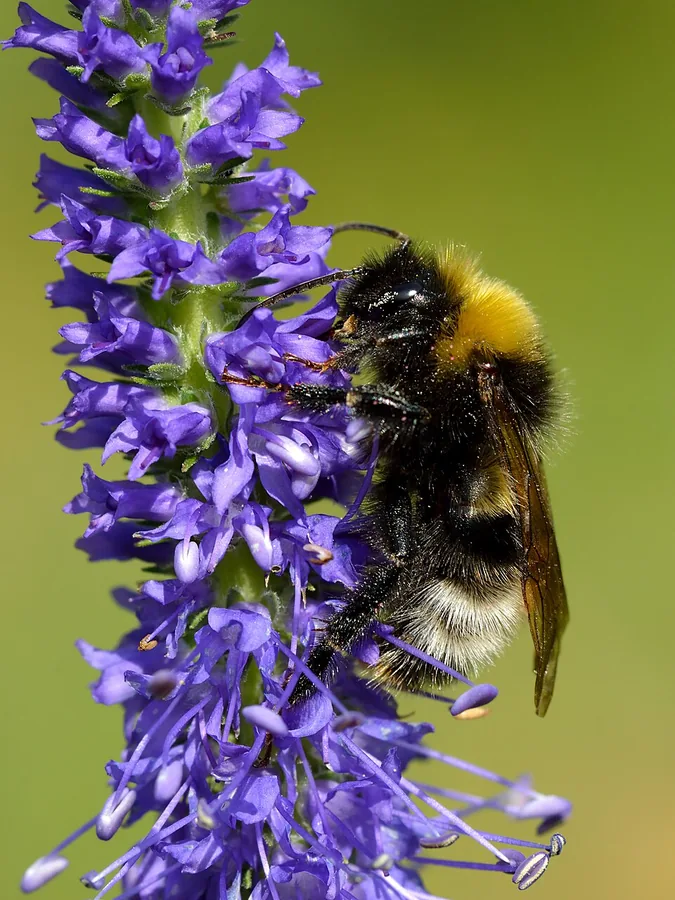
Spike speedwell, Veronica spicata, is an easy herbaceous perennial in the plantain family, valued in the sunny border for its slender racemes of blue, pink, or white borne from early summer. Those upright spikes draw pollinators from June into August, part of why it earns garden space. Its cold hardiness runs deep, holding across zones 3 to 8.
In cultivation it settles into a clump of roughly 2 to 3 feet (61 to 91 cm) in height and comparable spread. Its low demands and its resistance to deer and rabbit browsing suit it to low-input plantings. The critical limitation is its shallow root system, which cannot tolerate saturated ground, so drainage governs its success.
Given sun and free-draining soil, the plant largely maintains itself. Shearing the spent racemes removes the developing seed and redirects energy into a second flush of bloom in fall. Dividing the clump every few years renews the crown and sustains flowering vigor over the long term.
Care
The short version: full sun, a moist but sharply drained soil, and even moisture without saturation. Deadhead the spent spikes to prolong bloom, and divide the clump every few years to renew its vigor.
Light
Flowering in speedwell is light-driven, so it performs best in full sun, meaning 6 or more hours of direct exposure daily. It tolerates light to partial shade, but reduced light lengthens the internodes and thins the bloom, producing the familiar stretched, sparse habit.
Water
The species needs consistent, even moisture because its shallow roots draw from a limited soil volume and cannot bridge a prolonged dry spell, though an established plant withstands short drought. The greater risk runs the other way: sustained saturation, particularly in winter, deprives the roots of oxygen and invites root rot.
Soil
Grow it in average to organically rich loam or silt that retains moisture yet drains freely, within a pH of 6.0 to 7.5. Winter drainage is the decisive factor, since cold, waterlogged clay holds moisture against the crown and is the usual cause of loss.
Temperature
Cold hardiness is a defining trait: the plant withstands -40°F (-40°C) and tolerates up to roughly 86°F (30°C). That wide range explains its reliable overwintering throughout zones 3 to 8.
Humidity
Ambient outdoor humidity meets its needs, so no target level applies. The relevant factor is air circulation, because stagnant air over wet soil raises the moisture load at the crown and roots where problems begin.
Feeding
Nutrient demand is low. A single balanced application or a spring topdressing of compost supplies the season, whereas excess nitrogen promotes soft, elongated stems that flop, working against the plant's naturally upright form.
Pruning
Deadheading or shearing the spent spikes interrupts seed set and stimulates renewed bloom through the season. Cutting the plant back to its basal rosette after the main flush can prompt a fall repeat, and clearing the old growth in late winter or early spring readies the crown for new shoots.
Repotting
As a border perennial, speedwell is renewed by division rather than repotting. Dividing every 3 to 4 years relieves crowding and restores vigor, and the signal to act is a thinning clump center or a decline in flowering.
Size & spacing
A mature specimen reaches 2 to 3 feet (61 to 91 cm) tall with a spread of about 24 to 30 inches (61 to 76 cm). Spacing plants near their mature width lets each crown develop fully and keeps air moving through the planting, which lowers the moisture that favors rot.
When to plant
Speedwell tracks the temperate season closely. Sow indoors a few weeks before the last frost to gain a head start, transplant once the spring soil has warmed enough for root growth, and expect the racemes to open from June through August.
Northern hemisphere
Southern hemisphere
Typical months for a temperate climate: start earlier in warm zones, later where spring frosts linger.
- Sow: 6 to 8 weeks before last spring frost
- Plant: After last spring frost once soil has warmed
- Harvest: June to August (late spring to mid-summer)
Hardiness
USDA hardiness zones: 3–8
Temperature: down to -40°C
Troubleshooting
Most disorders in speedwell trace to one of two mechanisms: excess soil moisture at the root zone, or insufficient light at the canopy. Reading the early signs points to the cause, and correcting the site or removing spent growth usually resolves it.
Wilt and chlorosis with soft, blackened roots
The pattern of wilt, yellowing, and soft, blackened roots identifies root rot, a consequence of anaerobic conditions in wet, poorly drained soil rather than of underwatering. Winter compounds it, as cold ground drains slowly and holds water around the shallow roots. Lift the crown to assess, relocate the plant to a sharply drained position, and discard any tissue that has turned soft and mushy.
Fix:
- Reduce watering and improve drainage
- Move or replant into a sharply drained, raised, or amended site
- Remove and discard severely rotted plants
Reduced flowering with lax, elongated stems
Sparse bloom and lax, elongated stems indicate a light deficit, since shade drives etiolation at the expense of flowering, and retained spent spikes further suppress new bloom by directing energy into seed. Relocate the plant to full sun at 6 or more hours daily, and shear the finished spikes to release a fresh flush.
Fix:
- Site in full sun (6 or more hours of direct sun)
- Deadhead or shear spent spikes to promote rebloom
- Cut back to the basal rosette after the main flush
Toxicity
Veronica spicata carries no toxicity of horticultural note. The extension references record no poisonous listing, and it is absent from the ASPCA toxic plant database, so cats, dogs, and grazing stock face no hazard from it. The only plausible effect is a mild, transient stomach upset from ingesting a large quantity, a nonspecific response common to most plants.
Safe for
People · Cats · Dogs · Horses · Rabbits · Livestock · Birds
Cats None
No toxic constituents are recorded in speedwell, so it presents no hazard to cats. At most, a leaf taken in quantity might produce a brief, mild stomach upset, a nonspecific response rather than a toxic one.
Dogs None
Speedwell poses no documented risk to dogs, carrying no toxicity listing and no ASPCA entry. An incidental chew warrants observation only, not treatment.
Horses Safe
Horses face no toxicity from speedwell, as the plant holds no known toxic compounds and grazing on it produces no adverse effect.
Rabbits Safe
Rabbits generally avoid speedwell, and no toxic risk arises should one feed on it.
Livestock Safe
Cattle, goats, and sheep can graze in proximity to speedwell without hazard, since none of its tissues are toxic to them.
Birds Safe
Speedwell is non-toxic to birds, which work its spikes for nectar and pollen without adverse effect.
People Safe
Speedwell is safe to handle and to cultivate around children. It is not grown as an edible, so no portion is intended for consumption, though a nibbled leaf carries no more than a possible mild stomach upset.
No special handling precautions; generally considered safe around pets and people.
Varieties
The named cultivars of spike speedwell are distinguished chiefly by flower color and plant habit. The following are the most widely grown.
Icicle
Icicle is a white-flowered selection that reads brightly at the front of a border.
Rosea
Rosea replaces the typical blue with soft pink flower spikes.
Royal Candles (Glory)
Royal Candles, listed also as Glory, holds a compact, tidy habit beneath deep violet-blue spikes.
Red Fox (Rotfuchs)
Red Fox, the Rotfuchs selection, is marked by rosy-red to deep pink flower spikes.
How to propagate
Speedwell propagates readily by three routes, each exploiting a different mechanism: vegetative division of the crown, sexual reproduction from seed, and rooting of softwood cuttings in summer.
DivisionEasy
Early spring as shoots emerge, or early fall · One growing season
Division is the most reliable method because it reproduces the parent clone directly. Working in early spring as the shoots emerge, or in early fall, lift the entire clump, separate it into rooted pieces, and reset them at the same depth. Each division reestablishes over a single growing season.
SeedModerate
Indoors 6 to 8 weeks before last frost, or outdoors in early spring · Germinates in about 14 to 21 days; flowers later that season or the next
Seed is slower and less uniform but effective. Sow indoors 6 to 8 weeks before the last frost, or outdoors in early spring, and surface-sow onto moist medium without covering, since the seed requires light for germination. Emergence follows in 14 to 21 days, with flowering later that season or the next.
Stem cuttingsModerate
Late spring to early summer · A few weeks to root
Softwood cuttings taken in late spring to early summer offer a third route. Sever a 4 to 6 inch tip, remove the lower leaves to reduce transpiration, and insert it into a well-drained medium, where roots form over a few weeks.
Myths
Speedwell is toxic to cats and dogs.
The evidence does not support it. NC State Extension assigns spike speedwell no toxicity listing, and it does not appear in the ASPCA toxic plant database, which places it in the non-toxic category for pets. Ingesting a large volume of any plant can still provoke a mild, transient stomach upset, but that is a general effect, not a specific toxicity.
Speedwell requires perpetually saturated soil.
It requires moisture, not saturation. Waterlogged, poorly drained soil suppresses root respiration and leads to rot, whereas an established plant tolerates limited drought. The correct regime is consistent moisture over sharply drained soil.