Houseplant · Nephrolepidaceae
Kimberly Queen Fern
Nephrolepis obliterata
Supply bright indirect light and steady moisture and this upright sword fern holds a full, tidy form year round.
Bright indirect
Every 3–7 days
61–75°F · 16–24°C
USDA 9–11
Overview
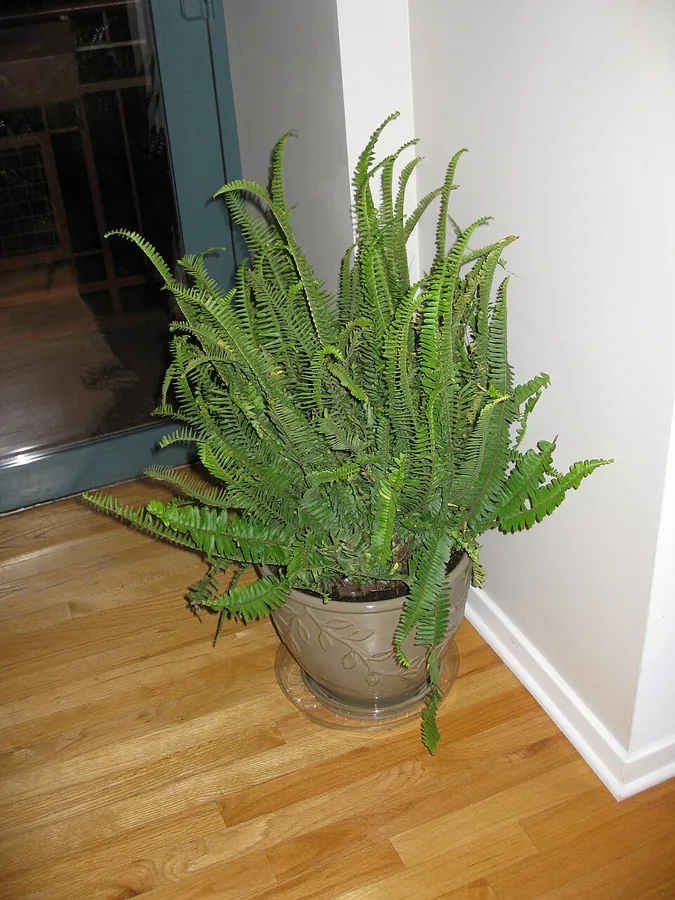
Nephrolepis obliterata, the Kimberly Queen fern, is an Australian sword fern that has become one of the more accommodating ferns for indoor culture. Its fronds are held stiff and upright rather than cascading, which lets the plant keep a defined outline and shed far less litter than the arching Boston fern. That self-contained habit accounts for much of its popularity.
Grown under interior conditions it settles at roughly 2 to 3 feet (60 to 90 cm) in height with a comparable spread, enough to occupy a corner or plant stand without dominating the space. Its moderate growth rate and perennial habit mean that consistent, unremarkable care sustains a single specimen over many seasons.
Its requirements reduce to three: illumination sufficient for photosynthesis but short of direct scorching sun, a substrate held moist without becoming anaerobic, and ambient humidity above the dry range of a heated room. Meet those and the canopy stays dense. Permit the rootball to desiccate and brown tips appear as the earliest symptom.
Care
The short version: bright indirect light, a substrate kept evenly moist but never saturated, and humidity toward the upper range sustain this fern. Feed it monthly through the growing season and remove spent fronds at the base to maintain form.
Light
Position it in bright indirect light, such as an east-facing window or a few feet inside a brighter aspect. It accepts partial shade and modest sun, but direct midday radiation exceeds what the fronds can dissipate and scorches them.
Water
Hold the rootball evenly moist, irrigating once the top inch or so of substrate has dried, which in practice recurs every 3 to 7 days. Wet the entire rootball at each irrigation yet never let it stand saturated, and reduce the frequency somewhat through winter as demand falls.
Soil
Grow it in a rich, humusy potting mix with free drainage, a peat-based medium amended with additional organic matter. It performs best under slight acidity, in the range of pH 5.5 to 6.5.
Temperature
It occupies ordinary interior temperatures, optimally between 61°F and 75°F (16°C to 24°C). Exclude cold drafts and the output of heating vents, both of which desiccate and stress the fronds.
Humidity
The fern requires high humidity in the range of 40% to 70%, exceeding what a heated home supplies in winter. A pebble tray, grouping with other plants, or a humidifier raises local moisture enough to prevent tip desiccation.
Feeding
Apply a balanced liquid houseplant fertilizer at half strength once monthly from spring to early fall. Suspend feeding through winter while growth is dormant, and leach the pot periodically so dissolved salts do not accumulate.
Pruning
No hard pruning is warranted. Simply excise dead, browned, or yellowed fronds at the base as they arise, which preserves the plant's appearance and frees resources for new growth.
Repotting
Advance it to a marginally larger container every 1 to 2 years, or sooner should roots circle the rootball or emerge from the drainage holes. Spring repotting also provides the appropriate occasion to divide a congested specimen.
Size & spacing
Under indoor conditions it attains about 2 to 3 feet (60 to 90 cm) in height with a spread of 2 to 4 feet (60 to 120 cm). Allow clearance on all sides so the upright fronds can arch outward without contacting a wall or adjacent plants.
Troubleshooting
Nearly every disorder in this fern registers first in the fronds, and the majority trace to a moisture or humidity deficit at the leaf. Interpret the symptom early and the corrective measure is usually minor. Match the sign below, then adjust conditions before the decline extends to the whole plant.
Fronds yellowing as the plant loses vigor
General yellowing and collapse usually trace to waterlogged soil, where standing moisture starves the roots of oxygen and lets root rot take hold. Inadequate light produces a comparable decline by limiting the energy the fronds can make. Allow the surface to dry before rewatering, confirm the pot drains freely, and relocate the plant to brighter conditions.
Fix:
- Let the top of the soil dry slightly and ensure the pot drains freely
- Move to a brighter spot with bright indirect light
- Remove rotted roots and repot into fresh, well-draining mix if rot is present
Webbing, sticky residue, or raised bumps on the fronds
Hot, dry air favors spider mites, whose feeding leaves the tell-tale webbing and a fine stippling where they have drained the leaf cells. Sticky residue or raised brown and white bumps instead indicate scale insects or mealybugs feeding on sap. Rinse the foliage, raise humidity to make conditions inhospitable to mites, and isolate the plant while you remove the pests by hand.
Fix:
- Rinse the foliage and raise humidity to discourage mites
- Wipe scale and mealybugs off or dab with insecticidal soap
- Isolate the plant until the infestation is controlled
Brown, crisp necrosis at the frond tips and margins
Tip and margin necrosis develops because the leaf loses moisture at the extremities faster than the roots can replace it, which happens when the air is dry or the rootball dehydrates between waterings. Accumulated fertilizer salts compound the injury by drawing water out of the tissue. Correct it by raising humidity, watering on a consistent cycle, and periodically leaching the pot to remove those salts.
Fix:
- Raise humidity with a pebble tray, grouping plants, or a humidifier
- Keep the rootball evenly moist and water more consistently
- Flush the pot occasionally to leach out accumulated fertilizer salts
- Trim off badly browned fronds at the base
Toxicity
For pet-owning households the verdict is straightforward: this true fern contains no toxic principle. The ASPCA lists Nephrolepis ferns as non-toxic to cats and dogs, and that assessment extends to other domestic animals. The greatest consequence of a pet ingesting the fibrous fronds is a brief, mild digestive upset caused by the roughage rather than any poison.
Safe for
People · Cats · Dogs · Horses · Rabbits · Livestock · Birds
Cats None
The species carries no compounds that would poison a cat, so a room shared with it presents no toxic risk. Where a cat consumes a large volume of the fibrous frond, the roughage alone may prompt brief drooling or a hairball-type upset that resolves without intervention.
Dogs None
With no toxic principle present, a dog that chews a frond takes no harm. A large quantity of the fibrous tissue may transiently loosen the stool through its bulk, then settle without treatment.
Horses Safe
As a true fern lacking any equine toxin, it poses no poisoning hazard to a horse, so an incidental graze warrants no concern.
Rabbits Safe
A rabbit may sample the fronds without toxic risk. Because the foliage is not a dietary staple, restrict it to an occasional offering alongside the animal's usual hay and greens.
Livestock Safe
Goats, sheep, and cattle sustain no poisoning from this fern, whether they reach a container specimen or one established outdoors.
Birds Safe
Pet birds may perch among and nibble the fronds without hazard, which supports its use in an aviary or a home housing parrots or finches.
People Safe
The fern is safe to handle and cultivate for adults and children. It is not grown as a food crop, so no edible portion exists to pursue; it is simply a harmless plant to keep in the home.
Although non-toxic, the fibrous fronds can cause mild, temporary stomach upset if a pet eats a large amount.
Varieties
The plant reaches the trade as a single named selection rather than a series of cultivars, so only one clone requires description here.
'Kimberly Queen'
A clonal selection of Nephrolepis obliterata found in nearly every garden center, it is valued for stiff, upright sword-shaped fronds whose habit sheds far less litter than the arching Boston fern.
How to propagate
Increasing Kimberly Queen ferns is undemanding and costs nothing, since the plant divides cleanly and additionally extends itself by runners.
DivisionEasy
Spring to early summer, ideally at repotting · 4 to 8 weeks
Propagate most reliably by division, carried out in spring or early summer to coincide with repotting, when the plant is entering active growth. Separate the rootball into sections that each retain a proportion of roots and several fronds, pot each on independently, and expect them to establish over 4 to 8 weeks. Sword ferns also produce runners and colonize adjacent space unaided.
Myths
Kimberly Queen fern is poisonous to cats and dogs.
The ASPCA classifies Nephrolepis ferns as non-toxic to both cats and dogs. No poisoning risk applies to this plant, and the most a pet experiences after a large bite of frond is a brief, self-limiting digestive upset from the roughage.
As a fern, it requires deep shade.
Sword ferns in this group tolerate appreciably more light than the Boston fern. Dappled sun or a bright morning exposure suits them, provided they are shielded from intense midday radiation, which scorches the fronds.