Houseplant · Nephrolepidaceae
Boston Fern
Nephrolepis exaltata
Supply steady moisture and humid air, and Nephrolepis exaltata develops into a fountain of soft green fronds.
Bright indirect
61–70°F · 16–21°C
USDA 10–12
2–3 ft · 0.6–0.9 m
Overview
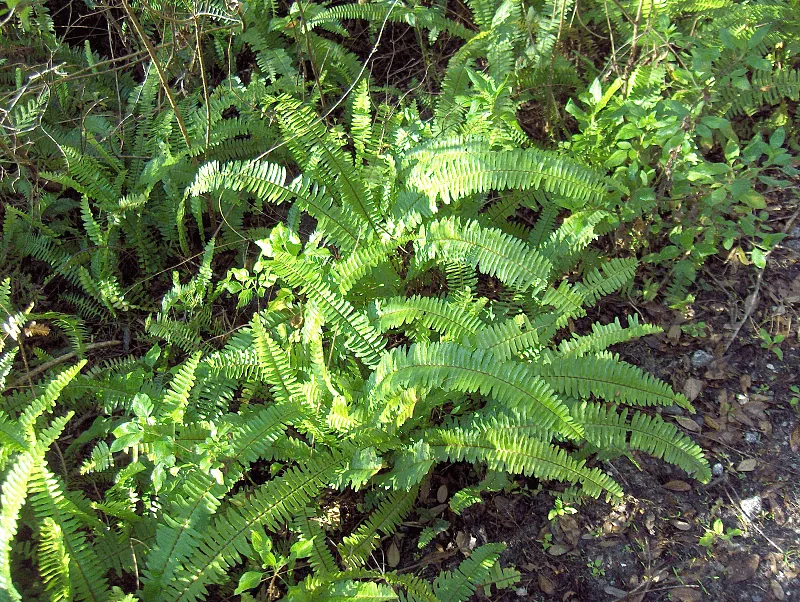
Among indoor ferns, Nephrolepis exaltata ranks as one of the most forgiving, valued for the arching fronds that cascade over a pot rim or hanging basket. The species belongs to the genus Nephrolepis and is native to humid tropical forests, an origin that explains its standing preference for warm, damp air indoors. Sited in bright light away from direct sun, it grows fast and develops into a dense green mound.
The plant's core requirements are steady moisture and high humidity, precisely the conditions ordinary heated interiors fail to provide. When the medium dries or the plant sits beside a heat source, transpiration outpaces uptake and the fern responds by browning at the tips and shedding leaflets. Held in evenly moist soil and humid air, it tolerates most other shortfalls in care.
The fern is well suited to homes with pets and children, since the ASPCA lists it as non-toxic. That status makes it one of the few houseplants that can be grown without concern over an investigative nibble, and an ornamental one besides.
Care
The short version: provide bright indirect light, a medium kept evenly moist but never soggy, and humid air around 61°F to 70°F (16°C to 21°C). Feed monthly through the growing season and divide the clump every few years.
Light
Position the fern in bright, indirect light, the level found near a window but shielded from direct sun. It also performs in medium light, partial shade, and full shade, so a dim corner is survivable, whereas direct sun scorches the fronds because the thin laminae cannot dissipate that intensity.
Water
Hold the medium evenly moist but never saturated, with only a slight reduction in winter as growth slows. A dry-out triggers leaflet shedding and tip browning, so consistency of moisture is the single most decisive factor in keeping the foliage intact.
Soil
Use a peaty, soil-based mix that drains freely yet retains moisture, such as a peat and vermiculite blend. That structure supplies the air-filled porosity roots need while still buffering the even moisture the species demands.
Temperature
The fern performs best between 61°F and 70°F (16°C to 21°C), ordinary interior range. Keep it clear of cold drafts and the dry heat radiators throw off, both of which accelerate moisture loss from the fronds.
Humidity
This is a high-humidity species, and dry indoor air is its principal limiting factor. Raise local humidity by double potting or by standing the pot on a tray of wet pebbles, methods that evaporate moisture into the surrounding air far more effectively than misting.
Feeding
Feed monthly from spring to early fall during active growth, then suspend feeding over winter as the plant rests. Apply a weak, half-strength liquid feed or a slow-release houseplant fertilizer, since the fine roots are prone to scorch under a concentrated dose.
Pruning
Cut spent or damaged fronds off at the soil line to redirect resources into new growth. Where a plant has dried out and shed, fronds may be cut back to about 2 inches, after which the crown regenerates fresh foliage from the base.
Repotting
Divide the fern every few years in spring, once the clump has filled the container. The indicators are roots circling the pot and crowded fronds showing reduced vigor, both signaling that root volume has outstripped the available medium.
Size & spacing
Indoors the species reaches about 2 to 3 feet (61 to 91 cm) in both height and spread, so allow clearance for the fronds to arch. The pendent growth habit displays best where it can hang freely, as from a basket or an elevated stand.
Troubleshooting
Nearly every Boston fern complaint reduces to one of three causes: dry air, dry soil, or an introduced pest. The fronds register the early stages plainly, so reading them lets you intervene before serious shedding begins. Identify the match below, then correct the cause while correction still pays off.
Browning fronds with leaflets shedding around the plant
This is classic moisture stress, and dry air and dry soil drive it. The damage surfaces first as browning at the leaflet tips, where transpiration losses outrun what the roots can supply, and shedding follows once the plant cannot hold the foliage. Keep the medium evenly moist, raise ambient humidity with a pebble tray or by double potting, and remove the plant from radiators and drafts that strip moisture from the fronds. If the dry-out has gone far, cutting the fronds back to about 2 inches lets the crown regenerate clean growth.
Fix:
- Keep the potting medium evenly moist but not saturated
- Raise humidity by double potting or setting the pot on a tray of wet pebbles
- If badly dried out, cut fronds back to about 2 inches to regenerate
Sticky fronds with cottony masses or raised bumps
The raised bumps and cottony clusters are scale insects or mealybugs, sap-feeders whose excreted honeydew accounts for the sticky film on the fronds. Remove and discard the worst-infested fronds to cut the population sharply, then treat the foliage that remains. Inspection of every incoming plant intercepts these pests before they spread, and holding an affected fern apart from the collection keeps a local outbreak from becoming a general one.
Fix:
- Remove and discard heavily infested fronds
- Treat remaining foliage for scale or mealybugs
Toxicity
For households with pets and children, the verdict is favorable: Nephrolepis exaltata is safe. The ASPCA lists it as non-toxic to cats and dogs, and no toxic principle has been documented in the species, so it can be grown within reach of inquisitive animals and children.
Safe for
People · Cats · Dogs · Horses · Rabbits · Livestock · Birds
Cats None
The ASPCA classifies Boston fern as non-toxic to cats and records no toxic principle, so an exploratory nibble carries no poisoning risk.
Dogs None
The same ASPCA listing extends to dogs, naming the fern non-toxic, so a chewed frond will not poison the animal.
Horses Safe
No toxic compound has been documented in the species, so grazing on a frond presents no poisoning hazard to horses.
Rabbits Safe
Because the fern contains no toxic principle, a rabbit can sample the fronds without harm, though a varied supply of greens remains a sounder staple.
Livestock Safe
Cattle, goats, and sheep encounter no toxic principle in this plant, so an incidental mouthful from a stray fern is safe.
Birds Safe
The foliage holds no recognized toxin, which makes the fern a safe planting to keep near birds.
People Safe
The species is non-toxic to people, so a child who mouths a frond is in no danger. It is not cultivated as food, however, so no part is intended for consumption.
Varieties
A small set of named cultivars accounts for most plants in cultivation, separated chiefly by size, frond texture, and color. These are the ones worth recognizing.
'Bostoniensis'
The original selection of the species, distinguished by gracefully arching fronds that reach roughly 4 feet long and 6 inches wide.
'Compacta'
A more compact form of the standard fern, scaled for confined spaces.
'Florida Ruffle'
Marked by denser, more finely divided fronds that give the plant a soft, ruffled habit.
'Rita's Gold'
A cultivar selected for new foliage that flushes chartreuse to golden-green.
How to propagate
Nephrolepis exaltata propagates readily, and the plant accomplishes most of the increase itself through clump division and self-rooting runners.
DivisionEasy
Spring · A few weeks to a couple of months to root and resume growth
Division of the clump is the most practical method of increase. In spring, when the plant enters active growth, cut the root ball vertically into halves or quarters, retaining as many fronds per piece as possible to support recovery, then allow the divisions a few weeks to a couple of months to root and resume growth. The species also spreads vegetatively through runners that root on contact with soil, and in the wild it reproduces sexually from spores borne on the undersides of the fronds.
Offsets & pupsEasy
Spring to summer · Several weeks once a rooted runner is separated
The plant produces runners that develop small plantlets wherever they contact moist soil. After a runner has rooted, sever it from the parent in spring or summer, and the established plantlet settles in within a few weeks.
Myths
Boston fern is poisonous to cats and dogs like so many houseplants.
The species is safe. The ASPCA lists Boston fern as non-toxic to both cats and dogs, which is why it suits households where many other houseplants are ruled out.
Misting is the best way to give a Boston fern the humidity it craves.
Misting raises ambient humidity only briefly and wets the fronds, and that surface moisture predisposes them to foliar leaf spot. Double potting or a pebble tray sustains humidity far more reliably by evaporating into the air around the plant while leaving the foliage dry.