Shrub · Hydrangeaceae
Hydrangea
Hydrangea macrophylla
Give it rich, moist soil and afternoon shade, and the hydrangea returns armfuls of bloom through summer.
Partial shade
Every 3–7 days
USDA 3–9
3–10 ft · 0.9–3 m
Overview
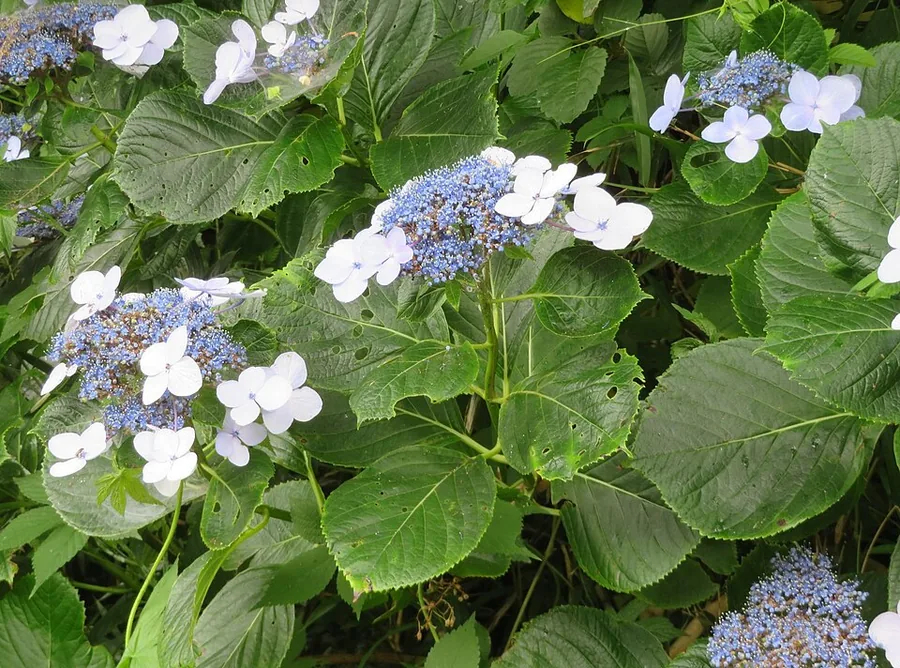
Hydrangeas are the substantial flowering shrubs of the summer border, carrying rounded mophead heads, flat lacecaps, or upright cones according to species. The most widely grown, the bigleaf hydrangea, is the one whose sepals develop blue in acidic soil and pink in alkaline, a pigment response to soil chemistry that has intrigued growers for generations. Growth is fast and flowering heavy, with mature plants reaching 3 to 10 feet (90 cm to 3 m) across the range of species.
The distinction that governs their culture is where each sets its flower buds. Some flower on old wood, differentiating buds the previous summer, while others flower on new wood produced in the current season. That single trait determines pruning timing, whether a severe winter costs a year's bloom, and which species succeed where late frosts occur. Selecting a species matched to the zone resolves much of the management in advance.
Beyond color and pruning, the requirements are modest. Hydrangeas ask for steady soil moisture, protection from the most intense afternoon sun, and a soil high in organic matter. Provided those, the plant performs for many years, being a long-lived perennial shrub that gains stature and fullness with age.
Care
The short version: establish it in rich, moist, well-drained soil with morning sun and afternoon shade, water deeply about once a week, and time pruning to whether the species blooms on old or new wood.
Light
Hydrangeas perform best in partial shade, ideally morning sun followed by shade through the hot afternoon. Bigleaf types in particular scorch and wilt under full afternoon sun because their broad leaves lose water quickly, whereas panicle types tolerate considerably more exposure. Deep shade, at the other extreme, sharply reduces flowering.
Water
Maintain the soil evenly moist, watering deeply about once a week and more frequently in heat or in a container. The genus name itself signals the demand for water, and bigleaf types are the first to wilt as the soil dries. A mulch layer conserves that moisture and moderates root-zone temperature.
Soil
Grow them in rich, moist, well-drained soil high in organic matter. A pH of 5.0 to 6.5 on the acidic side suits the plant, and in bigleaf and mountain types that same acidity, by increasing available aluminum, drives the flowers toward blue.
Temperature
These are cold-hardy shrubs, tolerating roughly -20°F to 95°F (-29°C to 35°C) in the hardier species. The operative hazard is a late spring frost, which can kill the formed buds on old-wood types and forfeit that season's bloom.
Humidity
Ambient outdoor humidity is adequate, so no target level applies. Air movement is the variable that matters, since crowded, stagnant, humid air is what predisposes the plant to leaf spot and powdery mildew.
Feeding
A balanced 10-10-10 fertilizer applied a few times from spring through mid summer supplies what the plant needs. Restraint is warranted, because excess nitrogen favors leaf production and suppresses the flowering that is the objective.
Pruning
Time every cut to the bloom wood. Prune old-wood bloomers such as bigleaf, oakleaf, and mountain immediately after flowering and no later than August 1, and prune new-wood bloomers such as panicle and smooth in late winter or early spring before growth resumes.
Repotting
Repotting is seldom required, since most plants are established permanently in the ground. For a container specimen, shift it up one pot size when roots circle the rootball, emerge from the drainage holes, or when water passes straight through without being absorbed.
Size & spacing
Depending on species, hydrangeas attain 3 to 10 feet (90 cm to 3 m) in height and 3 to 6 feet (90 to 180 cm) in spread. Allow each shrub sufficient room to develop so air circulates through the canopy and disease pressure stays low.
When to plant
Hydrangeas are hardy across zones 3 to 9, which reduces timing to two decisions: when to plant and when to prune. Set new shrubs out in spring or fall while conditions are mild, anticipate bloom from late spring through summer, and let the bloom-wood type dictate the pruning window.
Northern hemisphere
Southern hemisphere
Typical months for a temperate climate: start earlier in warm zones, later where spring frosts linger.
- Plant: Spring or fall
- Harvest: Late spring through summer; some reblooming types again in late summer
Hardiness
USDA hardiness zones: 3–9
Temperature: down to -40°C
Troubleshooting
Most hydrangea problems reduce to a few recurring disorders: heat-driven wilt, vigorous foliage with no flowers, and leaves marked by fungal spotting or chlorosis. Match the observed symptom below to its underlying cause, then correct it before the plant loses a season.
Foliage and flower heads flagging under hot afternoon sun
A midday collapse traces to thirst and sun stress acting together: transpiration outruns what the roots can supply, and bigleaf types, with their broad leaves, lose water fastest under hot direct sun before recovering in the cooler evening once the soil is recharged. The correction follows the mechanism. Reposition the plant to morning sun with afternoon shade, water deeply so the root zone stays evenly moist, and mulch to slow evaporation and hold soil temperature down.
Fix:
- Water deeply to keep soil evenly moist
- Mulch to conserve moisture and cool the roots
- Site bigleaf hydrangeas where they get morning sun and afternoon shade
A healthy plant that refuses to bloom
The leading cause is pruning that removes the flower buds. Old-wood bloomers differentiate next season's buds soon after the current flowers fade, so any cut from fall through early spring excises those buds before they can open. Winter cold or a late frost can kill the same formed buds, and heavy shade or surplus nitrogen shifts the plant toward vegetative growth at the expense of flowering. Establish whether the species blooms on old or new wood, then time the shears to that biology.
Fix:
- Prune old-wood bloomers only right after flowering
- Protect old-wood types from late frosts
- Reduce shade and avoid heavy nitrogen feeding
Purple-margined spotting or a whitish mildew film across the leaves
Two foliar fungi are at work. Cercospora and related leaf spots produce purple-margined lesions with tan centers, while powdery mildew forms its white surface film where plants are crowded and air is stagnant. Neither is lethal to an established shrub, but free moisture and still air let both advance. Remove and dispose of marked and fallen leaves to break the inoculum, irrigate at the base so foliage dries, and thin the canopy to restore the airflow that suppresses infection.
Fix:
- Remove and dispose of affected and fallen leaves
- Use drip or soaker irrigation to keep foliage dry
- Improve air circulation and apply a labeled fungicide if needed
Interveinal yellowing that spares the green veins
Yellow blades with veins still green are the classic picture of iron chlorosis, in which an alkaline soil pH locks iron out of solution so the plant cannot take it up. Because iron moves poorly within the plant, the deficiency appears on the newest growth first. Test the soil and bring the pH down into the slightly acidic band hydrangeas require, add organic matter to open the drainage, and apply iron only after a test confirms the shortage rather than as a reflex.
Fix:
- Test and adjust soil pH toward slightly acidic
- Improve drainage and add organic matter
- Apply iron if a deficiency is confirmed
Toxicity
Hydrangeas are toxic, and the risk extends to the very parts handlers most often touch. The leaves, buds, and flowers all contain cyanogenic glycosides, compounds capable of poisoning cats, dogs, horses, and grazing livestock, and no part of the plant is edible. Keep clippings and spent blooms away from pets and out of paddocks, and wash after pruning.
Toxic to
Cats · Dogs · Horses · Rabbits · Livestock · Birds · People
Cats Mild
In a cat that samples the foliage or flowers, the cyanogenic glycosides typically provoke vomiting and diarrhea, followed by a period of depressed, low energy. The pronounced bitterness generally deters further feeding before the dose becomes dangerous.
Dogs Mild
Dogs chew woody shrubs more than most pets, and the result is gastrointestinal upset with loose stools and a marked flatness of mood. A determined chewer warrants supervision, since a large ingested volume incrementally raises the otherwise small cyanide risk.
Horses Mild
A horse that browses hydrangea can present colic-like abdominal upset, diarrhea, and lethargy from the same compounds. Keeping clippings and prunings clear of paddocks removes the exposure.
Rabbits Toxic
The cyanogenic glycosides render every plant part hazardous to rabbits, whose small body mass narrows the margin of safety considerably. Digestive distress and weakness are the expected effects, so both the plant and its trimmings should be excluded from their enclosure.
Livestock Toxic
Grazing cattle, goats, and sheep can consume enough foliage to accumulate a genuinely harmful dose of cyanogenic compound. Drooling, diarrhea, and labored breathing are the diagnostic warning signs and call for veterinary attention.
Birds Caution
The leaves and buds carry the same toxin that affects mammals, so pet and backyard birds should be kept from feeding on them. Any pecking at the plant is reason enough to intervene.
People Caution
No part of a hydrangea is edible, and the leaves, buds, and flowers can produce gastrointestinal upset if swallowed. Keep inquisitive children away from the blooms and wash after pruning.
Keep clippings and fallen flowers away from pets and grazing animals; cyanide poisoning is uncommon but possible with very large ingestions.
Helpline numbers

United States
ASPCA Animal Poison Control: (888) 426-4435 (fee applies)
Poison Control: (800) 222-1222



Canada
Poison Centres: 1-844-764-7669
Varieties
Several hydrangea species share the common name yet diverge markedly in inflorescence form, hardiness, and flowering habit. The principal ones worth distinguishing follow.
Bigleaf (Hydrangea macrophylla)
This is the classic mophead and lacecap species whose sepals develop blue in acidic soil and pink in alkaline, flowering chiefly on old wood apart from reblooming Endless Summer selections that set flowers on both old and new growth.
Oakleaf (Hydrangea quercifolia)
A native species marked by bold oak-shaped leaves and white cone-shaped panicles that mature to pink, adding rich bronze autumn foliage color and flowering on old wood.
Panicle 'Limelight' (Hydrangea paniculata)
The most stress-tolerant of the group, withstanding full sun and severe cold while producing white-to-pink cone-shaped panicles on new wood, which places its pruning in late winter.
Smooth 'Annabelle' (Hydrangea arborescens)
A native that bears large white globe-shaped inflorescences on new wood, a habit that makes it forgiving under the shears and dependable to rebloom.
Mountain (Hydrangea serrata)
A finer-featured relative of the bigleaf with smaller lacecap flowers and leaves, valued for superior cold and bud hardiness through severe winters.
How to propagate
Hydrangeas propagate readily by vegetative means at home, and two straightforward, beginner-friendly methods will yield a new plant.
Stem cuttingsEasy
Late spring to summer · Several weeks to root
Softwood stem cuttings taken in late spring or summer are the most reliable route to new plants. Held under high humidity to limit water loss while roots form, they root over several weeks and reproduce the parent exactly, being clonal.
LayeringEasy
Spring to summer · One season to root
Layering is simpler still where a low, flexible branch can reach the ground. Pinned to the soil in spring or summer, it develops roots while still attached to the parent over a full season, after which it is severed and grown on as an independent plant.
Myths
A single pruning calendar, autumn or the close of winter, suits every hydrangea species.
Pruning timing is dictated by where the plant sets its buds. Old-wood bloomers such as bigleaf, oakleaf, and mountain differentiate buds just after flowering, so cutting from fall through early spring removes next season's flowers. New-wood bloomers such as panicle and smooth flower on the current year's growth and are cut in late winter or early spring. Identify the bloom-wood type before making a single cut.
Soil pH manipulation converts the flowers of every hydrangea species from pink into blue.
Sepal color responds to soil chemistry in only a subset of species. Only bigleaf and mountain hydrangeas change color with soil pH and available aluminum, turning blue under acidic conditions and pink under alkaline. White-flowered, panicle, and oakleaf types are genetically fixed in color and do not respond to soil amendment.