Ornamental · Asteraceae
Gerbera Daisy
Gerbera jamesonii
Give it full sun, sharp drainage, and a dry crown, and the gerbera daisy carries bright blooms from spring to fall.
Full sun
Every 3–7 days
45–75°F · 7–24°C
120–150 days
Overview
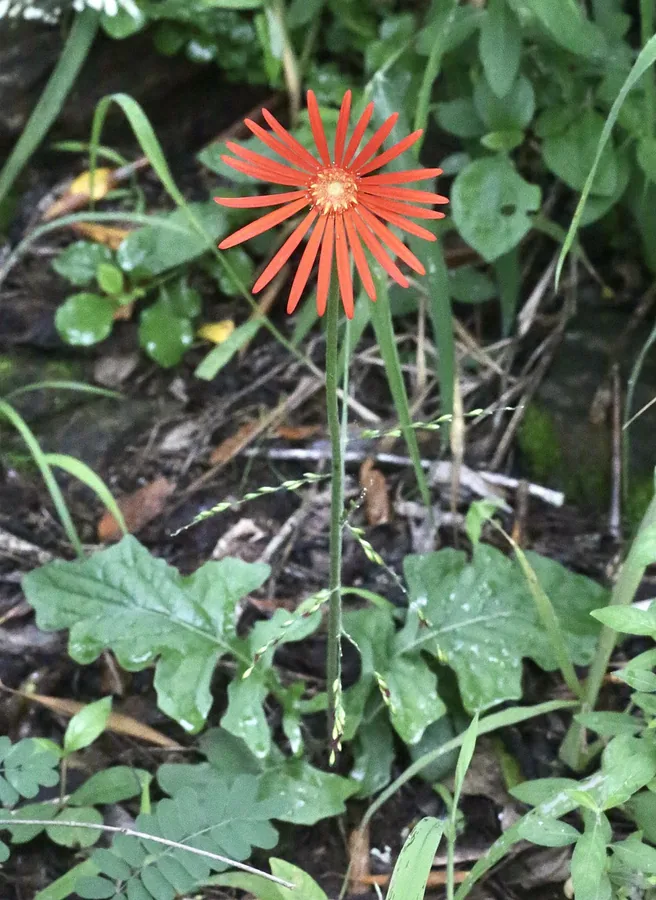
Gerbera jamesonii ranks among the most vividly colored ornamentals available to the grower, opening broad, flat capitula in reds, pinks, oranges, yellows, and white. Native to South Africa, it behaves as a tender perennial and sits within the sunflower and aster family. Outside the mild zones it is generally cultivated as a warm-season annual or held in containers that can be relocated as temperatures dictate.
Its reputation for being demanding rests almost entirely on water management. The plant grows from a low crown that decays under standing moisture, which is why rich, fast-draining soil and an irrigation regime that lets the crown dry between waterings are the deciding factors in whether it thrives. Manage that one variable and the remaining requirements are undemanding.
Supplied with full sun, adequate spacing for air movement, and roughly weekly deadheading, it returns months of bloom on tall, clean scapes. Those long, sturdy stems are also what make it one of the finest cut flowers a gardener can produce at home.
Care
The short version: full sun with some afternoon shade in high heat, a rich sharply drained medium, consistent moisture with the crown kept dry and set high, and routine deadheading to sustain flowering.
Light
The plant is a full-sun subject, which means six or more hours of direct light daily, because that exposure drives flower initiation. Light afternoon shade benefits it where summers are intense, but insufficient light produces etiolated, leggy plants that flower sparsely.
Water
Maintain the medium evenly moist yet never saturated, allowing the crown to dry between irrigations. Apply water at the base early in the day and avoid overhead delivery, since moisture held on the crown and foliage is the precondition for rot and fungal disease.
Soil
Grow it in rich, well-drained loam amended with organic matter to supply both fertility and structure. It performs on the acidic side of neutral, near a pH of 5.5 to 6.5, and adequate drainage is the single most decisive cultural factor.
Temperature
Its comfortable band runs 45°F to 75°F (7°C to 24°C), and frost is lethal. Temperatures above that range suppress flowering, so light shade during the hottest part of summer helps sustain bloom.
Humidity
Ambient humidity is adequate, so no specific target applies. Air circulation is the greater determinant, because still, congested air around the plant favors powdery mildew.
Feeding
Fertilize every two weeks through the growing season with a balanced liquid feed, or substitute a controlled-release product applied 2 to 3 times over the year. Monitor for iron and manganese deficiencies, which manifest as chlorotic new growth, and correct them as they emerge.
Pruning
Pruning is limited essentially to deadheading. Removing spent capitula redirects the plant into new bud production, frequently extending bloom over months.
Repotting
Refresh a containerized plant into new medium every 1 to 2 years, or earlier once roots circle the pot, flowering declines, or the substrate dries too quickly. Position the crown level with the surface in every case, never below it.
Size & spacing
Mature plants remain compact at 6 to 18 inches (15 to 46 cm) in height and 9 to 15 inches (23 to 38 cm) in spread. Spacing that preserves airflow around each plant is the practical defense against powdery mildew.
When to plant
Gerbera jamesonii is a warm-season subject with no frost tolerance, so timing follows temperature rather than the calendar alone. Sow indoors in late winter, transplant only after the last spring frost has passed and the soil has warmed, and expect flowering from late spring through autumn.
Northern hemisphere
Southern hemisphere
Typical months for a temperate climate: start earlier in warm zones, later where spring frosts linger.
- Sow: 8 to 10 weeks before the last spring frost
- Plant: after the last spring frost when soil has warmed
- Harvest: late spring through autumn
Hardiness
USDA hardiness zones: 8–10
Temperature: down to -12°C
Troubleshooting
The majority of gerbera failures originate in excess soil moisture, with arthropod pests a secondary concern. Direct your inspection to the crown and the foliage, where the earliest indicators appear. Match the symptom below and intervene promptly.
Soft brown rot at the soil line as the plant collapses
This presents as crown and root rot, the leading cause of loss in cultivated gerberas. Waterlogged soil starves the crown of oxygen and a buried crown holds moisture against the tissue, so the vascular base decays and the plant wilts even while the ground stays saturated. Remove the affected plants, reset each crown flush with the soil surface where it can shed water, and irrigate at the base early in the day so the root zone drains through.
Fix:
- Remove affected plants
- Improve drainage with raised beds or containers
- Replant with the crown level at the soil surface
- Water at the base early in the day
White powdery colonies developing on the foliage
The whitish bloom is powdery mildew, a fungal infection favored by humid air and the stagnant microclimate of crowded plantings. Its mycelium spreads across the leaf surface, wipes off under a finger, and can chlorose the tissue beneath as it draws on the leaf. Correcting the conditions does most of the work: open the stand for air movement and keep the foliage dry, holding fungicide in reserve for cases that escalate.
Fix:
- Improve air circulation
- Avoid wetting foliage
- Apply an appropriate fungicide if severe
Stippled, yellowing foliage with webbing or deformed shoots
Stippling, chlorosis, and deformed shoots point to sap-sucking pests including spider mites, aphids, thrips, and whiteflies, which drain cell contents and leave the tissue mottled. Confirm by turning the leaves over, where the insects congregate and mites betray themselves with fine webbing. Rinse the population down first, then apply insecticidal soap or neem oil and repeat on the label interval to catch newly hatched generations.
Fix:
- Rinse foliage
- Apply insecticidal soap or neem oil
- Repeat applications as directed
Toxicity
For households with pets or children, the record is unambiguous: the gerbera daisy is non-toxic in every category. The ASPCA classifies it as safe for cats, dogs, and horses, and no toxic principle poses a threat to other animals or to a child who handles it.
Safe for
People · Cats · Dogs · Horses · Rabbits · Livestock · Birds
Cats None
Documented safe for cats. The ASPCA classifies Gerbera jamesonii as non-toxic, so incidental browsing produces no poisoning.
Dogs None
Equally safe for dogs. It contains no toxic principle, though ingesting a large volume of any plant can provoke a transient digestive upset.
Horses None
Cleared for horses as well. The ASPCA lists the gerbera daisy as non-toxic to equines.
Rabbits Safe
No toxic compound reaches rabbits, so the flowers and foliage present no poisoning hazard.
Livestock Safe
Grazing livestock incur no poisoning risk, since the plant carries nothing toxic.
Birds Safe
Aviary and backyard birds face no exposure hazard, as the plant holds no toxins.
People Safe
Harmless to people, so handling the blooms carries no risk to children.
Varieties
The species is bred across an enormous color range, but several named selections merit attention for the specific traits they contribute to a planting. The following are worth sourcing by name.
Mardi Gras
Selected for a multicolored display in which several ray-floret shades open on one plant.
Rainbow
A series bred for a broad color range carried on uniform, compact plants.
Green Kermit
Distinguished by double flowers centered on a green disc, an uncommon trait in the species.
How to propagate
Two propagation routes are practical: dividing an established clump, or raising seedlings from seed. Each demands some patience, but neither exceeds a moderate skill level.
DivisionModerate
Early spring or after flowering · Several weeks to a few months
Divide a mature clump in early spring or once flowering concludes, separating it into sections and setting each crown flush with the soil surface to keep it from rotting. Expect a section to require anywhere from a few weeks to a couple of months to regenerate roots and resume independent growth.
SeedModerate
Start indoors 8 to 10 weeks before last frost · Several months to first bloom
Sow indoors 8 to 10 weeks before the last frost, pressing the seed onto the surface rather than covering it, because gerbera seed is light-dependent for germination. Maintain warmth and even moisture, and allow several months for a seedling to develop to its first bloom.
Myths
Gerbera daisies are toxic to cats and dogs like many other daisies.
The claim conflates this species with unrelated toxic members of the daisy family. The ASPCA records Gerbera jamesonii as non-toxic to cats, dogs, and horses, so it should not be grouped with the relatives that do cause poisoning.
Gerbera daisies like to be kept constantly soggy.
Saturated conditions are precisely what injure the plant. Continuously wet soil deprives the crown of air and induces crown and root rot, so establish it in well-drained ground and let the crown dry between irrigations.