Ornamental · Asteraceae
Dusty Miller
Jacobaea maritima
Grow it for the silver foliage that lifts every neighboring color, give it sun and sharp drainage, and it demands almost nothing in return.
Full sun
Every 7–10 days
USDA 7–10
8–24 in · 20–61 cm
Overview
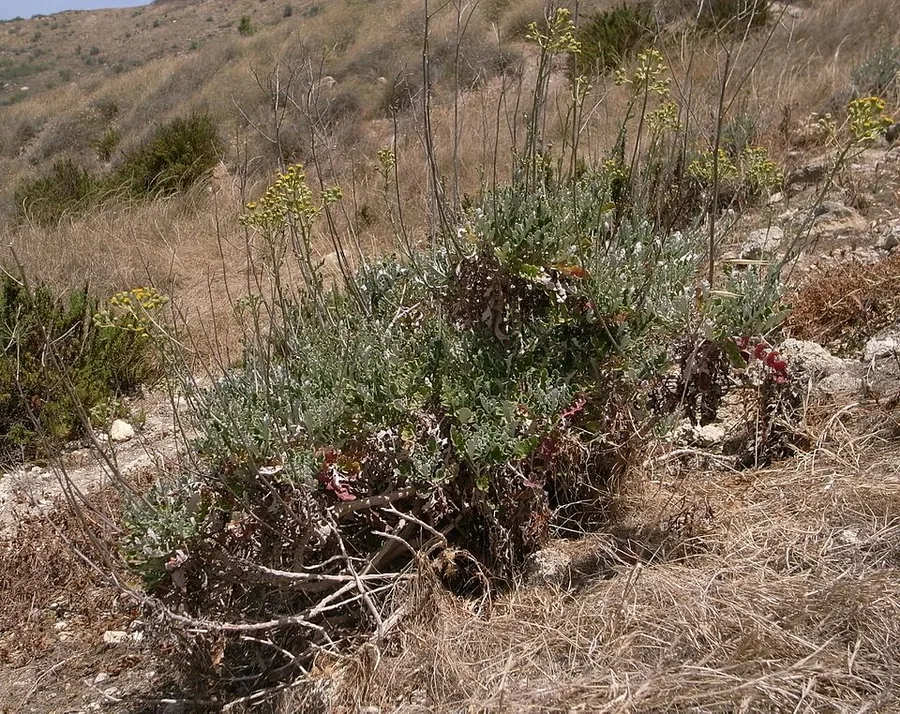
Dusty miller is cultivated for its foliage rather than its bloom. The felted, silver-white leaves are the draw, serving as a cool, even backdrop that sharpens the reds, purples, and pinks planted beside it. A member of the daisy family, it originated along the Mediterranean coast, an origin that accounts for both its appetite for sun and its intolerance of saturated ground.
In most gardens it performs as a warm season annual, though it is properly a tender perennial that persists for years where winters stay mild. Expect a low, mounding habit reaching somewhere between 8 and 24 inches (20 to 61 cm) tall depending on the selection. The fine silver leaves appear lacy and deeply cut on some cultivars and broad and rounded on others.
This is an undemanding plant that shrugs off heat and drought once it is established. Its single weakness is wet feet, which the roots cannot withstand. Provide sun and a soil that drains freely, pinch it periodically to keep the habit dense, and it holds its color from spring until frost.
Care
The short version: full sun and a light, fast-draining soil, watered deeply but only after the top half has dried. Pinch the young plants to keep the habit dense, and stay measured with both water and nitrogen.
Light
Give dusty miller full sun, ideally 6 or more hours a day, and the foliage stays dense, compact, and brightly silver. It tolerates light shade, but in genuine shade it elongates reaching for light, flops, and loses much of its color.
Water
Water deeply, then hold off until the top half of the soil has dried before the next application, which generally falls around every 7 to 10 days. Once established it handles heat and drought well. What it will not tolerate is standing moisture, since saturated roots lose oxygen and rot, so never let them sit wet.
Soil
Set it in light, well-drained soil of only moderate fertility. It performs adequately even in poor ground, but drainage is the factor that governs success, because waterlogged soil rots the roots and stems quickly.
Temperature
Dusty miller endures a broad span, from roughly 10°F to 95°F (-12°C to 35°C), which is what makes it such a dependable bedding plant. It withstands a light frost in mild zones but will not survive a hard freeze.
Humidity
Ordinary outdoor air suits it, so there is no figure to track. Airflow matters more than humidity here, because crowded, damp foliage is precisely what allows rust to establish.
Feeding
A monthly balanced feed across the growing season is sufficient. Keep nitrogen restrained, since an excess drives soft, leggy growth at the expense of the dense silver form you are working toward.
Pruning
Pinch the young plants to direct them into a bushy, compact habit. Many gardeners also remove the flower buds so the plant channels its energy into foliage. In mild zones, cut frost-damaged growth back to the crown and fresh leaves return in late spring.
Size & spacing
Plants mound 8 to 24 inches (20 to 61 cm) tall and spread roughly as wide. Set them about 12 inches (30 cm) apart so air moves freely between them and rust is held at bay.
When to plant
In most gardens dusty miller is grown as a frost-tender annual. Sow the seed indoors during late winter, transplant once the cold has passed, and the silver foliage carries straight through to fall. Any summer flowers are small and dull, and most gardeners simply remove them.
Northern hemisphere
Southern hemisphere
Typical months for a temperate climate: start earlier in warm zones, later where spring frosts linger.
- Sow: 10 to 15 weeks before the last spring frost; surface sow and do not cover seed as light aids germination at 68 to 77°F
- Plant: After all danger of frost has passed, spacing about 12 inches apart
- Harvest: Grown for silver foliage; insignificant cream to yellow daisy-like flowers may appear in summer and are usually removed
Hardiness
USDA hardiness zones: 7–10
Temperature: down to -18°C
Troubleshooting
Given sun and dry roots, dusty miller stays largely trouble-free. The problems that do arise almost always trace back to excess shade or excess water. Match the symptom below, then correct the underlying cause rather than the symptom alone.
Collapsing plants showing dark, softened stem bases
Saturated soil starves the roots of oxygen and opens the door to root and stem rot, and few plants resent wet feet more than a dusty miller. The base of the stem turns dark and soft while the roots go brown and pulpy. Correct the drainage, lengthen the interval between waterings, and reset any survivors into light, fast-draining soil.
Fix:
- Improve drainage and reduce watering frequency
- Remove severely affected plants
- Replant in light, well-drained soil
Raised orange to brown blisters scattered across the leaf surface
Those pustules are rust, a fungal pathogen that establishes where foliage stays damp and air sits still in a crowded planting. Strip off the marked leaves and dispose of them rather than composting, open up the spacing between plants, and deliver water at the soil line so the leaves stay dry.
Fix:
- Remove and destroy affected foliage
- Improve air circulation by spacing plants
- Avoid overhead watering
Tall, lax stems carrying leaves with wide gaps between them
What you are seeing is legginess, the predictable result of too little light. Starved of sun, the plant elongates its internodes reaching for it, and surplus nitrogen drives the same soft, stretched tissue. Relocate it to full sun, pinch the growing tips to trigger branching, and cut back on feeding.
Fix:
- Move or plant in full sun (6+ hours)
- Pinch back stem tips to force branching
- Reduce nitrogen feeding
Toxicity
This is not a plant for ground where animals graze. Every part holds pyrrolizidine alkaloids, the same hepatotoxic compounds present in ragwort, and they accumulate in the liver with each dose instead of clearing through. A curious pet that takes a single bite usually escapes with a mild stomach upset, but horses and livestock that consume it over time face real harm. Nothing on this plant is meant to be eaten.
Toxic to
Cats · Dogs · Horses · Rabbits · Livestock · Birds · People
Cats Mild
A single nibble typically produces nothing worse than drooling or one bout of vomiting. The genuine hazard is the liver damage that compounds if a cat returns to the plant repeatedly, so place it where the cat cannot reach it.
Dogs Mild
A dog that chews a leaf usually escapes with a mild stomach upset. The point to watch is repeated visits, since the alkaloids lodge in the liver and accumulate dose by dose.
Horses Severe
Horses carry the highest risk of any animal here. The toxin builds in the liver with every mouthful and produces weight loss, weakness, jaundice, photosensitive skin, and neurologic signs such as aimless walking or head-pressing against a wall. Keep the plant well away from paddocks and hay.
Rabbits Caution
The same hepatotoxic alkaloids are present, so dusty miller should never be offered as forage. A rabbit that samples a small amount is unlikely to come to harm, but it has no place in the hutch.
Livestock Severe
Cattle, goats, and sheep are at the greatest risk because they graze the plant or consume it dried in hay, where the bitter taste that normally deters them fades. Repeated intake drives toward liver failure, weight loss, and photosensitive skin, so keep it out of pastures and stored feed.
Birds Caution
Regard dusty miller as off-limits for pet birds and poultry. The pyrrolizidine alkaloids that injure mammalian livers are no safer for an avian liver, so do not let it become a snack.
People Caution
No part of this plant is grown for eating. Consuming it in any quantity can stress the liver through the same alkaloids, so keep it out of the kitchen and away from young children inclined to taste-test the garden.
Keep grazing animals away; pyrrolizidine alkaloids accumulate in the liver and cause cumulative damage with repeated ingestion. Greatest danger is to horses and livestock eating green plant material or contaminated hay over time.
Helpline numbers

United States
ASPCA Animal Poison Control: (888) 426-4435 (fee applies)
Poison Control: (800) 222-1222



Canada
Poison Centres: 1-844-764-7669
Varieties
Most dusty miller offered for sale is one of a handful of named selections, separated chiefly by leaf shape and mature height. These are the ones you are most likely to find.
Silver Dust
The selection you will encounter most often, a compact 10 to 12 inch plant valued for its finely cut, lacy silver-white foliage.
Cirrus
A lower 8 inch mound that swaps the familiar lacy form for broad, rounded, undivided silver leaves.
New Look
A compact 10 inch selection bearing large, broad, felted leaves that read as unbroken silver from across the bed.
Candicans
The tallest of the group at 16 to 24 inches, carrying big lobed leaves on a heavier, fuller frame.
How to propagate
Dusty miller can be raised from seed each spring or propagated from cuttings to carry a favored plant through a cold winter.
SeedModerate
Start indoors 10 to 15 weeks before the last spring frost; surface sow without covering at 68 to 77°F · Germinates in about 2 weeks; transplant outdoors after frost danger passes
Sow indoors well in advance, about 10 to 15 weeks before your last frost. Because the seed requires light to germinate, press it onto the surface and leave it uncovered, holding the tray at 68°F to 77°F (20°C to 25°C). Seedlings emerge in roughly two weeks, and the young plants move outdoors once frost danger has passed.
Stem cuttingsModerate
Take cuttings in fall to overwinter under glass in cold climates · Several weeks to root
Cuttings are the practical route to preserving a plant through a cold winter. Take them in fall and root them under glass, a process that runs several weeks, then carry the young plants into spring rather than surrendering the parent to frost.
Myths
Dusty miller is a threat only to livestock and stays perfectly safe around cats and dogs.
Every ragwort and Senecio relative carries pyrrolizidine alkaloids, which is why the plant is listed as toxic to cats, dogs, and horses alike. A pet faces a smaller risk that usually ends at a mild stomach upset, but the plant is not non-toxic, and repeated nibbling still taxes the liver over time.
Animals always avoid dusty miller because it tastes too bitter to eat.
Fresh foliage is bitter enough that most animals pass it over while better food is on hand. That defense disappears once forage grows scarce or the plant is dried into hay, where the bitter edge fades and horses no longer reliably refuse it.