Houseplant · Apocynaceae
Desert Rose
Adenium obesum
Hold it in full sun and let the soil run fully dry between waterings, and the desert rose answers with a swollen caudex and trumpet bloom.
Full sun
Every 7–14 days
50–86°F · 10–30°C
USDA 11–12
Overview
The desert rose is a succulent of the dry country across Africa and Arabia, valued as much for its sculptural trunk as its flowers. That trunk is the caudex, a water-storage organ that lets the plant carry on through prolonged drought; the same reservoir is why it tolerates neglect but rots under standing moisture. Grown indoors it stays slow and compact, well suited to a hot, sunny sill.
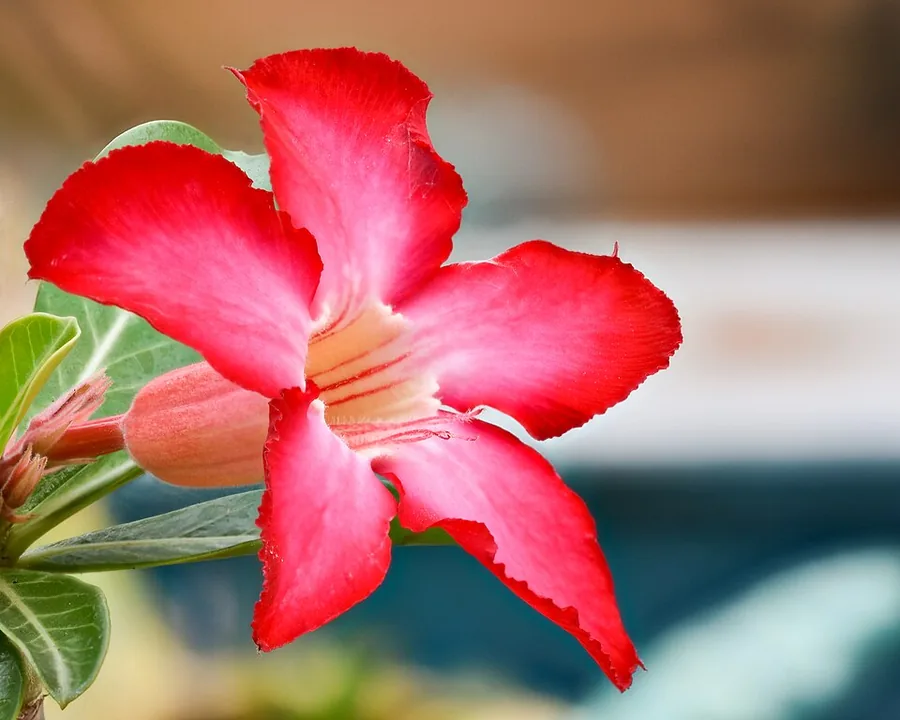
In bloom it justifies the name, lifting trumpet-shaped flowers in pink, red, and near-black above gray-green foliage through the warm season. Come winter the plant idles, slowing its metabolism and frequently shedding leaves, a dormancy response rather than a fault.
Its demands are few but one is absolute. Surplus moisture is what kills it fastest, the caudex and roots breaking down in saturated soil. Manage it as the arid-climate plant it is, supply grit, sun, and patience, and it will outlast nearly everything beside it.
Care
The short version: full sun, a gritty fast-draining medium, and water only after the soil has dried through completely, then taper off hard for the winter rest.
Light
Supply the most direct sun you can manage, several hours daily at the brightest window in the house. The plant survives in bright indirect light, but under it stems elongate and flowering shuts down, since bloom depends on strong light. South-facing glass serves it best.
Water
Allow the medium to dry through completely, then water it deeply. In active growth that tends to fall somewhere between every 7 and 14 days, though the soil dictates the timing, not the calendar. The plant rests in winter, so reduce sharply; a cold, wet caudex rots fast because the stored-water tissue has no defense against saturation.
Soil
Grow it in a gritty, fast-draining cactus or succulent mix that never holds water against the roots. A mildly acidic to neutral pH of 6.0 to 7.0 suits it. Drainage outweighs every other soil factor here, so fold in extra grit or pumice should your mix retain moisture.
Temperature
Hold it warm, within 50°F and 86°F (10°C to 30°C), and never expose it to frost. Tropical in origin, it suffers genuine injury from a cold draft or a chilled winter sill.
Humidity
Ordinary indoor air suits it, since this is a low-humidity plant native to arid country. Misting serves no purpose and chasing a target reading even less; damp, stagnant air does it more harm than good.
Feeding
Feed monthly across the spring and summer growth period with a balanced or low-nitrogen liquid fertilizer at half strength. Surplus nitrogen drives leaf growth at the expense of flowers, so favor a feed weighted toward phosphorus when bloom is the goal.
Pruning
Prune in early spring to set the shape, take out dead or leggy stems, and prompt fresh branching and heavier flowering. Cut stems release toxic milky sap, so wear gloves and clean your tools afterward.
Repotting
Repot every 2 to 3 years in spring as the caudex thickens and fills the container. Look for roots circling the drainage holes or the caudex pressing the walls, and step up just one pot size so the medium does not stay wet around the roots.
Size & spacing
Under indoor conditions it holds a slow, manageable 2 to 5 feet (60 to 150 cm) in height with a spread near 12 to 35 inches (30 to 90 cm). Its slow rate of growth lets one plant keep its form and footing for years.
Troubleshooting
Nearly every fault in this plant resolves to water or light. Read the caudex against the leaves and a routine winter rest separates cleanly from a genuine emergency. Match the picture below before you so much as lift the watering can.
When the caudex turns soft, dark, or mushy at the base
What you are seeing is root and caudex rot, and no other failure claims more of these plants. The decay takes hold when the gritty medium holds moisture too long or the plant sits cold and damp, conditions that let fungal and bacterial organisms colonize tissue the caudex cannot defend. Withhold water, excise everything back to firm tissue with a clean blade, allow the wounds to callus, and set the plant into a dry, sharply draining medium.
Fix:
- Stop watering immediately and move to a warm, bright spot
- Cut away all soft rotted tissue with a clean blade until firm tissue remains
- Allow cuts to callus, then repot in dry, gritty, fast-draining mix
Leaves yellowing, then shedding
Leaves that yellow and fall in autumn or through a cold spell almost always reflect normal seasonal dormancy, the plant withdrawing energy ahead of winter, and it will flush again as warmth returns. Inspect the soil before you assume the best, since overwatering produces the same yellowing; confirm the caudex stays firm and the medium drains freely.
Fix:
- Reduce watering and accept natural winter leaf drop
- Ensure adequate warmth and light
- Verify caudex remains firm and soil drains freely
Foliage in good order, yet the blooms refuse to appear
Green, healthy leaves with no flowers points almost every time to too little direct light or a feed that runs heavy on nitrogen, which drives leaf production at the cost of bloom. Set the plant at the brightest window available, where it takes several hours of direct sun, and change to a low-nitrogen feed that carries more phosphorus, the nutrient that supports flowering. A cool, dry rest through winter primes it to bloom once spring returns.
Fix:
- Move to the brightest possible location with several hours of direct sun
- Switch to a low-nitrogen, higher-phosphorus fertilizer
- Allow a cooler, drier rest period in winter to encourage spring bloom
Toxicity
Handle this plant with caution. Every part carries a milky sap loaded with cardiac glycosides, the class of compound once drawn on for arrow poison, capable of triggering vomiting, drooling, and dangerous disturbances of heart rhythm. Keep it clear of pets, livestock, and children, and glove up for every pruning session.
Toxic to
Cats · Dogs · Horses · Rabbits · Livestock · Birds · People
Cats Severe
A cat that bites any part will commonly drool, vomit, and grow lethargic; the cardiac glycosides in the sap act directly on the heart muscle and can drive the rhythm dangerously off course. Any ingestion warrants an emergency response.
Dogs Severe
Within a short time of chewing stem or sap, a dog typically shows vomiting, diarrhea, and weakness, but the disordered heartbeat is the genuine threat. Reach a vet rather than letting it run its course.
Horses Toxic
The cardenolides strike horses severely, producing colic, drooling, and an unsteady heart rhythm. Keep this plant well away from any paddock or barn.
Rabbits Toxic
A single nibble endangers a rabbit, because the glycosides disrupt both the gut and the cardiac rhythm. No portion of this plant should ever serve as forage.
Livestock Toxic
Cattle, goats, and sheep that browse the leaves or sap face cardiac and digestive poisoning alike. Fence it off from grazing animals without exception.
Birds Toxic
Even trace amounts of the cardiac glycosides threaten birds, putting a pecking parrot or chicken at real risk. Keep caged and free-roaming birds clear of it.
People Caution
No part of this plant is edible, and swallowing it can bring on vomiting and heart-rhythm effects. The milky sap irritates skin and eyes as well, so glove up before pruning and keep it out of children's reach.
Wear gloves when pruning or handling cut stems, avoid contact with the toxic milky sap, and wash hands and tools thoroughly after contact. All parts, especially the sap, are toxic; keep away from children and pets.
Helpline numbers

United States
ASPCA Animal Poison Control: (888) 426-4435 (fee applies)
Poison Control: (800) 222-1222



Canada
Poison Centres: 1-844-764-7669
Varieties
The plain species accounts for most desert roses on sale, but a handful of named forms reward the search for their flower color and growth habit.
Adenium obesum 'Black Knight'
Named for its deep red, nearly black trumpet flowers, this cultivar throws those dark blooms in sharp relief against the gray-green caudex.
Adenium obesum var. swazicum
A more slender variety bearing soft pink blooms, and one that handles summer rainfall better than the typical species.
How to propagate
A desert rose can be started from seed or from cuttings, and that single decision settles whether the prized swollen base develops. Wear gloves on either route, because severed stems weep toxic sap.
SeedModerate
Spring to early summer when temperatures are warm · Several weeks to germinate; one or more years to develop a notable caudex
Sow in spring or early summer once warmth is dependable. Seed germinates within a few weeks, though a year or more passes before the caudex grows noticeable; the payoff is that seed-raised plants develop the fat, swollen base the species is grown for, which cuttings rarely match.
Stem cuttingsModerate
Warm growing season after letting cuttings callus · Several weeks to root
Cut during the warm growing season and let the severed ends callus before potting, since exposed tissue invites rot. Rooting follows in a few weeks, faster than seed, but the compromise is that cutting-grown plants generally fail to form the swollen basal caudex.
Myths
The desert rose needs frequent watering because it grows in deserts.
Reality runs the other way. The swollen caudex functions as a stored water reserve, so the plant prefers extended dry intervals between drinks and rots quickly once the soil stays saturated. With this species, erring dry beats erring wet by a wide margin.