Ornamental · Asteraceae
Chrysanthemum
Chrysanthemum × morifolium
Site them in strong light, water consistently, and pinch the tips across the season; the lengthening nights of autumn then trigger a full canopy of bloom.
Full sun
Every 2–4 days
USDA 5–9
1–3 ft · 0.3–0.9 m
Overview
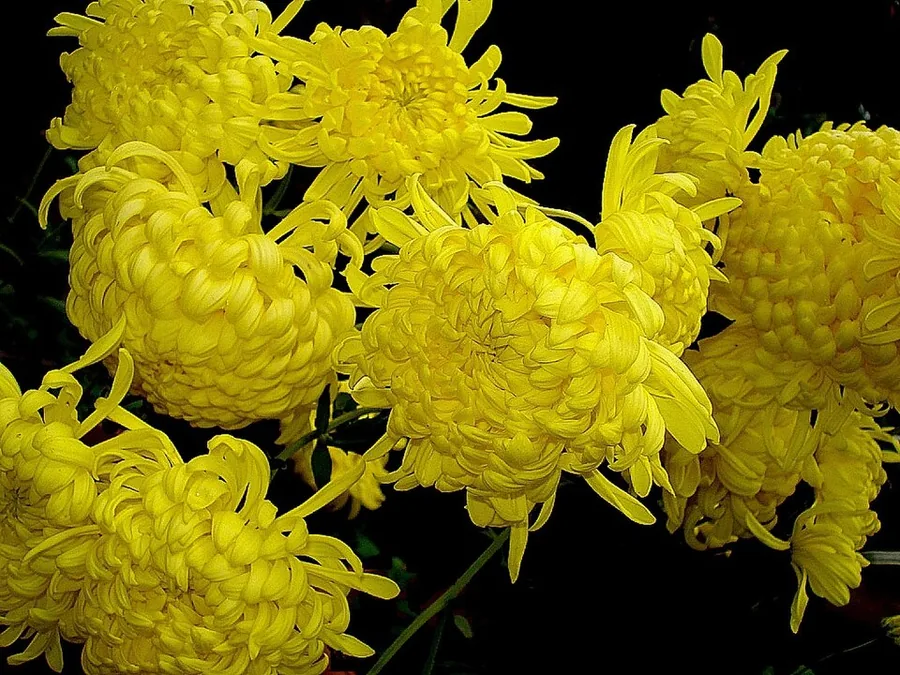
Few plants signal the turn of the season like the chrysanthemum. A member of the daisy family, it carries mounded heads across the warm part of the palette, running through rust, gold, pink, and a deep red. The bulk of stock on offer is the garden mum, a low, cushion-habit type whose flowering is keyed to the shrinking day length of fall.
Its reputation for being undemanding rests on meeting two requirements. The plant wants strong sun and uninterrupted moisture, plus repeated pinching from spring through summer to thicken its branching rather than elongate. Omit the pinching and apical dominance lets one stem dominate, yielding a lean, open habit that flowers only at the tips.
A single pitfall undoes a lot of growers. Autumn stock already in flower was pushed for a quick sale rather than hardiness, so much of it does not survive the cold months. Establish plants in spring on free-draining ground and they regrow fuller next season; purchased in fall, they are safest regarded as annuals.
Care
The short version: full sun, a rich free-draining bed held at even moisture, a soluble feed each week across the growth period, and repeated tip pinching that ceases about 100 days before bloom.
Light
Aim for 6 or more hours of direct sun daily; an open, unshaded site is ideal. Under heavier shade the plant etiolates, drawing its stems upward toward the light source, and that elongated growth is weak, prone to lodging, and far less floriferous.
Water
Demand here is high, with the soil best held at even, uninterrupted moisture, above all while buds form and open and transpiration is greatest. A dry spell checks growth or halts it. Apply water to the root zone, leave the leaves dry, and ensure drainage so roots are never saturated.
Soil
They do best in a rich, free-draining medium loaded with organic matter and held at steady moisture. Their tolerance covers a wide pH range of 6.0 to 8.0, so most ground qualifies once it drains; the organic fraction does double duty, supplying the heavy nutrient need and buffering soil moisture.
Temperature
Once established in the ground, garden mums withstand cold to about -20°F (-29°C) and shrug off summer warmth to roughly 90°F (32°C). The greater winter hazard is not temperature but saturated, heaving soil, which can hoist the crown clear of the ground or rot it in position.
Humidity
No humidity target applies, since whatever the open garden provides is adequate. The decisive factor is air movement: stagnant, moist air trapped among closely set plants is the condition under which powdery mildew colonizes the leaf.
Feeding
As heavy feeders, they respond to a weekly dose of balanced soluble fertilizer throughout the season of active growth. Withhold it once buds appear; continued nitrogen at that stage redirects the plant into foliage and suppresses flower formation.
Pruning
Pinching governs the result. Begin at roughly 6 inches tall by nipping out the top half-inch to inch of soft growth, then repeat every 4 weeks up to about 100 days before bloom. Removing the growing tip releases the side buds from apical dominance, multiplying the branches into the compact, flower-laden form. Once a hard frost arrives, take the stems down to 3 to 4 inches above ground.
Size & spacing
Mature height runs 1 to 3 feet (30 to 91 cm) with a spread of 12 to 24 inches (30 to 61 cm). Allow 18 to 30 inches between plants; that clearance lets air pass freely and starves powdery mildew of the still, humid microclimate it requires.
When to plant
Bloom in mums is driven by photoperiod: flower buds set as the nights lengthen in autumn, so the plant flowers from fall until a hard freeze ends the display. Setting plants out in early spring gives the root system a full season to establish, which produces the fullest and hardiest plants; fall plantings buy instant color at the cost of that establishment. The pinching done across spring and summer determines the branching framework the plant carries into bloom.
Northern hemisphere
Southern hemisphere
Typical months for a temperate climate: start earlier in warm zones, later where spring frosts linger.
- Sow: Not typically started from seed; propagated from spring cuttings or division.
- Plant: Fall or early spring; spring planting yields fuller plants for fall display.
- Harvest: Fall until freezing temperatures.
Hardiness
USDA hardiness zones: 5–9
Temperature: down to -29°C
Troubleshooting
Nearly every mum complaint traces to a cultural cause rather than chance: how the plant was pinched, how much sun it got, how the foliage was watered, and when it went in the ground. The four patterns below cover the usual failures. Read the mechanism, then correct the cause instead of chasing the symptom.
Healthy-looking autumn plants that fail to reappear come spring
The usual cause of overwinter death is frost heaving on wet ground, where cycles of freezing and thawing push the crown up out of position while standing moisture rots it in place. Plants set out late in fall fare worst, since the roots never anchored ahead of the freeze. Cut stems to 3 to 4 inches after a hard frost, cover with a loose, airy mulch, sort out the drainage, and wherever feasible establish in early spring to give the roots a full season to anchor.
Fix:
- After hard frost, cut stems to 3-4 in and apply a light, airy mulch
- Improve drainage to reduce standing winter moisture
- Plant in early spring to allow full root establishment
A white powdery film creeping over the leaves
The dusty layer is powdery mildew, a fungal infection that establishes where leaves remain damp and the air stagnates among tightly packed plants. Thin and space the planting to restore circulation, and direct water to the roots so foliage dries quickly. Strip the most affected leaves and dispose of them in the bin, not the compost, where the spores would carry over.
Fix:
- Improve spacing and air circulation
- Water at the base and keep foliage dry
- Remove and discard affected leaves
Curled, stippled leaves left sticky to the touch
Warped foliage, pinpoint speckling, and a sticky residue indicate aphids, thrips, or spider mites working the underside of the leaf. Dislodge them with a forceful spray, then inspect the tender new shoots regularly, as that is where the following generation establishes. A vigorous, unstressed plant supporting a population of natural predators keeps most flare-ups minor.
Fix:
- Spray foliage with a strong stream of water
- Inspect undersides regularly and treat infestations early
- Encourage beneficial insects
Stretched, floppy stems with barely any bloom
A lean, poorly flowered specimen almost always reflects pinching that was skipped, with insufficient light making it worse. Left unpinched, apical dominance drives a single stem upward; add shade and that stem etiolates and grows weaker still. Take out the top inch starting at about 6 inches tall and repeat every 4 weeks to break the dominance and multiply branches. Relocate the plant to 6 or more hours of direct sun, with 18 to 30 inches of spacing per plant.
Fix:
- Pinch off the top 1/2 to 1 in of growth starting at about 6 in tall, repeating roughly every 4 weeks until the regional cutoff
- Relocate to a site with 6 or more hours of direct sun
- Space plants 18 to 30 in apart
Toxicity
Treat this plant as toxic and position it accordingly around animals and young children. Its leaves and flowers hold pyrethrins and sesquiterpene lactones, compounds of the same family formulated into insecticides, which inflame the digestive tract of cats, dogs, and horses and bring salivation and a faltering gait. The same chemistry irritates skin on contact, so wear gloves whenever handling or cutting the plant back.
Toxic to
Cats · Dogs · Horses · Rabbits · Livestock · Birds · People
Cats Mild
Where a cat samples a bit of bloom or foliage, expect salivation and vomiting first, then loose stools. A heavier dose tips into unsteadiness, and contact irritation can leave the mouth reddened where the sap touched.
Dogs Mild
In dogs the pyrethrins produce hypersalivation, nausea, and loose stools. Should one consume much, expect a stretch of unsteadiness and dullness lasting through the next day.
Horses Mild
Horses that browse the foliage tend toward salivation and digestive upset. After a sizable feed, look for lethargy and an unsteady, off-balance gait.
Rabbits Caution
Because those irritant oils carry over to rabbits, the plant has no place near a hutch or exercise area. A rabbit that does feed on it tends to scour and go quiet and off its food.
Livestock Caution
Ruminants such as cattle, sheep, and goats generally pass over the bitter leaves, yet a hungry one may take enough to salivate and develop diarrhea. Excluding the planting from pasture removes the risk.
Birds Caution
Avian metabolism handles pyrethrins poorly, so the plant belongs well away from caged birds and from foraging routes used by poultry. Any interest shown in pecking it is the cue to relocate the pot.
People Caution
Beyond simply not being edible, the genuine human hazard sits at the skin: working with cut stems and foliage can raise an itchy, reddened reaction on susceptible hands, which gloves and a thorough wash prevent.
Contact with foliage can cause dermatitis in sensitive individuals; wash hands after handling.
Helpline numbers

United States
ASPCA Animal Poison Control: (888) 426-4435 (fee applies)
Poison Control: (800) 222-1222



Canada
Poison Centres: 1-844-764-7669
Varieties
What gets sold under a single label actually splits into a handful of distinct breeding groups, and the group reveals whether a plant was selected to persist or merely to flower. These are the distinctions worth making before you buy.
Florist's chrysanthemum
Greenhouse-forced selections driven for large, showy heads and cut stems, with no breeding for garden durability.
Hardy garden mum
Low, cushion-habit selections bred to deliver a dense flush of autumn color along with improved odds of surviving the winter and regrowing.
Rubellum Group (old-fashioned mum)
Hardier heritage stock prized for dependable regrowth season after season, persisting even where winters run cold.
How to propagate
Mums are not grown from seed for the garden; you increase them by dividing established clumps or by rooting their soft spring shoots. Both methods are easy and, because they are vegetative, every new plant is a clone identical to the parent.
DivisionEasy
Early spring as new growth appears, about 3-4 weeks after the last killing frost. · One growing season
Dig the whole clump early in spring as the first shoots emerge, about 3 to 4 weeks after the last killing frost. Retain the strong outer growth along with its roots and throw out the woody middle, which has passed its productive life. Repeating this every year or two restores the clump's vigor and stops the center dying out; allow each division a complete season to root in.
Stem cuttingsEasy
Spring, from healthy new shoots. · A few weeks to root
During spring, sever soft young shoots from a vigorous specimen and insert them into damp rooting medium held away from direct light, reducing transpiration loss before any roots have formed. Roots strike in a few weeks, and each shoot grows on as a genetic duplicate of its parent.
Myths
Garden mums sold in fall come back every year no matter where you buy them.
A mum purchased in full autumn bloom often dies before spring, the plant having committed its reserves to flowering instead of building the root mass needed to overwinter. Establish it in spring on sharply drained ground and survival rises markedly. Many gardeners treat fall mums as annuals, replacing them as a matter of course.
Mums flower perfectly well with no pruning at all.
An unpinched mum grows lanky and sparse-flowering, since apical dominance channels growth into one erect stem. Removing the soft tips from spring into early summer triggers the lateral branches that fill out the compact, flower-covered mound. Halt the practice roughly 100 days before bloom to let the buds develop.