Houseplant · Urticaceae
Chinese Money Plant
Pilea peperomioides
A compact Yunnan native with coin-shaped peltate leaves that earns its friendship plant reputation.
Bright indirect
55–75°F · 13–24°C
USDA 9–11
8–12 in · 20–30 cm
Overview
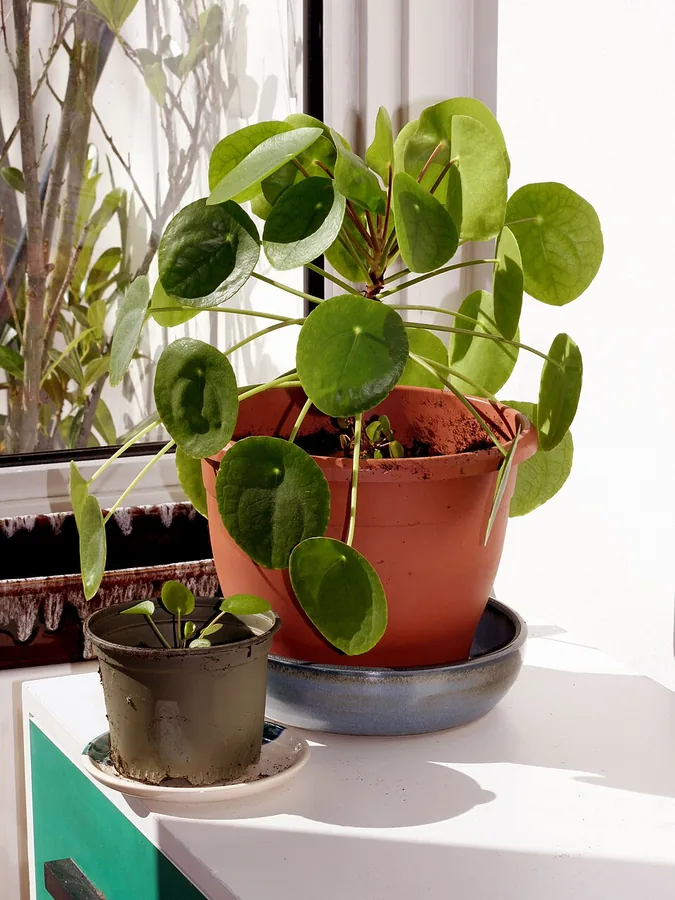
Pilea peperomioides is a small evergreen perennial, sometimes described as a subshrub, native to the mountains of Yunnan and southwest Sichuan in southwest China. The round, coin-shaped leaves ride on slender peltate stalks, a structure that produced the pancake plant, UFO plant, friendship plant, and missionary plant nicknames. It belongs to the family Urticaceae.
Indoors this is a compact grower, reaching about 8 to 12 inches (20 to 30 cm) tall and the same wide. The growth rate is fast, which means a healthy specimen fills out quickly and produces offsets at a steady clip. That even, modest stature is a large part of why it works so well as an indoor subject.
What makes it a beginner-friendly plant is the forgiving range it accepts: bright indirect light, ordinary household temperatures and humidity, and a simple monthly feeding routine in the growing season. The one demand it holds firm on is drainage, since its roots will not tolerate sitting wet. Get the soil and watering right, and the rest follows.
Care
The short version: give Pilea peperomioides bright indirect light, let the top half of the soil dry before a thorough watering, and pot it in a well-drained mix. Hold it between 55°F to 75°F (13°C to 24°C), feed monthly through spring and summer, and detach the pups it produces to expand a collection. Most failures trace back to soggy soil or too little light, so address those two variables first.
Light
Aim for bright indirect light, which this plant uses best, though it accepts partial shade and medium indirect conditions. Starve it of light and you trigger etiolation: the stems elongate, internodes widen, and the plant leans toward the window in a phototropic bend. Because that lean develops on the side facing the brightest source, rotating the pot evens out the exposure and keeps growth symmetrical.
Water
Let the top half of the soil dry before you water, then water thoroughly and let the excess drain away completely. This dry-down cycle matters because the roots need air between drinks, and overwatering drives root rot. A well-drained mix paired with that wait between waterings is what prevents waterlogging in the first place.
Soil
Use a well-drained houseplant potting mix. NC State lists loam or sand with good drainage as suitable, and the plant tolerates a pH of 6.0 to 8.0, so soil chemistry is rarely the limiting factor. Drainage is, since poor drainage is the main hazard for this species and the gateway to rot.
Temperature
Keep it in the range of 55°F to 75°F (13°C to 24°C), the band of ordinary indoor temperatures. Two situations stress the foliage at the edges of that comfort: cold drafts from doors or single-pane windows, and the dry heat thrown off by a nearby radiator. Position the plant clear of both.
Humidity
Average household humidity is enough, and there is no target percentage to chase. Pushing humidity too high backfires, because excess moisture in the air favors bacterial leaf spot. The control that actually matters here is air circulation, not misting, which keeps foliage surfaces from staying wet.
Feeding
Apply a balanced houseplant fertilizer monthly through spring and summer, when the plant is in active growth and able to use the nutrients. As light drops in the darker months and growth slows, reduce feeding accordingly. Matching fertilizer to the plant's demand avoids pushing salts the roots are not drawing on.
Pruning
Pruning needs are minimal. Remove damaged or leaf-spotted foliage promptly, which both limits disease spread and opens up air circulation around the remaining leaves. Pinching off basal pups is the other routine cut, useful for keeping the parent tidy or for harvesting offsets to propagate.
Repotting
Repot every 1 to 2 years in spring or early summer, or sooner if the plant goes rootbound. The telltale signs are roots emerging from drainage holes, a pot crowding with pups, and soil that dries faster between waterings as roots displace the mix. Spring timing lets the plant recover into the active growing season.
Size & spacing
Plan for a compact footprint: roughly 8 to 12 inches (20 to 30 cm) tall and the same across at maturity. Because the fast growth rate also means a steady supply of pups around the base, give the pot a little breathing room and rotate it so the whole plant stays evenly lit and shaped.
Troubleshooting
Nearly every problem on this plant resolves to a light or moisture imbalance, with a few pests and one bacterial disease rounding out the list. Read the symptom, identify the underlying cause, then correct the condition rather than the leaf. The disorders below appear in the order you are most likely to encounter them indoors.
Wilting And Mushy Stems Despite Wet Soil
Collapse and soft, mushy stems while the soil stays wet is the signature of root rot from waterlogging. Healthy roots are firm and white; rotting ones turn brown, soft, and mushy. Stop watering, repot into fresh well-drained mix while trimming away the rotted roots, and move it to a draining container.
Fix:
- Stop watering and allow soil to dry
- Repot into fresh, well-drained mix, trimming away soft, rotted roots
- Ensure the container drains freely
Fine Webbing And Stippled, Bronzed Leaves
Fine webbing alongside stippling and speckled or bronzed leaves indicates spider mites, which are favored by warm, dry air. Rinse and wipe the foliage to knock them loose, then treat with insecticidal soap or horticultural oil and repeat the application. Keep the plant isolated from others until the infestation is controlled.
Fix:
- Rinse foliage and wipe leaves to dislodge mites
- Treat with insecticidal soap or horticultural oil, repeating as needed
- Isolate the plant from other houseplants until controlled
Brown To Black Mushy Spots On Leaves
Brown to black mushy spots are the mark of bacterial leaf spot, promoted by excessive humidity and foliage that stays wet. Remove and dispose of the affected leaves, lower the humidity, and raise air circulation around the plant. Water at the soil so the leaves stay dry, since wet surfaces are what the bacteria exploit.
Fix:
- Remove and dispose of affected leaves promptly
- Decrease humidity and increase air circulation
- Avoid wetting the foliage when watering
Leggy, Stretched Growth Leaning Toward The Light
Elongated stems, fewer leaves, and a pronounced lean toward the brightest source point to light starvation. This is etiolation: deprived of adequate light, the plant stretches its internodes and bends phototropically in search of more. Move it to bright indirect light, filter a strong window with a sheer curtain, and rotate the pot weekly to straighten new growth.
Fix:
- Move to a spot with bright, indirect light
- Filter strong light through a sheer curtain rather than placing in deep shade
- Rotate the pot periodically so all sides receive even light
Curling, Cupping, Or Distorted Leaves
Leaves that curl, cup, or warp usually signal light or water stress: too much direct sun, too little light, or watering that swings between bone dry and soggy. Shift the plant out of direct sun into bright indirect light and settle into steady watering. Check the leaf undersides for pests as well, and expect new growth to flatten once conditions stabilize.
Fix:
- Move out of direct sun to bright, indirect light
- Keep watering even, avoiding both drying out and waterlogging
- Maintain stable temperatures away from drafts and heat sources
Yellowing Of The Lower, Older Leaves
A few lower leaves yellowing is often just normal senescence, the plant retiring its oldest foliage. When that yellowing pairs with persistently soggy soil, though, it points to overwatering in a poorly draining mix. Let the top of the soil dry before watering, confirm free drainage, and pull the spent leaves.
Fix:
- Allow the top of the soil to dry before watering again
- Ensure the pot has drainage and uses a well-drained mix
- Remove yellowed leaves
Toxicity
NC State Extension lists Pilea peperomioides as safe for pets and children. It carries none of the toxins that make other houseplants hazardous, so no poisoning occurs across the species below. A curious nibble may still bring a passing gastrointestinal upset, the same way any plant matter can, but that is irritation rather than toxicity.
Safe for
People · Cats · Dogs · Horses · Rabbits · Livestock · Birds
Cats None
Cats are safe around this plant. NC State Extension lists it as safe for pets, and it holds none of the toxins that endanger curious cats. A nibble might cause a brief stomach upset, but no poisoning.
Dogs None
Dogs are in the clear as well. The plant is non-toxic to dogs, carrying nothing that would poison one that chews a leaf. At most a sampled mouthful brings a passing digestive grumble, nothing more.
Horses None
Horses can graze near it without concern. It is safe for horses, free of the compounds that make other plants risky to them. Any reaction would amount to ordinary plant-matter irritation, not toxicity.
Rabbits None
Rabbits are unharmed by it. The plant is safe for rabbits, holding no toxins that would poison a nibbling one. A taste may pass through with a fleeting tummy upset and nothing worse.
Livestock None
Livestock, meaning cattle, goats, and sheep, are safe around this species. It carries none of the toxins that threaten grazing animals, so no poisoning follows a mouthful. Expect at most a transient gastrointestinal upset.
Birds None
Birds are safe near it too. The plant is non-toxic to birds, with nothing in its tissue that would poison one that pecks at a leaf. Any upset would be brief and minor, not a true poisoning.
People None
People are safe as well. NC State lists it as safe for children, and it bears none of the hazardous toxins found in other species. A nibble might unsettle a stomach the way any plant matter can, but no poisoning occurs.
No special handling precautions documented by approved sources
How to propagate
Few houseplants multiply as willingly as this one. The plant pushes pups from the base and rhizome, and that habit of sharing offsets is exactly why the names friendship plant and missionary plant stuck. Division and cuttings give you two further routes when you want them.
Offsets & pupsEasy
Spring to summer · Several weeks
Pups are the easiest and most reliable route. These offsets arise from the base and rhizome; detach each one, pot it individually, and it will establish in several weeks. The plant produces them readily, which is the practical origin of its friendship and missionary plant names.
DivisionEasy
Spring at repotting · Several weeks
Division suits a crowded clump at spring repotting. Split the clump so that each division keeps its own roots, then pot the sections separately. Expect them to settle in over several weeks.
Stem cuttingsModerate
Spring to summer · Several weeks to root
Stem and leaf cuttings are a moderate-difficulty backup, used mainly when no pups are available. Take them in spring to summer and expect several weeks to root. They work, but they ask more patience than pups or division.
Myths
Leaf cuttings are the only way to propagate a Chinese money plant.
The most reliable method is the pups, the basal and rhizomatous offsets you detach and grow on individually. Stem and leaf cuttings are viable but slower and fussier by comparison. The very ease of sharing pups is what gave the plant its friendship and missionary plant names.
It needs very high humidity to thrive indoors.
Moderate humidity is fine, and NC State notes the plant tolerates ordinary household air. Pushing humidity too high actually predisposes it to bacterial leaf spot, so air circulation is the controlling factor, not misting. Routine misting does more to wet the leaves than to help the plant.