Vegetable · Brassicaceae
Broccoli
Brassica oleracea Italica Group
Grown for cool weather and steady moisture, broccoli yields a main head followed by weeks of side shoots.
Full sun
Every 3–5 days
32–77°F · 0–25°C
55–85 days
Overview
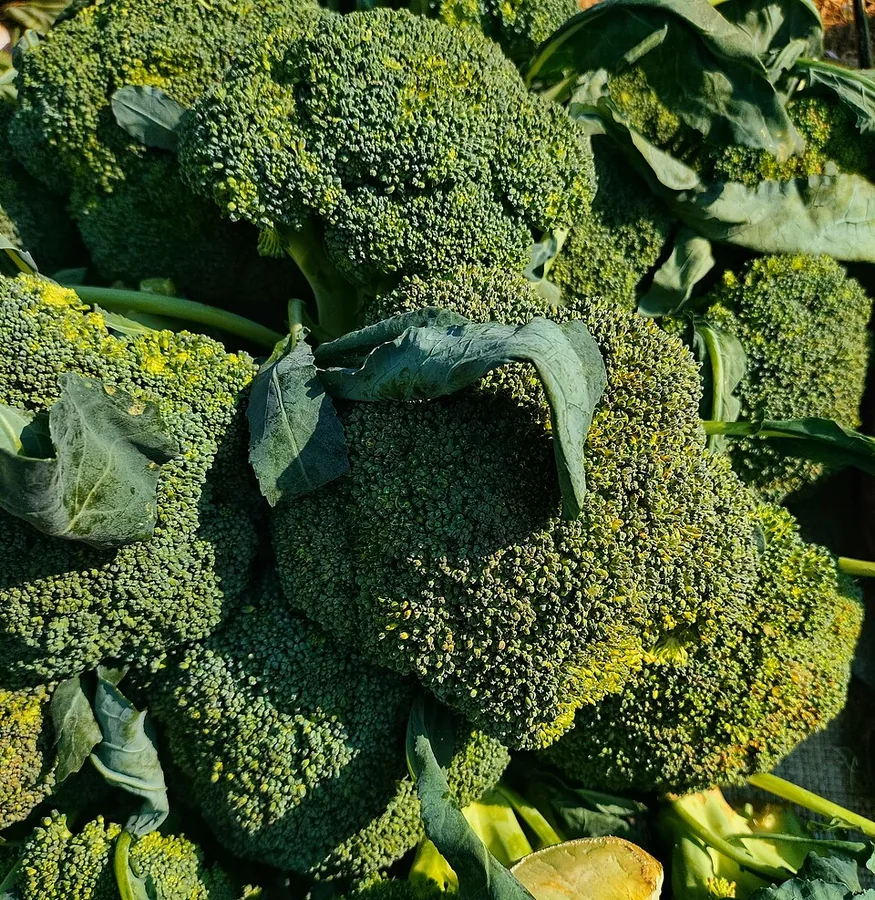
Broccoli belongs to the cabbage family and is grown for the dense cluster of immature flower buds, cut before anthesis. It derives from wild cabbage and falls within the same species as cauliflower, kale, and Brussels sprouts. Cultivated as an annual, it accommodates a spring crop, a fall crop, or both within one bed.
Timing governs the outcome because head quality depends on temperature during development. Schedule transplanting so the head matures under cool conditions, since heat drives the buds to open into yellow flowers and terminates the harvest prematurely. Met that requirement, the plant yields a firm terminal head and then continues to produce side shoots from the leaf axils for several weeks.
Broccoli demands consistency rather than intensive intervention. As a heavy feeder it requires fertile soil, uniform moisture, and full sun, and it attracts a predictable pest complex that floating row cover excludes effectively. Supply those conditions and it ranks among the most productive crops in the garden.
Care
The short version: full sun, fertile soil amended with compost, and uniform moisture of 1 to 1.5 inches of water per week. Schedule the crop so the head matures in cool conditions, fertilize generously, and cut the head while the buds remain tight.
Light
Broccoli requires full sun, a minimum of 6 to 8 hours daily, to develop a firm head, because adequate photosynthesis underpins head density. Light afternoon shade is tolerable where springs warm rapidly, and that shade moderates temperature enough to delay bolting.
Water
Maintain uniform soil moisture near 1 to 1.5 inches of water per week. A single deep weekly soaking wets the root zone more effectively than frequent light applications, and moisture is most critical during head formation, since water stress arrests development.
Soil
Establish broccoli in fertile, well drained loam amended with compost or well-rotted manure. A pH of 6.0 to 7.0 is suitable, and the near-neutral end suppresses clubroot, whose pathogen favors acidic conditions.
Temperature
Broccoli is a cool-season crop optimal from 32°F to 77°F (0°C to 25°C). It withstands light frost, but sustained heat above about 80°F (27°C) induces bolting in the head before harvest.
Humidity
Ambient outdoor humidity is adequate, so no target value applies. Air circulation is the operative factor, because crowded, humid foliage favors the caterpillars and rots that affect brassicas.
Feeding
Broccoli is a heavy feeder with high nitrogen demand. Incorporate a balanced fertilizer before planting, then apply a nitrogen side-dress roughly 3 to 4 weeks after transplanting to sustain vegetative growth that precedes head formation.
Pruning
No structural pruning applies. Cut the terminal head with about 6 inches of stem while the buds remain tight, retain the plant to encourage axillary side shoots, and remove senescing lower leaves.
Repotting
Repotting does not apply, as broccoli is a garden annual. Transplant seedlings to the garden at 5 to 8 weeks old, before the root system becomes constricted, because rootbound transplants are predisposed to button after planting.
Size & spacing
Mature plants reach 18 to 35 inches (45 to 90 cm) in height and a comparable spread. Allow 18 to 24 inches (45 to 60 cm) between plants to provide air movement and adequate nutrient supply per plant.
When to plant
Broccoli performs at the cool margins of the season because its head tolerates neither summer heat nor hard cold. Sow indoors in late winter for a spring crop or in July for a fall crop, transplant the hardened-off seedlings while conditions stay cool, and harvest the terminal head before either extreme arrives.
Northern hemisphere
Southern hemisphere
Typical months for a temperate climate: start earlier in warm zones, later where spring frosts linger.
- Sow: 6-8 weeks before the last spring frost (early to mid-April in cold climates); sow again in early to late July for a fall crop
- Plant: Set hardened-off transplants out around 2-3 weeks before the last spring frost; transplant the fall crop in mid to late summer
- Harvest: Harvest the main head in late spring to early summer (spring crop) or in autumn (fall crop) when it is 3-6 inches across and buds are still tightly closed; side shoots follow for several weeks
Hardiness
USDA hardiness zones: 2–11
Temperature: down to -46°C
Troubleshooting
Most broccoli disorders appear at the head or the roots, and the majority resolve to temperature or scheduling errors. Identifying the symptom early often preserves the current crop or informs the next planting. Match the observed sign below, then intervene while the response still helps.
Bud clusters separating and progressing to yellow bloom
This is bolting, the reproductive progression of the head triggered chiefly by sustained temperatures above about 80°F (27°C) during maturation. Delayed harvest and water stress accelerate the process. Cut the head as soon as the buds begin to loosen, since quality declines rapidly, and schedule subsequent crops to mature under cool conditions.
Fix:
- Harvest immediately at the first sign of loosening buds; quality declines fast
- Cut bolted heads off so side shoots may still form in cooler weather
Midday wilting and yellowing despite adequate irrigation
The cause typically lies in the roots. Lift a wilting plant: white legless maggots and tunneled roots indicate cabbage root maggot, whereas swollen, knotted galls indicate clubroot, a soilborne pathogen favored by acidic ground. Destroy infected plants rather than composting them, protect remaining plants with row covers or stem collars, and rotate brassicas out of the bed for three to four years.
Fix:
- Remove and destroy infested or infected plants (do not compost clubroot material)
- For root maggot, protect remaining plants with row covers or collars at the stem base
- For clubroot, lime soil toward pH 7 and rotate out of brassicas for several years
Premature, undersized head on an immature plant
This is buttoning, a premature transition to heading induced by vernalizing cold that exposed young transplants to temperatures near or below 40°F (4°C). Oversized or rootbound seedlings and establishment stress predispose plants to the same response. The undersized head seldom enlarges, so harvest it and replant with stocky transplants scheduled to the season.
Fix:
- Harvest and eat the small head; the plant rarely sizes up afterward
- Keep remaining plants evenly watered and side-dress with nitrogen
- Replant with fresh, properly sized transplants timed to the season
Irregular leaf holes accompanied by green larvae
The primary agent is the imported cabbageworm, the velvety green larva of the white cabbage butterfly, frequently accompanied by cabbage loopers and diamondback moth larvae. Inspect leaf undersides and the head for larvae and frass. Handpick visible larvae, apply Bt or spinosad while larvae are small, and exclude the adults with row cover installed at transplanting.
Fix:
- Handpick caterpillars
- Apply Bacillus thuringiensis (Bt) or spinosad per label while larvae are small
- Soak harvested heads in cold salted water to drive out hidden caterpillars
Toxicity
Broccoli is an edible crop and presents no toxic risk. No part of the plant is poisonous to pets, livestock, or people, and the entire head and stem are edible. The only consideration is quantity, since a large volume of raw brassica can produce gas in an animal.
Safe for
People · Cats · Dogs · Horses · Rabbits · Livestock · Birds
Cats None
Broccoli is non-toxic to cats. Most cats disregard it, and a curious nibble produces nothing worse than mild gas.
Dogs None
Broccoli is safe for dogs in small amounts, and many accept a crunchy piece readily. Limit the portion, since a large quantity of raw florets can leave a dog gassy or briefly inappetent.
Horses Safe
Broccoli contains nothing toxic to a horse. Brassicas can be somewhat gas-forming, so present it as an occasional snack rather than a routine feed.
Rabbits Safe
Rabbits can consume broccoli leaves and small portions of head safely. Introduce it gradually, because an abrupt large amount may cause gas.
Livestock Safe
Cattle, goats, and sheep tolerate broccoli and its trimmings without harm. Only sustained, heavy feeding of raw brassicas warrants avoidance.
Birds Safe
Chickens and other backyard birds consume broccoli, both leaves and florets, without difficulty. It serves as a useful green at no cost once the heads are cut.
People Safe
Broccoli is a dietary staple, suitable raw or cooked, with no part of the head or stem inedible. Wash garden-cut heads thoroughly to remove concealed caterpillars and soil.
No special handling precautions; wash garden-harvested heads to remove insects and soil before eating.
Varieties
Broccoli cultivars number in the dozens, divided largely between quick-maturing spring types and heat-tolerant selections. The following are the cultivars most commonly encountered.
De Cicco
De Cicco is an early Italian heirloom that produces a modest central head followed by a prolonged succession of side shoots.
Calabrese
Calabrese is the classic open-pollinated Italian type, characterized by a medium green central head and an abundant run of subsequent side shoots.
Packman
Packman is an early hybrid that heads in about 55 days from transplant, a trait that favors its use in spring crops.
Green Magic
Green Magic is a heat-tolerant hybrid that retains head quality as warm weather arrives, under conditions that would bolt many other cultivars.
Companions
Broccoli grows best beside plants that use space it leaves open or pull its pests away, and worst beside its own brassica cousins, which share the same diseases and crowd it for food.
Plant near
onions: Alliums make efficient use of space among widely spaced broccoli and their strong scent is traditionally credited with deterring some brassica pests
aromatic herbs (e.g., dill, chamomile): Flowering aromatic herbs attract beneficial insects, including parasitoid wasps that attack cabbageworm and other caterpillar pests
beets: Low-growing, light-feeding root crop that does not compete strongly with heavy-feeding broccoli for nitrogen or space
Keep apart
strawberries: Traditionally listed as a poor companion for cole crops; strawberries compete in the bed and are commonly recommended to be kept separate from brassicas
other heavy-feeding brassicas (cabbage, cauliflower, Brussels sprouts) in the same bed: Closely related crops share the same pests and soilborne diseases (clubroot, root maggot) and compete for nutrients; extensions recommend 3-4 year rotation away from all brassicas
How to propagate
Broccoli is propagated by seed, raised indoors and set out as a transplant for either a spring or a fall crop.
SeedEasy
Sow indoors 6-8 weeks before the last spring frost, or sow indoors or direct in early to late July for a fall crop · Germinates in about 4-7 days in warm soil; reaches transplant size in 5-6 weeks (fall crop) to 6-8 weeks (spring crop)
Broccoli is grown almost exclusively from seed. Sow indoors 6 to 8 weeks before the last spring frost, or start a fall crop indoors or direct in July, and expect emergence in 4 to 7 days in warm soil. Harden the seedlings off, set them slightly deeper than they grew in the cell, and space them 18 to 24 inches (45 to 60 cm) apart. Discard leggy or rootbound transplants, since these are the individuals predisposed to button.
Myths
After the terminal head is removed, the plant has finished producing and belongs on the compost pile.
Retained in the ground after the terminal head is cut, the plant continues to produce. Axillary side shoots develop from the leaf axils, and you can harvest them for weeks, particularly through cool fall weather. Removing the plant early forfeits this secondary yield.
Frost ruins a broccoli crop.
As a cool-season crop, broccoli tolerates light frost without injury. Fall plantings continue growing and producing after the first frosts, and cold conditions often improve flavor. Only young transplants warrant protection once temperatures fall below 32°F (0°C).