Vegetable · Brassicaceae
Collard Greens
Brassica oleracea (Viridis Group)
An easy, cold-hardy brassica that goes on producing tender leaves well past the frost that closes down everything else.
Full sun
Every 3–7 days
60–80 days
USDA 2–11
Overview
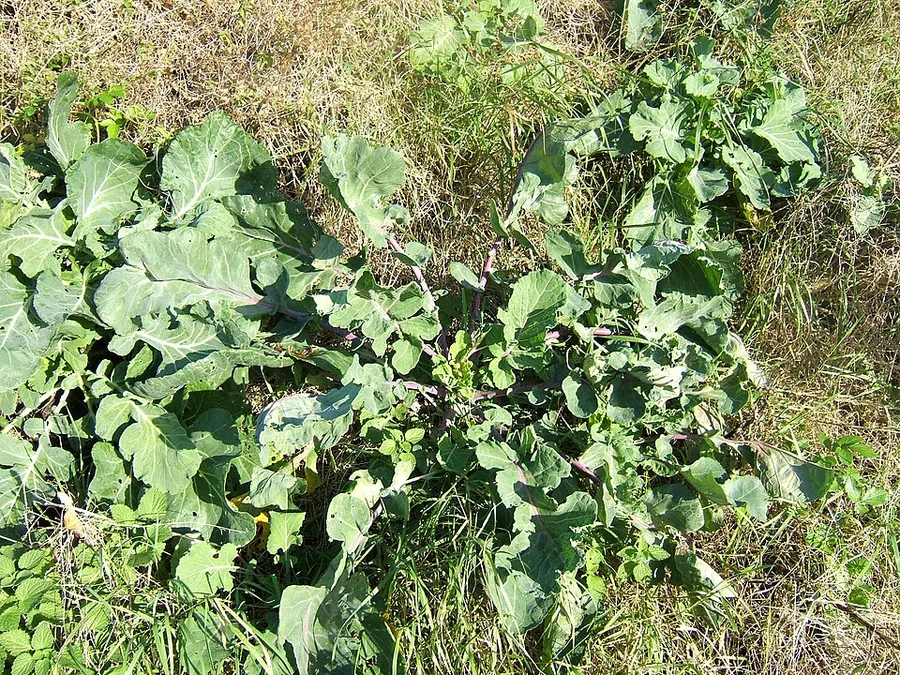
A collard is a leafy brassica, raised not for a head but for its broad, blue-green leaves that come off the plant a handful at a time. Across the South it has been a staple in the garden and the kitchen for generations, yet it succeeds just as well in far northern plots. Within the cabbage family, nothing else endures late-fall cold the way it does.
Much of its easy reputation comes down to how little it asks. Full sun or light shade both serve it; clay, loam, or sand all work once amended; and beyond steady moisture and a measured run of nitrogen, there is little more to supply. New leaves emerge from the central crown, so picking the lower leaves keeps that crown generating fresh growth for months on end.
Cold weather is where the crop pays off. Frost does not set a mature collard back; instead, falling temperatures push sugars into the leaves, deepening their flavor. For that reason many growers go on cutting them deep into winter, long after the tender vegetables have given out.
Care
The short version: give them full sun, though partial shade is tolerated, and a fertile, free-draining soil kept uniformly moist at around an inch of water weekly. Add nitrogen by side-dressing as the plants grow, hold roughly 18 inches between mature plants, and pick the lower leaves once they size up.
Light
Full sun produces the heaviest yield, but collards accept partial shade, and a little shade can actually help a leaf crop where the heat is intense. Stronger light supports more photosynthesis, which is why leaves come in fuller and faster in an open position. Choose the brightest spot you can spare.
Water
Aim for uniform soil moisture, roughly an inch of water each week, enough to wet the root zone to a depth of at least 6 inches. Apply it in the morning: leaves that dry off before night spend fewer hours wet, and that shorter wet period gives fungal and bacterial diseases less chance to establish. Quick-draining sandy soils want watering more often, and the moisture is most critical while the stand is establishing and again as the crop matures.
Soil
Best results come from organic-rich, loamy ground with free drainage, though clay or sand will do once compost has been dug in. Keep the pH in the 6.0 to 7.5 band, on the neutral side, a range that holds clubroot in check because that pathogen prefers acidic conditions.
Temperature
Collards are built for cool conditions and stay productive over a broad band, from roughly 23°F to 86°F (-5°C to 30°C). Established plants come through frost and light freezes unharmed, and that same cold is what builds sugar in the leaf tissue and sweetens it.
Humidity
Whatever humidity the open air provides is sufficient; there is no figure to chase. Airflow carries the real weight. Stagnant, moist air trapped among crowded plants is what allows leaf disease to settle in, which is why generous spacing and watering at the base earn their keep.
Feeding
Begin by incorporating a preplant fertilizer guided by a soil test. About 3 to 4 weeks after planting, side-dress with a nitrogen source such as calcium nitrate, then make a second application later on. A steady nitrogen supply keeps leaves coming, yet restraint matters: too much nitrogen forces soft, lush growth that invites aphids.
Pruning
There is nothing to prune in the usual sense. Harvest works as the management tool: pick each lower leaf once it grows large enough to use and the crown keeps pushing new growth, or cut the entire plant at maturity. Pull off any leaf that yellows or shows disease near the base without delay, since it can seed further infection.
Size & spacing
Expect a mature plant 2 to 4 feet (60 to 120 cm) tall with a spread of 12 to 24 inches (30 to 60 cm). Set plants about 18 inches apart; that gap keeps air moving between them and denies leaf disease the close, still conditions it needs.
When to plant
Two windows suit this cool-season crop. The first opens in spring, the moment the ground is workable; the second falls at midsummer, set up to carry leaves through autumn and into the early part of winter. Most gardeners favor that later planting, because cold drives sugars into the leaves and makes the harvest sweeter.
Northern hemisphere
Southern hemisphere
Typical months for a temperate climate: start earlier in warm zones, later where spring frosts linger.
- Sow: 6-8 weeks before the spring transplant date; sow indoors again in early summer (June) for a fall crop
- Plant: early spring as soon as soil can be worked for a spring crop; mid- to late summer for a fall and early-winter crop
- Harvest: harvest leaves 60-80 days from seeding; flavor sweetens after light fall frosts, and mature plants withstand frosts and light to medium freezes
Hardiness
USDA hardiness zones: 2–11
Temperature: down to -46°C
Troubleshooting
Trouble in collards tends to fall into two groups: leaf-feeding caterpillars and sap-suckers above ground, and bacterial or soilborne disease at the roots. Inspecting leaf undersides weekly and watching the plant's posture catches most of it early. Match the symptom below, then act while intervention still changes the outcome.
Yellow V-shaped patches advancing from the leaf margin
A yellow triangle at the margin with veins darkening inward is the signature of black rot, a bacterial infection that cannot be cured once it takes hold. Remove and destroy affected plants and their debris, and avoid moving through the bed while the leaves are wet, since handling wet foliage spreads the bacteria. Going forward, start with certified disease-free seed, direct early-morning water onto the soil at the crown rather than the leaves, and keep the ground out of brassicas for several years.
Fix:
- Remove and destroy infected plants and debris
- Avoid working among wet plants
- There is no cure once infection is established
Wilting in warm sun while the soil stays wet
Wilting and stalled growth despite wet soil is a tell. Lift a suspect plant and look for swollen, club-shaped galls on the roots; that is clubroot. The deformed roots cannot conduct enough water to keep the top supplied, hence the wilting. Dig out the plant complete with its roots, destroy it, and keep it well clear of the compost. Withhold brassicas from the site for at least four years, and bring the soil pH toward neutral, because the organism thrives in acidic ground.
Fix:
- Remove and destroy infected plants including roots
- Do not compost infected material
- Do not replant brassicas in the affected bed
Ragged holes through the leaves with green frass left behind
Green caterpillars account for this chewing, and three species are responsible: imported cabbageworms, cabbage loopers, and diamondback moth larvae. Remove what you can by hand, then treat the foliage with Bacillus thuringiensis to clear the remainder. Prevention beats treatment here: a floating row cover laid at planting forms a physical barrier, keeping the white butterflies and small gray moths from reaching the leaves to lay eggs.
Fix:
- Handpick caterpillars
- Apply Bacillus thuringiensis (Bt) to foliage
- Cover plants with floating row cover at planting to exclude egg-laying adults
Puckered, curled leaves coated with a sticky film
Twisted, tacky foliage points to aphids, which colonize the undersides of leaves and the folds of new growth and feed by drawing sap. A hard jet of water dislodges them; follow with insecticidal soap worked well onto the undersides where they shelter. The longer-term lever is fertility: hold back on nitrogen, since the soft, fast tissue it produces is precisely the growth aphids seek out.
Fix:
- Dislodge with a strong stream of water
- Apply insecticidal soap, thoroughly covering leaf undersides
- Remove heavily infested leaves
A flower stalk rises and the leaves go bitter
A rising flower stalk and bitter leaves mean the plant has begun bolting, diverting its energy from foliage into reproduction. Two triggers lie behind it: vernalization, where a young plant held in a long cold spell and then met with warmth reads the sequence as a cue to flower, and the natural second-year flowering of a biennial that has overwintered. The stalk cannot be talked back down, so take the leaves still worth eating and resow. In spring, lean on bolting-tolerant cultivars and delay setting transplants out until the cold has eased.
Fix:
- Harvest remaining usable leaves promptly
- Remove the plant and resow for the next season
Toxicity
Nothing in collards is toxic: the leaves are edible, and the ASPCA has not flagged the species as hazardous to pets. Children, dogs, cats, and backyard animals can all share a bed where collards grow. The lone qualification involves goitrogens, compounds present throughout the cabbage family that register as a minor dietary note only at very high raw intake and degrade with cooking heat.
Safe for
People · Cats · Dogs · Horses · Rabbits · Livestock · Birds
Cats Safe
For cats, the leaf carries no toxin, and the ASPCA does not rank it as a poisoning risk. Expect no trouble from a curious nibble. The only thing worth noting is that any leafy green eaten in quantity may loosen the stomach for about a day.
Dogs Safe
Dogs face no poisoning hazard from this plant; plain cooked collards are even folded into some homemade meals. Watch only for gas or a soft stool should a dog gulp down a heap of the raw leaves at once.
Horses Safe
A horse handles collards safely. Because the cabbage family tends toward gas in the gut, hold servings to modest amounts so a grazing horse stays comfortable.
Rabbits Safe
For rabbits, collard leaves are wholesome and turn up regularly in a fresh-greens rotation. Bring any unfamiliar green on slowly, and offer it as part of a mix rather than as the only item.
Livestock Safe
Cattle, sheep, and goats take collards as forage with no poisoning risk. The caution is digestive: a sudden shift onto a large volume of lush brassica can trigger bloat, so build the animals up to it gradually.
Birds Safe
Poultry and other birds enjoy collard leaves, which serve as a wholesome treat. Offering a leaf whole on a hook, or chopped fine, keeps them occupied across the day.
People Safe
For people, collards are a dependable food, eaten raw or cooked with no risk to anyone at the table. The mild goitrogens shared by every brassica become relevant only at very large raw intake and break down in the pot.
No special handling precautions. Like other brassicas, collards contain goitrogenic compounds, a minor dietary note at very high raw intake rather than a poisoning risk.
Varieties
Collard selections span old Southern heirlooms and modern hybrids bred for cold tolerance and bolt resistance. The cultivars below are the ones most often found on a seed rack.
Georgia Southern
A long-standing Southern heirloom prized for heat tolerance; it heads up not at all and instead yields a steady run of big, open leaves.
Vates
The heirloom benchmark: compact, reluctant to bolt, and known for tidy growth carrying smooth, blue-green foliage.
Morris Heading
A cabbage-collard heirloom whose tender foliage bunches into a loose head instead of staying open and spreading.
Champion
A refined selection from Vates, chosen to push cold hardiness further and to resist bolting more firmly.
Blue Max
A productive hybrid whose blue-green leaves show heavy savoy texture.
Top Bunch
A quick, even-growing hybrid suited to picking individual leaves repeatedly over a long run.
Companions
Collards do best kept well away from their cabbage-family relatives, which trade the same pests and soil diseases back and forth.
Keep apart
other brassicas (cabbage, broccoli, kale, Brussels sprouts): They share the same pests and soilborne diseases such as clubroot; extension guidance is to avoid planting collards where any brassica-family crop has grown within the past four years
How to propagate
Propagation runs entirely through seed, one of the simpler jobs in the garden. You can drop seed directly where the plants will grow or raise a few seedlings indoors first.
SeedEasy
Direct sow in early spring or in midsummer for a fall crop; or start indoors 6-8 weeks before transplanting · Germinates in about 5-10 days in cool soil; transplant-ready in 4-6 weeks
Seed is the route, and it asks little. Direct sowing works in early spring or at midsummer for the fall crop, or you can raise transplants under cover, starting them 6 to 8 weeks ahead of setting out. Place seed a quarter to half an inch deep; cool soil brings the seedlings up in 5 to 10 days, with transplant size reached in 4 to 6 weeks. Thin in two stages, first to roughly 6 inches, then harvesting the crowded young plants for the table until the keepers stand about 18 inches apart.
Myths
Collards only grow in the South and won't survive a northern garden.
Of every plant in the cabbage family, the collard tolerates the most late-fall cold. Gardeners in Illinois and Minnesota raise them reliably, still cutting leaves once the season's first frosts have finished off the rest of the garden.
Frost ruins collard greens.
Cold does the opposite of ruin. A mature collard rides out frosts and even light to medium freezes, and the chill prompts sugars to build up in the leaf, which sweetens the flavor rather than spoiling it.