Houseplant · Begoniaceae
Angel Wing Begonia
Begonia coccinea
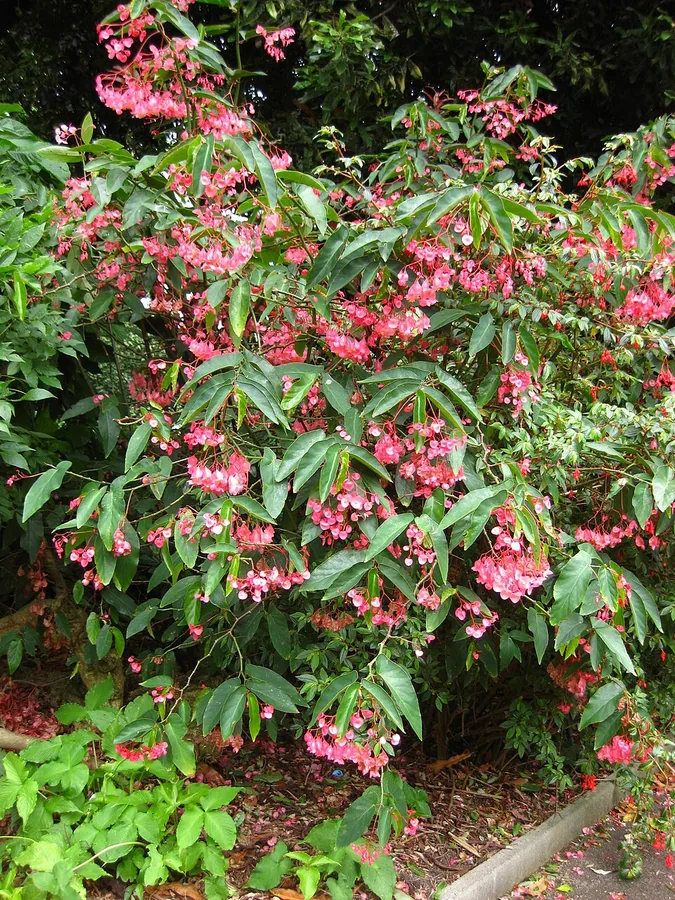
Supply bright light and a disciplined pinch, and the cane-type angel wing begonia returns silver-spotted leaves and pendulous red flowers.
Bright indirect
50–86°F · 10–30°C
USDA 10–11
1–3 ft · 0.3–0.9 m
Overview
The angel wing begonia is named for the asymmetric, wing-shaped leaves carried along its tall canes, often marked with silver flecking. It sits within the cane-type begonias, upright bamboo-stemmed plants native to the forests of Brazil, and has held a place in cultivation indoors for well over a century.
Under good culture it performs on two fronts. The foliage provides year-round interest, while in the warm season the plant produces pendulous clusters of red or pink flowers at the leaf axils. Growth is rapid, reaching 1 to 3 feet indoors, so it occupies a bright corner within a single season.
Classed as easy, it still rewards attention. Bright light, even moisture without saturation, and routine pinching keep it dense and in flower. Without pinching the apical dominance of the canes takes over, and the plant runs tall and bare at the base, foliage gathered at the tips above naked stem.
Care
The short version: bright indirect light with limited morning sun, soil held evenly moist but never saturated, temperatures above 50°F (10°C), high humidity, and routine pinching to maintain a bushy habit.
Light
Provide bright indirect light with a measure of direct morning sun, as at an east-facing window. The plant accepts partial shade, but afternoon sun is strong enough to scorch the foliage, while insufficient light triggers elongation and sparse growth.
Water
Hold the soil evenly moist and allow only the surface to dry between waterings, applying just enough to keep the leaves crisp. Reduce watering through winter as growth slows, and never leave the pot standing in water, because saturated soil rots the roots and stem bases.
Soil
Use a loose, humus-rich potting mix with free drainage. A pH from 5.5 to 7.5, on the acidic to neutral side, suits it, and effective drainage matters more to root health than the precise figure.
Temperature
Optimum range is 50°F to 86°F (10°C to 30°C), and the plant is not frost hardy. Exposure to a draft below 50°F induces leaf yellowing and drop, so keep it away from cold glazing in winter.
Humidity
The species prefers high humidity, above what most interiors hold in winter. Grouping plants or using a pebble tray raises local humidity, but maintain air movement, since static damp air encourages mildew.
Feeding
During active growth from spring through summer, apply a balanced liquid fertilizer at half strength at alternate waterings, which falls at roughly every two weeks. Suspend feeding through the lower-light, slower months.
Pruning
Pinch the branch tips early and at intervals to release lateral buds and keep the habit bushy rather than leggy. Once the target fullness is reached, cease pinching so the plant can redirect energy into flowering.
Repotting
Repot every 1 to 2 years, or sooner when roots emerge from the drainage holes, growth stalls, or water passes straight through the rootball. Advance only one pot size into fresh, free-draining mix.
Size & spacing
Indoors growth is rapid to about 1 to 3 feet (30 to 91 cm) in height with a spread of 1 to 2 feet (30 to 61 cm). Allow space and airflow so foliage dries promptly and mildew is discouraged.
Troubleshooting
Most begonia disorders resolve to one of three inputs: water, light, or air. Excess water at the root zone drives rot, low light elongates the canes, and stagnant air favors fungal mildew. Identify the symptom below, then correct the underlying cause rather than the symptom.
Softened, darkened stem bases with plant collapse
This is root and stem rot, almost always the result of soil that stays too wet, with cool damp air permitting botrytis as well. Once the base softens and roots turn dark and slimy, withhold water and let the medium dry. Excise the rotted tissue, take healthy tip cuttings to carry the genotype forward, and repot into fresh, fast-draining mix.
Fix:
- Withhold water and allow the soil to dry
- Cut away rotted tissue and take healthy tip cuttings to start a fresh plant if rot is advanced
- Repot into fresh, well-drained mix with adequate drainage
Dusty white film on the leaves
A powdery white coating indicates powdery mildew, a fungus that establishes in still, humid air where spores settle undisturbed. Open the air around the plant, remove the most affected leaves, and keep moisture off the foliage. Lowering ambient humidity slows colonization before it spreads.
Fix:
- Improve air circulation around the plant
- Remove and discard affected foliage
- Avoid wetting the foliage and reduce ambient humidity around the plant
Yellowing leaves that wilt and fall
Saturated soil is the usual driver, with overwatering behind most cases as waterlogging starves the roots of oxygen, though a cold draft below 50°F (10°C) produces the same droop. Let the surface dry between waterings, keep the pot out of standing water, and move it from chilly positions. Hold it within 50°F to 86°F (10°C to 30°C) and reduce watering through winter.
Fix:
- Let the soil surface dry between waterings and never let the pot sit in standing water
- Move the plant away from cold drafts and keep it above 50°F (10°C)
- Ensure the pot has drainage and a loose, well-drained mix
Honeydew, cottony masses, and small winged insects
Begonias attract several sap-feeders: mealybugs lodge cottony tufts in the leaf joints, spider mites stipple the foliage and spin fine webbing, whiteflies rise in a cloud when disturbed, and thrips leave silvery scarring. Isolate the plant first, then wipe off mealybugs and rinse the foliage to dislodge mites and whiteflies. Follow with insecticidal soap or horticultural oil, repeating until the population clears.
Fix:
- Isolate the affected plant
- Wipe off mealybugs and rinse foliage to dislodge mites and whiteflies
- Treat with an appropriate insecticidal soap or horticultural oil, repeating as needed
Elongated canes with foliage confined to the tips
Cane begonias elongate and turn leggy under low light without pinching, since unbroken apical dominance pushes growth upward. Relocate the plant to brighter light with morning sun, and pinch the growing tips to release lateral buds. Cut the tallest canes back hard and root the removed shoots as cuttings to rebuild density.
Fix:
- Move to a brighter spot with bright indirect light and some direct morning sun (e.g. an east window)
- Pinch the tips of branches to promote lateral growth and a fuller habit
- Cut back overly tall canes and use the removed shoots as cuttings
Toxicity
Treat this species as one to keep from animals. All parts contain soluble calcium oxalates, concentrated most in the roots, and because these oxalates are soluble they can reach the kidneys of a grazing horse or goat as well as upset a dog or cat. The sap also produces contact dermatitis on human skin, so wash after pruning.
Toxic to
Cats · Dogs · Horses · Rabbits · Livestock · Birds · People
Cats Moderate
A cat that chews the leaves or stems typically responds with drooling and vomiting. The soluble calcium oxalates are responsible, and because the roots hold the highest concentration, the pot belongs well out of reach.
Dogs Moderate
Heavy drooling and vomiting follow soon after a dog nibbles the plant. The same oxalates are involved, and a dog that excavates and chews the roots receives the strongest dose.
Horses Toxic
Grazing on begonia is hazardous to horses, since the soluble oxalates can damage the kidneys. The buried parts carry the greatest toxin load, so a horse should not be allowed to pull at a planting.
Rabbits Toxic
Rabbits should never be given any part of this plant. The oxalate crystals irritate the mouth and digestive tract, and the roots are the most concentrated source.
Livestock Toxic
Cattle, goats, and sheep face the same renal risk as horses when they graze the foliage or roots. The planting should be fenced off from any animal likely to browse it.
Birds Caution
Pet birds may react to the oxalates with oral irritation and digestive upset. Keep inquisitive beaks away from the leaves and stems.
People Caution
The plant is not eaten, and the sap can leave skin reddened and itchy on contact. Wash the hands after pruning and prevent small children from chewing the leaves.
Sap can cause skin irritation (contact dermatitis); the underground parts (roots) are the most toxic part. Keep the plant out of reach of pets and children, and avoid letting animals graze on it
Helpline numbers

United States
ASPCA Animal Poison Control: (888) 426-4435 (fee applies)
Poison Control: (800) 222-1222



Canada
Poison Centres: 1-844-764-7669
Varieties
Angel wing is in effect a group of cane begonias, and a few named selections recur in cultivation. The following are the ones worth recognizing.
'Argenteo-guttata'
This is the original angel wing begonia, a cross of B. aconitifolia and B. coccinea raised in 1888, and its silver-spotted wing-shaped leaves furnished the name for the entire group.
'Canary Wings'
Selected for its bright chartreuse-yellow foliage, this cane type sets heavy clusters of red flowers that contrast against the luminous leaves.
'Corallina de Lucerna'
A vigorous and long-established cultivar, it bears large silver-spotted leaves and pendent sprays of red flowers on tall canes.
'Gryphon'
Distinct from the rest, this selection is grown for its large palmate leaves, silver-streaked above and deep orange-red beneath, rather than for any floral display.
How to propagate
Angel wing begonias are among the most readily propagated houseplants, and one established specimen supplies ample stock material.
Stem cuttingsEasy
Spring to summer · Roots in a few weeks
Stem cuttings are the standard method for cane begonias and among the most reliable in propagation. Take a tip or stem cutting in spring or summer, set it in water or a pot of moist medium, and it roots within a few weeks into a clone of the parent.
Leaf cuttingsModerate
Spring to summer · Several weeks
Leaf cuttings serve as a slower alternative, taken in spring or summer as with stem cuttings. They require several weeks to root and demand more attention, so stem cuttings remain the first choice for most growers.
DivisionEasy
At repotting · Several weeks
At the next repotting of a mature, crowded clump, the plant can be divided into separate units. Each division establishes over several weeks and continues growth as an independent begonia.
Myths
The aerial foliage and stems represent the begonia's most hazardous tissue for pets.
The foliage is a reasonable guess, but the ASPCA records the opposite distribution. The roots underground hold the most toxin, which is a further reason to prevent pets from excavating the pot.
The oxalates in begonias are identical to the insoluble crystals of aroids.
The two are chemically distinct. Begonias contain soluble calcium oxalates, which behave differently from the insoluble crystals of many aroids and can reach the kidneys of a grazing animal that ingests enough.