Bulb · Begoniaceae
Tuberous Begonia
Begonia × tuberhybrida
Provide shade, even moisture, and good airflow, and the tuberous begonia rewards you with enormous summer blooms.
Partial shade
Every 2–4 days
55–75°F · 13–24°C
98–120 days
Overview
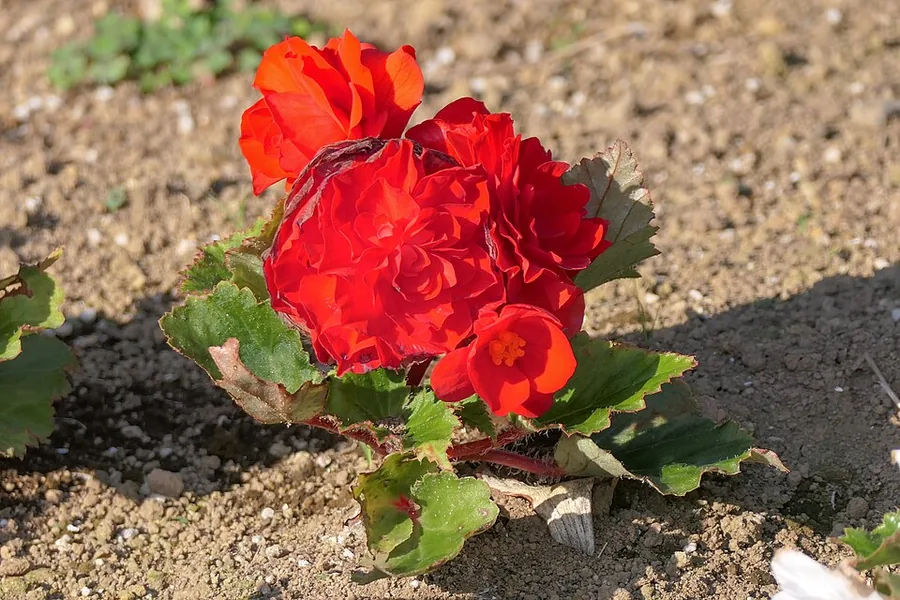
The tuberous begonia earns its keep through flowers that rank among the largest and most saturated a shade garden can produce. It grows from a swollen underground tuber instead of fibrous roots, and that tuber drives the whole cycle: it fuels a long season of summer bloom, then goes dormant through winter to begin again. Plant it in a bed, a container, or a hanging basket as you prefer.
Warm-season by nature, these plants resist neither frost nor harsh sun, which positions them squarely as a shade gardener's flower. The color span runs from soft pastels to deep reds, and the flower forms range from camellia-like doubles to trailers that spill from a basket. Most remain compact at 12 to 24 inches (30 to 61 cm) tall.
Success comes down to respecting two facts. Soggy soil rots the tuber, so drainage and a measured hand at the watering can often decide whether the plant survives. Get the light and water right and it produces big blooms from midsummer to frost.
Care
The short version: partial to dappled shade, soil kept evenly moist but never soggy, rich and well-drained ground, and a cool, breezy spot so the foliage stays dry and disease-free.
Light
Offer them partial to dappled shade, the soft light found beneath a tree or on the cool face of the house. They accept a touch of mild morning or late-afternoon sun, but hot midday sun scorches the leaves and shuts down flowering.
Water
Hold the soil evenly moist but never soggy, watering every 2 to 4 days as the surface begins to dry. Since the tuber stores its own water reserve, a waterlogged pot rots it from underneath. Permit the top to dry slightly between waterings.
Soil
Set them into rich, well-drained loam generously amended with organic matter. A pH from 5.5 to 7.0 suits them, and sharp drainage is the single most critical factor, because standing water is what destroys the tuber.
Temperature
They thrive between 55°F and 75°F (13°C to 24°C). Heat beyond that band stresses the plant and prompts bud drop, while frost terminates the season outright.
Humidity
Average humidity serves them well, so there is no figure to chase. Airflow matters far more than moisture in the air, since still, damp conditions are precisely what mildew and gray mold require to establish.
Feeding
These rank as heavy feeders. Across the growing season, from spring into late summer, supply a dilute balanced fertilizer roughly every two weeks to sustain the large flowers.
Pruning
Pinch the growing tips early to drive bushier growth and more blooms, and remove spent flowers as they fade. Once late summer arrives, cut the plant back and taper the water to ease it into dormancy.
Repotting
Manage them on an annual cycle. Lift the tubers each fall, store them cool and dry through winter, then restart them in fresh medium come spring rather than leaving them in spent, crowded soil.
Size & spacing
Plants grow 12 to 24 inches (30 to 61 cm) tall and spread 12 to 18 inches (30 to 46 cm) wide. Allot each one that full space so air circulates freely and the leaves stay dry.
When to plant
Tuberous begonias follow an annual rhythm organized around the tuber. Begin the tubers indoors in late winter, move the plants outdoors only once the last frost has passed, and enjoy bloom from midsummer until cold weather returns the tuber to dormancy.
Northern hemisphere
Southern hemisphere
Typical months for a temperate climate: start earlier in warm zones, later where spring frosts linger.
- Sow: Start tubers indoors February to April; sow seed December to January for summer bloom
- Plant: After all danger of frost passes, typically late May to early June
- Harvest: Mid-summer through first frost (July to September)
Hardiness
USDA hardiness zones: 9–11
Temperature: down to -7°C
Troubleshooting
Nearly every begonia problem comes back to water or stale air. Keep an eye on the tuber, the lower leaves, and the flowers, because that is where the earliest signs surface. Match what you observe below and act without delay.
A softened, mushy tuber or a decaying stem base
Tuber rot ranks as the gravest failure for this plant, and excess moisture is nearly always the trigger. The diagnostic signs are a foul odor paired with wilting that persists even though the soil is wet. Lift the tuber, excise the rotted tissue, dust the wounds, and reset it in a fresh, fast-draining mix.
Fix:
- Reduce watering immediately
- Lift and inspect the tuber; cut away rotted tissue and dust cut surfaces
- Repot or replant in fresh, well-drained medium
A dusty white film advancing across the foliage
What you are seeing is powdery mildew, a fungus that establishes itself when air goes stagnant among crowded plants. Wiping the coating off offers only a brief reprieve, because it returns until airflow improves. Open up the spacing, direct water at the base, and strip away the most heavily coated leaves.
Fix:
- Improve air circulation and spacing
- Remove and discard affected foliage
- Avoid wetting the leaves when watering
Fuzzy gray mold appearing on blooms and leaves
Botrytis blight, known as gray mold, gains a foothold where the air stays cool, damp, and unmoving, arriving on wet foliage and dropped petals. The infected tissue turns brown and collapses quickly. Strip out the moldy material along with any litter, then thin the plant so leaves can dry between waterings.
Fix:
- Remove infected flowers and leaves promptly
- Increase air circulation and reduce leaf wetness
- Clean up fallen plant debris
Buds yellowing and dropping before they open
Bud drop signals stress, most often from inconsistent watering or a spell of heat and humidity. Aim for soil that stays evenly moist, neither flooded nor parched. Relocating the plant somewhere cooler, shaded, and well-aired calms it, and the next flush of buds will hold.
Fix:
- Maintain even soil moisture without extremes
- Provide shade during hot afternoons
- Move container plants to a cooler, protected spot
Toxicity
This plant is toxic and belongs out of reach of pets and children. Every part contains soluble calcium oxalates, and the buried tuber carries the heaviest concentration. A single bite causes a burning mouth, heavy drooling, and vomiting, so keep the plant, and above all any cut tubers, well out of reach.
Toxic to
Cats · Dogs · Horses · Rabbits · Livestock · Birds · People
Cats Mild
When a cat bites into a leaf or tuber, the oxalates produce a burning mouth and heavy drooling. Vomiting and pawing at the face tend to follow.
Dogs Mild
A dog that chews any part can be expected to drool, develop mouth irritation, and vomit. Because the underground tuber holds the highest toxin load, dogs that dig warrant the most attention.
Horses Moderate
Grazing produces the familiar mouth irritation and drooling, yet a large dose carries greater risk in a horse and may drive the kidneys toward failure.
Rabbits Mild
Those same oxalates irritate a rabbit's mouth and put it off its feed. Store cut tubers and trimmings well beyond reach.
Livestock Moderate
Cattle, goats, and sheep develop a sore mouth and drooling after a nibble, and heavy grazing on the tubers can strain the kidneys.
Birds Caution
Documentation on birds is sparse, but the calcium oxalates that irritate other animals make this one to keep away from them.
People Caution
No part is intended for eating, and contact with sap and tubers can irritate skin and the mouth. Wash your hands after handling and keep the plant away from small children.
Wash hands after handling tubers and sap, which can irritate skin; keep tubers and plants away from pets and children.
Helpline numbers

United States
ASPCA Animal Poison Control: (888) 426-4435 (fee applies)
Poison Control: (800) 222-1222



Canada
Poison Centres: 1-844-764-7669
Varieties
Tuberous begonias span a broad set of flower forms, and a handful of groups account for most of what you will encounter. These are the ones worth recognizing by name.
Camellia (Camelliflora) types
Carrying the most striking flowers in the group, these are full and double and reach up to 3 inches across, with a strong resemblance to a camellia.
Picotee types
A narrow band of contrasting color rims every double bloom, giving the petals an outlined appearance.
Pendula (hanging/trailing) types
Rather than growing upright, these send their stems cascading over the rim of a pot, which makes them ideal for hanging baskets.
How to propagate
There are three ways to increase these plants, from dividing a tuber to rooting a cutting to the patient task of growing from seed.
DivisionModerate
Spring when restarting dormant tubers · Several weeks to sprout and root
When you rouse the dormant tubers in spring, slice one apart so each section retains a minimum of one shoot. Dust every cut surface, because an exposed wound on a tuber is a ready entry point for rot. Expect each division to need several weeks before it sprouts, roots, and starts growing.
Stem cuttingsModerate
Spring as new shoots develop · 3 to 6 weeks to root
After fresh shoots emerge in spring, remove a basal or stem cutting and settle it into a moist, well-drained mix away from direct sun. Allow 3 to 6 weeks for it to root and become its own plant.
SeedDemanding
December to January for summer bloom · 14 to 16 weeks before ready to plant out
Starting from seed is the demanding route. Because the seed is dust-fine, surface-sow it and hold it warm and humid instead of covering it. Sow in December or January, and plan on 14 to 16 weeks before the seedlings are ready to set out for summer bloom.
Myths
Begonias are perfectly safe houseplants for homes with pets.
Soluble calcium oxalates place begonia on the ASPCA list of plants toxic to cats, dogs, and horses, and the buried tuber concentrates the most toxin of any part. A pet that chews it develops an irritated mouth, heavy drooling, and vomiting. Keep the plant, and especially the tubers, out of reach of animals that chew.
Tuberous begonias need plenty of full sun to bloom well.
The truth runs the other direction. These plants want partial to dappled shade and decline in hot, direct sun, which scorches their leaves and triggers bud drop. Gentle morning or late-afternoon light is the most they will tolerate.