Shrub · Ericaceae
Wintergreen
Gaultheria procumbens
Match its acidic soil and cool shade, and wintergreen forms a glossy evergreen mat carrying red berries.
Partial shade
Every 4–7 days
USDA 3–8
3–8 in · 8–20 cm
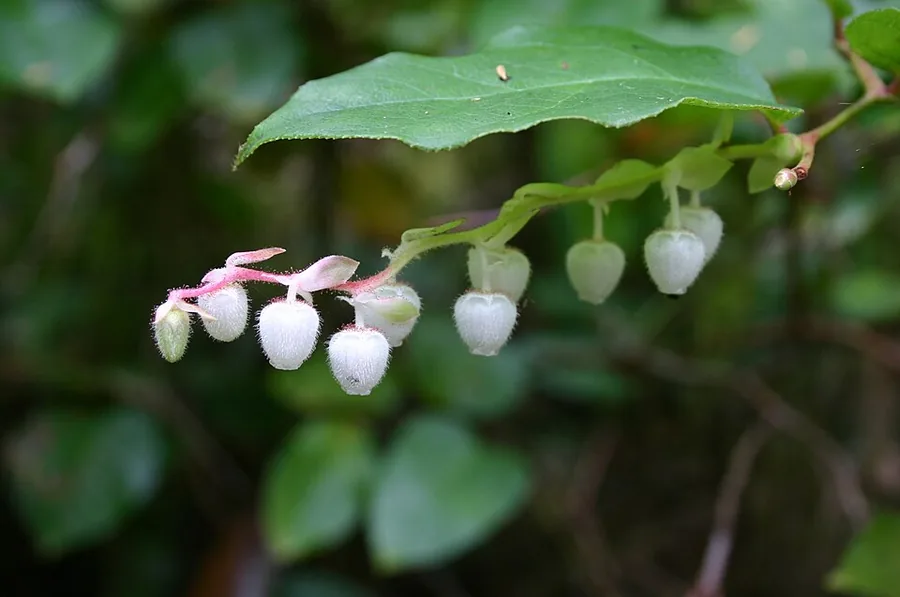
Overview
Gaultheria procumbens is a low, rhizomatous evergreen of the heath family, native to the woodland floor of eastern North America. It advances by underground stems rather than by seed, which is why a colony reads as one continuous mat. The glossy leaves hold the volatile compound behind the teaberry scent, and the red berries persist from fall through winter into the following spring, long past most fruit.
In cultivation it functions as a shade groundcover beneath acid-loving shrubs, holding at 3 to 8 inches (8 to 20 cm) tall. Its value lies in colonizing the cool, damp, acidic ground of a woodland edge, where less specialized plants fail. Because the rhizome extends slowly, establishment is measured in seasons, not weeks.
The governing requirement is consistency. Acidic soil, uninterrupted moisture, and genuine shade sustain the glossy foliage and steady spread, while heat and drought express as marginal leaf browning. Site it correctly and the planting becomes self-sustaining, fruit set included.
Care
The short version: part to full shade, a cool, evenly moist, acidic rooting zone at pH 4.5 to 6.0, and abundant organic matter. Mulch to insulate the roots, fertilize sparingly, and allow for slow growth, since the rhizome extends gradually.
Light
As an understory species, wintergreen performs best in part to full shade. It tolerates limited morning sun, but intense afternoon exposure drives leaf scorch and stresses the colony, because the foliage is adapted to filtered woodland light. Deep shade is closer to its native niche than open sun.
Water
Hold the rooting zone cool and evenly moist, irrigating every 4 to 7 days and more frequently during drought. An established mat withstands brief dryness, but sustained heat and sun in dry soil drive decline, since the shallow rhizome offers little buffer. Mulch moderates soil temperature and conserves that moisture.
Soil
This is an obligate acidophile. Provide organically rich, humus-rich, well-drained woodland soil at pH 4.5 to 6.0, the same regime that suits rhododendrons and blueberries. Above that range, iron becomes chemically unavailable, and the resulting chlorosis yellows the interveinal tissue.
Temperature
Cold hardiness is exceptional, extending to -40°F (-40°C), with an upper limit near 84°F (29°C). Performance peaks where summers stay cool, because prolonged heat, not winter cold, is the species' principal stressor.
Humidity
Ambient outdoor humidity meets its needs, so no target value applies. The operative factor is cool, moist soil and shade, the woodland microclimate, rather than atmospheric moisture around the foliage.
Feeding
Fertility demand is minimal. A single light spring application of an acidifying fertilizer formulated for acid-loving plants suffices, and only where growth is visibly weak. Excess feeding is counterproductive on a slow, low-nutrient-adapted species.
Pruning
Pruning requirements are negligible. A light spring trim or shear to shape the mat or remove winter-damaged growth completes the task, and in most years it is unnecessary.
Repotting
Container specimens rarely require repotting. Move a plant up only on clear indicators: roots circling the container, slowed growth, or soil that dries too rapidly between irrigations.
Size & spacing
Mature height stays low, 3 to 8 inches (8 to 20 cm), with a rhizomatous spread of 6 to 12 inches (15 to 30 cm). Reduce spacing where faster closure of the groundcover is the objective.
When to plant
As an evergreen, wintergreen imposes few seasonal demands. Establish plants in spring or early fall, expect anthesis from June to August, and note that the red berries color from September and persist through winter into the following spring.
Northern hemisphere
Southern hemisphere
Typical months for a temperate climate: start earlier in warm zones, later where spring frosts linger.
- Sow: late winter after cold stratification of seed
- Plant: spring or early fall
- Harvest: flowers June to August; bright red berries September into winter and following spring
Hardiness
USDA hardiness zones: 3–8
Temperature: down to -40°C
Troubleshooting
Nearly every disorder in wintergreen resolves to one of two site failures: a rising soil pH or an exposure too hot and dry for a shade species. The foliage registers both early. Identify the symptom below, then correct the underlying site factor rather than the visible sign.
Interveinal yellowing with green veins and decline
This interveinal yellowing is chlorosis, driven by a soil pH that has risen beyond the species' tolerance. Above pH 6.0, iron shifts to an unavailable form, so the tissue pales while the veins stay green. Return the pH to the 4.5 to 6.0 range with elemental sulfur or peat, mulch with pine needles, and withhold lime and alkaline tap water.
Fix:
- Amend soil with elemental sulfur, peat, or acidifying products to lower pH into the 4.5 to 6.0 range
- Mulch with pine needles or composted leaf litter
- Avoid lime and alkaline tap water
Marginal browning and wilting under sun stress
Leaf scorch develops when transpiration outpaces uptake in a shade plant exposed to sun or dry soil. The margins brown, the foliage wilts, and the colony flags through a heat event. Relocate to part or full shade, maintain even soil moisture, and mulch to keep the rooting zone cool.
Fix:
- Relocate or establish in part to full shade
- Keep soil evenly moist and mulch to keep roots cool
- Water during dry spells
Minimal seasonal spread of the mat
Limited annual gain is slow spread, an expression of the rhizomatous habit rather than a pathology. Wintergreen extends by rhizome, so even a vigorous colony widens only modestly each year. Supply acidic, moist, shaded soil, reduce plant spacing for faster closure, and allow the rhizomes several seasons to fill in.
Fix:
- Be patient; allow rhizomes to creep over several seasons
- Provide ideal acidic, moist, humus-rich shade to encourage spread
- Space plants closer for faster coverage
Sporadic aphids, thrips, or foliar spotting
Aphids and thrips appear intermittently on new growth, and powdery mildew or leaf spot establish where air movement is poor. On a vigorous plant the impact is minor. Dislodge or treat light insect populations, increase air circulation, and avoid wetting the foliage to suppress fungal infection.
Fix:
- Hose off or treat minor aphid and thrip infestations
- Improve air circulation and avoid overhead watering to reduce fungal disease
Toxicity
The garden plant carries low risk, and the ripe red berries are the recognized source of the teaberry flavor. The genuine hazard is the concentrated oil of wintergreen, near-pure methyl salicylate that behaves pharmacologically like a large aspirin dose. Store any essential oil or liniment away from pets and children, and treat cats as the most sensitive, since they lack the enzyme to metabolize salicylates.
Toxic to
Cats · Dogs · Horses · Rabbits · Livestock · Birds · People
Cats Caution
A nibble of leaf or berry generally produces only mild gastrointestinal upset, but cats are the most vulnerable class here. Lacking the hepatic enzyme to conjugate salicylates, they can suffer vomiting, tremors, and organ failure from even a small quantity of the concentrated oil of wintergreen. Keep the essential oil and liniments strictly out of reach.
Dogs Caution
Ingestion of the plant or its berries typically causes no more than transient gastric upset. The concentrated oil is the true hazard, delivering a salicylate load comparable to a heavy aspirin dose and provoking vomiting, gastrointestinal ulceration, and renal or hepatic stress.
Horses Caution
Light grazing of foliage or fruit is low-risk and seldom exceeds mild digestive upset. Body mass limits the plant's threat to a horse, but the concentrated oil of wintergreen is a potent salicylate and should never reach one.
Rabbits Caution
Small quantities of foliage may pass with only mild digestive upset, yet the methyl salicylate present in the leaves disqualifies wintergreen as safe browse. Direct rabbits to their standard forage and exclude any of the oil.
Livestock Caution
Cattle, goats, and sheep can consume a casual mouthful without significant harm, though the same salicylate compound is distributed through the tissues. Heavier grazing, or any exposure to the concentrated oil, is where toxicity begins.
Birds Caution
Wild birds consume the ripe berries through winter without apparent harm, and this frugivory is a primary dispersal mechanism for the seed. The concentrated oil remains off-limits, since salicylates affect small-bodied animals disproportionately.
People Caution
A few ripe red berries provide the characteristic teaberry flavor and are safe to sample. The warning applies to the concentrated oil of wintergreen, near-pure methyl salicylate, in which even a small volume equals a large aspirin dose and is genuinely dangerous to ingest.
Keep the harmless garden plant separate in your mind from the concentrated oil of wintergreen. Store any essential oil, liniments, or wintergreen products well away from pets and children. Cats are especially vulnerable because they lack the liver enzyme needed to metabolize salicylates.
Helpline numbers

United States
ASPCA Animal Poison Control: (888) 426-4435 (fee applies)
Poison Control: (800) 222-1222



Canada
Poison Centres: 1-844-764-7669
Varieties
The trade offers only a few named selections, chosen mainly for heavier fruit, alongside two related species worth distinguishing.
Very Berry
A selection developed for exceptionally heavy crops of large, bright red berries.
Berri Magic
A composite planting combining male and female-type plants in a single container to secure reliable, abundant fruit set.
Gaultheria shallon (salal)
A larger Pacific Northwest congener, a broadleaf evergreen shrub bearing edible dark berries.
Gaultheria hispidula (creeping snowberry)
A diminutive creeping relative with white berries and the same wintergreen flavor, its leaves far smaller than those of G. procumbens.
Companions
Wintergreen pairs naturally with the other acid-loving plants of the woodland garden, tucking in beneath shrubs that share its taste for cool, low-pH soil.
Plant near
Rhododendron: Both are acid-loving Ericaceae; wintergreen makes a low groundcover beneath rhododendrons in woodland shade.
Azalea: Shares the same acidic, moist, shaded woodland conditions as an underplanting.
Blueberry: Fellow acid-loving heath-family plant that thrives in the same low-pH soil.
Mountain laurel (Kalmia): Acid-loving shrub companion for shaded woodland and rock garden plantings.
How to propagate
The most reliable increase exploits the rhizome the mat has already rooted, with cuttings and seed available where time allows.
DivisionEasy
Spring or early fall · One growing season
Division is the most dependable method: lift and separate rooted portions of the creeping mat in spring or early fall. Reset the divisions in acidic, moist, shaded soil, where they consolidate over a single growing season.
LayeringEasy
Spring to summer · One season
The species self-layers as a matter of course, since the creeping stems root at points of ground contact. From spring through summer, sever the rooted runners and transplant them, each establishing within a season.
Stem cuttingsModerate
Summer · Several weeks to months
Cuttings demand more control. Root semi-ripe stems in an acidic, moist medium under high humidity through summer, allowing several weeks to a few months for adventitious roots to form.
SeedDemanding
Sow after cold stratification
Seed is the least efficient route. Dormancy requires cold stratification before germination, which then proceeds unevenly, and seedlings establish slowly thereafter.
Myths
Wintergreen and its red berries are dangerously poisonous because they contain oil of wintergreen.
The garden plant is low-risk, and its ripe red berries are safe for people in small amounts, since they hold only a trace of methyl salicylate. The genuine hazard is the concentrated essential oil, near 99 percent methyl salicylate, which acts as a potent salicylate load comparable to an aspirin overdose and affects cats most severely. The distinction is between the innocuous plant and the concentrated oil.