Shrub · Ericaceae
Drooping Leucothoe
Leucothoe fontanesiana
Match its native niche of shade, acidic soil, and even moisture, and this arching evergreen holds through every season.
Partial shade
Every 3–7 days
USDA 5–8
2–6 ft · 0.6–1.8 m
Overview
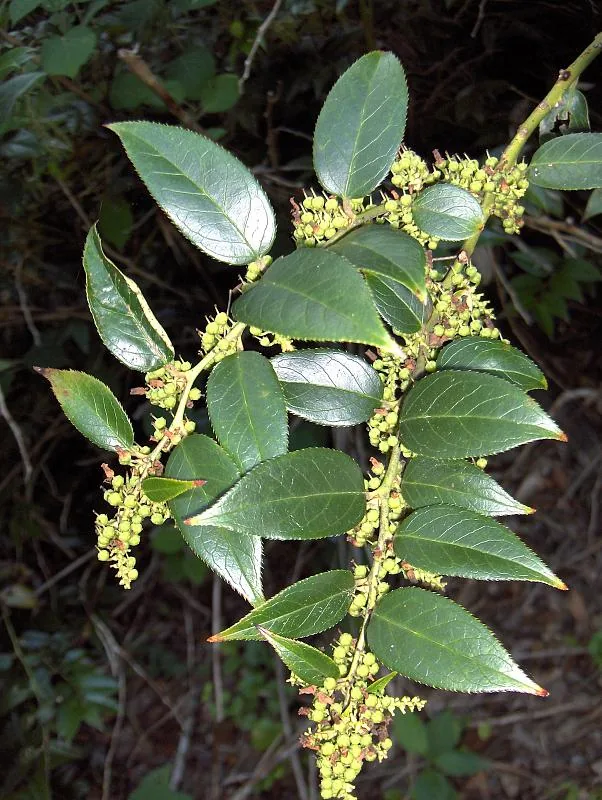
Leucothoe fontanesiana is a low, spreading evergreen shrub native to the southeastern mountains, where it colonizes shaded streambanks and woodland slopes. The arching stems bear glossy, leathery leaves ranged in overlapping tiers, and pendulous racemes of small white flowers hang below the branches each spring. As a member of the heath family, alongside azalea and rhododendron, it carries the family requirement for cool, acidic, humus-rich soil.
Its ecology is that of the understory. It performs where sun-demanding shrubs decline, occupying the shaded ground beneath a tree canopy and knitting the base of taller plantings together. Given room it suckers into a broad colony, and that dense, low, interlacing stem structure is the origin of the name doghobble, from the way it once entangled hunting dogs in the southern woods.
Cultivation succeeds or fails at the root zone. The plant depends on sustained moisture and an acidic substrate, and it has no reserve against drought, desiccating wind, or hot afternoon sun. Supply the correct root environment and demand is otherwise low, with foliage that holds its color through winter and colors to bronze or burgundy in the cold.
Care
The short version: site it in partial to full shade in moist, acidic, humus-rich soil, hold the root zone evenly moist because it has no drought tolerance, and shield it from wind and harsh sun.
Light
Site leucothoe in partial to full shade, the exposure that matches its understory origin and shows it at its best. It will accept a little partial sun, but only where soil moisture is reliable, since the combination of sun and dryness scorches the foliage.
Water
Hold the soil consistently moist and do not let it dry out, because the plant carries no drought tolerance. Irrigate every 3 to 7 days according to weather, and more frequently where it is sited in brighter, sunnier exposure.
Soil
It requires moist, acidic, humus-rich soil with adequate drainage and will grow across textures from sandy to clay provided those conditions hold. Target a pH of 4.5 to 6.0, firmly acidic, the same band that suits azaleas.
Temperature
The shrub is cold-hardy to -20°F (-29°C) and tolerates summer heat to about 90°F (32°C). Toward the cold limit of its range, a sheltered position protects the evergreen foliage through winter.
Humidity
Ambient outdoor humidity is sufficient, so no specific level need be met. Air movement is the more important factor, since stagnant, crowded air is the condition under which leaf spot establishes on the foliage.
Feeding
Apply a single spring feeding of an acidic, ericaceous fertilizer formulated for acid-loving plants. One seasonal application meets the needs of a slow-growing shrub of this kind.
Pruning
Leucothoe is low maintenance and requires little cutting. Prune immediately after flowering to shape the plant, and cut a leggy or overgrown colony back hard to renew the entire stand.
Repotting
Most specimens are grown in the ground and remain there. For a container-grown plant, repot every 2 to 3 years in spring, potting on when roots circle the container or water passes straight through.
Size & spacing
A mature plant reaches 2 to 6 feet (60 to 183 cm) in height and spreads considerably wider, to 2 to 8 feet (61 to 244 cm), as it suckers. Allow room for colony formation and space plants so that air passes freely between them.
When to plant
Leucothoe is hardy across zones 5 to 8 and establishes best from a spring or early fall planting, which lets the roots knit in before the stress of summer heat or winter cold. Flowering runs April to June, when pendent rows of small white bells open beneath the branches.
Northern hemisphere
Southern hemisphere
Typical months for a temperate climate: start earlier in warm zones, later where spring frosts linger.
- Plant: Spring or early fall
- Harvest: Blooms April to June (spring)
Hardiness
USDA hardiness zones: 5–8
Temperature: down to -29°C
Troubleshooting
A correctly sited leucothoe is largely free of trouble, so most complaints trace to the growing conditions rather than to a pest. The foliage is the first indicator, registering stagnant air or a drying root zone before the rest of the plant does. Identify the symptom below, then correct the underlying condition.
General wilt, marginal scorch, and progressive decline
A whole-plant decline of this kind traces to drought stress, and it matters because leucothoe has no drought tolerance to fall back on. Wind and hot afternoon sun raise transpiration beyond what dry or insufficiently acidic soil can supply, so the tissue runs a water deficit. Deep watering restores the soil reservoir, an organic mulch slows evaporation and moderates root temperature, and relocating or screening the plant lowers the evaporative demand at the source.
Fix:
- Water deeply and keep soil consistently moist
- Apply a layer of organic mulch to conserve moisture and cool roots
- Relocate or screen plants from wind and harsh sun
Defined brown or dark lesions across the foliage
These lesions point to fungal leaf spot, a pathogen that establishes where spores land on foliage that stays wet long enough to germinate. Stagnant air and overhead irrigation extend that wet period, and close spacing compounds it. Removing the affected leaves and fallen debris cuts the spore load, while thinning for airflow and watering at the base shorten leaf wetness and deny the fungus its opening.
Fix:
- Remove and discard affected leaves and any fallen debris
- Improve air circulation by thinning or selective pruning
- Avoid wetting foliage; water at the base of the plant
Toxicity
Regard the entire shrub as poisonous, root to flower. All tissues carry grayanotoxins, the heath-family toxin also found in azalea and pieris, and even a few leaves can seriously harm pets, horses, and livestock. No part is edible, so keep clippings and fallen leaves away from animals and children and wash your hands after pruning.
Toxic to
Cats · Dogs · Horses · Rabbits · Livestock · Birds · People
Cats Severe
In a cat, ingestion of any plant part brings on hypersalivation within hours, then vomiting and diarrhea. Weakness and ataxia follow, and at higher doses the grayanotoxins depress blood pressure and disturb cardiac rhythm, the stage at which the case becomes life-threatening.
Dogs Severe
A dog that consumes the foliage typically shows drooling, vomiting, and diarrhea early on. The toxin reduces strength and slows the heart, and a large ingestion can progress to cardiovascular collapse, so veterinary care should not be delayed.
Horses Severe
Horses respond to even a small browse with colic, salivation, and marked depression. The grayanotoxins impair muscle function and disrupt cardiac activity, and a substantial dose can lead to collapse.
Rabbits Toxic
The grayanotoxins that affect cats and dogs render the plant unsafe for rabbits on the same basis. Even a nibble can produce salivation, digestive upset, and weakness, so foliage and prunings should be kept entirely out of reach.
Livestock Severe
Grazing cattle, sheep, and goats can be affected severely, presenting salivation, weakness, and loss of coordination. The toxin disturbs heart rate and rhythm, and a large intake can end in collapse and death.
Birds Toxic
No part of the shrub is safe for birds, as the grayanotoxins pose the same hazard across species. Pet birds and backyard poultry should be excluded from the leaves, flowers, and any fallen clippings.
People Caution
No part of this plant is edible, so it warrants a strict look-but-do-not-taste rule. Ingesting leaves or flowers can cause nausea, vomiting, and a fall in blood pressure, and children should be prevented from placing any part in the mouth.
Keep clippings and fallen leaves away from pets and grazing animals; wash hands after handling.
Helpline numbers

United States
ASPCA Animal Poison Control: (888) 426-4435 (fee applies)
Poison Control: (800) 222-1222



Canada
Poison Centres: 1-844-764-7669
Varieties
The named selections are grown chiefly for the color of their emerging growth and their winter tints rather than for the flowers. The following are the ones most often encountered in the trade.
Girard's Rainbow
Its emerging growth is marbled with pink, copper, and cream over green, a coloration that accounts for its popularity as a color accent.
Scarletta (Zeblid)
The new foliage emerges deep scarlet-red, matures to glossy green over summer, and colors to burgundy-purple with the onset of winter.
Rollissonii
A compact selection whose narrow, fine-textured leaves give it a softer overall texture than the species.
Whitewater
Cream-and-green variegated foliage is borne along distinctly arching stems.
How to propagate
Leucothoe propagates readily because it already spreads vegetatively, and the most dependable methods simply capture the ways it multiplies in habitat.
Stem cuttingsModerate
Summer · Several weeks to a few months to root
Collect semi-hardwood cuttings in summer, treat the cut ends with rooting hormone, and maintain steady humidity so the tissue does not desiccate before roots form. Rooting takes several weeks to a few months. It is the least reliable of the methods, so expect a proportion to fail.
DivisionEasy
Spring or early fall · One growing season
Because leucothoe suckers into colonies, division exploits growth the plant has already made, which is why it is the straightforward option. Lift the clump in spring or early fall, separate the rooted suckers, and each division establishes within one growing season.
LayeringEasy
Spring to summer · Several months to a year
The low, arching branches form roots readily at the point of soil contact, which layering simply directs. From spring through summer, pin a branch to moist soil and allow it to root over several months to a year before severing it from the parent.
Myths
Leucothoe is a safe, harmless landscape shrub around pets and grazing animals.
Every tissue of this shrub contains grayanotoxins, the heath-family compound also present in azalea and pieris. Ingestion of only a few leaves can seriously sicken cats, dogs, horses, and livestock. Site it where curious pets and grazing animals have no access.