Shrub · Ericaceae
Cranberry
Vaccinium macrocarpon
Supply acidic peat, full sun, and steady moisture, and this low creeping vine returns a crop of tart berries each fall.
Full sun
Every 2–4 days
USDA 3–7
4–8 in · 10–20 cm
Overview
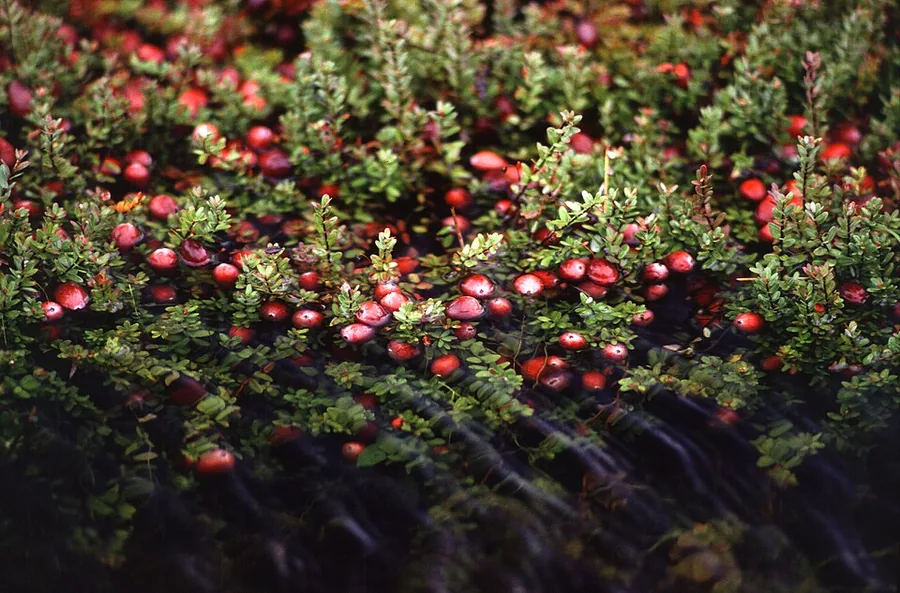
A low, trailing evergreen vine of the cool bogs and wetlands across northern North America, the cranberry sits within the heath family next to blueberries and lingonberries. Like those relatives, it demands very acidic, peaty ground that would leave most garden plants starved. The vines run along the surface and root as they travel, rising only a few inches while spreading broadly.
What marks the cranberry out is its narrow tolerance. The bed has to hold even moisture while still draining, the soil should rest close to pH 4.0 to 5.5, and the vine needs full sun to fruit properly. Late spring brings its pink and white flowers, and the red berries color up over autumn. Once established it is hardy and long-lived, but it asks for patience before it returns the favor.
Treat this as a plant for a committed corner rather than a mixed border. Set it in a contained bog bed or a wet, acidic pocket where the runners can range, keep lawn and vegetables well out of reach, and a single planting can keep fruiting for decades.
Care
The short version: full sun, unbroken even moisture, and acidic peaty soil near pH 4.0 to 5.5. Hold the fertility low, leave room for the runners to range, and thin out the surplus by raking in early spring.
Light
Fruiting is strongest in full sun, meaning 6 or more hours of direct light daily. The plant survives in partial shade, but a shaded bed throws out leafy runners and yields little fruit.
Water
Hold the bed under constant, even moisture, irrigating about every 2 to 4 days so it never dries through. Drainage has to match that supply, because the roots want damp peat rather than a standing pool, so always give surplus water an exit.
Soil
Use acidic, organically rich peat and sand, held consistently moist yet free-draining. Target a pH 4.0 to 5.5, far below the range most plants accept, and the reason cranberries earn a separate bed of their own.
Temperature
Cold hardiness runs deep here, from -40°F to 86°F (-40°C to 30°C). Severe winters present no danger; the limiting factor is summer heat above that ceiling rather than the cold below it.
Humidity
A moderate 40% to 70% range serves the plant well. Steady airflow through the bed counts for more than any precise figure, since stagnant, humid growth is what opens the door to fruit rot.
Feeding
Apply a light feed from spring into early summer using a fertilizer made for acid-loving plants. Cranberries call for low fertility, so restraint matters: surplus nitrogen drives runners and foliage in place of fruit.
Pruning
Keep pruning to a minimum. Rake or mow out the excess trailing runners in early spring to steer the plant toward upright fruiting shoots and to keep air circulating through the bed.
Repotting
Bog-container plantings need repotting only rarely. Refresh the acidic media every 2 to 3 years, and treat roots circling the pot or runners crowding the surface as your cue to act.
Size & spacing
The vines stay low, only 4 to 8 inches (10 to 20 cm) tall, while spreading 1 to 6 feet (30 to 180 cm) across. Allow for that horizontal creep and give each plant the space to mat over the bed.
When to plant
Geared to northern seasons, cranberries fit USDA zones 3 to 7. Plant rooted cuttings or vine pieces in spring as soon as the soil works, look for the pink and white flowers in late spring, and collect the ripe red berries from early autumn onward.
Northern hemisphere
Southern hemisphere
Typical months for a temperate climate: start earlier in warm zones, later where spring frosts linger.
- Plant: Set rooted cuttings or vine pieces out in spring once the soil can be worked (April to May).
- Harvest: Blooms May to June with pink and white flowers; fruit ripens and is harvested September to November.
Hardiness
USDA hardiness zones: 3–7
Temperature: down to -40°C
Troubleshooting
Two underlying causes account for most cranberry problems: a bed whose soil has crept out of the acidic band, or one that stays too wet and airless. Catch the early signals on the foliage and fruit and you can usually fix the cause before the planting declines. Find the match below, then act while the action still counts.
Foliage fading to yellow or red between the veins
These colors signal chlorosis, which sets in once soil rises past roughly pH 5.5 and chemically binds iron so the roots can no longer draw it up. Confirm with a soil test, then drop the reading back into range using elemental sulfur or a top-dressing of fresh acidic peat. Switching to non-alkaline irrigation water and an acid-loving plant food holds the foliage healthy once it recovers.
Fix:
- Acidify soil with elemental sulfur or amend with acidic peat
- Irrigate with non-alkaline water
- Apply a fertilizer formulated for acid-loving plants
Fruit collapsing into soft, sunken, or rotting berries
Warmth combined with standing water and poor drainage gives fungal fruit rot the conditions it needs, and the berries turn soft and discolored as a result. Strip out and dispose of each affected fruit, then correct the underlying cause by opening the bed to better drainage and stronger airflow. Reach for a registered fungicide only when the infection outpaces those cultural fixes.
Fix:
- Improve drainage and air circulation
- Remove and discard infected fruit
- Apply a registered fungicide per label if severe
Plenty of vine and foliage but almost no fruit
A bed thick with trailing runners and short on upright shoots is responding to excess shade or surplus nitrogen, both of which steer the plant into vegetative growth rather than fruiting. Relocate it to full sun and cut back on feeding to redirect that energy. Thinning the surplus runners by raking or pruning in early spring encourages the upright shoots that actually set berries.
Fix:
- Site in full sun
- Reduce nitrogen fertilization
- Rake or prune excess runners in early spring
Toxicity
The reassuring part is that every part of the cranberry, from root to berry, is non-toxic. Its fruit fills kitchens, and the extract is fed to cats and dogs for urinary health. The most a greedy pet risks is a brief stomach upset after eating too many at one go.
Safe for
People · Cats · Dogs · Horses · Rabbits · Livestock · Birds
Cats None
The plant poses no toxicity to cats, and cranberry even features in feline urinary supplements. A cat that overindulges in the fruit may show a passing bout of stomach upset and little else.
Dogs None
There is no harm in a dog eating cranberries, and the extract is given deliberately to support urinary health. At most, a generous serving leaves a dog with loose stool or mild gas.
Horses Safe
Horses grazing near the low vines and tart berries face no risk from the plant.
Rabbits Safe
The foliage and fruit are safe for rabbits to sample, though the berries suit an occasional treat better than regular feeding.
Livestock Safe
No harm comes to cattle, goats, or sheep from cranberry plants or the berries they bear.
Birds Safe
In the wild, birds feed on ripe cranberries and carry the seeds onward, with nothing to fear from the fruit.
People Safe
People enjoy cranberries cooked, dried, or pressed into juice, and they are a holiday and kitchen staple. Eaten raw the berries are intensely tart but in no way unsafe.
No special handling needed; the plant is non-toxic, though eating large amounts of fruit may cause mild digestive upset.
Varieties
Most of the cranberry crop rests on a small set of cultivars selected for color, productivity, and keeping quality. These are the ones worth recognizing.
Stevens
A hybrid combining heavy yields with strong disease resistance, now the commercial cultivar grown more widely than any other.
Ben Lear
Valued for its early ripening and deep pigment, it serves as a frequent parent in breeding work.
Howes
A Massachusetts heirloom whose firm fruit holds up in storage far longer than most.
Companions
Plant near
Lowbush blueberry (Vaccinium angustifolium): Shares the same very acidic, peaty, moist soil and growing conditions.
Lingonberry (Vaccinium vitis-idaea): Another acid-loving evergreen groundcover with matching soil and moisture needs.
Keep apart
Lawn grasses and most vegetables: They need near-neutral soil and cannot tolerate the very acidic, wet conditions cranberries require.
How to propagate
Growers almost always raise cranberries from cuttings or by layering, since both reproduce a chosen cultivar exactly. Seed will work, but it is slow and erratic, so it rarely earns the trouble.
Stem cuttingsModerate
Spring to early summer · Roots in a few weeks; 3 to 5 years to a full fruiting bed
Commercial beds are propagated this way. Insert 6 to 10 inch vine cuttings into damp acidic peat and sand from spring into early summer, holding the medium steadily moist. Rooting follows within a few weeks, though the bed needs 3 to 5 years to knit together and produce a serious crop.
LayeringEasy
Spring to summer · One growing season to root
The vines layer on their own. Trailing runners strike roots at any point of contact with moist soil, so pinning a runner down in spring or summer lets it establish into a fresh plant over one season.
SeedDemanding
After cold stratification in late winter · Several years
Starting from seed seldom repays the effort. The seed demands cold stratification in late winter before it germinates, the seedlings creep along for several years, and the offspring fail to match the parent cultivar.
Myths
Cranberries are aquatic plants that grow submerged in flooded bogs.
Cranberries develop on low creeping vines rooted in moist, well-drained acidic peat rather than underwater. The brief flooding growers apply serves only wet harvest and winter protection. During the growing season the soil is kept drained, never submerged.
The berries are poisonous to dogs and cats.
Plain cranberries carry no toxicity for pets, and the extract is marketed in urinary supplements made for them. Only a large helping might cause mild stomach upset, a reaction common to nearly any fruit.