Ornamental · Alismataceae
Water Poppy
Hydrocleys nymphoides
Set in full sun and warm, still water, water poppy holds glossy leaves at the surface and lifts yellow blooms across the summer.
Full sun
50–90°F · 10–32°C
USDA 9–11
6–12 in · 15–30 cm
Overview
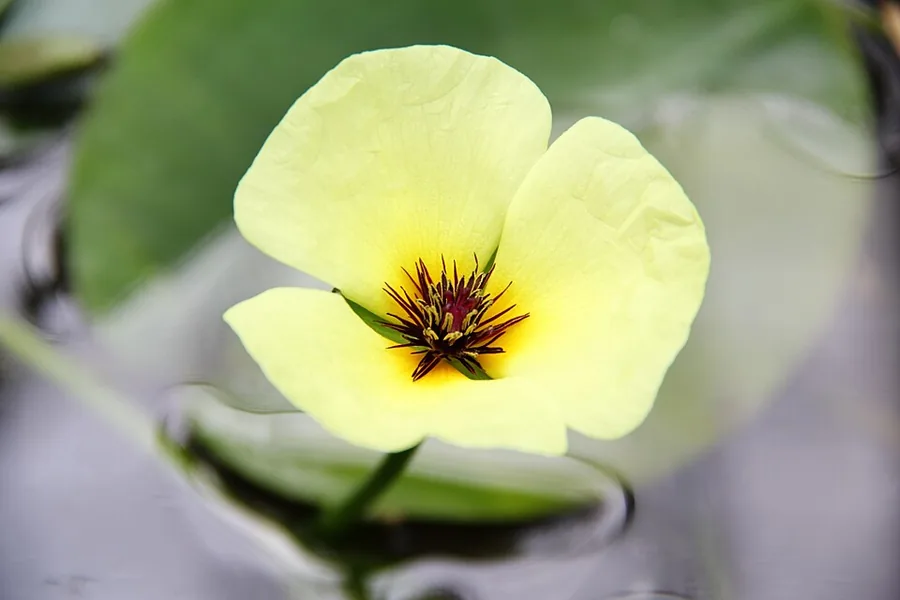
Water poppy is a small floating aquatic in the water-plantain family (Alismataceae), native to warm freshwaters of Central and South America. Its glossy heart-shaped leaves sit at the surface much like a water lily's, and through the warm season it produces cupped yellow flowers, each open for a single day in succession. The common name reflects flower shape rather than any relation to Papaver or to true water lilies.
Culture is straightforward: root the plant in heavy aquatic soil within a container and submerge it under a few inches up to about a foot of still water, keeping the crown below the surface. Warmth and full sun drive fast vegetative growth, with stolons extending across the surface and rooting plantlets at the nodes. That same vigor makes it a liability where winters stay mild, since it can become weedy and invasive, so it is kept contained and out of natural waterways.
Beyond managing its spread, the plant is undemanding. It needs sun, warm water, and periodic thinning, and it faces little pest pressure other than occasional aphids on emergent foliage. Its limiting factor is temperature, because it is frost tender and the first frost is fatal.
Care
The short version: full sun and warm, still water a few inches up to about a foot deep, the crown submerged in heavy aquatic soil, monthly feeding through the growing season, and the container overwintered indoors ahead of frost.
Light
Provide full sun, six or more hours of direct light daily. The plant tolerates partial sun, but flower initiation depends on high light, so shaded plants stay leafy and bloom sparsely.
Water
Being aquatic, it grows submerged in standing water. Set the container under a few inches up to about 12 inches of warm, still water and keep the crown below the surface at all times, since the crown must stay wet to remain active. Still water suits it; moving water does not.
Soil
Root it in heavy aquatic loam or clay in a pond container, which anchors the plant and holds nutrients against leaching. Texture is not critical, as it accepts clay, loam, or sand, provided pH stays within 6.0 to 7.5.
Temperature
It performs across roughly 50°F to 90°F (10°C to 32°C). Metabolism slows as water cools, and frost is lethal, so maintaining water warmth is the decisive factor in keeping it.
Humidity
Humidity is irrelevant to a submerged aquatic, so there is no target to meet. The surrounding water supplies all moisture the plant requires.
Feeding
Through spring and summer, insert an aquatic fertilizer tablet into the soil container about monthly. Feeding the substrate rather than the water column delivers nutrients to the roots and limits enrichment of the open pond.
Pruning
Pruning amounts to thinning and containment. Remove excess trailing stolons and yellowing leaves to hold the plant in bounds and prevent it from closing over the surface.
Repotting
Repot each spring, or once the container fills with roots. Matted roots, declining flower production, and stolons escaping the pot indicate that division and fresh substrate are due.
Size & spacing
Foliage rises only 6 to 12 inches (15 to 30 cm) above the water, but runners extend the plant to 1 to 5 feet (30 to 150 cm) across. Allow for that lateral reach and keep it potted to restrain it.
When to plant
Growth in water poppy is temperature driven, and it halts at the first frost. Hold stock indoors or start it in late winter, plant out only once the cold has passed and the water has warmed, and flowering follows through the summer.
Northern hemisphere
Southern hemisphere
Typical months for a temperate climate: start earlier in warm zones, later where spring frosts linger.
- Sow: Late winter to early spring (seed propagation is difficult; division is preferred)
- Plant: After all danger of frost has passed and water has warmed, late spring to early summer
- Harvest: Summer (June to August), beginning when water reaches about 70 degrees F
Hardiness
USDA hardiness zones: 9–11
Temperature: down to -7°C
Troubleshooting
Most disorders in water poppy resolve to three causes: water that is too cold, light that is too low, or the plant's own stoloniferous vigor. Reading the early symptoms lets you intervene before a minor issue overtakes the pond. Match the signs below, then correct the underlying condition.
Foliage turns translucent or black following cold
Water poppy is frost tender and not hardy below zone 9, so cold is its principal failure mode. As water temperature falls the plant ceases growth, and frost ruptures the tissue, leaving leaves translucent, mushy, or black. Move the container indoors to a bright, warm tub before the first frost, or grow it as an annual and replant in spring.
Fix:
- Before first frost, lift the container and move it indoors to a shallow tub or aquarium with bright light and warm water
- Overwinter as a houseplant or treat as an annual and replant in spring
Stolons and plantlets closing over the water
A surface mat reflects the plant's normal stoloniferous vigor, not pathology. In warm, frost-free water it roots at each node and generates plantlets that quickly cover the surface, outcompeting neighboring plants. Confine it to a sunken container rather than open pond mud, thin the runners routinely, and never introduce it to natural waterways.
Fix:
- Grow in a contained pot rather than planting directly in pond mud
- Regularly thin and remove excess stolons and plantlets
- Do not release into natural waterways
Abundant foliage with few flowers
Sparse flowering on an otherwise healthy plant points to insufficient light or water still below the threshold for bloom. Flower initiation begins once the water reaches about 70°F (21°C), so relocate the container to six or more hours of direct sun and allow the water to warm. A monthly aquatic fertilizer tablet in the substrate supports flowering once temperatures rise.
Fix:
- Move the container to full sun (6 or more hours of direct light)
- Wait for water to warm to about 70 degrees F
- Fertilize with aquatic fertilizer tablets
Honeydew and soft-bodied colonies on emergent leaves
Soft-bodied insects on the emergent foliage are aphids, and the sticky residue is the honeydew they excrete. Dislodge them with a strong stream of water or remove colonies by hand. Chemical pesticides are contraindicated on a pond plant because they harm fish and other aquatic life, so rely on physical removal and natural predators.
Fix:
- Spray aphids off foliage with a strong stream of water
- Wipe or hand-remove colonies
- Avoid chemical pesticides that can harm pond wildlife and fish
Toxicity
For households with animals, water poppy is non-toxic and regarded as safe around pets, livestock, and people. Its position in deep water keeps it largely out of reach, and ingestion of the wet foliage produces at most mild, self-limiting gastrointestinal upset.
Safe for
People · Cats · Dogs · Horses · Rabbits · Livestock · Birds
Cats None
The species carries no identified toxin, so cats are not at risk. Ingestion of the wet foliage may prompt transient drooling or mild stomach upset that resolves without treatment.
Dogs None
Dogs face no poisoning hazard, as the plant contains no known toxic principle. The most a persistent chewer experiences is mild, self-limiting gastrointestinal upset from the sodden leaves.
Horses Safe
Horses can graze the foliage without harm, since it holds no recognized toxin. In practice, an aquatic plant rarely lies within reach of a paddock.
Rabbits Safe
Rabbits are not poisoned by the leaves. Introduce any unfamiliar green in small quantities, however, because abrupt dietary change can disturb a rabbit's gut flora.
Livestock Safe
Cattle, goats, and sheep can browse it safely, as the plant contains no toxin. Its position in deep water generally keeps it beyond the reach of grazing stock.
Birds Safe
Foliage and flowers pose no threat to backyard or pond birds. Waterfowl commonly feed on the soft growth without adverse effect.
People Safe
The plant presents no poisoning risk to people. It is not cultivated as food, so ingestion is not intended, but a child who samples a leaf will come to no harm.
As an aquatic pond plant it is rarely accessible to pets; pets that nibble aquatic foliage may experience mild, self-limiting gastrointestinal upset.
Varieties
The genus offers no horticultural selections here. Only the straight species is cultivated, with no named cultivars in the trade.
Hydrocleys nymphoides (species)
Cultivation is confined to the straight species, distinguished by glossy heart-shaped floating leaves and three-petaled yellow flowers that account for the poppy epithet, with no named cultivars available in commerce.
How to propagate
Water poppy reproduces readily on its own, and vegetative division yields established plants far faster than seed, which is slow and unreliable.
DivisionEasy
Spring to summer during active growth · A few weeks
Division is the preferred method and the simplest way to increase water poppy. During active growth in spring and summer, detach the rooted plantlets borne along the stolons and pot each into aquatic soil, where establishment takes only a few weeks.
SeedDemanding
Spring · Several weeks to months
Seed sowing in spring is feasible but slow and unreliable, requiring anywhere from several weeks to a few months to establish. Most growers forgo it in favor of division.
Myths
Water poppy is a true water lily or a kind of poppy.
Taxonomically it is neither. Hydrocleys nymphoides belongs to the water-plantain family and merely resembles both, floating like a lily and bearing poppy-shaped yellow flowers. The name is a matter of appearance, not lineage, with no relation to Nymphaea or to Papaver.