Ornamental · Violaceae
Viola
Viola cornuta
As a cool-season species, viola delivers abundant, edible flowers from fall right through spring.
Full sun
39–70°F · 4–21°C
USDA 6–11
6–10 in · 15–25 cm
Overview
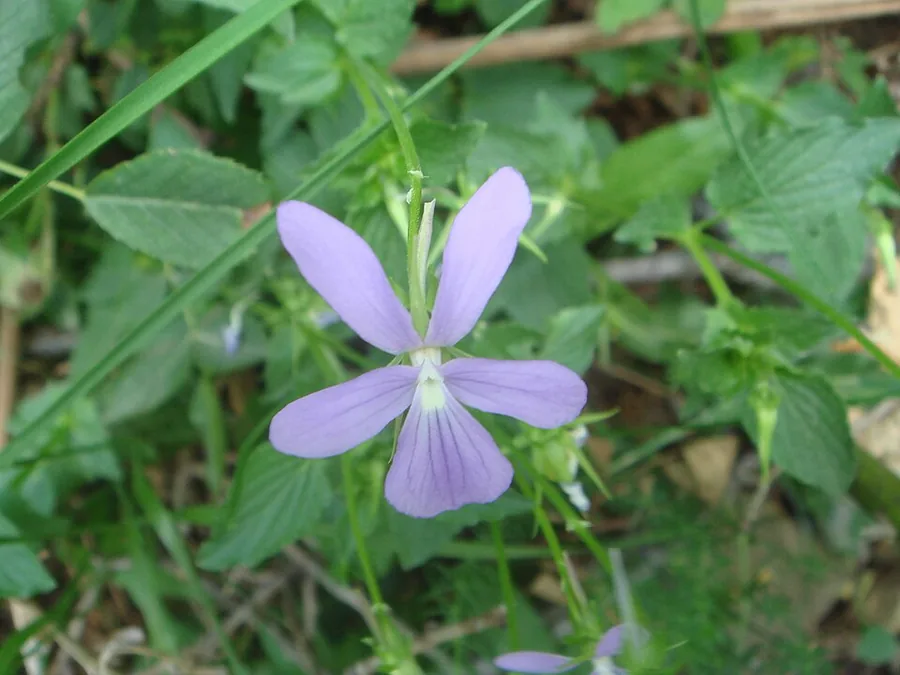
Viola cornuta belongs to the Violaceae and grows as a low, tufted plant that produces small flowers across a broad color range. Gardeners use it for bed edging, window boxes, and containers, where its modest habit and steady bloom earn its place. It makes few demands on soil or attention.
The name viola spans a group of close relatives within one genus. The bedding violas carry many small blooms, the larger-flowered pansies sit in the same genus, and Viola tricolor, the Johnny-jump-up, self-sows its tricolor flowers freely. All share a defining trait: they perform in cool weather and decline as summer heat rises.
Classed as easy, viola suits inexperienced growers. Consistent moisture, sun to light shade, and routine deadheading sustain months of flowering, because removing spent blooms redirects the plant's energy from seed set back into new buds. The flowers are also edible, which extends the plant's use from the border to the plate.
Care
The short version: full sun to part shade, consistent moisture in fertile, well-drained soil, a light monthly feed, and steady deadheading to prolong cool-season bloom.
Light
Viola performs best in full sun during the cool months, though it tolerates partial sun and partial shade. As temperatures climb, afternoon shade reduces heat load and prolongs the display, since the plant is intolerant of summer heat.
Water
Maintain consistently moist but never waterlogged soil. Saturated conditions deprive the roots of oxygen and favor crown and root rot, so irrigate to keep even moisture and allow free drainage.
Soil
Grow viola in moist, fertile, well-drained soil amended with organic matter, which supplies both moisture retention and drainage. Waterlogged ground is the key condition to avoid, because it drives root disease.
Temperature
This is a cool-season species, optimal between 39°F to 70°F (4°C to 21°C). It withstands light frost but responds to sustained heat by stretching and declining as growth outpaces its cool-adapted physiology.
Humidity
Ambient outdoor humidity is adequate, so no target range applies. Air circulation is the more important factor, because still, humid air over crowded foliage promotes downy mildew.
Feeding
Apply a light feed monthly through active growth using a balanced fertilizer. Restrict nitrogen, which promotes vegetative growth at the expense of flowering.
Pruning
Deadheading spent blooms prolongs flowering by preventing seed set and redirecting resources into new buds. The Johnny-jump-up types self-sow, so retaining a few seed heads yields volunteers the following season.
Size & spacing
Mature plants remain compact, reaching 6 to 10 inches (15 to 25 cm) in height and 8 to 12 inches (20 to 30 cm) in spread. That scale suits edging, window boxes, and container culture.
When to plant
Viola is keyed to the cool ends of the season rather than midsummer. Sow seed indoors in late winter or outdoors in late summer, transplant in early spring or fall while temperatures remain low, and expect bloom through spring and fall, persisting over winter in the milder zones 6 through 11.
Northern hemisphere
Southern hemisphere
Typical months for a temperate climate: start earlier in warm zones, later where spring frosts linger.
- Sow: 8 to 10 weeks before transplanting out in cool weather
- Plant: Early spring or fall while temperatures are cool
- Harvest: Spring and fall in cool weather; may persist over winter in mild climates and declines in summer heat
Hardiness
USDA hardiness zones: 6–11
Temperature: down to -23°C
Troubleshooting
Nearly all viola problems reduce to two conditions: excess soil moisture or rising heat. Because the earliest evidence shows on the leaves and flowers, close observation lets you intervene before losses occur. Identify the symptom below, then treat while intervention still changes the outcome.
Sudden wilt and collapse over a blackened crown
Persistently saturated soil sets up crown and root rot, which can collapse a plant rapidly. Lifting an affected plant reveals mushy, discolored roots and decay at the soil line. The disease is not curable, so discard the plant, correct drainage before replanting, and reduce irrigation frequency.
Fix:
- Remove and discard affected plants
- Improve drainage before replanting
- Reduce watering frequency
Chewed leaf holes or distorted, colonized new growth
The cool, damp conditions viola favors also suit two pests. Slugs feed after dark, cutting ragged holes and leaving mucus trails, while aphids colonize the tender shoots and distort the buds as they feed. Manage slugs by hand-picking or trapping, dislodge aphids with a forceful water spray, and reserve insecticidal soap for heavy colonies.
Fix:
- Hand-pick slugs or use traps and barriers
- Knock aphids off with a strong spray of water
- Apply insecticidal soap to heavy aphid infestations
Yellow upper-surface blotches over gray undersurface sporulation
These are the signs of downy mildew, a disease favored by cool, wet, humid weather. Inverting a symptomatic leaf reveals grayish to purple sporulation beneath the yellowed patches. Remove infected foliage, increase spacing to improve airflow, and irrigate at the base in the morning to limit the leaf wetness the pathogen requires.
Fix:
- Remove and discard infected foliage
- Improve air circulation and reduce leaf wetness
- Avoid overhead watering
Elongated, sparse growth under rising summer heat
As a cool-season plant, viola responds to summer heat with elongated stems and reduced flowering once warm weather is established. Light shearing with deadheading can force a final flush, and afternoon shade with steady moisture extends the season briefly. In most gardens the practical response is removal, replacement with summer annuals, and fresh planting in fall.
Fix:
- Deadhead and shear lightly to encourage rebloom
- Provide afternoon shade and consistent moisture
- Replace with summer annuals once spent
Toxicity
On toxicity the record is unambiguous. The ASPCA classifies the plant as non-toxic to cats, dogs, and horses, and the flowers are edible to people, so viola carries no poisoning risk in a household with pets or children.
Safe for
People · Cats · Dogs · Horses · Rabbits · Livestock · Birds
Cats None
Non-toxic to cats. Ingestion of a leaf or flower produces no poisoning.
Dogs None
Non-toxic to dogs, so investigative chewing carries no toxic risk.
Horses None
Listed as non-toxic to horses; grazing beside a planting poses no hazard.
Rabbits Safe
Rabbits may consume the foliage and flowers without adverse effect.
Livestock Safe
Cattle, goats, and sheep can graze around viola without risk.
Birds Safe
Backyard birds and poultry can feed on the plant safely.
People Safe
The flowers are edible and widely used as a garnish, so the plant is safe for people, children included.
Varieties
The genus runs to hundreds of forms, but a few series and long-standing selections dominate the trade. The following are the ones worth identifying by name.
'Sorbet' series
A compact, free-flowering bedding viola selected for cold tolerance and early bloom over a wide color range.
'Penny' series
A small-flowered viola valued for even, vigorous performance sustained through spring and fall.
Johnny-jump-up (Viola tricolor)
A tricolor form in purple, yellow, and white that self-sows freely and naturalizes across the garden.
'Etain'
A fragrant, more perennial viola bearing soft creamy-yellow flowers margined in lavender.
How to propagate
Viola propagates readily by three routes, from seed, by division of established clumps, or from cuttings, each suited to a different situation.
SeedEasy
Sow indoors 8 to 10 weeks before transplanting in cool weather, or direct sow in late summer for fall and spring bloom · 6 to 10 weeks to transplant size
Seed is the standard method. Sow indoors 8 to 10 weeks ahead of transplanting into cool weather, allowing 6 to 10 weeks to reach transplant size, or direct sow in late summer for fall and spring bloom. The Johnny-jump-up types self-sow freely once established, requiring no further effort.
DivisionEasy
Spring or fall · A few weeks
Established perennial clumps divide readily in spring or fall. Lift a clump, separate it into sections, and replant, and the divisions establish within a few weeks.
Stem cuttingsModerate
Spring or early summer · 3 to 4 weeks to root
Cuttings demand more precision. Take tip or basal cuttings from non-flowering shoots in spring or early summer, which root in roughly 3 to 4 weeks.
Myths
Violas and pansies are the same plant.
They are close relatives within a single genus, but they are not equivalent. The viola forms of Viola cornuta produce many more small flowers and tolerate somewhat more heat, whereas pansies yield fewer, much larger blooms. Select violas for a longer, more durable display and pansies for flower size.
Viola flowers are unsafe to eat.
The flowers are edible and commonly used as a garnish on food and cakes. The record lists the plant as non-toxic across all categories. Both the flowers and the whole plant are safe, making viola appropriate for spaces shared by people and animals.