Ornamental · Violaceae
Pansy
Viola × wittrockiana
Established in cool weather, pansies supply color through fall, winter, and spring.
Full sun
Every 2–4 days
19–64°F · -7–18°C
USDA 6–10
Overview
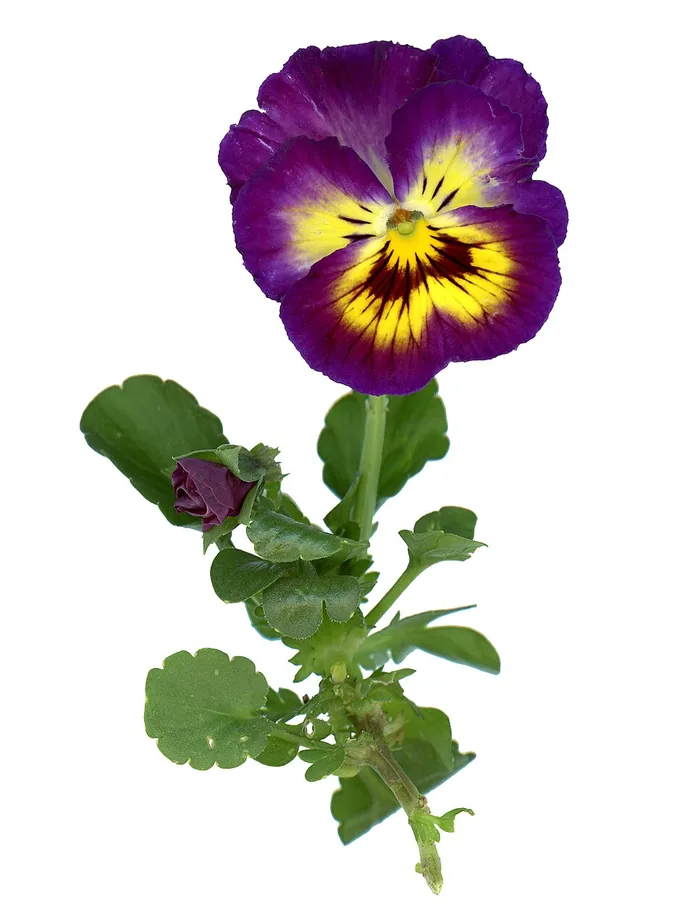
Pansies are the broad-faced flowers of the cool-season garden, coming in nearly every color with the dark blotches that resemble small expressions. As members of the violet family, they are a garden hybrid developed from wild violas. Their flowering is driven by cool conditions, so they perform best when the air is cool and crisp rather than warm.
The habit is low and mounding, reaching only 4 to 9 inches (10 to 23 cm) tall, which suits them to the front of a bed, a window box, or a container by the door. Flower patterning ranges from solid to blotched to whiskered, and the color range extends from soft pastels to deep, near-black purples.
By design these are short-lived plants, cultivated as cool-season annuals that reach their peak in fall, winter, and spring. Heat is the limiting factor, so they elongate and decline once summer sets in. Grow them through the cool season and replace them as the weather warms.
Care
The short version: establish them in cool weather in rich, well-drained soil, provide full sun to part shade, hold the soil evenly moist, and deadhead often to sustain flowering.
Light
Pansies flower best in full sun through the cool months and perform acceptably in partial sun or partial shade. As spring warms, a position with afternoon shade reduces heat load on the plant and prolongs flower retention.
Water
Hold the soil evenly moist but well-drained, letting the top inch dry slightly between waterings so the roots are not left saturated. Direct water to the base rather than the foliage, because leaf wetness favors downy mildew and crown rot. Under cool conditions this generally means irrigating every 2 to 4 days.
Soil
Grow them in humus-rich, well-drained loam amended with ample organic matter. A slightly acidic pH of 5.5 to 6.5 is optimal, and adequate drainage is the single most decisive factor for root health.
Temperature
This is a cool-season flower, performing within roughly 19°F to 64°F (-7°C to 18°C). Established plants withstand hard cold and even light snow, but flowering declines and stems elongate as daytime temperatures move past the mid-60s.
Humidity
Average outdoor humidity near 40% to 70% is entirely suitable. Air movement is the more important variable, since stagnant, humid air within a crowded planting is what allows foliar diseases to establish.
Feeding
Apply a balanced water-soluble fertilizer roughly monthly through the cool-season period in fall and spring. Light, regular feeding supports continued flowering without forcing the soft growth on which aphid populations expand.
Pruning
Deadhead spent flowers frequently to maintain bud initiation and prevent the plant from diverting energy into seed. Pinching back elongated stems keeps the plant compact and extends the flowering period.
Repotting
Shift container-grown pansies to a larger pot once they have outgrown the current one. Indicators include roots circling the interior or emerging from the drainage holes, or soil that dries almost immediately after watering.
Size & spacing
Pansies remain small, about 4 to 9 inches (10 to 23 cm) tall with a spread of 9 to 12 inches (23 to 30 cm). That compact footprint makes them well suited to edging, containers, or interplanting among taller subjects for early color.
When to plant
Pansy performance is governed by cool weather, not heat. Set plants out in fall so they flower through the cool months and overwinter in mild zones, or plant in very early spring for color before summer heat halts them.
Northern hemisphere
Southern hemisphere
Typical months for a temperate climate: start earlier in warm zones, later where spring frosts linger.
- Plant: Fall (overwinters in mild zones) or very early spring
- Harvest: Fall, winter, and spring in cool weather; declines and gets leggy in summer heat
Hardiness
USDA hardiness zones: 6–10
Temperature: down to -23°C
Troubleshooting
Most pansy problems fall into two categories: small pests that build in cool, damp weather, and rot or elongation when conditions turn wet or warm. Diagnosed early, most respond to a straightforward correction. Match the symptom below and intervene before it spreads.
Wilt despite ample soil moisture, roots water-soaked and darkened
Wilting in saturated soil followed by collapse at the soil line indicates crown and root rot, where waterlogging starves the roots of oxygen and opens the door to fungal pathogens that kill the tissue. The damage is not reversible, so affected plants should be pulled and discarded rather than treated. Correct the drainage before replanting and reduce irrigation, allowing the surface to dry between waterings so oxygen returns to the root zone.
Fix:
- Remove and discard affected plants
- Improve soil drainage before replanting
- Reduce watering and avoid waterlogging
Yellowed areas on upper leaf surfaces with grayish sporulation beneath
Yellow blotches on the upper surface with a gray-purple sporulation beneath signal downy mildew (Peronospora), an oomycete that advances during cool, humid, wet weather because free moisture on the leaf lets its spores germinate. Remove and destroy infected leaves and plants to cut the source of spores, then thin and space the planting so the canopy dries faster. Watering at the base early in the day keeps foliage dry through the night, which is when infection would otherwise set in.
Fix:
- Remove and discard infected leaves and plants
- Improve air circulation by spacing and thinning
- Avoid overhead watering and water early in the day
Soft-bodied green or black insects massing on tender shoots coated in honeydew
Those clustered soft-bodied insects are aphids, and they concentrate on new shoots in cool spring weather because tender tissue offers the easiest sap to feed on. A firm jet of water dislodges most of the colony, and insecticidal soap or horticultural oil finishes the rest by breaking down their protective coating. Prune out any heavily infested shoot and restrain nitrogen, since a nitrogen flush produces the soft growth that lets populations build fastest.
Fix:
- Spray plants with a strong jet of water to dislodge aphids
- Apply insecticidal soap or horticultural oil to affected growth
- Remove heavily infested shoots
Irregular holes through leaves and petals with glistening mucus trails
Chewed tissue accompanied by shining trails is the mark of slugs and snails, which feed at night and favor cool, damp shade because their soft bodies lose water fast in dry air. Hand-collecting after dark removes the active feeders, and iron phosphate bait placed along their routes controls the rest. Clearing the mulch, boards, and debris that hold daytime humidity denies them shelter, and morning watering lets the surface dry by dusk so the ground turns less hospitable.
Fix:
- Hand-pick slugs and snails in the evening
- Set out iron phosphate slug bait
- Remove mulch, boards, and debris that shelter them
Elongated, sparse growth and declining flower count as heat builds
Elongated stems and reduced flowering above 64°F (18°C) reflect summer heat stress, a physiological response rather than a disease, because pansies are cool-season plants whose metabolism and flowering falter in the heat. Pinching the leggy stems and deadheading redirects energy into a fresh flush, while afternoon shade and consistent moisture ease the plant's water stress during warm spells. Once genuine summer heat arrives, treat them as the cool-season annuals they are and replace the planting.
Fix:
- Pinch back leggy stems and deadhead to encourage rebloom
- Provide afternoon shade and consistent moisture in warm spells
- Replace plants as a cool-season annual when summer heat sets in
Toxicity
Pansies rank among the safest ornamentals you can grow. The ASPCA lists them as non-toxic to cats, dogs, and horses, and the flowers are edible for people. Neither a curious pet nor a grazing animal is at risk from a bed of pansies.
Safe for
People · Cats · Dogs · Horses · Rabbits · Livestock · Birds
Cats None
Pansies contain no compound toxic to cats, so a nibbled flower carries no risk. The only caveat applies to any plant: a cat that ingests a large volume of foliage may show brief, mild gastrointestinal upset that resolves without treatment.
Dogs None
Dogs can consume pansy leaves and flowers without toxic effect. The single point to note is the transient loose stool that follows any dog eating a large quantity of plant matter, which passes quickly.
Horses Safe
Pansies present no hazard to horses grazing near a bed or border. Because the plant holds no toxin, a grazing horse requires no particular precaution around it.
Rabbits Safe
Rabbits can eat both the foliage and the flowers safely, and the blooms are commonly offered as a treat. Portion them reasonably, as with any fresh green, to keep the gut flora in balance.
Livestock Safe
Cattle, goats, and sheep face no toxic risk from pansies in a pasture or planting. No part of the plant contains a harmful compound.
Birds Safe
Pansies are non-toxic to birds, and backyard hens readily peck at the petals. The plant holds nothing that would harm them.
People Safe
Pansy flowers are edible and appear in salads or candied on cakes. Wash them first, or grow them without pesticides, because garden-center stock may carry spray residue on the tissue.
No special handling needed; flowers are edible, though garden plants may carry pesticide residue and should be washed or grown pesticide-free before eating.
Varieties
Pansies are sold in dozens of named series, though a few recur consistently at the garden center. These are the series worth knowing by name.
Majestic Giants
This series produces the largest flowers of the group, roughly 3 to 4 inches across with pronounced dark blotches, and holds up under both cold and heat.
Matrix
Matrix selections stay compact and uniform, presenting their flowers upward and beginning to bloom early without elongating.
Delta
Delta is a vigorous, early-flowering series offering clear or blotched faces with strong tolerance of both cold and heat.
Cool Wave
Cool Wave is the trailing form that spills and cascades, making it the appropriate choice for hanging baskets or as a groundcover.
How to propagate
Pansies are raised almost entirely from seed, and successful germination depends on patience and controlled, steady warmth.
SeedModerate
Sow indoors in mid to late summer for fall planting, or in late winter for early spring planting
Pansies are propagated from seed or acquired as transplants rather than by cuttings, which are rarely used for this hybrid. Sow indoors in mid to late summer for fall planting, or in late winter to establish plants for setting out in early spring. Germination demands careful control of conditions, which is why many growers leave that stage to a specialist and purchase finished flats.
Myths
Pansies and violas are the same plant.
They are closely related but distinct. Pansies bear larger flowers in smaller numbers, whereas violas and Johnny-jump-ups produce more numerous, smaller blooms. The violas also carry somewhat greater heat tolerance.
Pansy petals are purely ornamental and unfit for human consumption.
The flowers are edible in fact. They can be used fresh in salads or candied for cakes, provided they are grown without pesticides before consumption.
Pansies perform as warm-season annuals and flourish in high temperatures.
The reverse is true. Pansies are cool-season plants that flower most freely in fall, winter, and spring, then elongate and decline as summer heat arrives.