Vegetable · Zingiberaceae
Turmeric
Curcuma longa
Sustained warmth, rich moist soil, and a long season drive the rhizome swelling that yields golden turmeric.
Partial shade
Every 2–4 days
68–95°F · 20–35°C
240–300 days
Overview
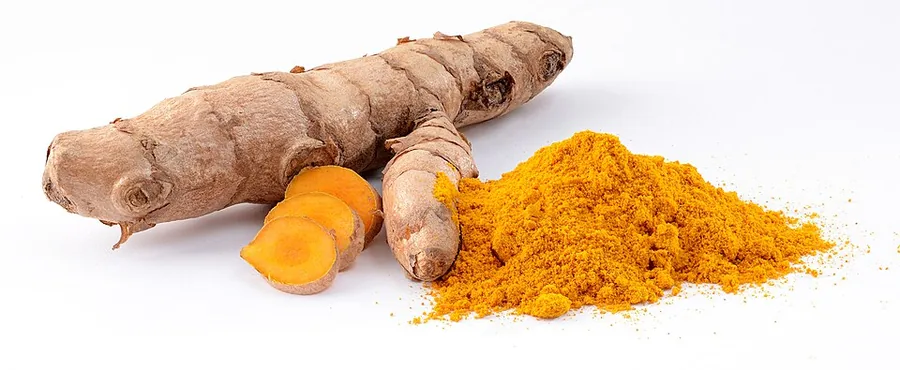
Turmeric, Curcuma longa, is a rhizomatous perennial in the ginger family, grown for the golden rhizome that flavors curry powder and yields a yellow dye. It evolved in the warm, wet lowlands of South Asia, where its broad leaves flush during the rains while the underground rhizomes store the reserves that build the crop. The harvested part is the rhizome, taken fresh or dried and ground; the foliage is not eaten.
The plant carries a long growth requirement: eight to ten months of warmth to accumulate enough reserves in the rhizome for a worthwhile harvest. That timeline is why growers beyond the tropics start rhizome pieces early under cover and transplant only after the soil warms. Because its roots tolerate confinement well, it also performs in a large container, extending its range to a bright porch or greenhouse in cooler regions.
Supplied with heat, consistent moisture, and fertile ground, turmeric is largely self-sufficient. Its main vulnerability is rhizome rot, which takes hold when the soil stays waterlogged rather than draining freely. The governing principle of its culture is therefore to feed the crop well while keeping drainage sharp enough that water never stands around the rhizomes.
Care
The short version: turmeric performs in partial shade under steady warmth, in rich, well-drained soil held evenly moist but never waterlogged. Feed it monthly through the growing season, and allow the full warm season it needs to bulk the rhizomes.
Light
Turmeric performs best in partial shade and accepts some direct sun, but a full day of intense sun scorches the broad, thin leaf blades. Site it where it receives bright, filtered light, or morning sun backed by afternoon shade.
Water
Hold the soil evenly moist throughout active growth without letting it dry, yet stop short of saturation, since standing water is what triggers rhizome rot. As the foliage yellows toward harvest and demand falls, reduce watering accordingly.
Soil
Grow it in rich, well-drained loam high in organic matter, a medium that retains moisture yet drains freely rather than staying muddy. The workable pH range is 5.5 to 7.5, so most garden soils qualify once amended with generous compost.
Temperature
Optimal growth occurs in sustained warmth between 68°F and 95°F (20°C to 35°C). As a frost-tender tropical it has no cold hardiness, and even a brief chill can blacken the foliage and terminate the season prematurely.
Humidity
Adapted to the humid tropics, turmeric favors relative humidity around 60% to 90%. Summer air supplies this outdoors, whereas an indoor specimen benefits from a humidity tray or periodic misting to raise the ambient moisture.
Feeding
Fertilize monthly through the growing season with a balanced feed, and incorporate compost or other organic matter to sustain fertility. The crop is a heavy feeder because it must build a full complement of rhizomes over one season.
Pruning
Pruning requirements are minimal. Remove dead or yellowing leaves and clear spent foliage periodically, which keeps the planting tidy and improves air movement around the clump.
Repotting
Under container culture, repot turmeric annually, as the rhizomes multiply rapidly and soon fill the available volume. Step it up a pot size once rhizomes crowd the container or roots protrude from the drainage holes.
Size & spacing
A mature clump attains 3 to 4 feet (90 to 120 cm) in height with a spread of 24 to 35 inches (60 to 90 cm). Allocate that footprint per plant so the large leaves have room and air can circulate through the stand.
When to plant
Turmeric combines a long season requirement with no frost tolerance, so scheduling is decisive. Start rhizome pieces under cover in late winter, transplant once the soil has warmed, and harvest in fall as the foliage yellows and dies back.
Northern hemisphere
Southern hemisphere
Typical months for a temperate climate: start earlier in warm zones, later where spring frosts linger.
- Sow: Late winter to early spring; start rhizome pieces indoors 6-8 weeks before the last expected frost
- Plant: After all danger of frost has passed and soil has warmed
- Harvest: Harvest rhizomes about 8-10 months after planting when the foliage yellows and dies back
Hardiness
USDA hardiness zones: 8–11
Temperature: down to -12°C
Troubleshooting
Most disorders in turmeric originate at the rhizome or register on the foliage before harvest. The key diagnostic step is separating a true problem from the senescence that naturally yellows the leaves at the close of the season, then intervening while it still helps. Compare the symptom to the probable cause below.
Soft, foul rhizomes and a collapsing clump
Soft, malodorous rhizomes beneath a collapsing plant indicate rhizome rot, a disorder driven by waterlogged soil rather than any pathogen you can spray off. Confirmation comes from lifting a plant: sound rhizomes stay firm, whereas rotted tissue is soft, discolored, and foul-smelling. Excise every affected piece, correct the drainage, scale back irrigation, and replant only clean, healthy rhizomes in fresh ground.
Fix:
- Remove and discard affected rhizomes
- Improve drainage and reduce watering frequency
- Replant healthy rhizome pieces in fresh, well-drained soil
Foliage blackening and collapse after chilling
Abrupt blackening and wilt across the whole plant after a cold event reflect turmeric's status as a frost-tender tropical with no cold tolerance. The damaged top growth is unrecoverable, so cut it down; in cold climates, lift the rhizomes and overwinter them under cover. Manage the crop on a warm-season schedule and remove the rhizomes before frost arrives.
Fix:
- Cut back damaged foliage
- Lift and store rhizomes in cold climates over winter
Midseason leaf yellowing or circular spotting
Yellowing or circular lesions appearing well before season's end point to fungal leaf spot under warm, humid conditions, or to nutrient shortfall in impoverished soil. Strip the affected foliage, open the stand to improve airflow, and restore fertility with a balanced fertilizer or compost. Distinguish this from the normal senescent yellowing that accompanies harvest.
Fix:
- Remove affected foliage
- Improve air circulation
- Supplement nutrients with balanced fertilizer or compost
Toxicity
On safety the record is unambiguous: turmeric is non-toxic throughout. The rhizome is a culinary staple, and the ASPCA does not list the species as toxic to cats or dogs, leaving nothing to endanger pets, livestock, or children. The sole practical issue is the rhizome's orange pigment, which stains skin and surfaces without posing any hazard.
Safe for
People · Cats · Dogs · Horses · Rabbits · Livestock · Birds
Cats None
Non-toxic to cats. Neither the foliage nor the rhizomes contain anything that would harm a cat sampling the plant.
Dogs None
Non-toxic to dogs. The species is absent from the ASPCA toxic list, and the dried spice is incorporated into some commercial dog foods.
Horses Safe
Harmless to horses, whether they brush against the foliage or ingest a small amount.
Rabbits Safe
Rabbits may browse the leaves without risk, as no part of the plant is poisonous to them.
Livestock Safe
Cattle, goats, and sheep face no toxicity from turmeric encountered while grazing.
Birds Safe
Birds are unaffected by it, and the rhizome is occasionally supplied in small quantities as a supplement.
People Safe
The rhizome is eaten fresh, dried, or ground as a spice, and contains no toxic parts that require avoidance.
The rhizome's orange pigment (curcumin) readily stains skin, fabric, and surfaces during handling and processing; this is a staining nuisance, not a toxicity concern.
Varieties
The turmeric grown for culinary use derives from a small number of Indian types, differentiated mainly by color, potency, and yield. The following names are the ones worth recognizing.
Alleppey
A high-curcumin Indian type whose deep orange flesh suits both cooking and use as a natural colorant.
Madras
A lighter, milder Indian type with a long record of use in the food and condiment trade.
Erode
A South Indian landrace from Tamil Nadu selected for its notably heavy rhizome yields.
How to propagate
Turmeric is propagated vegetatively from its own rhizomes rather than from seed, so an established plant supplies further stock at almost no cost.
DivisionEasy
Late winter to early spring before planting out · Roughly 2-4 weeks to sprout and establish under warm, moist conditions
Turmeric is increased from its own rhizomes, not from seed. In late winter or early spring, before transplanting out, divide a rhizome into sections each bearing at least one viable bud, and plant them a few centimeters deep in warm, moist soil. Held warm and damp, the sections sprout and establish in roughly 2 to 4 weeks.
Myths
Turmeric is poisonous to pets and must be kept from cats and dogs.
The claim is incorrect. Curcuma longa is an edible species the ASPCA does not classify as toxic to cats or dogs, and a curious animal that samples a leaf is unharmed. The entire plant is safe to cultivate around pets.
Turmeric grows easily outdoors anywhere, all year round.
It does not. This frost-tender tropical requires an uninterrupted warm period of roughly 8 to 10 months to develop a crop. In climates with real winters it is managed as a warm-season or container plant, with the rhizomes lifted before cold sets in.