Ornamental · Linderniaceae
Wishbone Flower
Torenia fournieri
Match its shade habit and even soil moisture, and torenia blooms from summer to frost.
Partial shade
Every 2–4 days
64–86°F · 18–30°C
USDA 2–11
Overview
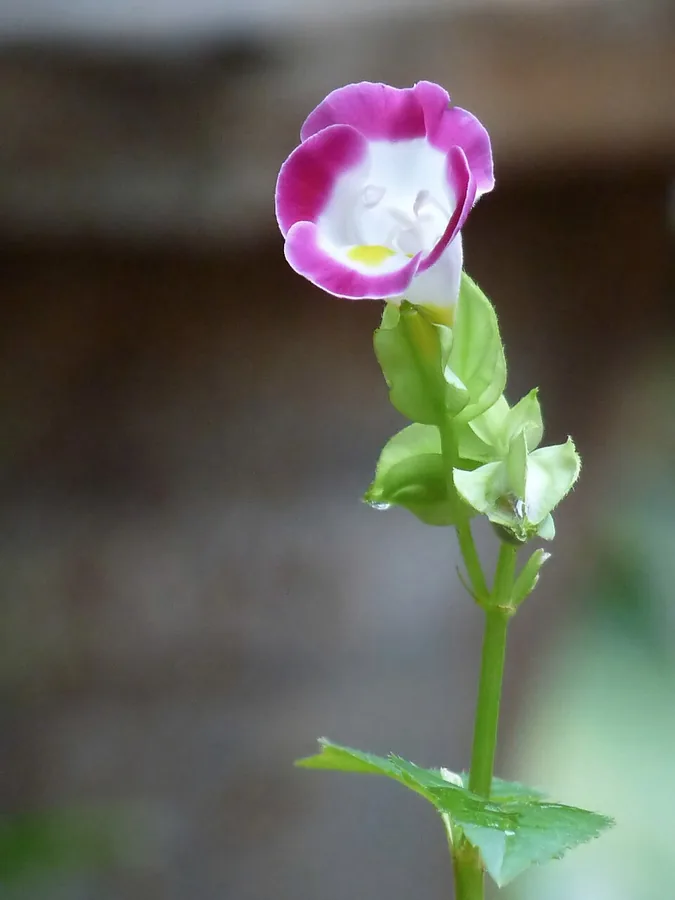
Torenia fournieri takes its common name from the paired stamens that arch and meet within each flower, resembling a wishbone. As a shade-adapted annual, it flowers in blue, purple, pink, and white and holds that bloom from early summer to frost. Its value lies in delivering sustained color under low light, where most bedding annuals fail.
Unlike the many annuals that require full sun to flower, this species performs in dappled light and part to full shade. That trait makes it well suited to north-facing beds, borders shaded by a fence, and containers on a covered porch. In hot regions, morning sun with afternoon shade prevents the heat and light stress that would otherwise degrade its form.
Maintenance demands are low once the plant establishes. Consistent soil moisture, periodic pinching, and its self-cleaning habit keep it flowering without deadheading. The critical variable is drainage, because saturated soil is the one condition that reliably fails this otherwise durable plant.
Care
The short version: site it in part to full shade, sheltered from hot afternoon sun, and hold the soil evenly moist at roughly 1 to 1.5 inches a week. Give it rich, well-drained soil, and pinch the growth periodically to keep the habit dense.
Light
Light drives its form. It performs as a shade species, best in part to full shade or dappled light, and in hot climates it needs morning sun with afternoon shade. Under excessive direct sun the internodes elongate and flowering diminishes, which is why siting matters more here than for most annuals.
Water
Keep the root zone evenly moist, since this species does not tolerate drying out between waterings. That equates to about 1 to 1.5 inches of water a week, and a mulch layer moderates soil temperature, keeping the roots cooler as heat rises.
Soil
Use rich, organic soil that retains moisture yet drains freely, because free drainage is what keeps the roots from the waterlogging that leads to rot. A slightly acidic pH of 6.0 to 6.5 is optimal. Organic matter supports both moisture retention and structure.
Temperature
Its comfortable range runs from about 64°F to 86°F (18°C to 30°C). Being frost-tender, it is killed by freezing temperatures, and at the upper extreme, shade and steady moisture buffer the plant against heat stress.
Humidity
Ambient outdoor humidity is sufficient, so no target level applies. Air circulation is the operative factor, because static, humid air within shaded plantings creates the conditions that favor powdery mildew.
Feeding
A complete slow-release fertilizer incorporated at planting meters nutrients out gradually and supplies the plant for much of the season. A repeat application at roughly 6-week intervals sustains growth if the plants show need.
Pruning
Pinching the new growth removes apical dominance and forces branching, producing a denser, more compact plant rather than a leggy one. Deadheading is unnecessary because the flowers are self-cleaning and drop on their own.
Size & spacing
Mature dimensions are modest, at 6 to 18 inches (15 to 46 cm) in height and 6 to 9 inches (15 to 23 cm) in spread. That compact stature suits edging, container culture, and the front rank of a shaded planting.
When to plant
As a frost-tender annual, torenia occupies the frost-free window, from the last spring frost to the first in autumn. Sowing indoors in late winter gives transplants a head start, and setting them out after the cold has broken lets the plant flower from early summer until frost terminates the season.
Northern hemisphere
Southern hemisphere
Typical months for a temperate climate: start earlier in warm zones, later where spring frosts linger.
- Sow: Start seeds indoors 6 to 8 weeks before the average last frost date.
- Plant: Transplant outdoors after danger of frost has passed, around mid to late April in many regions.
- Harvest: Blooms from early summer (about June) until first frost.
Hardiness
USDA hardiness zones: 2–11
Temperature: down to -46°C
Troubleshooting
Torenia presents few problems, and those that occur nearly always originate in excess soil moisture or excess sun. The entries below pair each early symptom with its underlying cause, so intervention can come before decline is irreversible. Identify the sign, then correct the condition driving it.
Wilt and collapse over decaying, dark roots
Wilting, chlorosis, and collapse above soft, dark roots indicate root rot, which develops where soil remains saturated or drains poorly. Excavate the crown and the roots will be brown, soft, and malodorous rather than firm and pale. Reduce irrigation, amend for better drainage, and remove plants already reduced to mush, since they will not recover.
Fix:
- Improve drainage and reduce watering frequency
- Remove and discard severely affected plants
Elongated stems with reduced flowering
Long stems and sparse bloom point to excess direct sun or heat stress, often compounded by a lack of pinching. Relocate the plant to morning sun with afternoon shade to remove the stress, then pinch back the new growth to restore branching and a compact, floriferous habit.
Fix:
- Provide morning sun with afternoon shade
- Pinch back new growth to encourage bushiness
Powdery white colonies on leaf surfaces and stems
A dusty white film on the upper leaves is powdery mildew, a fungus favored by shade combined with poor air circulation. Increase spacing and airflow to lower humidity around the foliage, and irrigate at the base so the leaves stay dry. These measures address the conditions the pathogen depends on.
Fix:
- Improve air circulation and spacing
- Avoid wetting foliage when watering
Toxicity
Torenia is non-toxic and safe in households with pets, livestock, and children. It does not appear on the ASPCA's list of species hazardous to cats or dogs, and no part of the plant contains a recognized toxin. It can be planted without restriction where animals and children are present.
Safe for
People · Cats · Dogs · Horses · Rabbits · Livestock · Birds
Cats None
Non-toxic to cats. Ingestion will not cause poisoning, though any plant may produce brief, mild gastrointestinal upset in a sensitive individual.
Dogs None
The plant contains no toxins affecting dogs, so an animal that consumes the foliage or flowers is not at risk.
Horses Safe
Horses are unaffected, as the species carries no compound harmful to them, even if grazed.
Rabbits Safe
Rabbits face no toxicity from browsing the foliage, and a planting may function simply as forage.
Livestock Safe
Cattle, goats, and sheep incur no toxic risk from grazing this plant.
Birds Safe
Wild and companion birds are unharmed, since no part of the plant holds a substance dangerous to them.
People Safe
The plant is non-toxic to humans, and children may be among the flowers safely, though it is cultivated ornamentally rather than for consumption.
Varieties
Numerous named series are in cultivation, though a handful account for most retail availability. The following are the ones worth identifying by name.
Kauai
A compact series selected for profuse flowering under partial shade.
Duchess
A compact, early-flowering series distinguished by larger blooms than the type.
Little Kiss
A diminutive, mounding form suited to containers and the forward edge of a planting.
How to propagate
Torenia is readily propagated from seed, the standard method by which growers produce each spring's planting.
SeedEasy
Start indoors 6 to 8 weeks before last frost, or direct sow after frost danger passes. · Several weeks to transplant size after germination.
Seed is the conventional means of raising torenia for spring planting. Sowing indoors 6 to 8 weeks before the last frost, or direct sowing after frost has cleared, produces seedlings that require several weeks to reach transplant size.
Myths
Wishbone flower requires deadheading to continue flowering.
Removing spent blooms is unnecessary. The plant is self-cleaning and sustains flowering unaided from spring to frost.
Torenia requires full sun for strong flowering.
It is among the few annuals that flower abundantly in part to full shade. In hot climates it in fact prefers afternoon shade, where full sun would impose stress.