Ornamental · Poaceae
Tall Fescue
Festuca arundinacea
A deep-rooted cool-season perennial, tall fescue stays green across heat and cold with the least fuss of any lawn grass.
Full sun
Every 5–10 days
61–75°F · 16–24°C
60–90 days
Overview
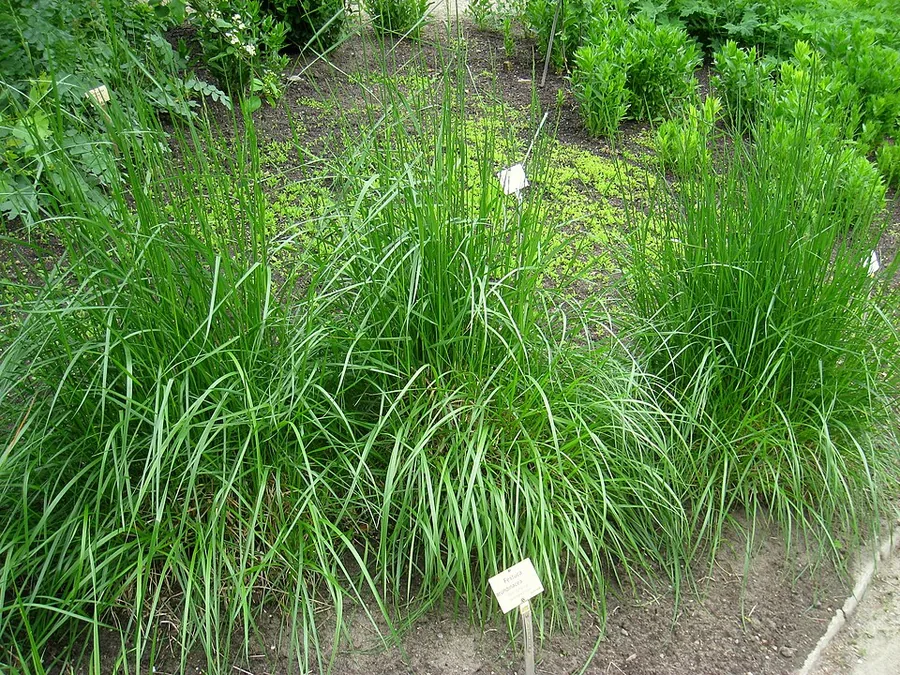
Tall fescue (Festuca arundinacea) is a cool-season perennial bunch grass whose defining trait is a deep, extensive root system. Those roots draw moisture from well below the surface, which is why the grass tolerates heat and drought better than most turf species and holds green foliage into fall and winter while warm-season grasses go dormant. The same vigor lets it persist in more shade, in clay, and at lower fertility than competing cool-season turfgrasses.
Its growth habit sets the management. Because tall fescue is bunch-forming and carries only short rhizomes, it cannot spread laterally to close bare ground the way stoloniferous or strongly rhizomatous grasses do. Any gap opened by stress or traffic therefore persists and widens, which makes annual fall overseeding a structural part of care rather than an option. Maintained at proper density, the stand is thick and wears well under traffic.
One caution applies before seeding for livestock. Most older tall fescue hosts a fungal endophyte that improves stress and pest resistance but also synthesizes ergot alkaloids toxic to grazing horses and cattle. A maintained turf lawn poses no risk to pets or people, but pasture should be established from endophyte-free or novel-endophyte cultivars.
Care
The short version: full sun to partial shade, mow high at 3 to 4 inches, irrigate deeply and infrequently, fertilize chiefly in fall, and overseed thin areas each fall to sustain density.
Light
Tall fescue performs best in full sun yet retains more shade tolerance than most turfgrasses, persisting in partial sun and partial shade. In shaded sites, raise the mowing height so the longer leaf area can capture the reduced light and sustain density.
Water
Irrigate deeply and infrequently to wet the full root zone, which trains roots downward and exploits the plant's natural drought resistance. About an inch per week during active growth maintains color, though the deep roots let it survive dry intervals and enter dormancy when irrigation stops. Allow the top half of the profile to dry between waterings.
Soil
The species adapts to most well-drained soils and tolerates clay and low fertility better than other cool-season grasses. It performs across a pH of 5.5 to 7.5, a band that covers the great majority of lawn soils.
Temperature
As a cool-season grass, photosynthesis and shoot growth peak in mild conditions, roughly 61°F to 75°F (16°C to 24°C). Growth resumes and greens through fall and winter, then slows or browns as summer heat exceeds that optimum.
Humidity
Ambient outdoor humidity is adequate, so no target range applies. The relevant risk is prolonged nighttime humidity, which keeps foliage wet and favors the brown patch pathogen on the leaves.
Feeding
Concentrate feeding in fall, applying a nitrogen turf fertilizer at about 2 to 3 pounds of nitrogen per 1,000 square feet per year, split between fall and spring. Limit summer nitrogen, since lush growth in heat and humidity intensifies brown patch.
Pruning
Mow within 2.5 to 4 inches, favoring the upper end in summer and shade because greater leaf area drives deeper rooting and suppresses disease. Remove no more than a third of the leaf height per mowing to avoid stressing the crown.
Repotting
none
Size & spacing
Under regular mowing the canopy holds at 3 to 4 inches (8 to 10 cm), while each clump occupies roughly 6 to 12 inches (15 to 30 cm). Since clumps do not coalesce on their own, overseeding is what fills the interstitial space.
When to plant
Tall fescue is established from seed, and establishment success hinges on timing. Late summer to early fall, when soil retains warmth but air temperatures have moderated, gives the strongest germination and rooting, with early spring a workable second window. Because the bunch habit prevents self-repair, plan to overseed thin areas each fall.
Northern hemisphere
Southern hemisphere
Typical months for a temperate climate: start earlier in warm zones, later where spring frosts linger.
- Plant: Sow seed in late summer to early fall (best) or early spring; tall fescue germinates in about 7-12 days. Overseed thin or bare areas each fall because this bunch-type grass does not spread to fill gaps.
- Harvest: Grown for turf, not bloom; stays green in fall and winter when warm-season grasses are dormant.
Hardiness
USDA hardiness zones: 4–7
Temperature: down to -34°C
Troubleshooting
Most tall fescue disorders trace to three causes: the bunch habit that leaves gaps, disease driven by heat and moisture, and heat-and-drought stress on a cool-season plant. Identifying the mechanism early lets you intervene before a small defect spreads. Match the symptom below to its cause, then treat accordingly.
Persistent bare patches in a clumpy stand
The cause is structural: tall fescue is a bunch-type grass with only short rhizomes, so it lacks the lateral runners that let creeping grasses knit over open soil. When summer stress, traffic, or disease removes plants, the resulting gap cannot self-repair and instead widens. Correct it by overseeding thin areas each fall and holding the new seed moist until it establishes.
Fix:
- Overseed thin and bare areas with turf-type tall fescue in early fall
- Loosen or lightly till the bare soil and ensure good seed-to-soil contact
- Keep newly seeded areas consistently moist until established
- Mow at the higher end of the range to thicken stand
Circular brown patches under heat and humidity
This is brown patch, caused by Rhizoctonia solani, a pathogen that becomes active once night temperatures exceed 68°F (20°C) and humidity is high. Excess nitrogen and extended leaf wetness accelerate infection, so shift irrigation to early morning for rapid drying, reduce summer feeding, and apply a labeled fungicide on high-value turf only where patches continue to enlarge.
Fix:
- Water early in the day so foliage dries quickly, and avoid evening watering
- Reduce nitrogen fertilizer during hot weather
- Improve air movement and drainage
- Apply a labeled turf fungicide on high-value lawns if needed
Summer browning and thinning on a cool-season lawn
Being a cool-season species, tall fescue slows when heat and drought push it past its temperature optimum and can enter summer dormancy despite its deep roots. Irrigate deeply and infrequently to sustain the lower root zone, raise the mowing height through summer to reduce stress, and expect fall rain and cooler temperatures to restore color. Overseed any areas that thin permanently.
Fix:
- Irrigate deeply and infrequently to wet the deep root zone
- Raise mowing height in summer
- Overseed in fall to recover thinned areas
Coarse, pale clumps within fine-textured turf
The wide, light-green tufts are typically old forage-type tall fescue, such as Kentucky 31, whose leaf blades are markedly coarser than those of modern turf cultivars. Because the texture will not blend, remove the clumps by digging or spot treatment and reseed the openings with a turf-type tall fescue to restore uniform texture.
Fix:
- Dig or spot-treat the coarse clumps
- Reseed the spots with a turf-type tall fescue to match texture
Toxicity
Turf-type tall fescue maintained as lawn is non-toxic to cats, dogs, rabbits, birds, and people, and it does not appear on the ASPCA toxic-plant lists. The hazard lies in endophyte-infected pasture fescue, where the fungal symbiont produces ergot alkaloids that cause fescue toxicosis in grazing horses and livestock. Keep pregnant mares off infected pasture, and establish forage from clean cultivars.
Toxic to
Horses · Livestock
Safe for
People · Cats · Dogs · Rabbits · Birds
Horses Caution
The plant is safe, but the endophyte within infected pasture fescue is the concern for equines. Pregnant mares grazing it can experience prolonged gestation, thickened placenta, dystocia, and agalactia, meaning no milk at foaling. Remove mares from endophyte-infected fescue well ahead of the foaling date.
Livestock Caution
Cattle and other grazers perform well on clean fescue, but endophyte-infected pasture induces fescue toxicosis. Expect reduced weight gain, impaired heat tolerance, and fescue foot, a lameness affecting the hooves and lower limbs. Grazing endophyte-free or novel-endophyte cultivars removes the exposure.
Cats None
A turf-type tall fescue lawn is non-toxic to cats. Ingesting a few blades may provoke a single episode of vomiting, as grass often does, but the plant contains no compound harmful to felines.
Dogs None
Dogs are unaffected by a tall fescue lawn, which is not toxic to them. A leaf-chewing dog may show brief, self-limiting gastrointestinal upset and nothing more.
Rabbits None
Tall fescue is a safe forage for rabbits. The plant carries no inherent toxin, and rabbits are not among the species affected by the endophyte that harms large grazing stock.
Birds None
Birds forage a tall fescue lawn without harm. Neither the foliage nor the seed is toxic, and poultry range through it without issue.
People None
A tall fescue lawn is safe for children and adults. It is a turf and forage species rather than a food crop, so it is not eaten, and incidental contact or an occasional chewed blade carries no risk.
A turf-type tall fescue lawn is safe for cats, dogs, and children. Do not graze pregnant mares or cattle on endophyte-infected (E+) tall fescue pasture; pregnant mares should be removed from E+ tall fescue well before foaling. Use endophyte-free or novel/friendly-endophyte forage cultivars for livestock.
Helpline numbers

United States
ASPCA Animal Poison Control: (888) 426-4435 (fee applies)

United Kingdom
Animal PoisonLine: 01202 509000 (fee applies)

Australia
Animal Poisons Helpline: 1300 869 738
Varieties
Tall fescue divides into coarse forage and utility types and the finer modern turf types, a distinction rooted in leaf texture and endophyte status. The cultivars below illustrate that range.
Kentucky 31 (K-31)
The archetypal coarse forage and utility grass, sown almost universally and typically endophyte-infected, which is precisely why it is unsuitable for horse pasture.
Rebel
Among the first genuine turf types, selected for a finer, denser, darker canopy than the coarse K-31 it replaced.
Falcon
A turf-type cultivar commonly incorporated into modern fine-textured lawn blends.
How to propagate
Tall fescue is propagated almost entirely from seed, both to establish a lawn and to maintain density through annual fall overseeding.
SeedEasy
Late summer to early fall is best; early spring is the second option. · Germinates in about 7-12 days; establishes a usable stand within a couple of months.
Seed is the standard method, and the late summer to early fall window yields the best establishment, with early spring as the secondary option. Germination occurs in about 7 to 12 days and a usable stand develops within a couple of months. Because the bunch habit prevents lateral spread into bare ground, annual fall overseeding is required to maintain density.
DivisionModerate
Cool weather of spring or fall · Several weeks
An established clump can be divided in the cool weather of spring or fall, with the divisions requiring several weeks to establish. The method is viable but inefficient at scale, where seeding and fall overseeding remain the practical route.
Myths
All tall fescue is toxic to grazing animals.
The toxin originates in a fungal symbiont, not the grass tissue itself. The endophyte Epichloe coenophiala synthesizes the ergot alkaloids responsible for fescue toxicosis, and plant breeding has produced endophyte-free and novel-endophyte cultivars that eliminate the alkaloid load. A turf-type tall fescue lawn is safe for pets and people, and clean forage cultivars are safe for grazing stock.