Ornamental · Poaceae
Blue Oat Grass
Helictotrichon sempervirens
Grown in full sun and poor, dry soil, blue oat grass keeps a compact, steel-blue mound across the year.
Full sun
Every 7–14 days
USDA 4–8
18–30 in · 46–76 cm
Overview
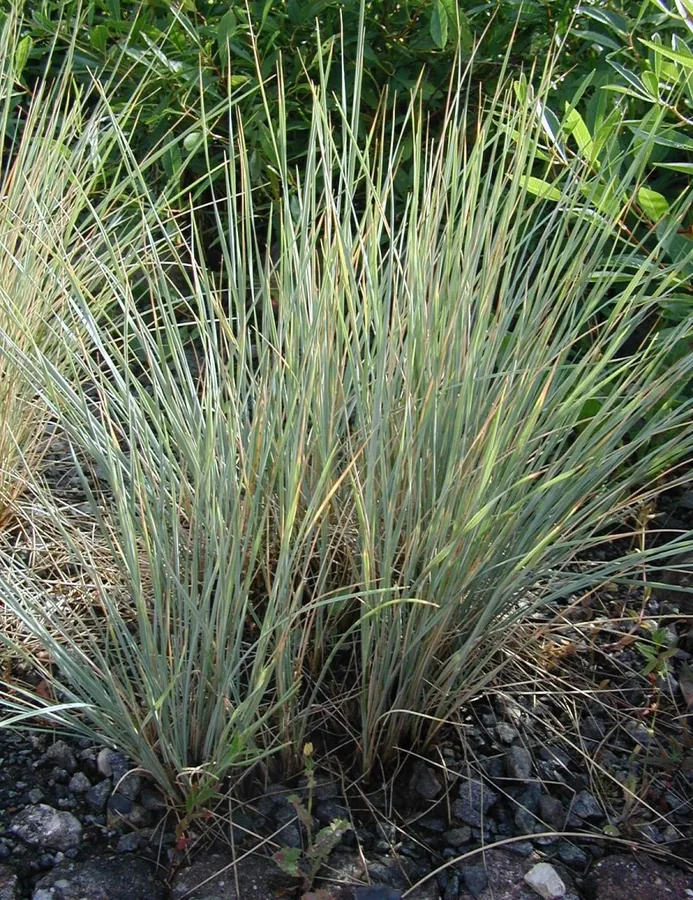
Blue oat grass is valued chiefly for foliage color. It builds a dense, rounded clump of fine steel-blue blades whose color persists through the year because this is a cool-season grass that remains evergreen where winters stay mild. A mature mound spans 18 to 30 inches (46 to 76 cm) and holds its upright, fountain-like habit unaided, a function of the stiff, narrow blades rather than any support.
In early summer, flowering culms extend above the foliage and carry oat-like, straw-colored panicles, the trait behind the common name. Growth is slow, and the plant is long-lived, hardy across USDA zones 4 to 8, so an established clump occupies its position for years with minimal intervention.
Color quality is a direct response to growing conditions. Lean, dry, sharply drained soil under full sun yields the most compact mound and the bluest foliage, while rich soil and shade drive lax, greener growth because surplus nitrogen and water fuel soft tissue. Poor soil is the cultural goal, not a limitation.
Care
The short version: site it in full sun on lean, sharply drained soil, withhold almost all fertilizer, and irrigate only during prolonged drought once it is established. Cut it back near the ground in late winter and leave it otherwise undisturbed.
Light
Blue oat grass requires full sun for best performance. It tolerates light shade, but reduced light weakens the blades and the clump opens and lodges, while the blue color, a product of a waxy cuticle that develops best in strong light, fades toward green.
Water
Established plants are very drought-tolerant and prefer dry to medium soil, needing irrigation only every 7 to 14 days during sustained drought. The critical limitation is drainage. Saturated, heavy, or humid conditions deprive the crown and roots of oxygen and induce rot, so the soil should run dry rather than wet.
Soil
It performs best in lean, sharply drained soil, which produces the bluest color and the firmest habit. Poor, dry, even rocky substrates suit it, and it accepts a pH from 6.0 to 7.5. Fertile soil supplies excess nutrients that promote soft, lax growth.
Temperature
The plant withstands a broad range, from -29°F to 100°F (-34°C to 38°C). Cold hardiness extends to zone 4 without difficulty, and at the upper end the limiting factor is the humidity that accompanies heat rather than the temperature itself, since warm, moist air favors foliar disease.
Humidity
It is adapted to low humidity and suffers in muggy air, which encourages foliar rust on the blades and rot at the crown. Air movement around the clump matters more than any absolute humidity figure, because moving air dries the foliage and limits infection, so avoid crowding.
Feeding
Apply little to no fertilizer. A clump grown lean retains its compact form and deepest blue, whereas a spring feeding or fertile ground supplies the nitrogen that drives soft, green, lodging growth.
Pruning
The sole annual task is to cut the whole clump back close to the ground in late winter or early spring before new growth emerges, which clears spent foliage and lets fresh blades develop cleanly. During the season, comb or rake out tattered old blades by hand to maintain appearance.
Repotting
Blue oat grass resents disturbance and seldom needs lifting. Divide in spring only when the center dies out or additional plants are wanted, and otherwise leave an established clump in place for years, since intact roots support steadier growth.
Size & spacing
A mature clump reaches 18 to 30 inches (46 to 76 cm) in height and spreads about 24 to 30 inches (61 to 76 cm). Space plants to that mature width so air circulates between them and the foliage dries quickly, which reduces disease.
When to plant
Blue oat grass is established as a plant rather than sown by season as a vegetable would be. Set new plants out in spring after the last frost, expect the oat-like flowering culms in early summer around June, and perform the single annual cutback in late winter before new growth begins.
Northern hemisphere
Southern hemisphere
Typical months for a temperate climate: start earlier in warm zones, later where spring frosts linger.
- Sow: Late winter to early spring
- Plant: Spring after last frost
- Harvest: Early summer (June); oat-like straw-colored panicles rise above the foliage
Hardiness
USDA hardiness zones: 4–8
Temperature: down to -34°C
Troubleshooting
Grown lean and dry, this grass is largely trouble-free, and the disorders it does develop trace back to excess moisture or insufficient light. Read the early signs on the blades and at the crown, then correct the underlying conditions before rust or rot becomes established.
The center of the clump rots and falls apart
Wet, heavy soil held against the crown through winter induces crown and root rot, an oxygen-starvation problem that no treatment reverses once the base turns soft and brown. The remedy is drainage. Reset the plant into a raised, gritty, sharply drained bed, clear any sodden mulch from the crown, and ensure it never stands in water.
Fix:
- Improve drainage or replant in a raised, gritty, sharply drained bed
- Reduce watering and cut off wet, mulch-heavy material at the crown
- Remove severely rotted plants
Rusty orange spots that rub off as powder
Orange-brown, powdery pustules indicate foliar rust, a fungal infection favored by warm, humid weather and by stagnant air around crowded plants. Remove and discard the affected blades, thin the clump to admit air, and irrigate at the base so the foliage stays dry, since the spores germinate on wet leaves. In humid regions the Sapphire selection resists rust far better than the species and is the sounder choice.
Fix:
- Remove and discard affected foliage
- Improve air circulation by spacing and thinning
- Avoid wetting the foliage; water at the base
- Grow rust-resistant cultivars such as Saphirsprudel/Sapphire in humid regions
Floppy growth and a fading blue color
A clump that splays open and shifts from steel-blue toward green is responding to insufficient light and excess fertility, and the corrective is lean soil and full sun. Shade and rich, irrigated ground supply the nitrogen and weak light that produce lax tissue. Relocate it to full sun, reduce feed and water, and shear it back so it regenerates a firmer, bluer mound.
Fix:
- Move or replant in full sun
- Reduce fertilizer and water; grow in leaner, drier soil
- Cut back to tidy the clump and let it regrow firmer
Toxicity
Blue oat grass is safe around pets, livestock, and children. The ASPCA does not list it among toxic plants, and the foliage and roots contain no known toxin. The only relevant concern is grass pollen, which can provoke symptoms in people prone to hay fever.
Safe for
People · Cats · Dogs · Horses · Rabbits · Livestock · Birds
Cats Safe
Blue oat grass contains no toxin harmful to cats, so an investigative nibble causes no injury. A cat that ingests a large quantity of blades may regurgitate them, a mechanical response common to grasses rather than a sign of poisoning.
Dogs Safe
The grass holds nothing that will poison a dog. Heavy chewing can produce mild vomiting, an effect of the indigestible roughage rather than any toxic compound.
Horses Safe
It is safe in the presence of horses, which generally disregard the wiry blue blades in favor of softer pasture grass.
Rabbits Safe
Rabbits may graze it without risk, though most favor tender greens over these stiff, coarse leaves.
Livestock Safe
Cattle, goats, and sheep are not poisoned by blue oat grass. It functions as an ornamental clump rather than a forage crop, so it yields little usable feed.
Birds Safe
The plant is harmless to birds, which frequently strip thin strands from the clump as nesting material in spring.
People Safe
It is non-poisonous and safe to handle. The single caveat is grass pollen, which can trigger hay fever in people susceptible to seasonal allergies.
Grass pollen can trigger seasonal allergies in sensitive people; pets that nibble grass blades may vomit, but the plant is not poisonous.
Varieties
Named forms of blue oat grass are few, but the distinction between the species and its leading selection carries real weight in humid climates where disease pressure is higher.
Saphirsprudel (Sapphire)
A German selection that develops a deeper blue than the species and shows markedly better resistance to rust along with greater tolerance of heat and humid summers.
Species (Helictotrichon sempervirens)
The species itself forms a steel-blue mound of 18 to 30 inches (46 to 76 cm) bearing oat-like, straw-colored panicles in summer that arch above the foliage.
How to propagate
Propagation proceeds by division of an established clump or by seed, though both bulk up slowly and the plant resents root disturbance.
DivisionModerate
Spring · One growing season
Because the plant resents root disturbance, divide only when an established clump begins to thin at the center or a second specimen is wanted. Lift and split it in spring, and the divisions reestablish and fill out within a single growing season.
SeedModerate
Late winter to spring · One to two growing seasons
The species comes true from seed sown in late winter or spring, with a seedling requiring one to two growing seasons to reach full size. Named selections such as Saphirsprudel do not reproduce true from seed and should be divided to preserve the clone.
Myths
Blue oat grass and blue fescue are the same plant.
The two share a blue cast and little else botanically. Blue oat grass is the larger and longer-lived species, forming an 18 to 30 inch (46 to 76 cm) clump with arching, oat-like flowering culms. Blue fescue remains a small 8 to 12 inch (20 to 30 cm) tuft that dies out in the center and requires division every couple of years to retain its form.