Herb · Asteraceae
Stevia
Stevia rebaudiana
A tender Asteraceae herb whose leaves hold a no-calorie sweetener you can taste raw.
Full sun
Every 2–4 days
50–90°F · 10–32°C
90–110 days
Overview
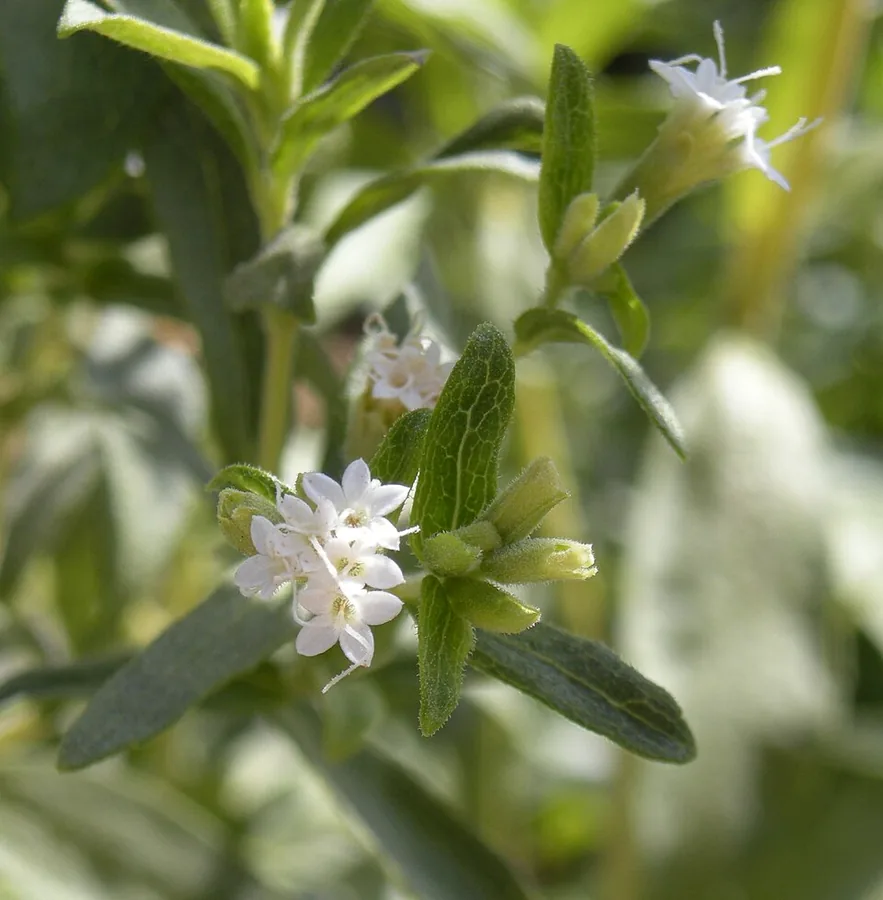
Stevia rebaudiana is a tender herb in the Asteraceae family, brought into cultivation from the Paraguayan highlands where its foliage has served as a sweetener for generations. The sweetness comes from steviol glycosides, leaf compounds that register many times sweeter than sugar yet contribute no calories. Because these compounds concentrate in the foliage, a single fresh leaf reads as sweet the instant it is chewed.
In growth habit it stays compact and bushy, reaching 18 to 30 inches (45 to 75 cm) at maturity. It behaves as a perennial only in frost-free climates; elsewhere it is frost-tender and is handled as a warm-season annual or lifted into a container and overwintered indoors. The plant performs equally in open ground and in pots, which makes it adaptable to beds and balconies alike.
Leaf quality depends on how the plant is managed. Regular pinching of the tips promotes denser branching, and removing flower buds early matters because, once the plant shifts into bloom, it redirects energy away from the foliage and the leaves lose sweetness. Managed this way, a single plant yields harvestable sweet leaves throughout the growing season.
Care
The short version: stevia performs best in full sun with steady moisture in free-draining soil, and consistent pinching of the flower buds and shoot tips sustains leaf production and the sweetness that peaks before bloom.
Light
Stevia is a full-sun species and needs six or more hours of direct light daily to build the dense, sweet foliage growers want. Light afternoon shade is tolerable in hot summer regions, but under deep shade the plant etiolates into thin, leggy growth with fewer leaves.
Water
The root system is shallow, so the soil should stay evenly moist and never waterlogged, since shallow roots both dry out and suffocate quickly. Water roughly every 2 to 4 days, more frequently under heat or in containers where drying accelerates, and mulch to buffer soil moisture.
Soil
Grow stevia in a well-drained loam rich in organic matter; the organic fraction supplies nutrients while the structure lets surplus water pass through and protects the shallow roots. The species accepts a broad pH span of 6.0 to 7.5, so most cultivated soils are suitable without amendment.
Temperature
Optimal growth falls between 50°F to 90°F (10°C to 32°C). The species is frost-tender: freezing temperatures kill the tissue outright, so containerized plants should be moved under cover before the first frost.
Humidity
Average humidity in the 40% to 70% range suits stevia, a band met by most indoor and outdoor conditions. Air movement is the more important variable, because still, humid air around crowded foliage favors both pest colonization and fungal rot.
Feeding
Apply a balanced, low-nitrogen organic fertilizer monthly through spring and summer. The nitrogen limit is deliberate: excess nitrogen drives vegetative growth at the expense of glycoside concentration, so overfeeding directly reduces leaf sweetness.
Pruning
Frequent pinching of the shoot tips forces lateral branching and a bushier canopy. Removing flower buds as they appear is equally important, since flowering diverts resources from the leaves and lowers their sugar content, which is highest before bloom.
Repotting
Repot annually, or whenever the plant is brought indoors to overwinter, shifting it into a marginally larger container with fresh medium. Indicators that it has outgrown its pot include roots circling the rootball, a slowing of growth, and soil that dries almost immediately after watering.
Size & spacing
At maturity plants stand 18 to 30 inches (45 to 75 cm) tall with a spread of 12 to 24 inches (30 to 60 cm). Spacing plants at roughly that width sustains air circulation between them, which keeps foliage dry and limits disease.
When to plant
Stevia demands warmth and has no frost tolerance, which dictates the schedule. Start sowings or cuttings under cover in late winter, and set plants out only once frost has passed and the soil has warmed. Leaf harvest then runs through summer until the first frost ends the season.
Northern hemisphere
Southern hemisphere
Typical months for a temperate climate: start earlier in warm zones, later where spring frosts linger.
- Sow: 8-10 weeks before the last spring frost
- Plant: after all danger of frost has passed and soil has warmed to at least 50°F (10°C)
- Harvest: Harvest leaves through summer; pinch flowers as leaves are sweetest before bloom. Main leaf harvest before flowering in late summer/early fall.
Hardiness
USDA hardiness zones: 9–11
Temperature: down to -7°C
Troubleshooting
The majority of stevia problems present on the foliage, arising from insect pests, saturated roots, or the shift into flowering. Reading these signs early allows intervention before yield or leaf quality declines. Identify the pattern below and respond while correction is still effective.
Wilting in saturated soil from decayed roots
Wilting that persists in wet soil is characteristic of root rot, driven by waterlogged, poorly drained ground. The affected roots turn brown and soft and cannot regenerate. Reducing irrigation immediately, correcting drainage or repotting into a free-draining medium, and never leaving a container in standing water together halt the decline.
Fix:
- Reduce watering immediately
- Improve soil drainage or repot into well-drained mix
- Remove and discard severely affected plants
Foliage blackened following a freeze
Blackened, collapsed foliage after cold weather reflects stevia's frost-tenderness, since the tissue cannot survive a freeze. Relocating containers indoors ahead of cold protects the plant. Where frost has already struck, cutting back the damaged growth and overwintering the plant under cover preserves it for the following season.
Fix:
- Move container plants indoors before frost
- Cut back damaged growth and overwinter the plant indoors
Curled, sticky foliage with insects massed beneath
Curling with a sticky coating points to aphids or whiteflies, sap-sucking insects that congregate on leaf undersides and excrete honeydew as they feed. A firm spray of water dislodges the colony, and insecticidal soap suppresses any that persist. Removing the most heavily colonized leaves clears the reservoir of insects.
Fix:
- Spray plants with a strong jet of water to dislodge insects
- Apply insecticidal soap to affected foliage
- Remove and destroy heavily infested leaves
Ragged holes eaten near the base of the plant
Ragged holes accompanied by shiny mucus trails indicate slugs or snails, which feed nocturnally and during wet weather. Hand-collection after dark, when they are active, is the most direct control. Removing mulch and surface debris eliminates the damp daytime shelter the population depends on, and traps or barriers reduce numbers further.
Fix:
- Hand-pick slugs in the evening
- Remove debris and mulch that harbor them
- Use slug traps or barriers around plants
Declining sweetness coinciding with bud formation
A drop in sweetness alongside slower leaf production signals the onset of flowering, at which point the plant allocates resources to reproduction rather than foliage. Pinching out buds as they emerge at the shoot tips delays this shift. Taking the principal harvest before bloom secures leaves at their maximum sugar content.
Fix:
- Pinch out flower buds as they form
- Harvest leaves before full bloom
Toxicity
From a safety standpoint stevia ranks among the most benign plants in cultivation. Its leaf is an edible, no-calorie sweetener in worldwide culinary use, and it carries no toxicity listing against household cats and dogs or other kept animals. Incidental browsing by a curious pet carries no meaningful risk.
Safe for
People · Cats · Dogs · Horses · Rabbits · Livestock · Birds
Cats None
Stevia is not among the species the ASPCA flags as toxic to cats, so it presents no poisoning risk. A small quantity of leaf is harmless, though consuming a large volume of any foliage can provoke transient gastrointestinal upset.
Dogs None
The foliage contains no toxin hazardous to dogs. Ingesting a large amount may cause brief digestive upset, at most some short-lived gas or a softened stool.
Horses Safe
Stevia presents no toxicological danger to horses. Grazing on an occasional sprig is safe, as the leaf yields the same glycoside sweetener consumed by people.
Rabbits Safe
Rabbits tolerate stevia without issue, and the sweet leaf works as an acceptable occasional treat. Portions should stay small so the diet remains dominated by hay and leafy greens.
Livestock Safe
Goats, sheep, and cattle graze stevia safely. Because it is cultivated as a food crop, the foliage holds nothing that would harm ruminant grazers.
Birds Safe
Poultry and pet birds may peck the leaves without hazard. The tissue holds no avian toxin, only a distinctly sweet flavor.
People Safe
Stevia is cultivated specifically for human consumption. Its leaves function as a no-calorie sweetener, eaten fresh or dried, and are considered safe for all members of a household.
Leaves are edible and used as a natural sweetener; no special handling precautions are required.
Varieties
Commercial stevia is generally offered without a cultivar name, yet a few named selections are worth sourcing where higher glycoside content or reliable container performance is the goal.
Sweet Sugar Leaf
A commonly grown selection notable for its high steviol glycoside levels, which give the leaves a pronounced sweetness.
Candy
A compact, high-yielding cultivar developed for dependable container culture while still producing an ample crop of sweet leaves.
How to propagate
Two propagation routes exist, and they differ sharply in reliability. Seed germinates slowly and inconsistently, whereas cuttings root quickly and reproduce a chosen plant exactly, which is why most growers favor them.
SeedDemanding
Start indoors 8-10 weeks before the last spring frost · Germination in 1-3 weeks, but often poor and erratic
Seed propagation is the demanding option. Start seed under cover 8 to 10 weeks ahead of the last spring frost, but anticipate low viability and uneven emergence over 1 to 3 weeks. Given the high failure rate, most growers bypass seed in favor of cuttings.
Stem cuttingsModerate
Spring through summer from healthy non-flowering shoots · Roots in 2-4 weeks
Cuttings are the reliable method and reproduce the parent exactly. At any point across spring through summer, insert a softwood tip taken from a healthy, non-flowering shoot into moist medium, and roots form in roughly 2 to 4 weeks.
Myths
Stevia foliage is bitter when eaten fresh from the plant.
A freshly picked leaf delivers a clean, intense sweetness rather than bitterness, because the steviol glycosides are already present in the raw tissue. Glycoside levels are highest before flowering, so the principal harvest should be taken while buds remain closed.
Stevia is a cold-hardy perennial able to overwinter outdoors.
It is genuinely perennial where winters stay warm but remains frost-tender and is killed back by the first freeze. In colder regions it is therefore cultivated as an annual, or a potted specimen is moved indoors to carry it over the winter.