Herb · Asteraceae
German Chamomile
Matricaria chamomilla
Under full sun with unimpeded drainage, Matricaria chamomilla flowers freely, lining beds with apple-scented daisies through the season.
Full sun
Every 3–7 days
41–86°F · 5–30°C
60–65 days
Overview
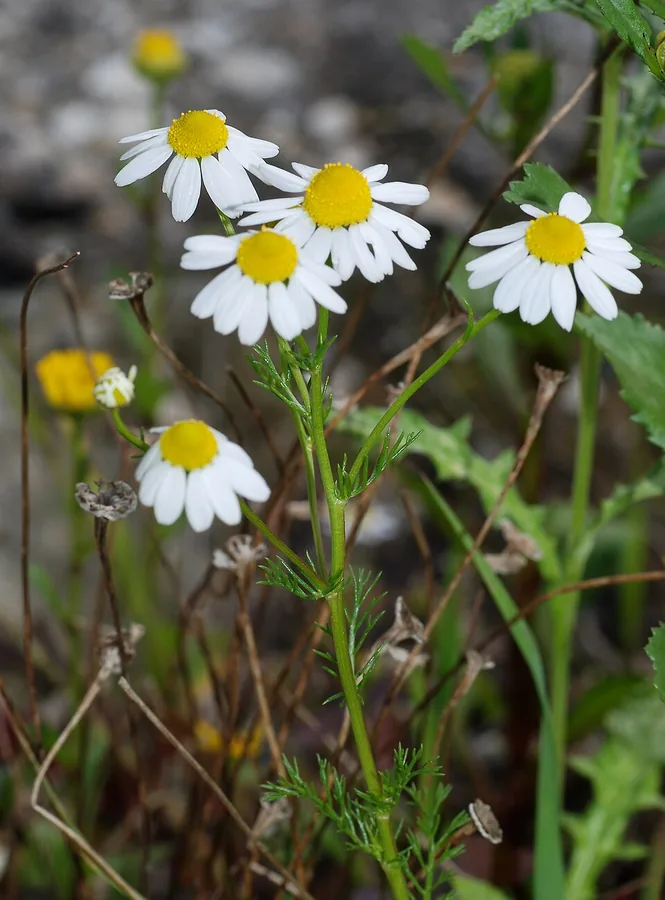
German chamomile is an upright, fast-growing annual in the daisy family, and the source of most chamomile tea. Its small white-and-yellow flower heads sit on finely divided, feathery foliage, and the plant releases a sweet, apple-like aroma that announces it before the eye finds it. The flower heads are the crop, cut at full openness and dried for a calming infusion.
Its cultural demands are modest. Direct sun and well-drained soil meet almost all of them, and the species performs even on poor, low-fertility ground that would check more demanding herbs. Because it self-seeds freely, a season's flowers reliably regenerate the next, and a small planting can persist in a bed for years wherever a few heads are allowed to mature.
One caveat governs siting. The dried flowers make an infusion safe for most people, but the fresh plant is mildly toxic to cats, dogs, and horses, and the foliage can provoke contact dermatitis in anyone sensitized to ragweed. It earns a place in the garden readily, provided that place is out of reach of a browsing pet.
Care
The short version: full sun, light well-drained soil, and even moisture during establishment, with minimal feeding and consistent deadheading to sustain flowering.
Light
Chamomile sets the most bud in full sun, meaning six or more hours of direct light daily. It tolerates light afternoon shade, but insufficient light produces elongated stems and only sparse flowering.
Water
Hold seedlings and young plants evenly moist through establishment, when the root system is shallow. Once established the plant withstands a brief dry spell, yet consistent moisture over free-draining soil yields the heaviest flowering.
Soil
Grow it in well-drained sandy to loamy soil. The species tolerates poor, low-fertility ground and accommodates a broad pH range of 5.6 to 7.5.
Temperature
A cool-season herb, it grows within a range of 41°F to 86°F (5°C to 30°C). Seedling frost tolerance is what makes an early sowing practical.
Humidity
Average ambient humidity of 40% to 60% suffices. In the open garden this is generally met without intervention, so direct attention to airflow rather than to humidity itself.
Feeding
Feed sparingly. A little compost or a dilute balanced feed at planting meets the plant's needs, and surplus nitrogen shifts growth from flower to foliage, reducing yield of the very heads you grow it for.
Pruning
Deadhead and harvest open heads often to extend flowering and restrain self-seeding. Cut back leggy growth as it develops to maintain form.
Repotting
Repotting does not apply. The species is raised as a direct-sown or transplanted annual and renewed each season, so it is replaced rather than potted on.
Size & spacing
Mature plants stand 12 to 24 inches (30 to 60 cm) tall with a spread of 8 to 12 inches (20 to 30 cm). Allow roughly a hand's width between plants to maintain air movement through the stand.
When to plant
German chamomile is a cool-season annual that establishes early. Start it under cover in late winter or sow directly in early spring, as the seedlings withstand a light frost. The daisy-like flowers open in early to midsummer, which is the window for cutting and drying the heads.
Northern hemisphere
Southern hemisphere
Typical months for a temperate climate: start earlier in warm zones, later where spring frosts linger.
- Sow: Late winter to early spring, about 4-6 weeks before the last frost
- Plant: Early spring; cool-season annual whose seedlings tolerate a light frost
- Harvest: White-and-yellow daisy flowers in early to mid summer; harvest flower heads when fully open with petals reflexed
Hardiness
USDA hardiness zones: 2–8
Temperature: down to -46°C
Troubleshooting
Chamomile is an undemanding herb, though a handful of predictable issues arise around seedling establishment, light, and its vigorous self-seeding. Most appear early and are readily corrected. Identify the disorder below, then intervene before it advances.
Seedlings keel over at the soil line
A seedling that pinches and falls at the base is showing classic damping-off, caused by soilborne fungi that thrive where the surface holds cold moisture. The stem tissue at the soil line goes water-soaked and can no longer support the plant, so it collapses. Deny the pathogen its conditions by sowing thinly in a sterile, free-draining mix, watering sparingly, and keeping air moving across the surface.
Fix:
- Reduce watering
- Improve drainage and airflow
- Sow thinly in a sterile, well-drained seed mix
Honeydew-slicked buds and distorted shoot tips dotted with soft-bodied insects
Soft green or black insects massed on the buds are aphids, and the sticky film they excrete is honeydew. Because they feed on tender, sap-rich tissue, an excess of nitrogen that forces soft growth invites them in, so reduce the feed and dislodge the colony with a firm jet of water. Insecticidal soap breaks down the cuticle of a heavier population, while ladybirds and other predators supply ongoing control.
Fix:
- Dislodge aphids with a strong spray of water
- Apply insecticidal soap
- Encourage beneficial insects such as ladybugs
Leggy stems and barely any flowers
Elongated, sparsely flowered stems point to a light deficit, since chamomile needs at least six hours of direct sun to set bud freely and stretches toward the light when it falls short. Relocate the planting to a full-sun position to correct the cause. Curb nitrogen, which biases growth toward foliage at the expense of flower, and deadhead spent heads to redirect the plant's energy into fresh bloom.
Fix:
- Relocate to a full-sun site
- Reduce fertilizing
- Deadhead to encourage more flowers
Unplanned chamomile seedlings colonizing the bed the following spring
A flush of unbidden seedlings the next spring reflects chamomile's strong self-seeding habit, as a single ripened head releases dozens of viable seeds into the bed. Interrupt the cycle by harvesting or deadheading the heads before the seed matures and sheds. Any volunteers that do establish lift out with minimal effort while their root systems are still shallow.
Fix:
- Deadhead before seed set
- Pull unwanted volunteer seedlings
Toxicity
Chamomile is benign in the cup and merely to be managed in the bed. The dried flowers yield an infusion safe for most people to drink, yet the living plant is mildly toxic to cats, dogs, and horses, and its volatile oils can irritate skin on contact. Keep pets from grazing it, and wear gloves if you are prone to plant allergies.
Toxic to
Cats · Dogs · Horses · Rabbits · Livestock · Birds
Safe for
People
Cats Mild
In a cat, ingestion of the foliage tends to produce drooling, vomiting, and reduced appetite, while the volatile oils can leave the skin irritated on contact. Sustained grazing over time has been associated with a tendency toward easy bleeding.
Dogs Mild
A dog that eats the plant commonly develops gastrointestinal upset, loose stools, and a lowered appetite. Repeated contact can redden the skin, and prolonged ingestion carries the same bleeding tendency reported across the affected animals.
Horses Mild
In grazing horses the response is typically digestive, with a sour stomach and mild diarrhea, and the volatile oils occasionally irritate the muzzle and skin where they make contact.
Rabbits Mild
The volatile oils that disturb cats and dogs act on a rabbit's digestive tract as well, so exclude them from the foliage and provide safer browse in its place.
Livestock Mild
Goats, sheep, and cattle grazing chamomile may present with digestive upset and skin irritation, although most stock avoids the bitter, aromatic foliage of their own accord.
Birds Caution
Firm evidence for birds is scarce, so apply caution and keep pet birds away from the oily foliage and pollen.
People Edible as tea
The dried flowers yield a soothing tea that most people can drink without incident. The exception is dermal exposure: contact with the foliage or pollen can provoke contact dermatitis, particularly in individuals sensitized to ragweed and related Asteraceae.
Wear gloves when handling; the foliage and pollen can cause contact dermatitis, especially in people sensitive to ragweed and other Asteraceae.
Helpline numbers

United States
ASPCA Animal Poison Control: (888) 426-4435 (fee applies)

United Kingdom
Animal PoisonLine: 01202 509000 (fee applies)

Australia
Animal Poisons Helpline: 1300 869 738
Varieties
A few named cultivars merit attention, most selected by tea growers for larger heads or higher oil content. Those below are the ones worth sourcing.
Bodegold
A German tea cultivar developed for large flower heads and a high yield of essential oil.
Bona
A Czech cultivar recorded in trials as the earliest to flower each season, which favors an early harvest.
Zloty Lan
A Polish cultivar selected for high bisabolol content and a heavy yield of essential oil.
How to propagate
SeedEasy
Early spring; sow indoors in late winter or direct-sow once soil is workable, as seedlings tolerate light frost · Germinates in about 7-14 days and flowers in roughly 60-65 days
Chamomile propagates dependably from seed, either started under cover in late winter or sown directly once the ground is workable in spring, since the seedlings withstand a light frost. Sow onto the surface and leave the seed exposed, as it requires light to germinate and will not break dormancy when buried. Emergence follows in about 7 to 14 days, flowering in roughly 60 to 65 days, and any heads left to ripen will reseed the bed for the following year.
Myths
The chamomile sold as German and the type sold as Roman are one and the same species.
Though they share the same family and a common use, they are distinct species. German chamomile is the upright, self-seeding annual Matricaria chamomilla, whereas Roman chamomile is the low, mat-forming perennial Chamaemelum nobile. Both yield a tea, but they diverge in growth habit and chemistry.
Because the tea is so mild, the plant itself must carry no toxicity.
The brew is mild, yet the living plant warrants respect. The ASPCA lists chamomile as toxic to cats, dogs, and horses, and its volatile oils and acids can induce dermatitis, gastric upset, and allergic reactions. A ragweed sensitivity often predicts a chamomile reaction, given their shared Asteraceae chemistry.