Houseplant · Araceae
Split-leaf Philodendron
Philodendron bipinnatifidum
Steady warmth, consistent soil moisture, and bright indirect light let this large-leaved aroid build the broad, architectural canopy it is known for.
Bright indirect
65–85°F · 18–29°C
USDA 9–11
4–15 ft · 1.2–4.6 m
Overview
The split-leaf philodendron takes its common name from broad, deeply pinnatifid leaves borne on a single stout, self-supporting stem. A member of the Araceae, it is native to South America, where it develops as a broad, semi-woody shrub rather than a climber. Container culture restrains its size, but the plant retains its spreading habit and needs space to express it.
Its reputation as an easy subject rests on tolerance: it accepts warmth, bright indirect light, and a consistently moist medium, and it recovers from lapses that would check a more exacting houseplant. With age the oldest basal leaves are shed and the stem thickens and turns woody, so a mature specimen assumes a small, tree-like form.
One caution governs placement: all tissues contain calcium oxalate crystals, which produce oral stinging on chewing and can irritate skin on contact. That chemistry makes the plant a poor choice where pets or young children browse foliage, and it is the reason gloves are advised for any pruning.
Care
The short version: provide bright indirect light, hold temperatures above 65°F (18°C), and keep the medium evenly moist but never saturated, with monthly feeding and high humidity across the growing season.
Light
Position it in bright indirect light for optimal growth. It tolerates a wide range, from partial sun to fairly deep shade, but intense midday sun scorches the leaf blade while insufficient light produces thin, slow, drawn-out growth.
Water
Maintain the medium evenly moist but never waterlogged, and never leave the pot standing in drainage water. The species tolerates neither drought nor accumulated salts, so water consistently and taper the amount through winter as growth slows.
Soil
Grow it in a rich, moisture-retentive yet free-draining medium high in organic matter. Ordinary potting soil suffices for indoor containers, and the plant is indifferent to texture, accepting clay, sand, or loam across a slightly acidic to slightly alkaline range.
Temperature
Growth is best between 65°F and 85°F (18°C to 29°C), with steady warmth preferred year-round. Hold it above roughly 70°F (21°C) in summer and above 60°F (16°C) in winter, and return container specimens indoors ahead of frost, which the tissue does not survive.
Humidity
As a tropical species it favors high humidity. It endures average indoor air, but foliar appearance improves when ambient moisture is raised, particularly during the dry conditions of a heated winter interior.
Feeding
Feed monthly through spring and summer, the period of active growth. A dilute water-soluble houseplant fertilizer or a slow-release formulation supplies enough; over-application drives soluble salt accumulation, which scorches the leaf tips.
Pruning
Pruning requirements are minimal. Remove yellowed, damaged, or spent lower leaves at the base; little else is needed. Wear gloves and avoid sap contact, which can provoke contact dermatitis.
Repotting
Repot only once the plant outgrows its container or roots begin circling the surface and emerging from the drainage holes. Large, established specimens are repotted infrequently. Transfer into general-purpose potting soil when you do.
Overwintering
In climates with frost the plant is brought indoors before cold sets in. It is reliably hardy outdoors only in roughly zones 9 to 11, so grow it in a portable container and maintain it above 70°F (21°C) in summer and above 60°F (16°C) in winter.
Size & spacing
Indoors it remains restrained, but as a landscape specimen in frost-free climates it can reach 4 to 15 feet (1.2 to 4.5 m) in height and 6 to 15 feet (1.8 to 4.5 m) in spread. Allot a wide, open position, since the large leaves of a mature plant extend well beyond the base of the stem.
Troubleshooting
Nearly every disorder in this plant originates at the roots or registers first in the foliage. Reading those early symptoms lets you correct the cause before it advances. Identify the sign below, then intervene while the response still yields a result.
Soft, blackened roots with wilting or collapse
Persistently saturated, poorly draining soil is the direct cause of root rot, which can kill even a large specimen. Unpot the plant and assess the roots: sound tissue is firm and pale, whereas rotted tissue is brown, soft, and foul. Excise the dead roots, repot into fresh free-draining medium, and reduce watering thereafter.
Fix:
- Reduce watering
- Repot into fresh well-draining mix and trim away rotted roots
- Ensure the container drains freely
Progressive yellowing of the lower leaves
Yellowing confined to the lower leaves nearly always reflects overwatering or inadequate light. Allow the surface to dry slightly between waterings, verify that the container drains freely, and relocate the plant to brighter indirect light. Remove leaves once they have yellowed completely, as they will not recover.
Fix:
- Let excess water drain and allow the soil surface to dry slightly before rewatering
- Move to a brighter spot with medium to bright indirect light
- Remove badly yellowed leaves
Honeydew, webbing, or insects on the foliage
Dry indoor air and plant stress favor aphids, mealybugs, scale, thrips, and spider mites, evident as sticky honeydew, stippled tissue, or fine webbing. Dislodge a light infestation by washing or wiping, then treat with insecticidal soap or horticultural oil. Isolate the plant until the population is controlled.
Fix:
- Wash or wipe off light infestations
- Treat with insecticidal soap or horticultural oil
- Isolate affected plants until controlled
Curling, browning leaf tips
Brown, curling tips indicate an accumulation of soluble fertilizer salts in the medium. Suspend feeding and leach the pot with a generous volume of plain water to carry the salts out through the drainage holes. Resume feeding only at a dilute rate.
Fix:
- Stop fertilizing
- Leach the soil by flushing thoroughly with water
- Resume feeding only at a dilute rate
Bleached or scorched patches on exposed leaves
Pale, scorched patches on the most exposed leaves indicate excessive direct sun. Relocate the plant to dappled sun, part shade, or bright indirect light. If greater exposure is intended, acclimate it gradually so the foliage can adjust before the intensity increases.
Fix:
- Move to dappled sun, part shade, or bright indirect light
- Acclimate gradually before increasing sun exposure
Discrete dark spots on the foliage
Leaf spot, whether fungal or bacterial, establishes on foliage that remains wet in still, poorly ventilated air. Water at the soil line to keep the leaves dry, increase spacing to improve air movement, and remove the affected leaves.
Fix:
- Improve air circulation
- Keep foliage dry when watering
- Remove affected leaves
Toxicity
Placement should exclude any animal or child inclined to chew the foliage. Every part contains insoluble calcium oxalate crystals that cause immediate oral burning, profuse salivation, and swelling on contact. No tissue is edible, and even the sap can irritate skin, so prune in gloves and site the plant beyond the reach of pets and children.
Toxic to
Cats · Dogs · Horses · Rabbits · Livestock · Birds · People
Cats Toxic
In a cat, biting the foliage releases calcium oxalate crystals that cause immediate oral burning. Expect pronounced salivation, pawing at the face, vomiting, and dysphagia. Swelling of the mouth and pharynx can develop, and in rare cases it compromises breathing.
Dogs Toxic
In a dog, chewing any part elicits drooling, gagging, and pawing at an irritated mouth, commonly followed by vomiting and abrupt anorexia. Signs are generally mild and resolve within a day, though infrequent airway swelling warrants veterinary attention.
Horses Toxic
In a horse, the crystals sting the mouth and lips, prompting salivation and refusal of feed. The inflamed, swollen oral tissue keeps the animal off its ration until the irritation subsides.
Rabbits Toxic
The crystals injure a rabbit's oral tissue as they do in any species, so the plant must be kept well out of reach. Anticipate drooling and cessation of eating, which is a genuine risk in so small a grazer.
Livestock Toxic
Cattle, goats, and sheep that browse the foliage sustain the same oral burning, salivation, and swelling. Most reject the bitter plant after an initial taste, but it should never be grown within grazing range.
Birds Toxic
In pet birds, chewing the leaves produces the same irritation of the mouth and throat, with salivation and evident discomfort. Keep the plant away from any bird permitted to roam and forage.
People Caution
No part of the plant is edible; biting a leaf produces sharp burning of the mouth, lips, and tongue, with swelling and salivation. Handling alone can irritate skin, so wear gloves when pruning and keep the plant from young children.
Wear gloves when pruning; the sap can cause skin irritation/contact dermatitis. Keep out of reach of pets and children
Helpline numbers

United States
ASPCA Animal Poison Control: (888) 426-4435 (fee applies)
Poison Control: (800) 222-1222



Canada
Poison Centres: 1-844-764-7669
Varieties
Named selections are few, but one compact cultivar appears often enough in the trade to merit mention.
'Lundii'
'Lundii' is a compact selloum selection that remains smaller and more restrained than the species, suiting it to confined spaces.
How to propagate
Propagation is straightforward by division of the basal offsets, and it is worth attempting from seed only in the absence of any easier option.
DivisionEasy
Spring to summer during active growth · Several weeks to a few months
The most reliable increase comes from detaching the basal offshoots that develop around a parent plant. Carry it out in spring or summer during active growth, potting each division individually. Allow several weeks to a few months for the divisions to establish and root.
Stem cuttingsModerate
Any season, best under warm growing conditions · A few weeks to root
Stem cuttings and air layering are alternatives that succeed in any season but root most readily under warm conditions, with a cutting taking a few weeks to initiate roots. The tree and selloum types root less readily than the climbing philodendrons, which makes this the less dependable method for this plant.
SeedDemanding
When fresh seed is available · Slow and variable
Seed propagation is feasible but seldom justified in the home. Viability declines rapidly unless the seed has been correctly processed and vacuum-packed, and the resulting seedlings develop slowly and unevenly. Reserve the method for occasions when fresh seed is available and the simpler techniques are unavailable.
Myths
Split-leaf philodendron and Monstera deliciosa are the same species.
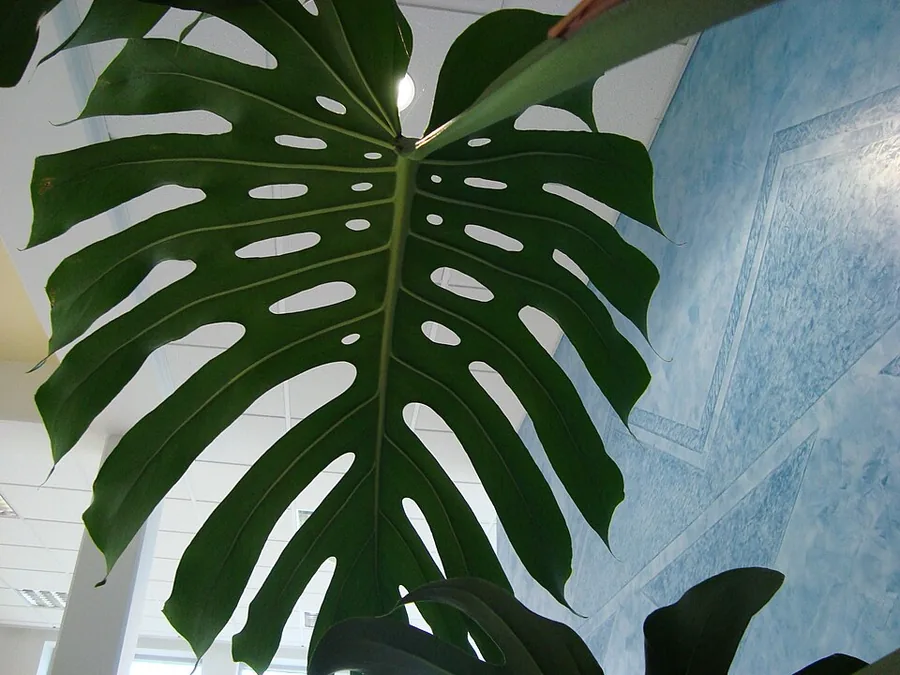
The two occupy different genera, though both belong to the Araceae. The name split-leaf philodendron is frequently misapplied to Monstera deliciosa, yet close inspection separates them. Monstera perforates its mature leaves with holes, whereas this philodendron bears deeply dissected leaves without perforations and forms a stout, trunk-like stem.
The transfer of this plant into the genus Thaumatophyllum is definitively settled.
A 2018 study segregated a clade of philodendrons into the genus Thaumatophyllum, and some databases accordingly record it as Thaumatophyllum bipinnatifidum. Kew's Plants of the World Online continues to treat that name as a synonym and retains Philodendron bipinnatifidum as the accepted name, so the classification remains unresolved.
Sources
- Plants of the World Online, Royal Botanic Gardens Kew
- Plants of the World Online, Royal Botanic Gardens Kew
- NC State Extension Gardener Plant Toolbox
- Missouri Botanical Garden Plant Finder
- University of Florida IFAS Extension (EDIS FPS473)
- ASPCA Animal Poison Control
- Pet Poison Helpline
- Clemson Cooperative Extension HGIC
- Missouri Botanical Garden Plant Finder