Shrub · Adoxaceae
Snowball Bush
Viburnum opulus
Sited in full sun with generous spacing, the snowball bush produces its dense white flower globes through mid spring.
Full sun
Every 5–10 days
USDA 3–8
10–12 ft · 3–3.7 m
Overview
The snowball bush takes its common name from the round white inflorescences that open across the shrub in mid spring, each cluster dense enough to resemble packed snow. As a deciduous member of the viburnum group, it is grown for its sterile, fruitless flowers, which is precisely why it sets no berries: the florets are showy but non-functional. The blooms emerge white and acquire a pink cast as they mature.
Structurally this is a large shrub, reaching 10 to 12 feet (3 to 3.7 m) in height and spreading wider into a rounded crown that needs little intervention once established. Its broad cold hardiness and tolerance of varied soils explain its long persistence in older landscapes, where it withstands severe winter minima and adapts to clay, loam, or sand alike.
Placement drives performance. A crowded, shaded position reduces flowering and raises mildew pressure, because restricted airflow keeps foliage damp. Site it in open sun with free air movement and it flowers heavily each May while demanding almost nothing further, a direct result of giving it the light and airflow it needs.
Care
The short version: provide full sun to light shade, an evenly moist but well-drained medium, and open spacing. Prune immediately after flowering, because the buds for next season are set on the current year's old wood, and later cuts remove them.
Light
Full sun drives the heaviest flowering, since bloom density in this shrub tracks light exposure directly. Partial shade is tolerated, but it reduces flower count and, by keeping the canopy cooler and damper, raises the risk of powdery mildew. The open, sunny position is therefore the sound default.
Water
Maintain evenly moist soil while the shrub is young, irrigating every 5 to 10 days and more frequently during drought, because an immature root system cannot yet buffer dry spells. Once established, the plant becomes markedly more drought-tolerant and handles a wide range of conditions, though prolonged desiccation still stresses it.
Soil
The species is unfussy about texture and grows in clay, loam, or sand provided drainage is adequate, since standing water is the real limiting factor rather than soil type. A well-drained loam suits it best, and it accepts a broad pH span from 5.5 to 8.0, which encompasses most cultivated soils without amendment.
Temperature
Cold hardiness is a defining trait here, with the shrub enduring winter minima to -40°F (-40°C) and summer maxima near 100°F (38°C). That wide thermal tolerance accounts for its reliability across a large geographic range and its frequency in long-established plantings.
Humidity
Ambient humidity outdoors is set by climate and needs no management, so there is no target figure. Air circulation is the operative variable, because stagnant, humid microsites at the canopy are where powdery mildew establishes and spreads.
Feeding
A single application in early spring meets the shrub's modest nutrient demand. Use a balanced slow-release shrub fertilizer or compost, and limit nitrogen, since excess promotes the soft, succulent growth that aphids preferentially colonize.
Pruning
Time pruning to the window immediately after flowering, because bloom initiation occurs on old wood and a later cut removes the following season's buds. Excise dead, damaged, or crossing stems to preserve the rounded habit, and otherwise leave the framework intact.
Repotting
This is a landscape shrub that rarely requires containment and performs best in open ground. A young plant held temporarily in a container should be potted on before roots begin to circle, but the objective remains transplanting it into the ground where it has room to develop.
Size & spacing
Allocate space for a mature specimen of 10 to 12 feet (3 to 3.7 m) in height and 12 to 15 feet (3.7 to 4.5 m) in width. Setting plants at that spacing from the start preserves airflow through the canopy and avoids the recurrent hard pruning that crowding forces.
When to plant
Flowering falls in mid to late spring, around May, and that single event organizes the maintenance calendar. Establish new plants in spring or fall while the soil remains workable, and confine pruning to the interval just after bloom, since the flower buds develop on old wood and any later cut sacrifices the next display.
Northern hemisphere
Southern hemisphere
Typical months for a temperate climate: start earlier in warm zones, later where spring frosts linger.
- Plant: Spring or fall while soil is workable
- Harvest: Mid to late spring (May); sterile snowball flower clusters, no fruit
Hardiness
USDA hardiness zones: 3–8
Temperature: down to -40°C
Troubleshooting
The snowball bush is notably low-maintenance, and the disorders that do appear concentrate on the expanding new foliage, where soft tissue is most vulnerable. Reading an early symptom, a curled tip or a spotted leaf, allows intervention before damage progresses. Match the presentation below and respond while treatment remains effective.
Leaf lesions, white coating, or stem dieback
Several disorders converge on similar symptoms here and warrant close inspection. Water-soaked angular lesions indicate bacterial leaf spot, a white surface coating signals powdery mildew in shaded, poorly ventilated sites, and entry holes with frass at the base of a declining stem implicate a borer. Remove affected wood, thin the canopy to improve airflow, and irrigate at the base to keep foliage dry.
Fix:
- Prune out and dispose of affected stems
- Improve air circulation by thinning and proper spacing
- Avoid overhead watering to keep foliage dry
Distorted, cupped new growth at the shoot tips
Twisted, cupped new leaves at the tips indicate the snowball aphid, which feeds on soft expanding tissue and deforms it as the leaf develops. Inverting a distorted leaf reveals colonies of bluish-gray aphids with a white, waxy bloom. The injury is largely cosmetic, so a forceful water spray or natural predators usually suffice, with insecticidal soap reserved for heavier populations.
Fix:
- Knock aphids off with a strong stream of water
- Tolerate light infestations since natural predators often control them and damage is mostly cosmetic
- Treat heavy infestations with insecticidal soap, neem oil, or a labeled systemic such as imidacloprid
Toxicity
This is a sound choice for households with animals or young children. The ASPCA classifies viburnum as non-toxic to cats, dogs, and horses, and the sterile snowball form sets no fruit, so it offers nothing palatable to ingest. A stray mouthful may produce mild gastrointestinal upset, as most plant material can, but the tissue itself is not poisonous.
Safe for
People · Cats · Dogs · Horses · Rabbits · Livestock · Birds
Cats None
Cats are unaffected. The ASPCA classifies viburnum as non-toxic, so investigative chewing carries no risk of poisoning.
Dogs None
Dogs incur no toxic effect. Ingesting a leaf produces at most the mild gastrointestinal upset typical of non-food plant material.
Horses None
Horses may graze in proximity without hazard, as the shrub contains no compounds toxic to them.
Rabbits Safe
Rabbits are unharmed by the foliage, which holds nothing poisonous, although it does not constitute a dietary staple.
Livestock Safe
Cattle, goats, and sheep face no risk of poisoning and may browse the shrub without adverse effect.
Birds Safe
Birds are in no danger, and because the sterile form produces no fruit, it offers them nothing to consume in any case.
People Safe
The plant is safe around children, since no part is poisonous and an incidental mouthful during play presents no toxic concern.
No special handling precautions are required; sap may occasionally irritate sensitive skin as with any plant.
Varieties
The name snowball is applied across several distinct species that share a globular, sterile inflorescence, which is where much of the confusion begins. The following are the forms most often encountered, with the traits that separate them.
Viburnum opulus 'Roseum' (also sold as 'Sterile')
This is the classic European snowball, distinguished by 3 to 4 inch globular clusters of sterile white florets that age to pink and set no fruit.
Viburnum macrocephalum (Chinese Snowball)
A separate species frequently confused with the European snowball, it produces considerably larger inflorescences up to 8 inches across on semi-evergreen growth.
Viburnum plicatum (Japanese Snowball)
Readily identified by its horizontally tiered branching and strongly pleated foliage, it bears its own rounded, sterile snowball clusters.
How to propagate
Because this cultivar produces no viable seed, propagation relies on vegetative methods that reproduce the parent exactly, taking a portion of the plant and rooting it.
Stem cuttingsModerate
Late spring to early summer · Several weeks to root, one or more seasons to establish
Collect softwood cuttings in late spring or early summer, while the current season's wood is still pliable and roots readily. Rooting takes several weeks, after which the young plant needs a season or more to establish. Since the sterile 'Roseum' yields no seed, cuttings are the only means of reproducing it true to type.
LayeringEasy
Spring through summer · One growing season or more to root before severing
Layering is the least demanding technique. Pin a low, flexible branch against the soil at any point from spring through summer and allow it to root in place over a full growing season before severing it from the parent. It is a dependable method for increasing this fruitless cultivar.
Myths
The snowball bush spreads invasively from seed like the wild European cranberrybush.
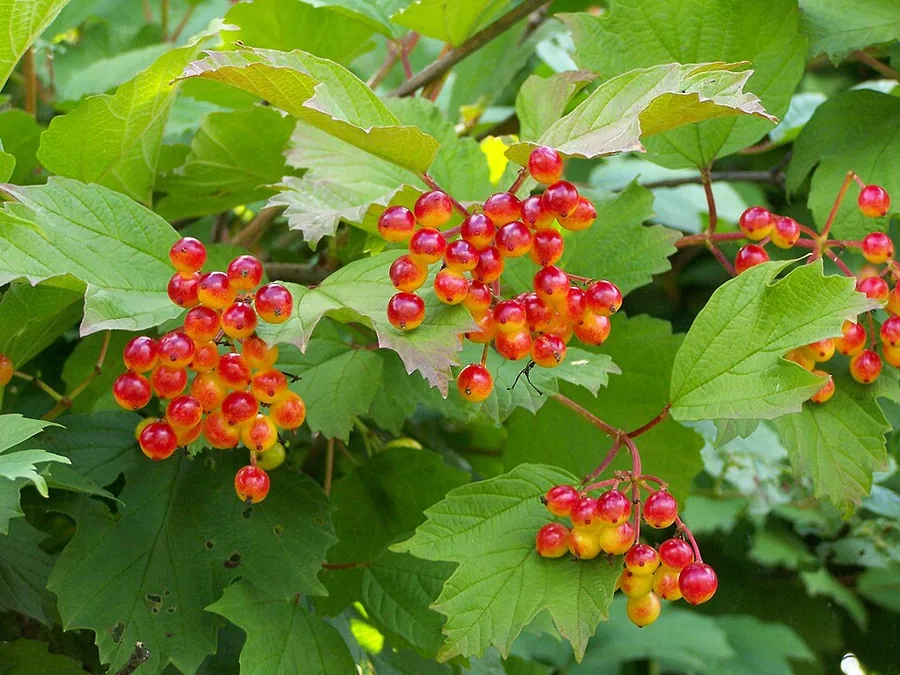
The mechanism for spread is simply absent. The 'Roseum' cultivar bears entirely sterile flowers and produces neither fruit nor viable seed, leaving it no means of self-dispersal. Only the fertile species, Viburnum opulus, has naturalized and become invasive in parts of the US and Canada.
The snowball bush is the same plant as the fragrant Chinese snowball viburnum.
These are separate species that converge only in appearance. The common European snowball is Viburnum opulus 'Roseum', the Chinese snowball is Viburnum macrocephalum with its larger inflorescences, and the Japanese snowball is Viburnum plicatum, three taxa under one common name.