Shrub · Adoxaceae
Elderberry
Sambucus canadensis
Supply sun, steady moisture, and a second cultivar nearby, and elderberry returns heavy clusters of dark fruit.
Full sun
Every 3–7 days
USDA 3–9
5–12 ft · 1.5–3.7 m
Overview
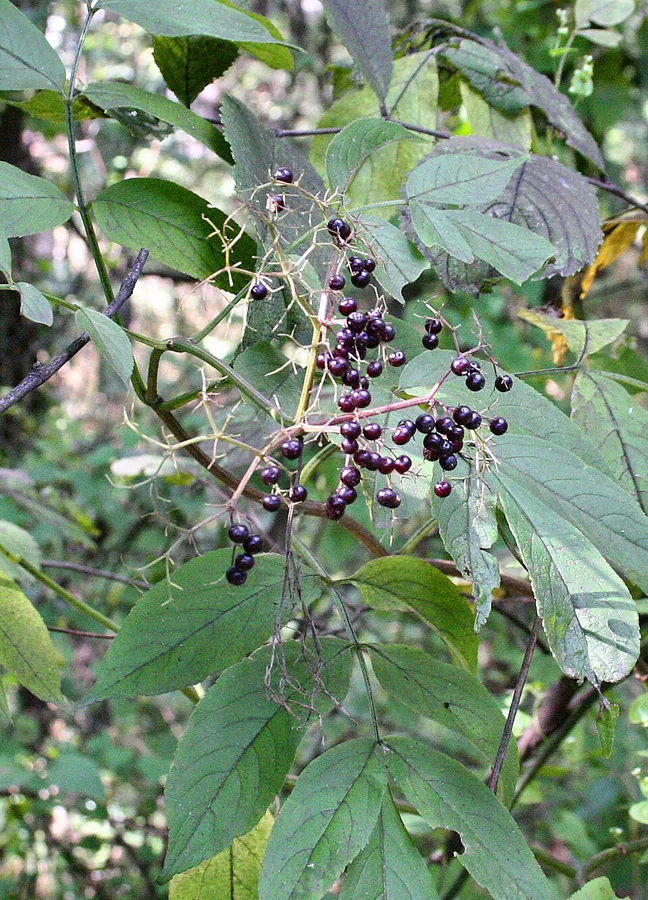
Elderberry is a fast, accommodating shrub that pays you twice in a season: broad, creamy flower heads open in June, and dark berry clusters follow, ripening from August into September. It sits in the genus Sambucus and grows wild across much of North America, favoring damp ground and field margins. Unchecked, it reaches 5 to 12 feet (1.5 to 3.7 m) and spreads to a similar width as a multi-stemmed thicket.
Few shrubs ask for so little. This one withstands cold across zones 3 through 9 and tolerates poor soil, saturated ground, and partial shade. One rule, though, is non-negotiable from the start: only the fully ripe berries, and only after cooking, are fit to eat. The leaves, stems, bark, roots, and any raw or unripe fruit hold cyanogenic compounds that sicken people and animals alike.
If fruit is your aim, plant a second cultivar within range, because a lone shrub sets only a light crop. Two different cultivars flowering in step pollinate one another and weigh the canes down with berries. Allow it space, keep the root zone watered, and prune it hard each winter, and an elderberry rewards the effort quickly.
Care
The short version: site it in full sun to part shade in rich, evenly moist soil, give it a balanced spring feed, prune it hard during dormancy each winter, and keep a second cultivar nearby for a full crop.
Light
Elderberry crops heaviest in full sun, where the abundant light fuels the flower heads and berry clusters to full development. It will take partial sun and even partial shade, but expect the yield to thin out as the planting site grows darker.
Water
Hold the soil evenly moist, since the shallow, fibrous root system dries quickly and the plant registers the shortfall most acutely while flowering and fruiting. Water deeply through any dry stretch, roughly every 3 to 7 days as conditions dictate, but never leave the ground sitting waterlogged.
Soil
Set it in rich, moist, well-drained loam, though elderberry is adaptable and copes with clay, sand, and ground that swings from wet to dry. It performs across a broad pH range of 5.5 to 7.5, which covers most garden soil without amendment.
Temperature
This is a truly hardy shrub, enduring winter lows of -29°F (-34°C) and summer highs of 95°F (35°C). That span suits most temperate gardens with no protective measures.
Humidity
It asks only for average humidity in the 40% to 70% band, and outdoor air seldom falls below that. Stagnant, congested air does encourage powdery mildew, so good airflow does more for the plant than ambient moisture ever will.
Feeding
Apply a single feed in early spring as growth resumes, choosing a balanced or nitrogen-rich product such as 10-10-10 or composted manure. For a plant this vigorous, one seasonal feeding meets its needs.
Pruning
Prune during the dormant season, in late winter. On established plants, cut dead, weak, and 3-plus-year-old canes back to the base to redirect vigor into the productive 1 to 2 year wood; some growers go further and cut the entire plant to the ground each year. Lift root suckers as you work to keep the plant from spreading.
Repotting
Elderberry is a ground plant rather than a container subject, so repotting seldom comes up. If circumstances force a pot, transplant it before the roots circle the inside, since a bound root mass stalls growth and wilts the plant soon after each watering.
Size & spacing
A mature specimen reaches 5 to 12 feet (1.5 to 3.7 m) in height and spreads to about the same, 6 to 12 feet (1.8 to 3.7 m). Allow each shrub generous spacing so air circulates freely and mildew is denied the still conditions it needs.
When to plant
Elderberry takes its cues from the calendar. Plant dormant bare-root stock or cuttings in early spring once the hard frosts are behind you, watch for the creamy flower heads in June, and gather the dark, ripe fruit from August into September.
Northern hemisphere
Southern hemisphere
Typical months for a temperate climate: start earlier in warm zones, later where spring frosts linger.
- Sow: Late winter, only after 60-90 days of cold-moist stratification; seed is slow and erratic, so cuttings are preferred
- Plant: Early spring after the last hard frost, using dormant bare-root plants or cuttings
- Harvest: Flowers in June; dark berry clusters ripen August to September
Hardiness
USDA hardiness zones: 3–9
Temperature: down to -40°C
Troubleshooting
Elderberry is a durable plant, and most of its troubles are minor. Powdery mildew and aphids mar appearance more than health, whereas cane dieback and foraging birds call for a prompter response. Find the match below and intervene before a small issue gains ground.
One cane collapsing alone while the rest stay green
A solitary cane failing while its neighbors hold up points to cane borers or fungal dieback working through old or injured wood. Sever that cane at the base and burn or bin it. The longer-term defense is renewal: a yearly dormant pruning that retires canes past 3 years old denies these problems the aging wood they depend on.
Fix:
- Cut out and destroy affected canes at the base
- Remove old (3-plus-year) and damaged canes during dormant pruning
A dusty white bloom spreading across the foliage
What you are seeing is powdery mildew, a fungus that colonizes congested, shaded growth precisely because stagnant air lets its spores settle and germinate. Open the canopy by thinning and pruning the canes so air moves through, pull the most heavily coated leaves, and turn to a labeled fungicide or horticultural oil only when the infection advances. On an otherwise healthy shrub the damage is rarely more than skin deep.
Fix:
- Thin and prune canes to improve air flow
- Remove and dispose of badly affected leaves
- Apply a labeled fungicide or horticultural oil if severe
Tender shoot tips curling under a film of sticky residue
These are aphids, and they gather on the soft, succulent growth that a nitrogen-heavy feed tends to force. A firm jet of water dislodges the colony, and insecticidal soap or horticultural oil settles any that persist. Left to it, lady beetles and lacewings will hunt down the survivors, so resist reaching for broad sprays.
Fix:
- Spray off with a strong jet of water
- Apply insecticidal soap or horticultural oil
- Encourage lady beetles and lacewings
Coloring fruit disappearing before you can pick it
Birds register ripe elderberries before a grower does and can clear a cluster within hours. Lay netting over the shrub as the fruit begins to darken, and cut whole cymes the instant they color. Choosing the cultivar Bob Gordon adds a built-in advantage, because its clusters invert and hang downward where birds find them harder to work.
Fix:
- Net plants as fruit begins to ripen
- Harvest whole cymes promptly when berries darken
- Grow cultivars with drooping clusters such as Bob Gordon
Toxicity
Here elderberry earns its caution. The leaves, stems, bark, roots, and any raw or unripe berries carry cyanogenic glycosides that release cyanide and provoke gut distress, and they are toxic to people and animals without distinction. Only fully ripe berries that have been cooked are safe to eat, so keep children, pets, and livestock clear of every green part of the plant.
Toxic to
Cats · Dogs · Horses · Rabbits · Livestock · Birds
Safe for
People
Cats Moderate
When a cat gnaws the foliage, canes, or raw fruit, expect drooling first, then vomiting, with diarrhea and a dull, withdrawn manner setting in afterward. The serious cases trace to a large mouthful of green tissue, since the cyanide it liberates can leave the animal weak.
Dogs Moderate
After a dog gets into the plant, look for vomiting, diarrhea, refusal of food, and a noticeable drop in energy. The typical outcome is a churning gut, yet a generous serving of raw fruit or leaves can drive the picture toward something heavier.
Horses Toxic
Foliage and woody tissue pose a real hazard to a horse, and the cyanide released can surface as drooling, colic, breathing distress, and an unsteady gait. The safe course is to fence elder well clear of any pasture or paddock within a horse's reach.
Rabbits Toxic
Keep the leaves, stems, and raw berries away from a rabbit entirely. A modest bite of the green plant is enough to provoke gut stasis and a fast slide downhill, so bar the shrub from anywhere a rabbit can browse.
Livestock Toxic
Cattle, goats, and sheep grazing the leaves or green fruit are exposed to cyanide poisoning, which in severe cases brings bloat, trembling, and collapse. A frequent route is wilted prunings tossed over a fence, where browsing stock find them irresistible.
Birds Caution
Wild birds consume the ripe fruit without harm and disperse the seed, a relationship that helps explain why the shrub crops so generously. The green tissue and raw, unripe fruit still carry cyanide, however, so caged birds should be offered none of it.
People Cooked ripe fruit safe
Cooked, fully ripe berries are a safe and well-loved kitchen staple, and processed or cooked flowers pose no problem either. Taken raw, the berries along with any leaves, stems, bark, or roots bring on nausea, vomiting, and diarrhea, so always cook the fruit and discard the green parts.
Keep children and pets from chewing leaves, stems, bark, or unripe berries. Never eat raw berries or any green parts; always cook ripe berries and discard stems and leaves before eating.
Helpline numbers

United States
ASPCA Animal Poison Control: (888) 426-4435 (fee applies)
Poison Control: (800) 222-1222



Canada
Poison Centres: 1-844-764-7669
Varieties
Most home growers settle on a few well-proven cultivars, and since the plant needs a pollination partner, they are planted in pairs as a matter of course. These are the names worth knowing.
Adams
An old, hard-working American selection prized for its large fruit clusters, and conventionally paired with York to supply the cross-pollination both need.
York
Among the largest-berried cultivars available, York also serves as a dependable pollinizer for Adams.
Bob Gordon
A productive Missouri cultivar notable for clusters that invert and hang as the fruit matures, which shelters much of the crop from foraging birds.
Sambucus nigra (European black elder)
Listed here as an alias, the European species reaches a taller, more tree-like form and is the parent of many of the ornamental and medicinal selections.
Companions
Elderberry's most useful neighbor is another elderberry. A second cultivar that blooms at the same time is what turns a light crop into a heavy one.
Plant near
A second, different elderberry cultivar (for example Adams with York): Cross-pollination between two cultivars that bloom at the same time increases fruit set and yield.
How to propagate
Few shrubs propagate as readily as elderberry, and three of the four methods are close to foolproof. Most growers pass over seed and simply take free copies from a plant they already have.
Stem cuttingsEasy
Hardwood cuttings in late winter while dormant; softwood cuttings in early summer · Roots in a few weeks; transplantable within one season
Cuttings are the most reliable way to start an elderberry. Use pencil-thick sections bearing 2 or 3 nodes, hold them at even moisture, and roots form within a few weeks. A cutting struck this year will be ready to set out in its permanent spot by season's end.
DivisionEasy
Dormant season, late winter to early spring · Establishes within one growing season
Because elderberry sends up rooted suckers around the crown, dividing it is simply a matter of lifting and separating those shoots while the plant rests in dormancy. Each division arrives with roots already formed and beds in across one growing season.
LayeringEasy
Spring to summer · Roots over one season before severing
The shrub's long, supple canes lend themselves to layering. Peg a low cane firmly to the ground from spring into summer, allow a full season for roots to form at the contact point, then detach it as an independent plant.
SeedDemanding
Sow after 60-90 days of cold-moist stratification · Slow and erratic; 1-2 or more years to a plantable shrub
Raising elderberry from seed tests your patience. The seed demands 60 to 90 days of cold, moist stratification to break dormancy, germinates unevenly even then, and takes 1 to 2 years or more to make a plantable shrub. Seedlings also segregate genetically, so cuttings remain the way to hold a named cultivar true to type.
Myths
Every part of an elderberry is deadly poison, so none of it can be eaten.
Cooked ripe berries and flowers are eaten widely and have served kitchens and herbalists for generations. Only the leaves, stems, bark, roots, and raw or unripe berries are toxic, and cooking the ripe fruit resolves the issue.
Ripe elderberries are fine to eat straight off the bush.
Raw and unripe fruit holds cyanogenic glycosides capable of triggering nausea, vomiting, and diarrhea. They are safe only after cooking, which is precisely why the fruit is never eaten fresh by the handful.
One elderberry bush is enough for a full crop.
A single plant is only partly self-fruitful and therefore sets a sparse crop on its own. Plant two or more cultivars that bloom at the same time and both fruit set and total yield rise sharply.