Ornamental · Apiaceae
Sea Holly
Eryngium planum
Grown in full sun and lean, dry soil, sea holly holds its steel-blue, thistle-like flower heads on stiff, self-supporting stems all summer.
Full sun
Every 10–21 days
USDA 5–9
2–3 ft · 0.6–0.9 m
Overview
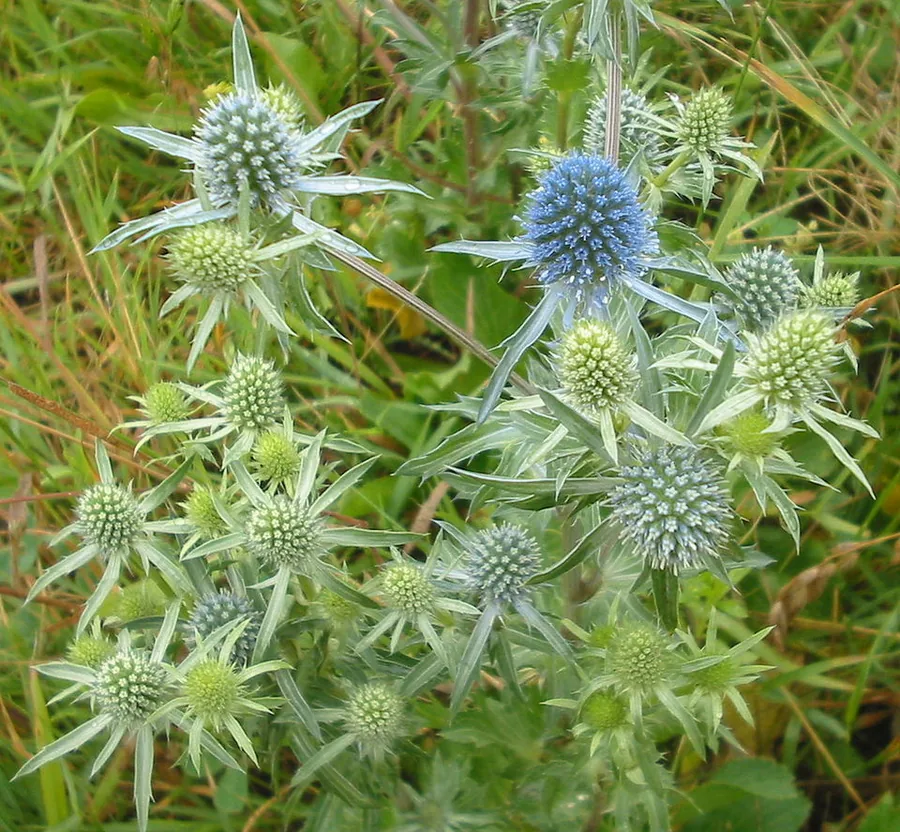
Sea holly, Eryngium planum, belongs to the carrot family rather than the true hollies, and the resemblance is only skin deep, arising from its spiny, steel-blue flower heads. It performs as a cold-hardy perennial across USDA zones 5 to 9, where the crown survives hard winters and returns each year. Each cone-shaped head is subtended by a ruff of stiff, silvery bracts that hold their color from June into September.
Its defining trait is a low nutrient demand paired with a need for fast drainage. In lean, dry soil under full sun, the stems build firm, self-supporting tissue, whereas rich ground or excess water drives soft, rapid growth that leans and flops. The practical lesson is that withholding feed and water yields the sturdier plant.
The flowers carry ecological and practical value. They supply nectar to bees and other pollinators through summer, and the stems hold their form and blue color when cut, so they dry well for lasting arrangements. Below ground, a deep taproot stores reserves that buffer the plant against drought, and the same structure explains why it transplants poorly once established.
Care
The short version: full sun, lean and sharply drained soil, and minimal water or feeding once the plant establishes. The deep taproot resents disturbance, so siting it correctly the first time matters more than any later intervention.
Light
Full sun drives the firm, upright growth this plant is known for, so site it in full sun. Partial sun is tolerated, but reduced light produces etiolated, weak stems that stretch and lean, since the tissue develops with less structural strength.
Water
Once established, the deep root system makes sea holly drought tolerant, and it is adapted to dry out fully between waterings, roughly every 10 to 21 days and only in extended drought. Wet, poorly drained soil is what triggers root rot, so overwatering is the most common cause of failure.
Soil
Sharp drainage matters more than fertility here. Plant in dry, sandy or loamy soil that drains freely, where the plant tolerates poor, gritty ground and a broad pH span of 5.5 to 8.5. Rich or persistently wet soil produces the twin faults of floppy growth and root rot.
Temperature
Cold hardiness is a defining strength. The crown withstands winter lows near -20°F (-29°C) and the plant tolerates summer heat to about 90°F (32°C), a range that spans zones 5 to 9 without winter protection.
Humidity
Low ambient humidity suits sea holly, and the record sets no target percentage. What matters is air movement around the foliage, because still, damp air favors the fungal problems this dry-adapted plant is not built to resist.
Feeding
This plant is adapted to low fertility and needs little to no fertilizer. A single spring feeding is the most it warrants, and even that is optional, because extra feeding drives the soft, leggy growth that later collapses.
Pruning
Two pruning tasks keep the plant in order. Deadhead spent flowers to maintain appearance, and cut the stems back once flowering ends. The foliage can be taken to ground level in late fall or early spring, which clears old growth ahead of the new season.
Repotting
Sea holly rarely needs lifting, and that follows directly from its root structure. The deep taproot resents disturbance, so an established plant recovers slowly from any move and is best left in place. Reserve digging for a long-standing clump that shows crowding or declining vigor.
Size & spacing
Mature plants reach 2 to 3 feet (61 to 91 cm) in height when flowering and spread 12 to 24 inches (30 to 61 cm) across. Space them at roughly that width so clumps develop fully and air circulates between them, which limits foliar disease.
When to plant
Sea holly follows the cycle of a temperate perennial. Because the seed germinates best after cold, moist chilling, sow it indoors in late winter, transplant it young so the taproot stays intact, and expect the steel-blue inflorescences from June through September.
Northern hemisphere
Southern hemisphere
Typical months for a temperate climate: start earlier in warm zones, later where spring frosts linger.
- Sow: Late winter, 8-10 weeks before last frost; seed germinates best after cold-moist stratification
- Plant: Spring after last frost, while young so the taproot is undisturbed
- Harvest: June to September
Hardiness
USDA hardiness zones: 5–9
Temperature: down to -29°C
Troubleshooting
Most sea holly problems are cultural, not pathological, and they trace back to conditions richer or wetter than the plant evolved to handle. Excess fertility, shade, and standing moisture account for nearly all of them. Identify the pattern below and correct the growing conditions rather than reaching for a treatment.
Wilt and basal collapse from root rot
A wilting plant with a soft, browning base indicates root rot, the predictable result of soil that holds water rather than an airborne pathogen. As it advances, the roots turn brown and mushy and the crown fails. Amend with sand or grit to sharpen drainage, suspend watering to let the soil dry, and remove any plant too far decayed to recover.
Fix:
- Improve drainage by amending with sand or grit
- Stop supplemental watering and allow soil to dry
- Remove and discard severely rotted plants
Leggy, floppy stems in rich or shaded sites
Weak, leaning stems are a growth response, not a disease, and they follow from soil that is too fertile or a position with too little sun. In lean, dry ground and full sun the tissue develops the rigidity to stand on its own. Withhold fertilizer, relocate the plant into stronger light where feasible, and cut the sprawling stems back after flowering.
Fix:
- Grow in lean, dry, well-drained soil and avoid fertilizing
- Site in full sun for stiff, self-supporting stems
- Cut back floppy stems after flowering
Distorted shoots and perforated leaves from pests
Two pests account for most damage. Aphids feed on the soft new growth and distort it as they draw sap, while slugs and snails rasp irregular holes and leave slime trails on the foliage. Dislodge aphids with a firm jet of water or treat with insecticidal soap, remove slugs by hand or with bait, and eliminate the damp debris that gives them cover.
Fix:
- Spray aphids off with a strong jet of water or use insecticidal soap
- Hand-pick slugs and snails or use bait
- Keep area free of debris that shelters slugs
Toxicity
No toxicity is documented for Eryngium planum by the ASPCA or by extension and botanical references, so it presents no poisoning risk to pets, livestock, or people. As a member of the carrot family, it shares nothing with the true hollies beyond a common name. The only real hazard is mechanical: the spiny bracts and leaf margins can prick or scratch, which is why gloves are advised when cutting stems.
Safe for
People · Cats · Dogs · Horses · Rabbits · Livestock · Birds
Cats None
No toxin in sea holly affects cats, so ingestion carries no poisoning risk. The only concern is mechanical, since the stiff, prickly bracts can scratch a nose or mouth that probes them.
Dogs None
Dogs can ingest the foliage without toxic effect, as the species contains no documented poison. In practice the spiny flower heads deter chewing well before any injury occurs.
Horses Safe
Horses face no chemical risk from sea holly, which carries no toxin. Its rigid, thistle-like bracts function as a physical deterrent, keeping grazing directed elsewhere.
Rabbits Safe
There is no toxic component for rabbits to metabolize, so poisoning is not a concern. The prickly leaves and stems usually prevent feeding altogether.
Livestock Safe
Cattle, goats, and sheep can graze in proximity without harm, since the plant holds no toxin. Its sharp, spiny growth acts as a mechanical barrier that discourages consumption.
Birds Safe
Birds are unaffected chemically and often work the flower heads for seed. The only obstacle they meet is the stiff bracts surrounding each head.
People Safe
The species is non-toxic to children and adults, with no poisonous tissue in any part. The documented hazard is mechanical: the spiny bracts and leaf margins can prick or scratch, so gloves are sensible when cutting or arranging stems.
The spiny, stiff bracts and leaf margins can prick or scratch skin; wear gloves when handling or cutting stems.
Varieties
Breeding has produced several named cultivars that differ chiefly in height and flower character. These are the ones most often grown.
Blue Hobbit
Blue Hobbit is a dwarf selection, forming a compact, globe-shaped mound that reaches only 8 to 12 inches in flower.
Blue Glitter
Blue Glitter produces a heavy set of glittering steel-blue heads on freely branching stems.
Jade Frost
Jade Frost is a variegated selection, its blue-green leaves margined in creamy white beneath violet-blue flower heads.
Tiny Jackpot
Tiny Jackpot is a compact cultivar held upright on strong stems to about 14 inches.
Companions
Sea holly looks its best next to other plants that share its taste for sun and dry, lean ground, where their colors and textures play off its steel-blue spikes.
Plant near
Black-eyed Susan: Shares full-sun, dry, well-drained conditions and contrasts with the steel-blue flower heads.
Ornamental grasses: Thrive in the same lean, sunny, drought-tolerant settings and complement the spiky texture.
Yarrow: Drought-tolerant, full-sun perennial that pairs well in dry borders and pollinator plantings.
How to propagate
Seed is the preferred method, because any technique that severs or lifts the deep taproot compromises establishment. Propagation therefore favors starting fresh over dividing existing clumps.
SeedModerate
Sow in late winter to spring; cold-moist stratification improves germination · Blooms typically in the second year from seed
Seed is the most reliable route to new plants. Sow from late winter into spring, and precede sowing with cold, moist stratification, since the seed germinates best after that chilling requirement is met. Transplant the seedlings young, before the taproot deepens, and expect first flowers in the second year.
DivisionDemanding
Spring, only if necessary · Slow and unreliable to recover
Division is the least dependable method and should be treated as a last resort. The deep taproot is cut and damaged in the process, so a divided clump transplants poorly and is slow and unreliable to recover. Attempt it only in spring and only when no alternative exists, because an undisturbed plant consistently performs better.
Myths
Sea holly is a true holly and therefore poisonous like holly berries.
Taxonomy corrects the name. Eryngium planum sits in the carrot family, not the genus that contains the true hollies, and no source records toxicity to pets or people. The only hazard is the spiny bracts, a mechanical one rather than a chemical one.
Sea holly clumps must be divided on a set schedule to remain vigorous.
The plant's root anatomy argues against routine division. Its deep taproot recovers slowly and unreliably once cut, so lifting an established clump sets it back rather than renewing it. Leave established plants in place and propagate from seed or root cuttings when more are wanted.