Bulb · Ranunculaceae
Persian Buttercup
Ranunculus asiaticus
Give the tuberous claws a cool, well-drained start and ranunculus returns dense, papery double blooms on long cutting stems.
Full sun
Every 3–7 days
90–120 days
USDA 8–10
Overview
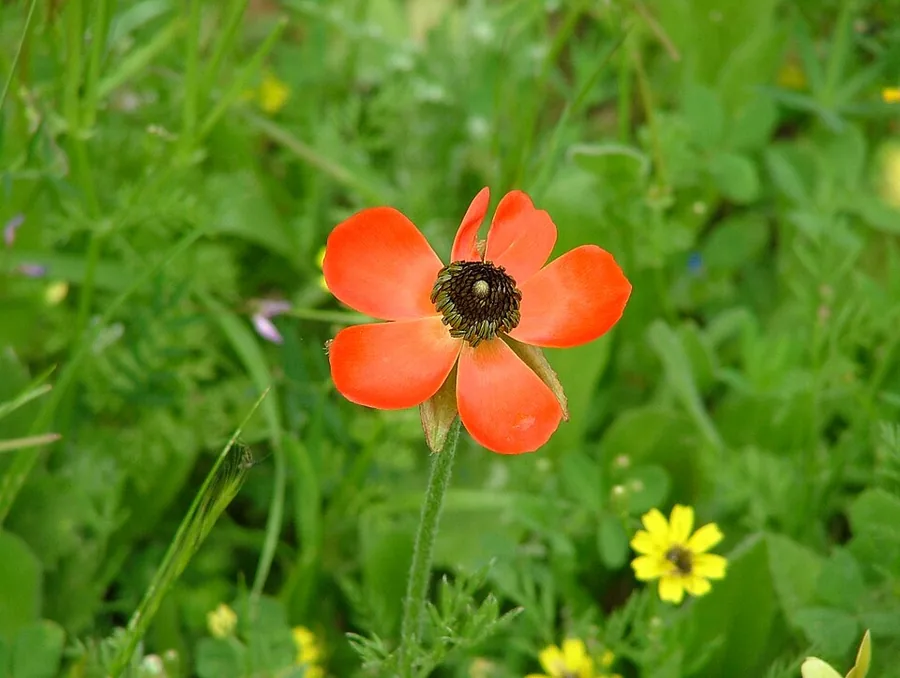
Persian buttercup is a cool-season geophyte grown for flowers so densely petalled they read as almost artificial. Growth comes from claw-shaped tuberous roots, storage organs rather than a true bulb, and the species sits within Ranunculaceae alongside the wild buttercups. Its long, straight stems and broad color range explain its standing as a florist crop.
Its bloom window is short by design. Planted into cool spring conditions, it flowers heavily from late spring into early summer, then declines as rising heat forces it into dormancy. In mild-winter zones the tuberous roots persist and regrow each year; where winters are hard, the plant is treated as an annual or the roots are lifted and stored.
The essentials are full sun, free-draining soil, and consistent but moderate moisture. The critical failure point is saturated soil, because waterlogged tuberous roots rot quickly. Correcting drainage removes the main cause of loss, after which the plant is undemanding.
Care
The short version: site it in full sun and cool spring temperatures, use rich soil that drains fast, hold even moisture without saturation so the tuberous roots stay sound, and let the plant enter dormancy as summer heat rises.
Light
Provide full sun, defined here as 6 or more hours of direct light daily, because flowering depends on high light. The plant tolerates light shade, but bloom production falls without strong sun, particularly during the cool spring period it favors.
Water
Maintain even moisture and avoid saturation, since the tuberous roots have no tolerance for waterlogging and rot when it occurs. Irrigate roughly every 3 to 7 days according to conditions, then reduce it as the plant enters summer dormancy and its water demand drops.
Soil
Use rich, free-draining soil high in organic matter, typically a loam or sandy loam. A pH of 6.0 to 7.0 is appropriate, and heavy clay should be avoided because its poor drainage retains the moisture that induces root rot.
Temperature
The species is adapted to cool conditions, performing between 28°F and 75°F (-2°C to 24°C). It withstands light frost but declines rapidly under summer heat, and that heat sensitivity is what terminates the bloom season.
Humidity
Ambient outdoor humidity is sufficient, so no target level applies. Air circulation is the more important factor, because still, humid conditions around dense foliage promote rot.
Feeding
Apply a balanced liquid or slow-release fertilizer about monthly during active spring growth, when nutrient demand is highest. Feeding after the plant slows toward summer dormancy serves no purpose.
Pruning
Deadhead spent flowers as they fade, since removing them redirects energy into further bloom. Once the foliage yellows and dormancy sets in, cut it back and allow the tuberous roots to rest.
Repotting
Where winters exceed its hardiness, lift and divide the tuberous roots each year and replant in fall or spring. Crowded clumps, reduced flowering, and smaller blooms indicate that division is due.
Size & spacing
Mature plants stand about 12 to 24 inches (30 to 61 cm) tall with a comparable spread. Space them 12 to 24 inches (30 to 61 cm) apart to maintain air movement and keep foliage dry, which limits fungal problems.
When to plant
This species performs in cool conditions and declines under summer heat, so scheduling drives success. Presprout the tuberous roots indoors in late winter, transplant outdoors in spring several weeks before the last frost, and expect bloom from late spring into early summer before heat ends the display.
Northern hemisphere
Southern hemisphere
Typical months for a temperate climate: start earlier in warm zones, later where spring frosts linger.
- Sow: Presprout tuberous roots indoors in late winter, several weeks before last frost
- Plant: Plant tuberous roots outdoors in spring several weeks before the last frost date (mild-winter areas may plant in fall)
- Harvest: Late spring to early summer (May to June)
Hardiness
USDA hardiness zones: 8–10
Temperature: down to -12°C
Troubleshooting
Most disorders in ranunculus originate at the roots or track with rising temperature. Early recognition allows effective intervention. Match the symptom below and address the cause before it progresses.
Rotting tuberous roots and a collapsing crown
The disorder is root rot, driven almost entirely by excess soil moisture. In heavy clay or waterlogged ground the tuberous roots decay to a brown, soft, foul mass, and the loss of water and nutrient uptake brings down the top growth. Discard the affected roots, correct the drainage, and replant only firm, sound tissue into amended soil.
Fix:
- Stop overwatering and improve drainage
- Remove and discard affected plants and rotted roots
- Replant healthy tuberous roots in amended, well-drained soil
Blackened, sunken lesions on the root system
The cause is black root rot, a fungal infection that necrotizes root sections and checks growth above ground. Infected plants do not recover, so remove and destroy them and avoid replanting susceptible species in the same ground. Clean planting stock and freely draining soil are the practical controls.
Fix:
- Remove and destroy infected plants
- Avoid replanting susceptible plants in the same soil
- Improve soil drainage and sanitation
Bloom fading early under rising temperatures
This is heat stress, a physiological limit rather than a pathogen. Ranunculus is adapted to cool spring conditions, so flowering shortens as May and June temperatures climb. Site it in full sun, deadhead to extend the display, and permit natural dormancy as summer heat takes over.
Fix:
- Plant in full sun in cool spring weather
- Deadhead spent flowers to prolong blooming
- Allow plants to go dormant naturally as summer heat arrives
Toxicity
This is an ornamental to view rather than ingest. Every tissue contains ranunculin, which is converted to the irritant protoanemonin when cells are chewed or crushed, producing oral and gastrointestinal irritation. Keep the plants and cut stems away from cats, dogs, horses, rabbits, livestock, birds, and children, and wear gloves when handling cut sap.
Toxic to
Cats · Dogs · Horses · Rabbits · Livestock · Birds · People
Cats Mild
In cats the protoanemonin released on chewing produces hypersalivation and often vomiting or diarrhea, together with oral ulceration, lethargy, and reduced appetite. The bitter, irritant sap limits intake, so most cats stop after minimal contact.
Dogs Mild
Dogs that chew the plant show marked drooling, vomiting, and loose stool, frequently with oral ulcers and lethargy alongside appetite loss. The unpalatable taste generally restricts the quantity consumed.
Horses Moderate
Horses are more severely affected, developing oral blistering and irritation, profuse salivation, colic, and diarrhea. A large intake can produce an unsteady, wobbly gait.
Rabbits Toxic
The same protoanemonin irritates the oral and digestive tissues of rabbits, so exclude all plant material and cut stems from their access. It should never be provided as forage.
Livestock Toxic
Cattle, sheep, and goats grazing the fresh plant can develop oral blistering, salivation, and digestive upset. The acrid taste deters most animals, leaving underfed stock on poor pasture as the principal risk group.
Birds Toxic
The irritant sap poses the same hazard to birds, so keep pet and aviary birds away from foliage and flowers. Every part should be regarded as unsafe.
People Caution
The plant is not edible, and chewing any part irritates the mouth and can blister the lips and tongue. Contact with crushed stems or sap can also produce skin irritation, so wear gloves and keep it from children.
Wear gloves when handling crushed foliage or sap, which can cause skin and mucous-membrane irritation.
Helpline numbers

United States
ASPCA Animal Poison Control: (888) 426-4435 (fee applies)
Poison Control: (800) 222-1222



Canada
Poison Centres: 1-844-764-7669
Varieties
Breeding has produced distinct forms of ranunculus, from large double cut-flower strains to compact dwarfs for containers. The selections below are the ones worth knowing.
Tecolote (Giant Tecolote)
Selected for large, fully double flowers across an extensive color range, it is a leading choice for cut-flower production.
Bloomingdale
A compact dwarf selection developed for reduced stature, which suits container culture and low bedding schemes.
Picotee types
Distinguished by petals margined in a contrasting color, a feature that raises their value in cut arrangements.
How to propagate
Ranunculus is propagated most readily from tuberous roots, with division of established clumps and seed as slower alternatives.
Bulbs & cormsEasy
Plant tuberous roots in spring several weeks before last frost (or fall in mild-winter areas) · 2 to 3 weeks to sprout; blooms in spring
The standard method is direct planting of tuberous roots. Position each 2 inches deep, spaced 6 to 8 inches apart, with the claws oriented downward; a presoak hydrates the tissue and accelerates emergence. Shoots appear within 2 to 3 weeks, with flowering in the same spring.
DivisionModerate
When dormant, after foliage dies back · One growing season
Division is carried out during dormancy. After the foliage dies back, lift the clustered tuberous roots and separate them, ensuring each division retains at least one growing point. Expect a full growing season for a division to establish and flower.
SeedModerate
Sow in late summer to fall for bloom the following spring · One to two seasons to flowering size
Seed propagation is the slowest route. Sow in late summer or fall for bloom the following spring, and note that seedlings require one to two seasons to reach flowering size, considerably longer than tuberous roots.
Myths
Ranunculus is a cold-hardy perennial bulb that overwinters in any climate.
Botanically it is a tuberous-rooted perennial, not a true bulb, and dependable perennation is limited to roughly USDA Zones 8 to 10. Beyond that range it is grown as an annual, or the roots are lifted and stored through winter.
Buttercups are ordinary garden flowers, so they pose no risk to pets.
Ubiquity is not safety. The ASPCA classifies buttercup and ranunculus as toxic to cats, dogs, and horses, the active agent being protoanemonin, which irritates oral and gastrointestinal tissue.