Ornamental · Ranunculaceae
Columbine
Aquilegia canadensis
Given dappled shade and moist, free-draining soil, columbine produces spurred spring flowers adapted to hummingbird pollination.
Partial shade
Every 5–10 days
USDA 3–8
1–3 ft · 0.3–0.9 m
Overview
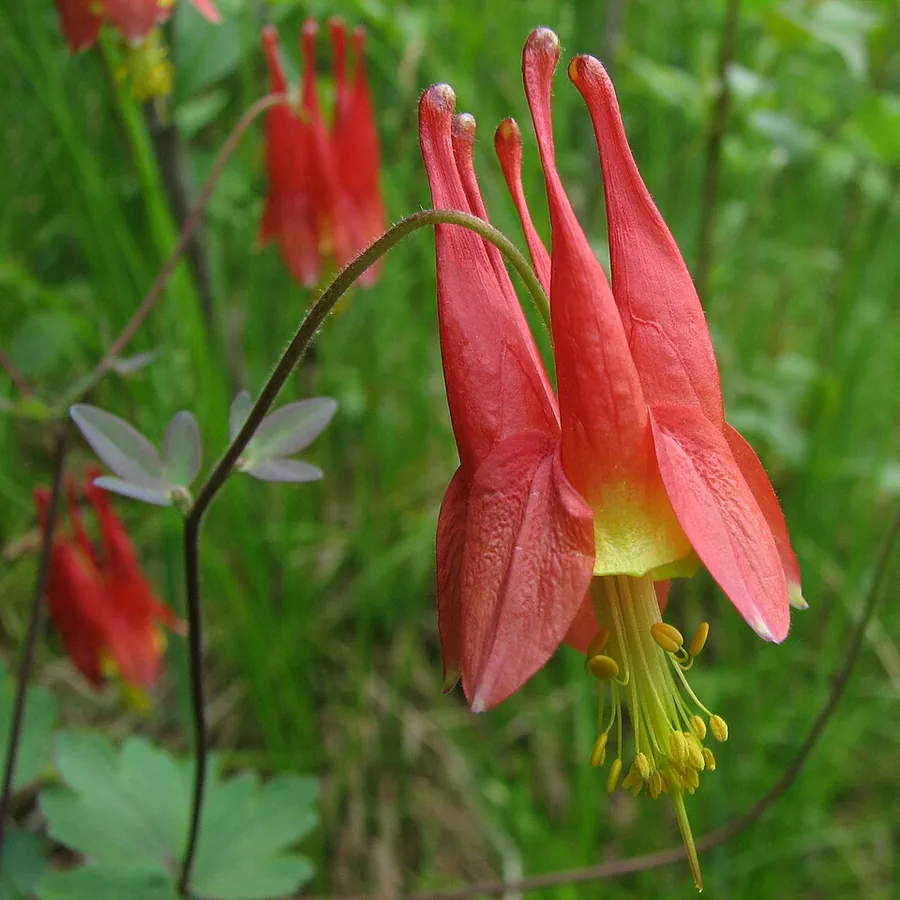
Columbine is a woodland perennial in the buttercup family (Ranunculaceae), and the native Eastern red species, Aquilegia canadensis, occurs naturally across much of eastern North America. Its nodding, spurred flowers hang from slender stems above soft, blue-green foliage, and the spurs hold nectar that pulls in hummingbirds as spring temperatures rise. The fine-textured habit belies a genuinely durable constitution.
The plant is well suited to partial shade, performing along a border edge or within a woodland setting where taller vegetation moderates light and heat. Cold hardiness extends down to USDA zone 3, and it persists through summers up to zone 8. Although short-lived for a perennial, it self-sows so readily that a planting effectively perpetuates itself and develops into loose colonies over successive seasons.
Provide soil that retains moisture while draining freely, and the cultural requirements are largely met. Flower color spans a broad range across the genus, from the red and yellow of the native species to the blues, whites, and pinks of the European types. Allowing a portion of the seedheads to mature ensures new plants recruit nearby from season to season.
Care
The short version: site it in partial shade with rich, moist, well-drained soil. Irrigate to hold the root zone evenly damp without saturating it, apply a light spring feed, and cut back declining foliage after bloom to maintain the plant and limit its self-seeding.
Light
Columbine performs best in partial shade, equivalent to the dappled light of a woodland margin. It tolerates full sun in cooler climates and accepts partial sun, but in hot summers deeper shade prevents leaf scorch by limiting heat load and transpiration stress.
Water
Maintain evenly moist but never waterlogged soil, irrigating about every 5 to 10 days after accounting for rainfall. An established plant withstands brief dry intervals, yet saturated soil through a hot summer predisposes the crown to rot, so allow the surface to dry slightly between waterings to restore aeration.
Soil
Grow it in rich, well-drained loam amended with organic matter, though it adapts to sand or clay provided drainage is adequate. It tolerates a broad pH range from 6.0 to 8.0, so most garden soils are suitable without amendment.
Temperature
This is a cold-hardy perennial suited to USDA zones 3 to 8, withstanding temperatures from -40°F to 90°F (-40°C to 32°C). The winter cold is functionally beneficial, since the seed requires a chilling period to break dormancy and germinate.
Humidity
Ambient outdoor humidity meets its needs, so no target value applies. Air movement is the operative factor, because still, crowded conditions raise leaf-surface humidity and favor powdery mildew.
Feeding
Columbine is a light feeder. A single balanced feed or a topdress of compost in spring supplies the season's nutrition, whereas excess fertilizer promotes the soft, nitrogen-rich growth that attracts aphids.
Pruning
Cut spent flower stems after bloom to encourage a second flush and to limit the heavy seed set that drives self-seeding. If the foliage deteriorates by mid-summer, shear it to the ground and the crown will regenerate fresh leaves.
Size & spacing
Mature plants stand 1 to 3 feet (30 to 91 cm) tall with a spread of 12 to 18 inches (30 to 46 cm). Spacing on that interval maintains airflow through the clump and suppresses the leaf-surface humidity that mildew exploits.
When to plant
Columbine's cycle is keyed to spring. Because the seed requires chilling, start it indoors in late winter after cold stratification, or sow it directly in spring or fall so winter provides the cold. The spurred flowers open from March into May and persist for four to six weeks before the plant transitions into summer dormancy of growth.
Northern hemisphere
Southern hemisphere
Typical months for a temperate climate: start earlier in warm zones, later where spring frosts linger.
- Sow: Late winter, 6 to 8 weeks before last frost; seeds benefit from cold stratification.
- Plant: Spring after last frost, or sow seed outdoors in fall.
- Harvest: Spring (March to May), with bloom lasting about four to six weeks.
Hardiness
USDA hardiness zones: 3–8
Temperature: down to -40°C
Troubleshooting
Columbine is undemanding, and most disorders register on the foliage or at the crown. Identifying the cause early means a trim or an adjustment to irrigation usually resolves it. Match the symptom below to what you observe, then respond accordingly.
Basal collapse and rot during summer heat
Wilting and a soft, browning crown in hot weather signal crown rot, the result of pathogens active in saturated, oxygen-poor soil at the root collar. Once the crown is compromised the plant cannot recover, so it should be lifted and discarded. Correct the underlying drainage before replanting, and reduce irrigation through summer when warm, wet soil most favors the rot.
Fix:
- Remove affected plants
- Improve soil drainage before replanting
Serpentine mines tracking through the leaf blade
Those pale serpentine tracks mark where leaf miner larvae feed within the mesophyll, the tissue layer between the upper and lower leaf surfaces. Because the damage stays confined to that layer, it remains cosmetic and does not threaten the plant's vigor. Remove the mined leaves to take out the larvae, and cut the foliage to the ground after bloom so the crown pushes a fresh, clean flush.
Fix:
- Remove and destroy mined leaves
- Cut affected foliage to the ground after bloom to flush fresh growth
- Choose resistant species such as Aquilegia canadensis
Sap-feeding colonies massed on buds and shoots
Dense colonies of green or black aphids settle on the meristematic tips and buds, and their sap feeding deforms the expanding leaves and deposits honeydew. A firm jet of water dislodges them mechanically, while insecticidal soap is the next step only once populations build. Since high nitrogen drives the soft, succulent growth aphids prefer, restraint with feed reduces their foothold.
Fix:
- Spray plants with a strong jet of water
- Apply insecticidal soap if populations are heavy
Powdery fungal bloom on foliage and stems
A talc-like white coating on the foliage is powdery mildew, a fungus whose spores germinate readily where humidity sits high around the leaf and air stays still. Spacing columbines so air circulates through the canopy lowers that leaf-surface humidity and slows infection. Remove colonized leaves, and irrigate at the base rather than overhead so the foliage stays dry and offers the spores no film of moisture to establish in.
Fix:
- Improve air circulation by spacing plants
- Remove and destroy infected foliage
Toxicity
Columbine rates as mildly toxic, with flowers that present little hazard. The concern is concentrated in the seeds and roots, which contain cardiogenic toxins and cyanogenic glycosides capable of causing gastrointestinal upset when ingested in quantity. Routine cultivation requires no special handling, but keep pets and children from consuming the seedpods.
Toxic to
Cats · Dogs · Horses · Rabbits · Livestock · Birds · People
Cats Mild
A cat ingesting the seeds or roots, where the cyanogenic glycosides concentrate, may drool, vomit, or develop loose stools. The flowers and leaves carry little toxin, so signs follow only a meaningful dose.
Dogs Mild
Dogs generally tolerate exposure without effect. Consuming the seeds or roots in quantity can provoke drooling and a transient episode of vomiting or diarrhea, reflecting the glycosides held in those tissues.
Horses Mild
Horses typically refuse columbine, and an incidental mouthful yields minimal effect. Only a substantial intake of the seed-bearing or root tissue is likely to disturb the gut.
Rabbits Mild
Restrict rabbit access to the seedpods and roots, the tissues where the cyanogenic compounds are most concentrated. Light browsing on the foliage rarely produces more than transient gastrointestinal discomfort.
Livestock Mild
Cattle, goats, and sheep generally avoid the plant, and poisoning is infrequent. Heavy grazing on the seeds or roots remains the scenario most likely to cause mild digestive upset.
Birds Mild
Hummingbirds take nectar from the flowers with no adverse effect. Because the cyanogenic glycosides reside in the seeds, prevent poultry from consuming the ripe pods in quantity.
People Caution
Columbine is not edible. The flowers pose little risk, but the seeds and roots contain cardiogenic toxins, so ingesting those parts in quantity can cause gastrointestinal upset and should be avoided, particularly in children.
No special handling is needed for routine gardening; wash hands after extended contact and supervise pets and children around the seeds.
Helpline numbers

United States
ASPCA Animal Poison Control: (888) 426-4435 (fee applies)
Poison Control: (800) 222-1222



Canada
Poison Centres: 1-844-764-7669
Varieties
The genus runs from a hardy native wildflower to large, showy garden hybrids. The selections below are those most commonly encountered.
Aquilegia canadensis (Eastern red columbine)
The native species bears nodding red and yellow spurred flowers on wiry stems and shows notable resistance to the leaf miner that disfigures its relatives.
Aquilegia vulgaris (Granny's bonnet)
The long-cultivated European columbine flowers in blue, violet, white, pink, or red but proves markedly more susceptible to leaf miner than the native species.
Aquilegia chrysantha (Golden columbine)
This southwestern species produces long-spurred yellow flowers and tolerates heat well, yet it is prone to rapid crown rot where drainage is poor.
Aquilegia × hybrida (Hybrid columbine)
The garden hybrids deliver the largest, frequently bicolor long-spurred flowers across the broadest color range, opening from mid-spring into early summer.
How to propagate
Columbine effectively propagates itself, and the grower can supplement that through saved seed or careful division of an established clump.
SeedEasy
Sow indoors in late winter with cold stratification, or direct sow outdoors in spring or fall. · Seedlings typically flower in their second year.
Seed is the most dependable means of increasing columbine, and the species readily self-sows into loose colonies wherever conditions allow. Because the seed carries a chilling requirement, start it indoors in late winter following cold stratification, or sow it outdoors in spring or fall so winter supplies the cold. Anticipate the first flowers in the seedling's second year, since the initial season goes to crown development rather than bloom.
DivisionModerate
Early spring or fall. · One growing season; columbine has a deep taproot and resents disturbance, so divide carefully.
Division, taken in early spring or fall, is the more demanding method. Columbine forms a deep taproot and responds poorly to root disturbance, so lift and divide the clump with care and replant the divisions without delay to limit transplant stress. A careful division will reestablish within one growing season, though seed remains the more reliable approach.
Myths
Columbine is deadly poisonous and should never be grown around pets or children.
Extension references classify the genus as low in toxicity and document no serious poisoning incidents. The cyanogenic compounds are concentrated in the seeds and roots, so consuming a large quantity of those parts can produce mild gastrointestinal upset, yet the plant is safe to grow with normal supervision and the flowers carry little risk.
Every columbine gets chewed to ribbons by leaf miner.
Susceptibility is species-dependent rather than universal. The native Aquilegia canadensis resists leaf miner well, whereas hybrids and several other species sustain heavy mining, which is why picking a resistant species is the simplest fix.