Ornamental · Ranunculaceae
Monkshood
Aconitum napellus
Tall blue hooded spikes that earned the name queen of poisons, an ornamental of real garden merit and real toxic risk.
Full sun
Every 3–7 days
USDA 3–7
3–4 ft · 0.9–1.2 m
Overview
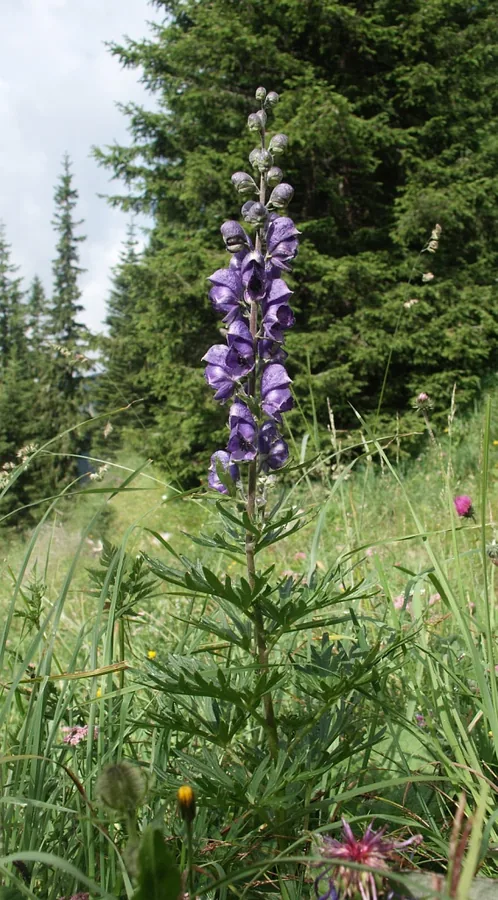
Monkshood peaks in late summer, lifting hooded flowers of deep purplish-blue on tall stems. The hood, formed by an enlarged sepal that curves over the bloom like a cowl, is what names the plant. A member of the buttercup family, it performs where summers stay cool and moist across the colder USDA zones.
That ornamental value sits alongside a place among the most poisonous plants in cultivation. Every part contains aconitine, a fast-acting alkaloid that gave rise to names such as wolfsbane and queen of poisons. The toxicity is serious enough to weigh carefully before siting it near children, pets, or grazing animals.
As a slow, long-lived perennial, it resists transplanting and needs little intervention once established. Provide rich, evenly moist, well-drained soil and some shelter for the tall stems, and wear gloves whenever you handle it. Managed with that respect, a clump persists and reflowers for many years.
Care
The short version: full sun to part shade in cool climates, soil held evenly moist yet freely drained, rich ground amended with compost, and gloves worn on every occasion you handle the plant.
Light
Monkshood performs best in full sun in cool climates, though it accepts afternoon shade where summers turn hot. Deep shade produces weak, floppy stems because the plant etiolates in low light, so combine good light with a degree of shelter.
Water
Hold the soil evenly moist and never let it dry out, which in a dry spell means watering roughly every 3 to 7 days. Free drainage is equally important, since standing water rots the roots. Through hot weather, consistent moisture and a little afternoon shade offset the added transpiration.
Soil
Establish it in rich, moist, well-drained ground high in organic matter, which supplies both the steady moisture and the drainage it needs. It accepts a broad pH range from 5.5 to 7.5, so most garden soils suit it once amended with compost.
Temperature
This is a cold-climate perennial, hardy to roughly -35°F (-37°C) yet limited near 84°F (29°C). Because it copes poorly with heat, afternoon shade lowers the load where summers are hot.
Humidity
Ambient outdoor air is sufficient, so no target figure applies. Air movement matters more than humidity itself, since still, humid conditions let powdery mildew establish on the leaves.
Feeding
Feed in spring as growth resumes, incorporating a balanced fertilizer or a layer of compost to supply the season's nutrients. A single seasonal feed meets the needs of so slow a grower.
Pruning
Cut spent flower stalks as they fade to tidy the clump and sometimes prompt a second flush, then cut the foliage back once it dies down in fall. Always wear gloves and keep cut stems and their sap off the skin.
Repotting
An established clump resents disturbance, so divide only every 4 to 5 years and only when overcrowded. Reduced flowering, smaller crowded leaves, or a dying center all signal that congestion has reached the point of division.
Size & spacing
Mature plants stand 3 to 4 feet (91 to 122 cm) tall on narrow clumps that spread only 12 to 18 inches (30 to 46 cm). Spacing that respects that width keeps air circulating and discourages mildew.
When to plant
Monkshood follows a cool-season schedule. Sow the cold-stratified seed in late winter, or divide established clumps in early spring or fall, and expect the tall blue hoods to open through the warmth of July and August.
Northern hemisphere
Southern hemisphere
Typical months for a temperate climate: start earlier in warm zones, later where spring frosts linger.
- Sow: Late winter; seed needs cold stratification and germination is slow and erratic
- Plant: Spring after frost, or divide established clumps in early spring or fall
- Harvest: July to August
Hardiness
USDA hardiness zones: 3–7
Temperature: down to -40°C
Troubleshooting
Most monkshood problems originate at the roots in wet soil or among stems set too densely for air to move. Reading the early signs lets you intervene before a clump is lost. Match the symptom below, and put gloves on before you handle any affected plant.
Basal crown softening to brown mush and sinking down
The soft, blackened base points to crown rot, a decay that follows when soil stays saturated or a clump grows dense enough to trap moisture around the crown. Because the affected tissue cannot recover, remove and discard those plants in gloves. Correcting the drainage before replanting healthy divisions removes the root cause rather than the symptom.
Fix:
- Remove and discard affected plants (wear gloves)
- Improve drainage and avoid overhead watering
- Replant healthy divisions in better-drained, amended soil
Persistent leaf wilt that fails to reverse with irrigation
When foliage wilts and watering brings no recovery, the likely agent is verticillium wilt, a soilborne fungus that occludes the vascular tissue and starves the plant of water from within. That vascular blockage explains the discolored tissue and the failure to rebound, and no cure follows infection. Remove and destroy affected plants, and exclude susceptible species from that ground thereafter.
Fix:
- Remove and destroy affected plants
- Avoid replanting susceptible plants in the same soil
- Maintain plant vigor with proper moisture and nutrition
Dusty white film coating the leaves
The floury layer is powdery mildew, a fungus that colonizes foliage late in the season when high humidity and stagnant air favor its spores. Thinning or spacing the plants restores the air movement that suppresses it, and removing the worst leaves lowers the spore load. Keeping water off the foliage denies it the leaf-surface conditions it needs, and the disorder rarely causes lasting harm.
Fix:
- Improve air circulation by thinning or spacing plants
- Remove and discard badly affected foliage
- Avoid wetting foliage when watering
Elongated flowering stems lodging following heavy rain or gusts
Stems at this height carry their flower load high, so wind and the added weight of rain lever them over, and rich or shaded sites soften the growth further and worsen the lean. Setting supports before the stems elongate keeps them vertical through the season. A position sheltered from the strongest wind reduces the leverage that causes the fall.
Fix:
- Stake or support taller stems
- Site in a spot with some shelter from strong wind
Toxicity
Treat this plant as genuinely dangerous. All parts contain aconitine, a poison capable of killing cats, dogs, horses, livestock, and people, at times within hours of a small ingestion. Because the sap is absorbed across skin, wear gloves whenever you handle it and keep it well clear of animals and children.
Toxic to
Cats · Dogs · Horses · Rabbits · Livestock · Birds · People
Cats Severe
In a cat, a few mouthfuls can prove lethal. The clinical picture runs from heavy salivation and vomiting to a stumbling weakness and laboured breathing, while the aconitine drives the heart into a racing or erratic rhythm that can end in sudden collapse. Regard any exposure as an emergency.
Dogs Severe
A dog that ingests any part salivates, bloats, and vomits early, then weakens and breathes with difficulty. The decisive injury is cardiac, where the alkaloid disorders the heart rhythm and can arrest it outright.
Horses Severe
A grazing horse develops salivation, colic, and muscle tremor within a short interval. Respiration becomes laboured and the cardiac rhythm loses its regularity, a progression that can culminate in fatal cardiopulmonary failure.
Rabbits Severe
The aconitine that kills larger animals is no less lethal at the scale of a rabbit. Even a nibble may induce salivation, weakness, and a failing heartbeat, so every part of the plant should remain out of reach.
Livestock Severe
In cattle, sheep, and goats the foliage and roots are the toxic parts, and documented losses in grazing stock confirm the hazard. Affected animals stagger, show a slowed heartbeat, and struggle to breathe, often dying before intervention.
Birds Severe
Aconitine acts systemically with no threshold that can be called safe, and birds are equally vulnerable. Pecking at leaves, seeds, or roots can bring rapid weakness and a fatal disturbance of cardiac function.
People Caution
No part of this plant is edible. Ingesting even a small quantity produces tingling, numbness, vomiting, and dangerous arrhythmias, and because the sap is absorbed through skin, the plant should never be handled without gloves.
Wear gloves whenever handling this plant, avoid skin or oral contact with plant juices and cut stems, cover any open cuts or abrasions, and wash hands thoroughly afterward. Keep away from pets, livestock, and children.
Helpline numbers

United States
ASPCA Animal Poison Control: (888) 426-4435 (fee applies)
Poison Control: (800) 222-1222



Canada
Poison Centres: 1-844-764-7669
Varieties
Most monkshood in the trade is the wild blue species, though a few named selections alter the flower color. The following forms are the ones you are most likely to encounter.
Album
This selection bears clean white spikes rather than the deep purplish-blue of the species.
Carneum
It flowers in a pale pink to pinkish tone that reads softer than the wild form.
Bicolor
Its blooms combine blue and white on the same flower, and it is frequently listed as Aconitum x cammarum.
How to propagate
Monkshood is increased either by dividing a clump or by raising it from seed, and each method calls for patience and gloves throughout.
DivisionModerate
Early spring or fall · Often slow to establish; may take a year or more to settle and bloom well
Divide an established clump in early spring or fall, working in gloves throughout because the sap is toxic on bare skin. Since these plants resent root disturbance, expect the divisions to sulk and to require a year or more before they re-establish and flower well.
SeedDemanding
Sow in late winter; seed benefits from cold stratification · Slow and erratic germination over many weeks
Sow in late winter after a period of cold, which stratifies the seed and breaks its dormancy, though even then germination proceeds slowly and unevenly over many weeks. Handle both seed and seedlings in gloves, as every part already contains the toxin.
Myths
The plant is hazardous solely through ingestion, meaning contact with bare skin carries no risk.
Aconitine in the sap is absorbed across intact skin, so contact with cut stems or juices poses a hazard in its own right, independent of ingestion. Garden and poison authorities accordingly advise you to wear gloves and avoid all contact, with particular caution around any break in the skin.
Toxicity is confined to roots and seeds alone, leaving the foliage and flowers safe.
Every part of the plant is toxic, encompassing the bark, leaves, flowers, fruit, seeds, roots, and stems. The roots, seeds, and young shoots merely carry the highest alkaloid concentration, which does nothing to make the remaining tissue safe to touch or taste.