Ornamental · Ranunculaceae
Hellebore
Helleborus orientalis
A true winter pioneer, hellebore lifts its flowers in shade and lingering snow long before most perennials stir.
Partial shade
USDA 4–9
12–18 in · 30–46 cm
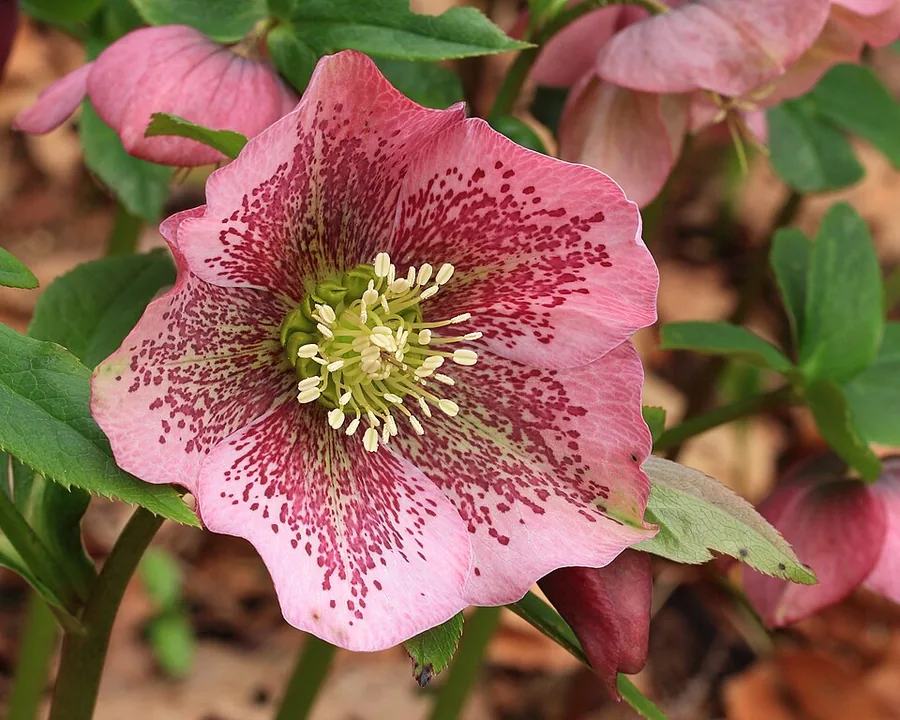
Overview
The hellebore is a woodland-edge perennial that flowers while the rest of the garden is dormant. A member of the buttercup family, Ranunculaceae, it blooms in deep winter, typically from late winter into spring across an 8 to 10 week period, and its flowers can open while snow still covers the ground. The names Lenten rose and Christmas rose record that early flowering, though the plant has no botanical link to the rose.
Two species account for most cultivated stock. The Lenten rose, Helleborus orientalis, produces nodding cups in white, pink, and rose-purple, while the Christmas rose, Helleborus niger, opens earliest with broad white flowers. Most plants offered for sale are vigorous hybrids derived from these, selected for a wider color range and a more refined flower form.
Growth is slow and incremental rather than conspicuous, and a mature clump spans only 12 to 18 inches (30 to 46 cm) in cool shade. Because the fleshy crown resents disturbance, the plant performs best when sited once and left undisturbed. One point governs all handling: every part is poisonous, and the cell sap irritates bare skin.
Care
The short version: part to full shade in rich, humusy, well-drained soil. Keep it evenly moist while it establishes, feed lightly in late winter, and remove the tattered old leaves before the flowers open.
Light
Site hellebores in part to full shade, where the dappled light beneath deciduous trees closely matches their woodland origin. Winter sun during flowering is beneficial, but the leaves scorch and desiccate under harsh summer sun, so shade through the growing season protects the foliage.
Water
Hold the soil evenly moist while a plant establishes, and do not let it dry out severely through the first year or two while its roots extend. Once established it tolerates some dry shade, so free drainage that keeps water off the crown matters more than frequent irrigation.
Soil
Grow them in organically rich, humusy, well-drained loam amended with leaf mold, which supplies fertility and the drainage the crown needs. The species tolerates a broad pH span from 6.0 to 8.0, so most well-managed shade beds fall within its range.
Humidity
Ambient outdoor humidity suffices, and there is no target figure to meet. Air movement is the operative factor, because moisture lingering on crowded foliage is what allows leaf spot and crown rot to establish.
Feeding
Apply a light feed in late winter or early spring, using a balanced fertilizer or a top dressing of compost or leaf mold. A rich organic soil meets most of the nutrient demand, so heavy feeding to force growth is neither needed nor helpful.
Pruning
Remove the old, tattered, or winter-damaged leaves in late winter before the flowers open, which both tidies the clump and displays the emerging blooms. After flowering, cut away the spent stems to redirect the plant's energy into fresh foliage.
Size & spacing
Mature plants remain compact at 12 to 18 inches (30 to 46 cm) tall and roughly as broad. Allow each that spacing so the canopy dries quickly and disease pressure stays low.
When to plant
Hellebores follow an off-season phenology tied to cool temperate winters. Set out container-grown crowns in spring or fall, and from late winter into spring the flowers open and persist for weeks, at times before the snowpack has cleared.
Northern hemisphere
Southern hemisphere
Typical months for a temperate climate: start earlier in warm zones, later where spring frosts linger.
- Sow: Seed is slow and erratic; fresh seed sown outdoors or self-seeding is more reliable than indoor sowing.
- Plant: Plant container-grown crowns in spring or fall into shaded, well-drained soil.
- Harvest: Blooms late winter into spring, often for an 8 to 10 week period; flowers may open while snow is still present.
Hardiness
USDA hardiness zones: 4–9
Temperature: down to -34°C
Troubleshooting
Most hellebore disorders present on the foliage or at the crown, and moisture held in damp, crowded plantings underlies the majority of them. Recognizing the early signs lets you intervene before the problem advances. Match the symptom below, then act while intervention still changes the outcome.
Basal collapse with a browned, softened crown
A plant that wilts and folds at the base has crown rot, driven by soil that holds water against the crown. Saturated, poorly drained ground excludes oxygen from the tissue, so the crown and lower stems go soft, discolored, and sometimes sour-smelling. Lift the plant, correct the drainage, set it at the proper depth, and keep mulch off the crown so the tissue can stay dry and firm.
Fix:
- Remove affected plants or rot-damaged tissue
- Improve drainage and avoid planting too deeply
- Do not mulch directly over the crown
Necrotic black streaking with deformed shoots
Black streaking through leaves, stems, and flowers with distorted new growth is hellebore black death, caused by Helleborus net necrosis virus. Because the disorder is viral rather than fungal, no spray affects it, and aphids move it from plant to plant as they feed. Rogue out and destroy infected plants at once, suppress the aphid vectors, and never divide or collect seed from a plant showing symptoms, since the virus travels in that tissue.
Fix:
- Remove and destroy infected plants promptly
- Control aphids that spread the virus
- Do not propagate from affected plants
Discolored lesions enlarging across the foliage
Defined dark lesions on the blades are fungal leaf spot, and the pathogen advances wherever foliage stays wet and stagnant. Because free moisture on the leaf surface lets the spores germinate, removing and destroying marked leaves cuts the inoculum, and cutting the old foliage in late winter before new growth clears overwintered infection. Thin crowded clumps so the canopy dries faster, and the disease loses its foothold.
Fix:
- Remove and destroy affected leaves
- Cut back old foliage in late winter before new growth
- Improve air circulation by thinning crowded plantings
Serpentine mines and notched leaf margins
Pale serpentine tunnels within the blade are the mines of leaf miners feeding between the leaf surfaces, while ragged margins with slime trails indicate slugs and snails, and clean marginal notches indicate weevils. This feeding is cosmetic and does not threaten the plant. Remove the worst-mined leaves to take the larvae with them, hand-pick or trap the molluscs, and inspect new growth for aphids, which matter more as virus vectors than as feeders.
Fix:
- Pick off and destroy affected leaves
- Hand-pick slugs and snails or use traps
- Monitor for aphids and rinse or remove as needed
Toxicity
Treat this plant with respect, because every part is poisonous. Hellebore accumulates bufadienolide cardiac glycosides and the irritant protoanemonin throughout the leaves, stems, and roots, and a large dose can act on the heart. The bitter sap irritates skin and mucous membranes alike, so wear gloves when handling it and keep pets, livestock, and children clear.
Toxic to
Cats · Dogs · Horses · Rabbits · Livestock · Birds · People
Cats Toxic
A cat that ingests any part shows drooling, vomiting, diarrhea, and abdominal pain, and larger intake brings depression and lethargy. The same bufadienolide glycosides that irritate the gut act on cardiac muscle, so a substantial dose becomes a genuine emergency.
Dogs Toxic
In a dog that chews the foliage or roots, expect drooling, retching, gastrointestinal upset, diarrhea, and depression. Once intake exceeds what the bitter sap normally deters, the cardiac glycosides can alter heart rate and rhythm.
Horses Toxic
A grazing horse develops drooling, inappetence, colic, and loose manure from the same irritant and cardioactive compounds. Because a large meal can act on the heart, exclude the plant from paddocks and keep it out of hay.
Rabbits Toxic
No part of the plant is safe for a rabbit, since even a small quantity irritates the mouth and digestive tract and provokes drooling and refusal to feed. The cardiac glycosides scale the risk upward with the amount consumed.
Livestock Toxic
Cattle, goats, and sheep that consume hellebore show oral and gastrointestinal irritation, drooling, and diarrhea, and a heavy intake can disturb the heart. The acrid taste normally limits grazing, but discarded trimmings in a pasture remove that natural deterrent.
Birds Toxic
Regard hellebore as unsafe for birds, because the bufadienolides and protoanemonin that poison mammals are no less toxic to avian species. Exclude poultry and pet birds from the foliage and any cuttings.
People Caution
No part is edible, and ingestion produces oral burning, drooling, vomiting, and abdominal cramping, with possible cardiac effects at higher doses. The sap alone causes contact dermatitis, so protective gloves are warranted for cutting or dividing, and children should be kept from the flowers and foliage.
The cell sap can cause skin irritation and contact dermatitis, so wear gloves and protective clothing when cutting or dividing plants. Hellebore contains bufadienolide cardiac glycosides (such as hellebrin) plus protoanemonin, and large ingestions can affect the heart, so keep cut foliage and trimmings away from pets and children.
Helpline numbers

United States
ASPCA Animal Poison Control: (888) 426-4435 (fee applies)
Poison Control: (800) 222-1222



Canada
Poison Centres: 1-844-764-7669
Varieties
Most cultivated hellebores derive from a small group of species and their hybrids. These are the ones worth identifying by name.
Helleborus orientalis (Lenten rose)
This clump-forming species bears nodding, cup-shaped flowers in white, pink, and rose-purple that are frequently spotted, flowers from late winter into spring, and supplies much of the parentage behind the modern garden hybrids.
Helleborus niger (Christmas rose)
A more compact species at roughly 9 to 12 inches, it carries large white bowl-shaped flowers, extends hardiness to zone 3, and opens earliest, sometimes around Christmas where winters are mild.
Helleborus × hybridus (hybrid Lenten rose)
Derived largely from H. orientalis, these vigorous garden hybrids deliver a broader color range and improved flower form, and they are the plants most often marketed simply as Lenten rose.
How to propagate
Hellebores increase slowly, whether by dividing a clump in spring or by allowing the plant to distribute its own seed.
DivisionModerate
Spring · One to two seasons; divisions are slow to reestablish and may bloom poorly the first year.
Divide in spring, lifting a mature clump and splitting the crown, then replant each division at its original depth in rich, well-drained shade so the crown is neither buried nor exposed. Because severed roots must regenerate, a division needs one to two seasons to reestablish and commonly flowers poorly in its first year.
SeedModerate
Sow fresh seed in late spring to summer, or allow self-seeding. · Seedlings take 2 to 3 years to reach blooming size
Sow fresh seed in late spring to summer, or allow the plant to self-seed, which it does readily under favorable conditions. Germination is slow and erratic, and a seedling requires 2 to 3 years to reach flowering size. Because hybrids segregate, their seedlings rarely come true to the parent, so expect variation in the offspring.
Myths
Because it bears the rose name and appealing flowers, hellebore poses no danger.
The common name is horticulturally misleading, as the plant belongs to Ranunculaceae and is no true rose. Every part is poisonous and it is listed as toxic to cats, dogs, horses, and people, while the sap induces contact dermatitis on bare skin. Treat it as a poisonous plant and wear gloves.
Robust as they are, hellebores tolerate division at any time of year.
Established crowns resent disturbance and reestablish slowly after their roots are cut. Divide only in spring if division is necessary, and anticipate a weak first year regardless. Many growers forgo division and rely on the plant's ready self-seeding instead.