Ornamental · Ranunculaceae
Marsh Marigold
Caltha palustris
Sited where the ground stays wet to soggy, marsh marigold colors the water's edge before nearly any other perennial breaks bud.
Full sun
Every 1–3 days
USDA 3–7
8–24 in · 20–61 cm
Overview
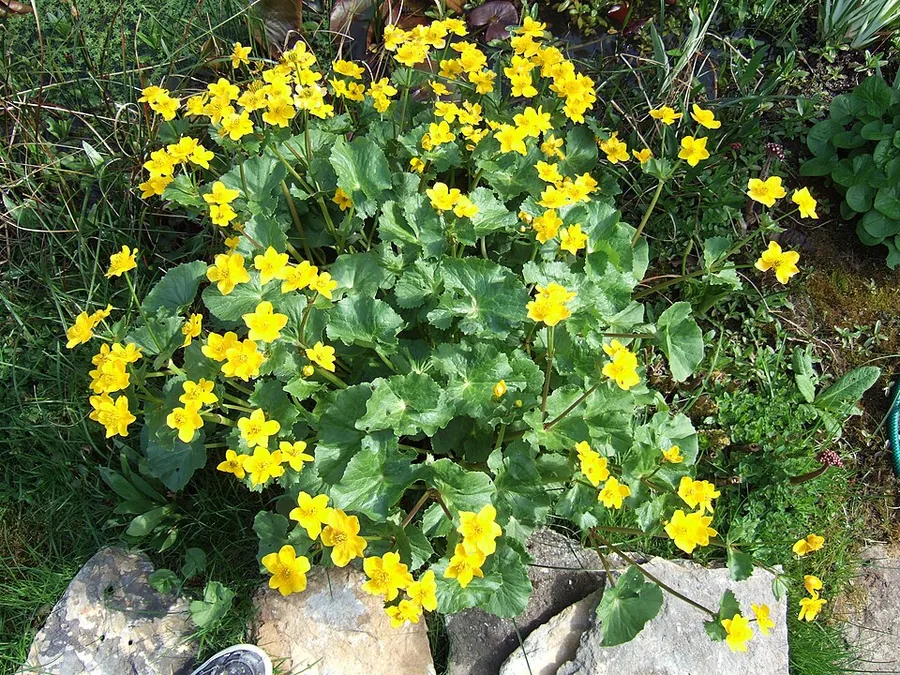
Marsh marigold delivers one of the season's earliest displays of gold, opening cupped yellow flowers along ponds, streams, and boggy ground while most perennials remain dormant. As a member of the buttercup family, it shows the family stamp in its glossy sepals and the rounded, heart-shaped leaves that sit beneath the flowers.
Its ecology explains its single non-negotiable requirement: the root zone must stay wet. Native to wet meadows and marshes, it grows in constantly moist to wet, humus-rich soil or even shallow standing water, which is why a pond margin, bog garden, or rain garden mirrors its natural niche. Provide that hydrology and its remaining needs are minimal.
The species is durable and long-lived, cold-hardy through severe winters, and undemanding wherever the soil never dries. Following the spring bloom it commonly enters summer dormancy and dies back, then re-emerges the next spring from the persistent crown. Because the fresh tissue is an irritant, treat it with measured caution around pets and children.
Care
The short version: full sun to part shade over soil kept wet to soggy all season, in rich, mucky ground at the water's edge, with minimal intervention beyond never allowing the root zone to dry.
Light
The plant accepts full sun to part shade and flowers most freely under ample light. In hot-summer regions, light afternoon shade is worthwhile because reducing heat load slows the onset of summer dormancy and extends the useful life of the foliage.
Water
Moisture is the governing factor in its culture. The roots must remain constantly moist to wet, in saturated soil or even shallow standing water, and must never be allowed to dry. If the ground dries after flowering, the plant typically drops early into summer dormancy.
Soil
It performs in wet, humus-rich, mucky soil of the type found at a pond edge and will tolerate shallow standing water. It accepts a pH from 5.5 to 7.5, so soil reaction seldom warrants correction.
Temperature
Cold tolerance is exceptional. The plant is hardy to roughly -40°F (-40°C) and endures heat to about 86°F (30°C), though high summer temperatures tend to advance the onset of dormancy.
Humidity
It favors a moist atmosphere, which its wet, marginal habitat supplies inherently. High humidity around the foliage suits it, so no supplemental humidity is needed when it is sited near water.
Feeding
Nutrient demand is modest. As growth resumes in spring, apply a single dose of balanced fertilizer or incorporate rich compost, which sustains the plant through the season.
Pruning
Pruning requirements are minimal. Deadhead spent flowers and remove yellowing foliage as the plant dies back, and recognize that summer dieback is normal and the crown produces fresh growth the following spring.
Repotting
Divide and rejuvenate clumps every 2 to 3 years, or sooner if flowering declines, roots fill the container, or the crown lifts above the soil. Keep any divisions saturated while they establish.
Size & spacing
Mature plants reach roughly 8 to 24 inches (20 to 61 cm) in height and spread to about 12 to 18 inches (30 to 46 cm), forming a compact mound at the water's edge.
When to plant
Marsh marigold operates on an early phenological calendar. It breaks dormancy and flowers in early to mid spring, ranking among the first plants to bloom, then frequently dies back over summer. Plant it in spring or fall into wet ground, and sow seed fresh in late summer to fall.
Northern hemisphere
Southern hemisphere
Typical months for a temperate climate: start earlier in warm zones, later where spring frosts linger.
- Sow: Sow fresh seed in late summer to fall; cold stratification improves germination
- Plant: Spring or fall, in wet soil or pond margins after frost
- Harvest: Early to mid spring (April to June), one of the earliest spring bloomers
Hardiness
USDA hardiness zones: 3–7
Temperature: down to -40°C
Troubleshooting
Marsh marigold presents few genuine problems, and most reduce to a single cause: a root zone that dried out. Distinguish routine summer dieback from actual disorder and intervention is rarely warranted. Confirm the symptom below before acting.
Plant wilts, fades, or never comes back
Real decline traces almost entirely to dry soil. As a bog species the root system is adapted to permanently moist to wet ground, so any period of drought sets the plant back or kills it outright. Reposition it at a pond margin, bog garden, or rain garden, irrigate often enough to keep the profile saturated, and mulch to slow evaporation from the root zone.
Fix:
- Move or replant at a pond margin, bog garden, or rain garden where soil stays wet
- Water frequently to keep the soil saturated
- Mulch to retain moisture
Leaves yellow and die back in summer
Post-bloom yellowing is summer dormancy, a programmed rest rather than a disease. After flowering the plant withdraws resources to the crown, and drier or hot-summer sites trigger that retreat earlier. Leave it undisturbed, hold the soil wet to draw the foliage out longer, and remove the withered leaves once the crown has gone dormant.
Fix:
- Leave the plant in place and let foliage die back naturally
- Keep the soil wet to prolong the foliage and reduce stress
- Tidy away yellowed leaves once they have withered
White powder or rusty spots on the leaves
A white surface film indicates powdery mildew, and orange-brown pustules indicate rust, both fungal issues that establish where stagnant air surrounds a crowded clump. Remove the affected leaves to cut inoculum, thin the planting so air moves freely, and keep the foliage dry into evening to deny the spores the moisture they need. The species has no other significant pest or disease pressure.
Fix:
- Remove and dispose of affected leaves
- Improve air circulation around the clump
- Avoid wetting foliage late in the day
Toxicity
The whole plant is toxic while fresh. As a member of the buttercup family it contains protoanemonin, an irritant liberated when the leaves or stems are crushed or chewed, and it can blister the mouth and skin and provoke gastrointestinal upset. The bitter, burning taste usually limits ingestion, but keep the fresh plant away from pets, livestock, and children regardless.
Toxic to
Cats · Dogs · Horses · Rabbits · Livestock · Birds · People
Cats Toxic
When a cat bites the fresh tissue the released protoanemonin irritates the mouth, and most cats disengage quickly. Expect drooling, pawing at the mouth, vomiting, and loose stool.
Dogs Toxic
Chewing the leaves or stems irritates a dog's mouth and dulls its appetite, with vomiting or diarrhea following. The acrid, blistering taste self-limits intake, which is why most cases stay mild.
Horses Toxic
The fresh plant irritates the mouth and gut, so a grazing horse rarely consumes more than a taste. Drying in hay hydrolyzes and dissipates the protoanemonin, which removes the hazard.
Rabbits Toxic
It should not be offered. The same protoanemonin that irritates other species blisters a rabbit's oral tissue and disturbs its gut, so keep the fresh plant out of reach.
Livestock Toxic
Cattle, goats, and sheep may develop lip blistering and digestive upset from the raw plant, though the bitter taste normally curbs grazing. Once cured into hay the toxin degrades and the forage is safe.
Birds Toxic
Regard it as unsafe near birds. Crushing the tissue liberates the same caustic compound that affects mammals, so there is no justification for allowing access.
People Caution
No part is safe raw. Fresh sap can blister the mouth and skin, so wear gloves when cutting it, although thorough boiling breaks down the toxin and the cooked young leaves and buds have long been eaten.
The raw plant is toxic and irritant: the same protoanemonin found in buttercups and clematis. Cooking (boiling) destroys the protoanemonin, and cooked young leaves and flower buds have historically been eaten - never eat any part raw. The sap can irritate skin, so wear gloves when handling or cutting.
Helpline numbers

United States
ASPCA Animal Poison Control: (888) 426-4435 (fee applies)
Poison Control: (800) 222-1222



Canada
Poison Centres: 1-844-764-7669
Varieties
Beyond the wild golden type, a small number of garden selections circulate. These two are the ones worth recognizing.
'Flore Pleno' ('Multiplex')
A double-flowered selection in which multiplied petal-like sepals produce full, rounded golden-yellow blooms.
var. alba
A white-flowered variant that replaces the typical gold with clean white petals surrounding a yellow center.
How to propagate
Marsh marigold propagates by clump division or from seed, and division is decidedly the faster and more dependable route.
DivisionEasy
Early spring or late summer after flowering · One growing season
Division is the most reliable method. Lift an established clump in early spring or late summer once flowering is done, separate the crown into sections, and reset each in wet ground. Held continuously saturated, the divisions root and establish within a single growing season.
SeedModerate
Sow fresh seed in late summer to fall · Several months to a year; may self-seed in suitable wet sites
Seed demands more patience because the embryo is dormant at shedding. Sow it fresh in late summer to fall so that a cold winter period supplies the stratification that breaks dormancy and prompts germination. Seedlings take several months to a year to establish, and on permanently wet sites the marsh marigold commonly self-seeds without intervention.
Myths
Marsh marigold and true cowslip are the same plant.
The two share the vernacular name cowslip yet sit in separate families. Marsh marigold is Caltha palustris in the Ranunculaceae, whereas true cowslip is Primula veris in the primrose family. The common name is their only point of overlap, so rely on the botanical name where accuracy matters.
Marsh marigold is a safe wild green to forage and eat.
In its raw state it is a Ranunculaceae irritant carrying protoanemonin, which can blister the mouth. Only the young leaves and flower buds, thoroughly boiled, have a documented history of consumption, because heat degrades the toxin. No part is safe to eat raw.