Houseplant · Araceae
Xanadu Philodendron
Philodendron xanadu
Supply bright, indirect light and steady moisture, and this self-heading philodendron builds a full corner specimen with minimal intervention.
Bright indirect
65–75°F · 18–24°C
USDA 9–11
2–5 ft · 0.6–1.5 m
Overview
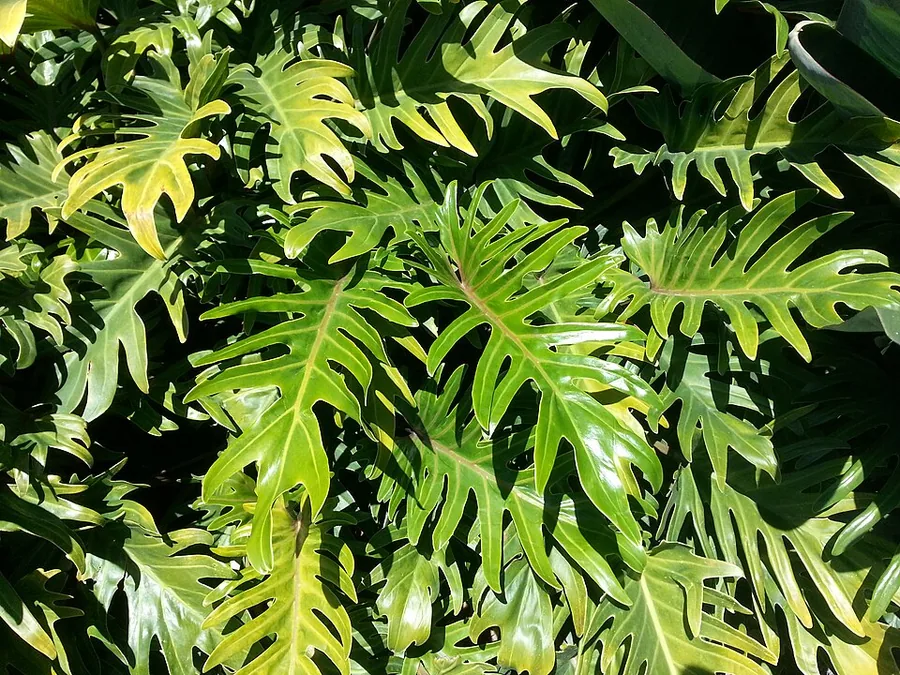
Philodendron xanadu is a compact, self-heading aroid grown chiefly for its deeply lobed, glossy green foliage. It sits within the arum family, Araceae, and descends from Philodendron bipinnatifidum, though it stands as a patented selection distinct from its parent. The self-heading habit means the stem stays short and upright, so indoors the plant forms a tidy, rounded clump that holds its own shape without staking or training.
Its reputation for being easy rests on genuine tolerance. It performs best in bright indirect light yet accepts the shadier positions that would stall a more demanding species, and its moderate drought tolerance lets it ride out a short dry interval between waterings. Provide a warm room and a freely draining pot, and the plant largely regulates itself.
Mature dimensions are the one factor to design around. A grown specimen spreads 3 to 6 feet (91 to 183 cm), so it belongs at floor level rather than on a crowded shelf. The return on that space is a full, architectural clump that fills the footprint it occupies.
Care
The short version: bright indirect light, a mix kept evenly moist but never saturated, and a room held at 65°F to 75°F (18°C to 24°C). Feed monthly across spring and summer, and allow room for the clump to spread.
Light
Provide bright, indirect light to drive the fullest, most compact growth. The plant tolerates partial shade and even deep shade better than most houseplants, but under genuine gloom internodes elongate, the leaves spread apart, and the habit turns leggy. Screen it from harsh midday sun, which scorches the foliage.
Water
Hold the soil evenly moist through active growth, allowing only the surface to dry between waterings. Moderate drought tolerance means a brief dry interval causes no harm, whereas standing water starves the roots of oxygen. Persistent overwatering is the leading cause of leaf yellowing on this plant.
Soil
Grow it in a rich, humus-heavy medium that retains moisture yet drains freely. It is indifferent to texture, succeeding in sand, loam, or clay, and it tolerates a pH range from acidic to slightly alkaline. The single intolerance is a container that remains waterlogged.
Temperature
Indoors it holds best at a steady 65°F to 75°F (18°C to 24°C), the ordinary warmth of most homes. It carries no frost tolerance, so keep it clear of cold drafts and chilled windowsills during winter.
Humidity
Average household humidity is sufficient, so no target figure applies. Slightly elevated air moisture keeps the foliage in better condition and suppresses spider mites, whose populations build fastest in the hot, dry air of heated interiors.
Feeding
Apply a balanced liquid houseplant fertilizer monthly across spring and summer, the period of active growth when the plant can use the nutrients. Reduce or suspend feeding through fall and winter as growth slows. Consistent light feeding supports the plant better than an occasional concentrated application.
Pruning
This is a low-maintenance plant requiring little shaping because the self-heading habit governs its form. Remove old, yellowed, or damaged leaves at the base as they occur. Wear gloves or wash afterward, since severed stems exude an irritating sap.
Repotting
Repot every 1 to 2 years, or sooner if roots emerge from the drainage holes, growth slows, or water runs straight through the pot, each a sign the roots have filled the container. Shift it to the next pot size in fresh mix in spring. The wide-spreading clump benefits from the additional root volume.
Size & spacing
A mature specimen attains 2 to 5 feet (61 to 152 cm) in height and spreads a full 3 to 6 feet (91 to 183 cm). Allocate floor space and clearance for air to circulate around the clump rather than confining it to a crowded shelf.
Troubleshooting
Most disorders on this plant originate in the root zone or register first on the foliage. Overwatering accounts for the majority of cases, with a short list of common houseplant pests behind it. Match the symptom to the entries below and intervene while the problem is still minor.
Progressive lower-leaf chlorosis moving upward
Yellowing that originates in the oldest lower leaves and advances upward is the classic signature of overwatering, not a nutrient shortfall. Saturated, poorly drained soil excludes oxygen from the root zone, and stressed roots stop supplying the foliage. Let the surface of the mix dry before rewatering, verify that the container drains freely, and cut the most affected leaves at the base.
Fix:
- Allow soil to dry slightly before next watering
- Ensure the pot and soil drain freely
- Remove badly yellowed leaves at the base
Stippled, bronzed foliage with fine webbing
Fine stippling that dulls into a bronze cast, accompanied by webbing, indicates spider mites, which reproduce fastest in hot, dry air. The mites feed by piercing cells on the leaf underside, so inspect there for minute moving specks and threads. Rinse and wipe the foliage to reduce the population directly, apply insecticidal soap or horticultural oil, and isolate the plant so the pest does not cross to neighbors.
Fix:
- Rinse foliage and wipe leaves clean
- Treat with insecticidal soap or horticultural oil
- Isolate the affected plant
Cottony masses or hard bumps with a sticky deposit
White cottony masses identify mealybugs, while the fixed, limpet-shaped brown bumps on the stems are scale, and the sticky honeydew both excrete confirms an active sap-feeding infestation. Alcohol on a swab dissolves the protective coating and kills the insect on contact, which is why it works where a spray alone may not. Treat that way first, follow with insecticidal soap or horticultural oil, and repeat until no new individuals appear.
Fix:
- Dab insects with an alcohol-moistened swab
- Apply insecticidal soap or horticultural oil
- Repeat treatments until clear
Deformed new growth hosting small insects
Soft-bodied aphids congregate on expanding new leaves, and slender thrips rasp the surface to leave a silvery stippling, both distorting the tender growth they feed on. A jet of water dislodges aphids mechanically, insecticidal soap finishes the survivors, and pruning out the worst growth removes the colonies with it. Restraining fertilizer matters here, because a surge of soft new shoots is precisely the succulent tissue these insects target.
Fix:
- Rinse off aphids with a stream of water
- Treat with insecticidal soap
- Remove heavily infested growth
Discrete dark leaf spots with pale margins
Discrete brown spots, at times encircled by a chlorotic yellow halo, are lesions of fungal leaf-spot pathogens that germinate only on a wet leaf surface. Persistent moisture in humid, still air lets the spores establish and spread, which is why the disease worsens under those conditions. Remove the lesioned leaves, increase air movement to dry the canopy faster, and water at the soil line so the foliage stays dry.
Fix:
- Remove affected leaves
- Improve air circulation
- Avoid wetting foliage when watering
Toxicity
Treat this as a toxic plant and site it out of reach of pets, livestock, and children. Every part contains insoluble calcium oxalate crystals, which lacerate and inflame the mouth and throat the moment they are chewed, producing drooling, swelling, and difficulty swallowing. No part is edible, and the sap alone can irritate skin and eyes, so wash your hands after any pruning.
Toxic to
Cats · Dogs · Horses · Rabbits · Livestock · Birds · People
Cats Moderate
Biting the leaf tissue ruptures cells that discharge sharp calcium oxalate crystals, so a cat feels the sting the instant it chews. The oral injury drives heavy drooling, pawing at the muzzle, vomiting, and difficulty swallowing.
Dogs Moderate
The released crystals produce intense burning of a dog's lips and tongue, with drooling and retching following as the tissue reacts. Because the pain is immediate, most dogs spit the plant out and rarely ingest a large amount.
Horses Toxic
The identical crystals inflame the oral cavity and throat of a horse, leaving it drooling and disinclined to feed. Swelling of the tongue and lips can develop after even a single mouthful.
Rabbits Toxic
The crystals irritate a rabbit's mouth and digestive tract with equal ease, so the foliage should stay entirely out of reach. Oral pain frequently causes a rabbit to stop eating, and that loss of appetite is itself a serious hazard.
Livestock Toxic
Goats, sheep, and cattle that browse the leaves sustain the same oral burning and digestive upset from the crystals. The immediate irritation usually deters further feeding after the first bite.
Birds Caution
A bird that pecks the tissue can absorb the same crystal-driven oral irritation and drooling. Positioning cages and perches away from the plant removes the exposure entirely.
People Caution
No part of this plant is intended for consumption. A chewed leaf burns the mouth and can swell the lips and tongue, and the sap irritates skin and eyes, so hands should be washed after handling cut stems.
Sap can irritate skin, eyes and mucous membranes; wash hands after pruning or handling cut stems
Helpline numbers

United States
ASPCA Animal Poison Control: (888) 426-4435 (fee applies)
Poison Control: (800) 222-1222



Canada
Poison Centres: 1-844-764-7669
How to propagate
This philodendron propagates readily at home, either by dividing an established clump or by rooting a basal cutting.
DivisionEasy
Spring to summer · A few weeks to re-establish roots
Division is the most reliable method, and the clumping, self-heading habit is what makes it straightforward, since the plant already forms discrete rooted crowns. Lift an established specimen during spring or summer and separate it into rooted sections, each retaining its own offsets. Working in the growing season lets the divisions re-establish and generate new roots within a few weeks.
Stem cuttingsModerate
Spring to summer · Several weeks to root
Stem cuttings offer a second route, recorded by the Missouri Botanical Garden alongside seed. Take a basal cutting carrying at least one node in spring or summer, since that node supplies the meristematic tissue from which roots form, and allow several weeks for rooting. Commercial stock is largely tissue-cultured rather than propagated this way, but the method succeeds under home conditions.
Myths
Following its reclassification, Thaumatophyllum xanadu is the only valid name for Xanadu.
A 2018 study did transfer several Philodendron species to Thaumatophyllum, yet the taxonomy remains unresolved. Kew's Plants of the World Online continues to record Philodendron xanadu as the accepted name, listing Thaumatophyllum xanadu as a synonym, so the genus placement stays contested between authorities.
Xanadu is merely a dwarf form of the split-leaf philodendron.
It qualifies as a distinct selection in its own right, trademarked XANADU and protected as 'Winterbourn' under US plant patent PP7030. Raised from seed of Philodendron bipinnatifidum of unknown parentage, it is recognized by Kew as a species rather than a reduced selloum.