Houseplant · Araceae
Mini Monstera
Rhaphidophora tetrasperma
Give it bright indirect light, a moss pole, and humid air, and the mini monstera climbs fast all year.
Bright indirect
65–80°F · 18–27°C
USDA 9–12
2–15 ft · 0.6–4.6 m
Overview
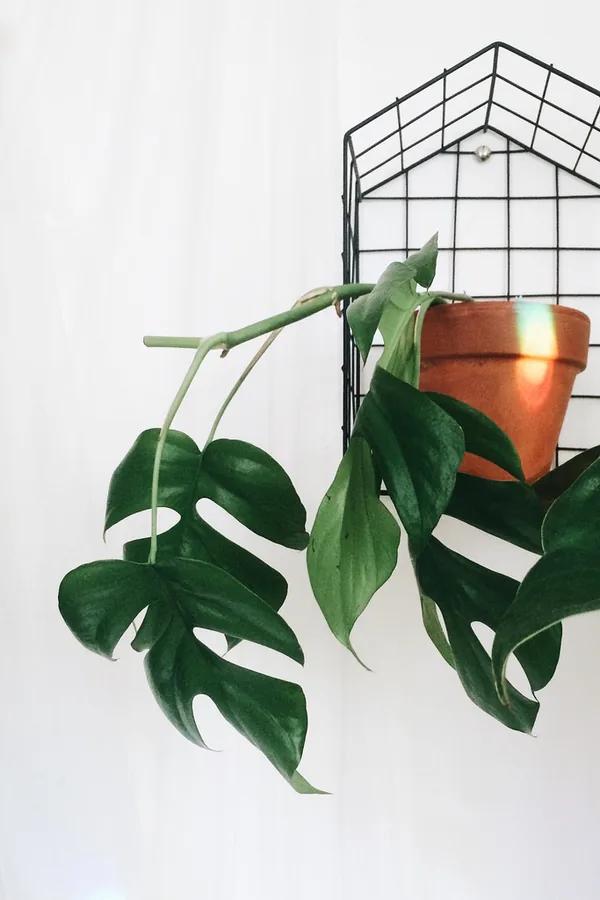
The mini monstera presents as a smaller, faster-growing analogue of Monstera deliciosa, bearing the same fenestrated leaves on a climbing rather than sprawling vine. It sits within the arum family, Araceae, and originates in the forests of Thailand and Malaysia, where it ascends tree trunks toward the canopy light. The common name misleads, because the plant is neither a Monstera nor a Philodendron, but a member of its own genus, Rhaphidophora.
Under indoor conditions it grows rapidly and behaves as an obligate climber. Provide a moss pole or trellis and it forms a tidy, leafy column; withhold support and it trails, producing smaller leaves with fewer of the characteristic fenestrations. Leaf size and the depth of the splits both increase as the plant matures and gains height, a direct response to its climbing habit.
The easy rating follows from modest requirements: consistent warmth, elevated humidity, and disciplined irrigation. The dominant failure mode is overwatering, which excludes oxygen from the root zone and precipitates rot. Holding the medium on the drier side of moist keeps the roots aerated and the plant largely self-sufficient.
Care
The short version: bright indirect light, a support to climb, and warm air held at 60% humidity or above. Irrigate only once the top inch of medium dries, use a loose, fast-draining potting mix, and feed monthly through spring and summer.
Light
Site it in bright indirect light at a window screened from harsh midday sun. It tolerates a few hours of mild direct exposure, but intense radiation scorches the lamina, while deep shade yields small, weakly fenestrated new growth because the plant lacks the energy to develop fully.
Water
Irrigate once the top inch (2.5 cm) of mix has dried, then water thoroughly until drainage exits the holes to flush the entire root zone. Because the species is far more susceptible to rot than to drought, defer watering by a day when uncertain. Reduce frequency in winter as growth slows.
Soil
Use a loose, well-drained potting mix high in organic matter, amended with bark or perlite to preserve aeration around the roots. It tolerates a fairly broad range up to a pH of 8.0, so most quality houseplant substrates suffice without adjustment.
Temperature
Maintain 65°F to 80°F (18°C to 27°C), a range typical of an ordinary heated room. It responds poorly to cold drafts and abrupt temperature drops, so keep it away from doorways and air conditioning vents through winter.
Humidity
As a high-humidity species it performs best at 60% or higher. Average indoor air sustains it, but the low humidity of heated winter interiors desiccates the leaf margins, so a humidifier or a humid bathroom measurably improves it.
Feeding
Apply a balanced liquid fertilizer at half strength monthly through spring and summer, coinciding with active growth. Suspend feeding in fall and winter, since nutrients the dormant plant cannot assimilate accumulate as salts in the medium.
Pruning
Cut the vines to the intended length and remove damaged or chlorotic leaves at the base. Pruning also serves as propagation, because any healthy segment bearing a node can be rooted into a new plant.
Repotting
Repot every 1 to 2 years once the plant becomes rootbound, advancing one pot size into fresh medium. Roots emerging from the drainage holes and a marked slowing of growth are the reliable indicators.
Size & spacing
Given support, it climbs from 2 to 15 feet (61 cm to 4.5 m) and spreads 1 to 4 feet (30 to 122 cm) wide. Provide a pole or trellis and vertical room, since leaf size and fenestration deepen as the plant gains height.
Troubleshooting
Nearly all mini monstera disorders originate in water relations and ambient humidity rather than pathogens or pests. Interpret the foliage and the substrate together, since chlorosis over saturated mix indicates the opposite cause of wilting over dry mix. Identify the matching entry below and correct the underlying factor before it progresses.
Softened roots with a putrid odor
Soft roots and a sour odor confirm root rot, a condition that follows soil left saturated beyond what the roots can tolerate. Because waterlogged mix starves roots of oxygen, they die and decay, so lift the plant, excise every brown and softened root, and repot into fresh, fast-draining medium. Withholding water until the top inch dries restores the air the roots need.
Fix:
- Unpot plant
- Cut away rotten roots
- Repot in fresh well-drained mix
- Reduce watering
Foliage fading toward pale yellow
Yellowing typically signals roots held in standing moisture, a stress that impairs their uptake, and insufficient light frequently compounds it. Assess soil moisture before acting, reduce irrigation, and relocate the plant to brighter conditions. Bright indirect light drives faster transpiration and evaporation, so the medium dries at a pace the roots can handle.
Fix:
- Check soil moisture
- Reduce watering
- Increase bright indirect light
Webbing and fine chlorotic stippling
Fine webbing and pale stippling indicate spider mites, which proliferate in the dry air that also stresses the plant. Rinse the foliage to dislodge the colony, apply insecticidal soap, and repeat until webbing ceases to reappear, since a single treatment rarely reaches every life stage. Maintaining higher humidity suppresses their reproduction and makes the host far less hospitable.
Fix:
- Rinse foliage
- Apply insecticidal soap
- Raise humidity
Loss of turgor over dried medium
Generalized wilting above dry mix reflects lost turgor from underwatering, as the cells can no longer hold their internal pressure. Irrigate thoroughly until water exits the drainage holes to rehydrate the entire root zone, then resume consistent watering. Turgor commonly returns within a day once the tissues take up moisture again.
Fix:
- Water thoroughly
- Resume regular watering
Desiccated brown margins on the foliage
Browned, brittle margins reflect atmospheric moisture below what this humidity-loving aroid requires. Raising ambient humidity toward 60% and holding the medium evenly moist reduces the water deficit at the leaf edge, where transpiration losses concentrate. Existing necrotic tissue will not regenerate, but subsequent growth emerges undamaged.
Fix:
- Raise humidity toward 60%
- Keep soil evenly moist
Toxicity
Regard this plant as one to keep away from any mouth. All tissues contain insoluble calcium oxalate crystals that penetrate and inflame the mouth and throat on chewing, and the sap can provoke dermatitis on exposed skin. Nothing on the plant is edible, so classify it as toxic to pets and people alike and position it beyond the reach of curious cats, dogs, and children.
Toxic to
Cats · Dogs · Horses · Rabbits · Livestock · Birds · People
Cats Toxic
When a cat bites the foliage, the released calcium oxalate crystals embed in the oral tissue, producing pronounced salivation, pawing at the muzzle, and a swollen, painful tongue.
Dogs Toxic
Dogs exhibit the same oral response, with salivation, retching, and mouth soreness that ordinarily deters further ingestion.
Horses Caution
The crystals would irritate the oral and gastric lining of a horse, although a horse indoors seldom encounters this species.
Rabbits Toxic
In rabbits, ingestion produces oral burning and anorexia, so the container should be positioned well beyond their reach.
Livestock Caution
Goats, sheep, and cattle would sustain equivalent oral and gastrointestinal irritation, though as an indoor plant it seldom reaches grazing animals.
Birds Caution
A bird that mouths the foliage risks oral irritation from the crystals, so accessible leaves should be kept out of range.
People Caution
No portion of this plant is edible. Chewing it burns the mouth, and the sap can produce contact dermatitis on bare skin, so gloves are advisable when cutting it and it should be kept from small children.
Wear gloves; sap can cause contact dermatitis
Helpline numbers

United States
ASPCA Animal Poison Control: (888) 426-4435 (fee applies)
Poison Control: (800) 222-1222



Canada
Poison Centres: 1-844-764-7669
How to propagate
Mini monstera ranks among the most straightforward houseplants to propagate, since a single nodal cutting develops into an entire new vine.
Stem cuttingsEasy
Spring to summer · Several weeks to root
Mini monstera propagates reliably from stem cuttings taken during the spring and summer growing season, when active growth favors rapid rooting. Sever a segment bearing a node and an aerial root, since the node supplies the meristematic tissue from which new roots arise, and set it in water or a moist medium. Rooting proceeds over several weeks, after which the cutting can be potted as an independent plant.
Myths
Mini monstera is a juvenile Monstera deliciosa.
The resemblance is superficial. Mini monstera is classified as Rhaphidophora tetrasperma, a distinct genus, so a small specimen remains small rather than developing into a true Monstera. The fenestrated leaves reflect shared family morphology within Araceae, not juvenile status.
It is a species of Philodendron.
The trade designations Philodendron Ginny and Philodendron Piccolo have persisted for years despite being taxonomically incorrect. The plant is not a Philodendron, and those labels amount to obsolete nursery nomenclature.