Tree · Rosaceae
Loquat
Eriobotrya japonica
Sited in full sun and clear of late frost, the loquat ripens sweet fruit when few other trees are cropping.
Full sun
Every 7–14 days
USDA 8–11
15–30 ft · 4.6–9.1 m
Overview
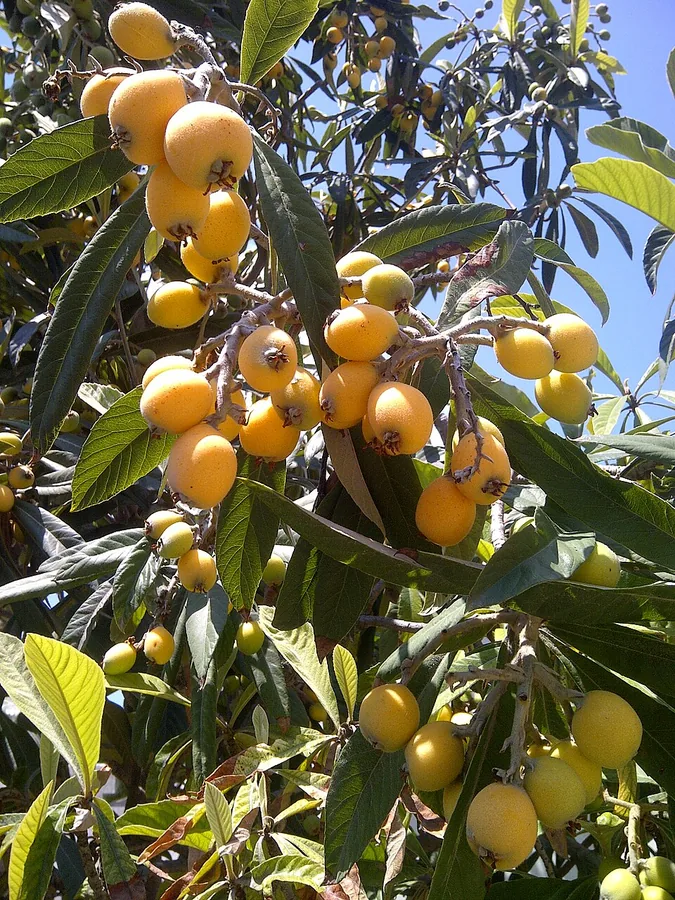
Loquat is an evergreen member of the Rosaceae, native to China and long cultivated in Japan and across warm regions worldwide. Its value is twofold: broad, leathery leaves that furnish year-round structure, and clusters of small, sweet fruit that mature in late winter and spring. That precocious ripening, ahead of nearly every other tree fruit, is central to its appeal.
The species follows an unusual phenology. It flowers in fall and early winter and then carries its developing fruit through the cold months to ripen when most orchards remain bare. This same schedule is its principal vulnerability, since a hard freeze can destroy an entire season of bloom even though the tree's wood withstands the cold without lasting injury.
Given full sun, well-drained soil, and protection from late frost, the loquat is undemanding thereafter. Established specimens tolerate drought and adapt to poor, high-pH substrates. The two management priorities are shielding the early flowers from cold and monitoring for fire blight.
Care
The short version: full sun and well-drained soil, with consistent moisture while the tree is young and through flowering and fruiting; once established it tolerates drought, so the substantive task is protecting the early bloom from frost.
Light
Fruiting is strongest in full sun, because ample light drives sugar accumulation in the fruit and maintains a dense canopy. The tree accepts partial shade, but reduced light shifts the balance toward vegetative growth and away from a heavy crop.
Water
Irrigate young trees regularly and sustain even moisture through flowering and fruiting, the period of active crop development. Once established the tree becomes drought tolerant and requires far less. Allow the top half of the soil to dry between waterings, since standing water at the roots is not tolerated.
Soil
The species is adaptable in its soil requirements. It performs best in well-drained loam but accommodates sandy or clay ground and a broad pH of 6.0 to 8.0, including alkaline high-pH sites that limit less tolerant fruit trees. Adequate drainage is the non-negotiable condition.
Temperature
The wood is hardy from roughly 10°F to 95°F (-12°C to 35°C), considerably more cold-tolerant than the reproductive tissue. A freeze below about 28°F (-2°C) kills open blooms and young fruit, which is why a warm, sheltered site is decisive for fruiting in cooler zones.
Humidity
Loquat is comfortable across a wide 40% to 70% humidity range and seldom responds to it outdoors. Free air movement through the canopy is more consequential than any specific figure, since good airflow suppresses conditions that favor fire blight.
Feeding
Apply a balanced complete fertilizer through spring and summer during active growth. Keep nitrogen moderate, because the soft, succulent flush that high nitrogen forces is precisely the tissue fire blight colonizes.
Pruning
Loquat requires little pruning. After harvest, remove dead, crossing, or fire blight damaged wood and shape the tree lightly, always cutting well below diseased tissue and disinfecting blades as the work proceeds.
Repotting
As large landscape trees rarely grown in containers, loquats seldom present a repotting question. Establish the tree in its permanent position and leave it undisturbed in the ground.
Size & spacing
A mature loquat is a substantial tree, reaching 15 to 30 feet (4.5 to 9 m) in height with a spread of 15 to 25 feet (4.5 to 7.5 m). Allow generous open ground so the broad canopy has room to develop and air can circulate through it.
When to plant
Loquat runs on a distinctive schedule. Establish young trees in spring, then anticipate bloom in fall and early winter and fruit that ripens from late winter into spring. The species is hardy across zones 8 to 11, but because a freeze below about 28°F (-2°C) destroys the bloom, a sheltered position is what secures a crop.
Northern hemisphere
Southern hemisphere
Typical months for a temperate climate: start earlier in warm zones, later where spring frosts linger.
- Plant: spring
- Harvest: Blooms fall to early winter and ripens fruit late winter to spring; late freezes below about 28°F kill blooms and young fruit, limiting fruiting in colder zones even though the tree survives to about 10°F.
Hardiness
USDA hardiness zones: 8–11
Temperature: down to -12°C
Troubleshooting
Loquat is a durable species, and its difficulties concentrate in two areas: a bacterial disease and a poorly timed frost. Recognizing the signature of each allows intervention before the crop is lost.
New shoots blacken and curl into a scorched hook
The blackened, hooked shoots point to fire blight, caused by the bacterium Erwinia amylovora, which multiplies fastest in warm, wet spring conditions and colonizes soft, actively growing tissue. Prune well below the visible damage into sound wood, and disinfect blades between cuts, because the pathogen travels in the sap and a contaminated blade seeds the next wound. Restrain nitrogen as well, since the succulent flush high nitrogen produces is the very tissue the bacterium exploits.
Fix:
- Prune out blackened, dead shoots and branches well below symptoms, disinfect tools between cuts, and avoid excessive nitrogen.
Blossoms and set fruit blackened following a freeze
Because loquat flowers in fall and early winter and develops its fruit through to spring, the reproductive tissue is exposed precisely when late freezes occur. Open blooms and immature fruit are killed once temperatures fall below about 28°F (-2°C), while the vegetative wood tolerates cold to roughly 10°F (-12°C), which explains why the tree persists yet fails to crop. Site it in a protected position or a warm microclimate, and in colder zones regard it as an ornamental with negligible fruit.
Fix:
- Plant in a protected site or warmer microclimate; in colder zones grow primarily as an ornamental and expect little to no fruit.
Toxicity
The ripe flesh is edible and safe for people, but the seeds and leaves contain cyanogenic glycosides that release cyanide on chewing. That renders the tree a genuine hazard to cats, dogs, horses, and grazing stock. Keep fallen seeds, prunings, and wilted foliage out of reach of pets and livestock.
Toxic to
Cats · Dogs · Horses · Rabbits · Livestock · Birds
Safe for
People
Cats Mild
When a cat chews foliage or a fallen seed, the cyanogenic glycosides release enough cyanide to prompt drooling, vomiting, and labored breathing. The ripe flesh carries no such compounds, so the hazard lies entirely in the seeds and leaves.
Dogs Mild
A dog that mouths a dropped seed or chews a leaf typically shows drooling and gastric upset as the glycosides break down. Labored breathing signals rising cyanide and warrants closer attention.
Horses Moderate
Horses respond more severely to the cyanide in chewed seeds and wilted foliage, developing weakness, respiratory distress, and potential collapse. Exclude all prunings and clippings from any paddock or grazing area.
Rabbits Moderate
Foliage a rabbit browses delivers the same cyanogenic compounds, so the leaves should be withheld entirely. Limit any offering to a small portion of ripe flesh and nothing more.
Livestock Toxic
In cattle, goats, and sheep the cyanide concentrates within wilted leaves and prunings and can prove rapidly fatal. Fence grazing animals from the tree and exclude trimmings from pasture without exception.
Birds Caution
Birds may consume the soft, ripe flesh, yet the seeds and leaves retain the same toxin and must be kept away. Regard everything but the pulp as unsuitable.
People Fruit flesh safe
The ripe flesh is a well established edible fruit and safe for people. Avoid swallowing the large seeds and do not chew the leaves, as both retain cyanogenic glycosides.
Keep fallen seeds, prunings, and wilted leaves away from pets and grazing animals.
Helpline numbers

United States
ASPCA Animal Poison Control: (888) 426-4435 (fee applies)
Poison Control: (800) 222-1222



Canada
Poison Centres: 1-844-764-7669
Varieties
Numerous loquat cultivars have been selected for size, color, and flavor. The few below are those most frequently encountered in home gardens.
Gold Nugget
A late-season selection bearing large, round, orange fruit that finishes sweet.
Champagne
A yellow-fleshed cultivar valued for its juicy flesh and balanced sweet-tart character.
Big Jim
A vigorous, heavy-bearing tree producing large, rounded fruit of good flavor.
Mrs. Cooke
A reliable yellow-fleshed cultivar grown in home gardens for its consistent cropping.
How to propagate
A loquat grows readily from seed taken directly from the fruit, though the seedling will not reproduce the parent. To perpetuate a named cultivar, growers rely instead on grafting or air-layering.
SeedEasy
Fresh loquat seed germinates readily when sown straight from the fruit, which makes it the simplest method. Because seedlings segregate and seldom reproduce the parent's fruit, they serve best as rootstock or as an experiment rather than a route to a known cultivar.
GraftingModerate
Grafting or budding a named cultivar onto a seedling rootstock preserves it true to type. The technique demands more skill than sowing seed, yet it remains the only dependable means of reproducing a tree's exact fruit.
Air layeringModerate
Air-layering clones a selected tree by inducing roots on a branch that remains attached to and nourished by the parent. It requires patience while roots form, but it eliminates the variability inherent in seed propagation.
Myths
The entire loquat plant is poisonous.
The ripe flesh is a widely eaten edible fruit that causes no harm. The cyanogenic glycosides reside only in the seeds and leaves, and they pose a real risk chiefly when chewed in quantity, so discarding the large seeds removes the concern.
Two loquat trees are required for any fruit to set.
Most loquat cultivars are self-fruitful and set a crop unaided. A second cultivar planted nearby can raise yield through cross-pollination, but a solitary tree will still fruit on its own.