Ornamental · Campanulaceae
Lobelia
Lobelia erinus
Give it cool weather, part shade, and steady moisture, and lobelia carries clouds of blue from spring into fall.
Partial sun
Every 2–4 days
36–81°F · 2–27°C
70–85 days
Overview
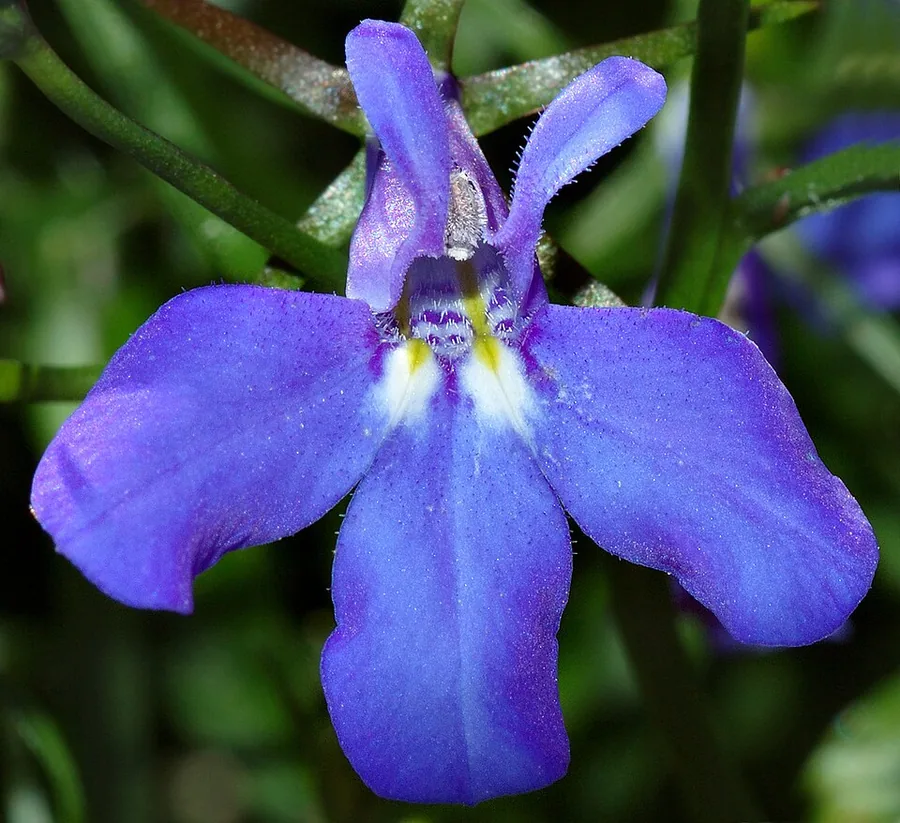
Lobelia is a low, fine-textured edger of the bellflower family, familiar for lining paths and cascading from baskets in a haze of blue. In most gardens it is grown as a tender annual, holding to 4 to 9 inches (10 to 23 cm) in height while it develops either a soft mat or a trailing curtain of bloom.
Its defining trait is a preference for cool conditions. As a cool-season plant it flowers most freely in the mild windows of spring and fall, blooming from April into early summer where the climate stays gentle. Where the summer turns hot and humid it loses vigor, which is why growers cut it back and rely on the return of cooler weather to force a second flush.
Established plants are undemanding: rich, moisture-retentive soil, a position sheltered from the strongest afternoon sun, and irrigation before the root zone dries. Meet those needs and a single planting sustains weeks of color. The one caution that overrides convenience is that the whole plant is toxic, so site it beyond the reach of pets and grazing animals.
Care
The short version: part shade where summers run hot, rich soil held evenly moist, a balanced feed at two-week intervals, and a hard cutback at midsummer to renew flowering in fall.
Light
Lobelia performs best in part sun and tolerates full sun only in cool climates. In hot regions provide afternoon shade, because the excess heat and radiation, rather than light itself, are what curtail flowering early in the season.
Water
Hold the soil evenly moist at all times, since lobelia has no drought tolerance and declines rapidly once the root zone dries. Irrigate at the base every 2 to 4 days, more often in heat, but avoid saturation, which favors the rots the plant is prone to.
Soil
Grow it in rich, well-drained ground high in organic matter, whether loam, sand, or clay. It is indifferent to pH within a band of 6.0 to 7.5, provided the medium retains moisture without becoming waterlogged.
Temperature
As a cool-weather species it operates across roughly 36°F to 81°F (2°C to 27°C). It is most productive at the mild ends of that range and loses vigor once summer heat and humidity set in.
Humidity
Ordinary outdoor air is adequate, so no specific level need be met. The limiting factor is muggy summer heat rather than dry air, because damp, stagnant air around the canopy encourages the rots that affect the plant.
Feeding
Apply a balanced water-soluble fertilizer every two weeks through the growing season. This steady, dilute supply sustains flowering in a fast-growing plant that would otherwise exhaust its reserves by midseason.
Pruning
When heat degrades the display at midsummer, shear the whole plant back by about a third. Removing the tired canopy appears drastic briefly, then stimulates fresh growth that reblooms as cooler fall weather arrives.
Size & spacing
Lobelia remains low at 4 to 9 inches (10 to 23 cm) tall and spreads 6 to 12 inches (15 to 30 cm) across. That compact, mounding-to-trailing habit is precisely what suits it to edging beds and occupying the front of containers.
When to plant
Because lobelia is governed by temperature, timing decides success. Sow the slow seed indoors well ahead of the last frost, set plants out once the cool spring weather has settled, and expect flowers from April into summer, extended where the season stays mild.
Northern hemisphere
Southern hemisphere
Typical months for a temperate climate: start earlier in warm zones, later where spring frosts linger.
- Sow: Start seed indoors 8 to 10 weeks before the last spring frost; seed can be slow and difficult to germinate.
- Plant: Transplant after the last frost once cool spring weather is settled.
- Harvest: April to June, continuing into summer in cool climates
Hardiness
USDA hardiness zones: 10–11
Temperature: down to -1°C
Troubleshooting
Most lobelia problems trace to two conditions: excess moisture during establishment and heat as the season advances. Identify the symptoms below early and the plant usually recovers. Match the sign to its cause, then act before the problem widens.
Seedlings collapse and rot at the soil line
The cause is damping-off, a complex of soil-borne fungi that attack tender seedling tissue in cold, saturated media where growth is slow. The pathogen invades at the soil line, leaving stems water-soaked and constricted so the plant falls in a single collapse. Because the fungi need cold and excess moisture, control follows the conditions: sow into a sterile, free-draining mix, reduce irrigation, raise air circulation, and rogue out any collapsed seedlings.
Fix:
- Use sterile, well-draining seed mix
- Improve air circulation and reduce watering
- Remove and discard affected seedlings
Wilting persists as roots turn brown and soft
Chronically wet, poorly drained soil starves roots of oxygen and opens the way to stem and root rot. The diagnostic clue is wilting that continues even in saturated soil, because the decayed, darkened roots can no longer take up water. Correcting drainage and lengthening the interval between waterings restores root function, while plants already extensively rotted should be removed.
Fix:
- Improve drainage and reduce watering frequency
- Remove severely affected plants
Vigor and flowering drop off in mid-summer
Lobelia erinus is adapted to cool conditions, so heat and humidity stress are the physiological trigger behind mid-summer decline. As temperatures rise the plant loses vigor and flowering stops, leaving ragged foliage. Cutting back by roughly a third removes the spent canopy and prompts fresh basal growth, and with even moisture and afternoon shade in hot regions that new growth reblooms as autumn cools.
Fix:
- Cut plants back by about one-third to encourage fall rebloom
- Maintain consistent moisture during heat
- Provide afternoon shade in hot climates
Toxicity
Regard lobelia as ornamental, not edible. All parts contain lobeline and related alkaloids, so ingestion sickens pets, livestock, and people, producing nausea, vomiting, and salivation, with cardiac and respiratory effects at higher doses. Site it beyond the reach of animals and small children.
Toxic to
Cats · Dogs · Horses · Rabbits · Livestock · Birds · People
Cats Toxic
Lobeline is distributed throughout the tissue, so ingestion by a cat produces salivation, inappetence, and a dull, depressed demeanor. Vomiting and diarrhea follow, and at higher doses the alkaloids disturb cardiac rhythm and respiration.
Dogs Toxic
In dogs the leaves and flowers provoke heavy salivation and vomiting, with abdominal pain and loose stools soon after. A sufficient dose carries the alkaloids to the heart and respiratory system.
Horses Toxic
The same alkaloids affect horses, which show drooling, gastric upset, and depression. A large dose can disturb cardiac rhythm, so exclude lobelia from paddocks and hay stores.
Rabbits Toxic
Because the alkaloid load extends through the entire plant, no part is safe forage for a rabbit. Salivation and gastrointestinal upset are expected, worsening with larger intake.
Livestock Toxic
Grazing cattle, sheep, and goats are poisoned by the foliage, developing salivation, vomiting, and weakness. Heavy intake risks cardiac and respiratory involvement, so exclude the plant from pasture.
Birds Toxic
The lobeline concentrated in leaves and flowers makes the plant unsafe for pet and wild birds alike. A small quantity irritates the gut, and a larger one reaches the heart.
People Caution
No part of lobelia is edible, and ingestion produces nausea, vomiting, and salivation. A large quantity can affect cardiac and respiratory function, so keep the plants out of reach of curious children.
Keep away from grazing animals and pets.
Helpline numbers

United States
ASPCA Animal Poison Control: (888) 426-4435 (fee applies)
Poison Control: (800) 222-1222



Canada
Poison Centres: 1-844-764-7669
Varieties
The species divides into upright edging forms and trailing forms for baskets, predominantly in shades of blue. The selections below are the ones most often encountered.
Crystal Palace
A compact, upright selection suited to edging, distinguished by deep blue flowers borne over bronze-tinged foliage.
Cambridge Blue
A tidy mounding edger recognized by its soft sky-blue flowers.
Sapphire
A trailing selection whose blue, white-eyed flowers cascade well from a hanging basket.
Laguna series
A line of trailing cultivars bred for heat tolerance so that container displays persist through summer.
How to propagate
Lobelia is raised from seed, a process that rewards patience more than technique.
SeedModerate
Start indoors 8 to 10 weeks before the last frost. · Roughly 10 to 12 weeks from sowing to transplant-ready size.
Lobelia is propagated by seed, a method that demands care rather than difficulty. The seed is dust-fine and germinates slowly, so sow it indoors 8 to 10 weeks before the last frost, surface-sow without covering, and hold the medium evenly moist and warm. Allow roughly 10 to 12 weeks from sowing to a transplant-ready plant; where that timeline is impractical, nursery stock is the more reliable option.
Myths
Edging lobelia is the same plant as the medicinal cardinal flower.
Annual edging lobelia (Lobelia erinus) and cardinal flower (Lobelia cardinalis) are distinct species, though the two are often conflated in the garden. The pertinent point is the toxicology they hold in common: every Lobelia contains toxic lobeline alkaloids, and none is safe to consume.
Lobelia is a true sun-lover that thrives in summer heat.
In practice it behaves as a cool-season annual that performs best in part shade where summers are hot. Mid-summer heat and humidity typically drive it into decline, so its peak display falls in spring and autumn rather than at the height of the season.