Ornamental · Campanulaceae
Bellflower
Campanula persicifolia
Provide cool weather, sun, and well-drained soil, and the bellflower rings out blue bells every summer.
Full sun
Every 5–7 days
USDA 3–7
2–3 ft · 0.5–0.9 m
Overview
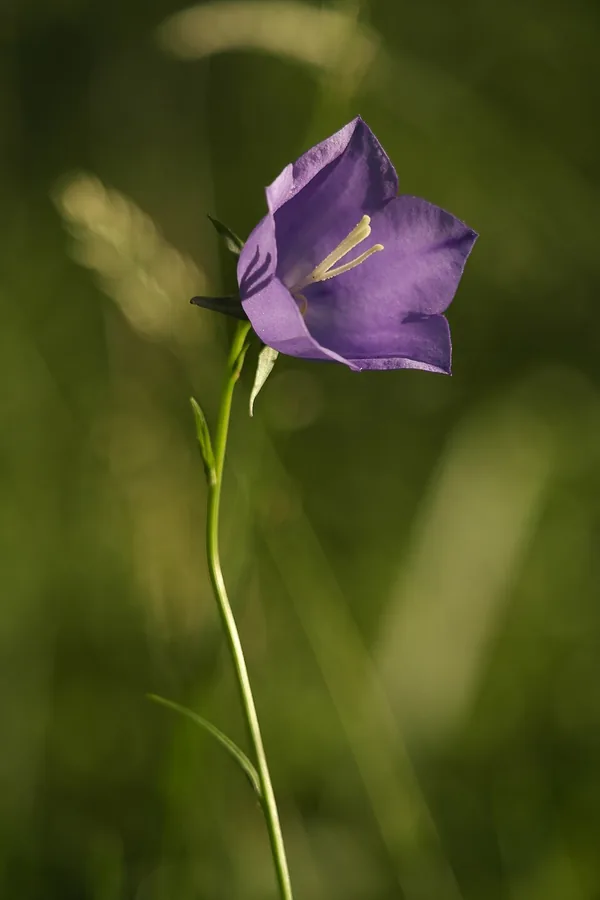
Bellflower contributes a dependable blue and white note to the early-summer herbaceous border. The peachleaf form raises slender flowering stems lined with large, outward-facing bells through the June to July period. It sits within the genus Campanula, a large group whose habit spans tall border subjects to low edging mounds.
Functionally this is a cool-climate perennial, hardy across zones 3 to 7 and best adapted to regions with mild summers. It persists from year to year and gradually builds a clump that can be lifted and divided to increase stock. Its principal physiological limit is heat, so growers in warm regions should supply afternoon shade and consistent soil moisture.
The cultural requirements of most bellflowers are modest. Adequate light, sharp drainage, and unobstructed air movement reliably produce several weeks of bloom. Removing spent inflorescences frequently induces a second flush later in the season, because it diverts resources from seed set back into flowering.
Care
The short version: full sun, or afternoon shade in hot-summer regions, in average well-drained soil held at even moisture. Deadhead spent inflorescences, divide the clump every few years, and fertilize sparingly.
Light
Bellflowers perform optimally in full sun yet tolerate partial shade without significant loss. In hot-summer regions, afternoon shade is advisable because it reduces leaf temperature, which both protects the plant and extends the display of individual blooms.
Water
Maintain the soil at average, even moisture, which under dry conditions means irrigation every 5 to 7 days. Drainage is the governing factor, so reject sites that remain saturated or desiccate completely, and supplement water in hot regions from zone 7 upward where evaporative demand is higher.
Soil
Almost any well-drained substrate is suitable, whether loam, sand, or soil enriched with organic matter. The genus accepts a broad pH range from 6.0 to 8.0, so amendment for acidity or alkalinity is rarely required in typical garden beds.
Temperature
The plant is fully cold-hardy, withstanding winter minima of -29°F (-34°C). Its upper limit is the operative constraint: above roughly 86°F (30°C) vigor declines, which accounts for poor performance in warm-climate gardens lacking shade.
Humidity
Ambient outdoor humidity is sufficient, so no atmospheric moisture management is needed. Air circulation is the relevant variable, since stagnant, humid air combined with warm nights is what progressively debilitates these cool-season plants.
Feeding
Nutrient demand is low. A single light, balanced application approximately four weeks before bloom supplies what is needed, and like most perennials the plant performs better on lean rather than enriched soil.
Pruning
Deadhead spent inflorescences to promote a second flush and limit self-seeding. When the cauline leaves senesce, cut flowering stems back to the basal rosette, and periodic pinching maintains a branched, compact form.
Repotting
Clumps lose productivity as they age and crowd. Divide every 3 to 4 years to sustain flowering, and treat congested growth or diminished bloom as the indication to lift and separate the crown.
Size & spacing
Mature plants attain 1.5 to 3 feet (46 to 91 cm) in height with a spread of 12 to 18 inches (30 to 46 cm). Spacing at that interval secures the air movement the foliage requires and allows the clump to develop fully.
When to plant
Bellflower culture follows a cool-season schedule. Sow seed indoors in late winter, transplant young stock outdoors in spring after frost has cleared, and anticipate flowering from June into July.
Northern hemisphere
Southern hemisphere
Typical months for a temperate climate: start earlier in warm zones, later where spring frosts linger.
- Sow: Late winter to early spring (8-10 weeks before last frost)
- Plant: Spring after last frost
- Harvest: June to July
Hardiness
USDA hardiness zones: 3–7
Temperature: down to -40°C
Troubleshooting
Bellflower presents few disorders, and those that occur are straightforward to diagnose. Most reduce to chewing pests on the foliage or thermal stress during summer. Match the observed symptom below and intervene at the earliest stage.
Reduced vigor and early decline under hot-summer conditions
As cool-season perennials, bellflowers lose vigor when sustained heat and humidity prevent the nighttime recovery they require, particularly where lows hold near 70°F (21°C). Performance falls off south of zone 7, where the thermal load exceeds the plant's tolerance. Afternoon shade lowers leaf temperature and consistent moisture buffers transpiration stress, but the decisive intervention is siting the plant in the coolest available microclimate.
Fix:
- Site plants where they receive afternoon shade in hot regions
- Ensure good drainage and adequate moisture
- Choose cooler microclimates for planting
Irregular feeding holes in foliage and flowers with adjacent slime trails
Ragged margins paired with a dried mucous trail are the diagnostic signature of slugs and snails, nocturnal feeders that retreat to cool, damp cover by daylight. A flashlight inspection after dusk lets you remove them by hand at the moment they feed. Stripping out the mulch and leaf litter denies them the humid refuge they depend on, and iron-phosphate bait, which they ingest while foraging, holds down any persistent population.
Fix:
- Hand-pick slugs and snails in the evening
- Remove plant debris and mulch that provides hiding spots
- Use traps or iron-phosphate baits if pressure is high
Curled apical growth colonized by soft-bodied insects with sticky exudate
Curled tips, dense colonies of green or black soft-bodied insects, and a tacky film of honeydew identify aphids, which insert their mouthparts into the youngest, most succulent tissue. A forceful jet of water dislodges the colony mechanically before populations build, and insecticidal soap clears any that reattach. Restraint with nitrogen is the structural fix, since nitrogen drives the flush of tender growth these insects preferentially exploit.
Fix:
- Spray plants with a strong jet of water to dislodge aphids
- Apply insecticidal soap if infestation is heavy
- Encourage natural predators such as lady beetles
Toxicity
For households with animals the assessment is favorable: bellflower is not known to be toxic to pets, livestock, or people. It does not appear on the standard poison references, and several Campanula species are documented as edible by foragers. Ingestion of a substantial quantity of foliage may at most produce transient gastric upset.
Safe for
People · Cats · Dogs · Horses · Rabbits · Livestock · Birds
Cats None
No toxin is on record for cats, so bellflower carries no recognized hazard. Ingestion of foliage by a cat may at most produce transient gastric irritation, the nonspecific response seen with many non-toxic plants.
Dogs None
Bellflower is absent from the standard canine toxic-plant references, so dogs face no documented risk. A dog that consumes a quantity of foliage may show brief hypersalivation or a single loose stool, both self-limiting.
Horses Safe
No constituent of bellflower is known to be toxic to horses. Grazing on the plant has no reported adverse effect in equines.
Rabbits Safe
Bellflower presents no hazard to rabbits, as the foliage contains no compound documented to affect them.
Livestock Safe
Cattle, goats, and sheep can graze in proximity to bellflower without risk, since it holds no compound known to poison ruminant stock.
Birds Safe
Bellflower poses no documented threat to avian species. Both domestic poultry and wild birds may forage within a planting without adverse effect.
People Safe
Bellflower is regarded as safe for people, and certain Campanula species are documented as edible by foragers. Incidental contact with a leaf or flower presents no risk to a child.
Generally considered safe around pets and people; as with any plant, ingesting large amounts of foliage may cause mild, temporary stomach upset.
Varieties
The genus Campanula is extensive, but a small number of bellflowers recur in cultivation. The following are the species worth knowing by name.
Campanula persicifolia (Peachleaf bellflower)
Upright stems of 1.5 to 3 feet bear large outward-facing campanulate flowers ranging white to violet-blue across the June to July window.
Campanula carpatica (Carpathian bellflower)
A low, compact, mounding habit of upward-facing blue, purple, or white bells suits it to formal edging.
Campanula glomerata (Clustered bellflower)
At 6 to 24 inches it aggregates its violet to lavender-blue flowers into dense terminal clusters.
Campanula medium (Canterbury bells)
A biennial species cultivated for its large cup-and-saucer corollas.
How to propagate
Bellflower propagates readily by three routes: clump division, seed, and basal cuttings.
DivisionEasy
Spring or early fall · One growing season
Division is the most reliable propagation method and simultaneously rejuvenates clumps that have lost vigor with age. Lift and separate an established plant in spring or early fall, and each division reestablishes within a single growing season.
SeedModerate
Sow indoors late winter to early spring or allow self-seeding outdoors · Often blooms the second year from seed
Seed propagation succeeds either by indoor sowing in late winter to early spring or by permitting natural self-seeding in the bed. Because seedlings are typically biennial to flower and bloom in their second year, deadheading through the season regulates the volume of self-sown progeny.
Stem cuttingsModerate
Spring to early summer from basal growth · Several weeks to root
Basal cuttings reproduce a selected plant clonally, preserving its exact traits. Harvest basal shoots in spring to early summer, and they form roots over several weeks to yield new plants.
Myths
All bellflowers are dangerously poisonous to cats and dogs.
No toxin is documented in Campanula for companion animals. The genus is absent from Cornell's canine toxic-plant list, the NC State profile records no poison warning, and several species are eaten by foragers. Bellflower is safe to cultivate around cats and dogs.
Every bellflower is a harmless garden ornamental.
Campanula rapunculoides, creeping bellflower, is the exception. It propagates aggressively by both seed and subterranean rhizomes and resists removal once established, since fragments left in the soil regenerate. Exclude that species and select a non-invasive bellflower.