Ornamental · Campanulaceae
Balloon Flower
Platycodon grandiflorus
Site it in full sun with sharp drainage, and the inflated buds keep bursting open each summer for years on end.
Full sun
Every 5–10 days
USDA 3–8
12–30 in · 30–76 cm
Overview
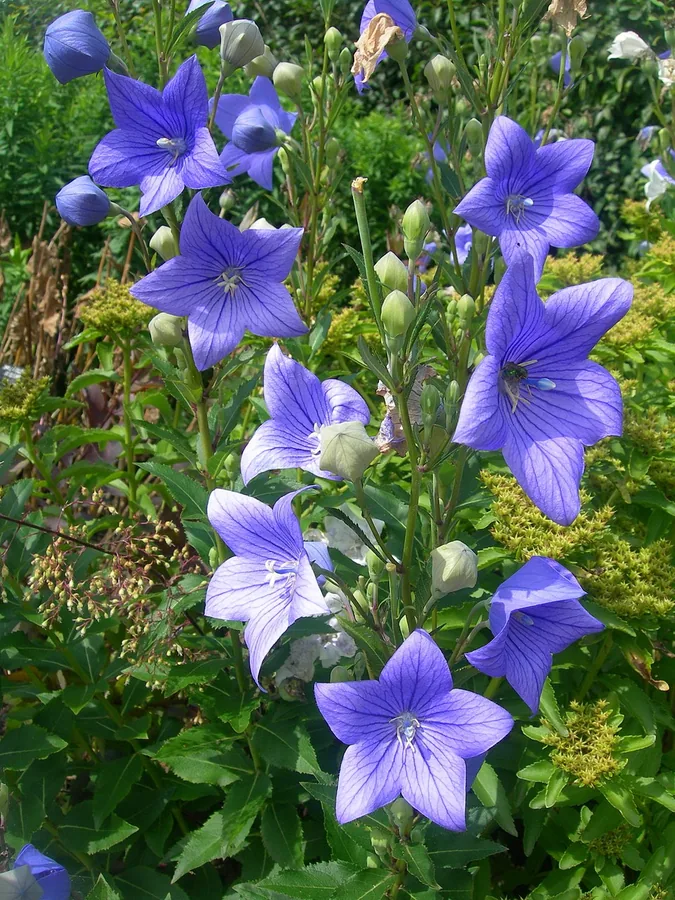
The common name traces directly to the bud, which inflates into a small balloon-like pod and then ruptures into a broad five-pointed star, most often deep blue but also white and pink. It is a hardy perennial in the bellflower family, native to East Asia, and durable enough to return season after season across zones 3 through 8.
Gardeners drawn to undemanding perennials will find a good match here. The requirements are simple: full sun, free-draining ground, and little intervention, with bloom carrying from June into August once the plant has settled. Taller forms come with one caveat worth noting, since they lean over without support, which is why many growers shear them in late spring to hold them compact.
A single growth habit tends to surprise newcomers. The plant is a late emerger, sending up stems weeks behind the rest of the bed, and that delay convinces many gardeners it has perished. Mark its spot and hold off the spade, and it reappears on its own timetable.
Care
The short version: full sun and light, free-draining soil, kept evenly moist but never sodden at the root. Apply a light spring feed, shear taller stems back in May to limit flopping, and otherwise let this easy perennial manage itself.
Light
Position balloon flower in full sun to build the firmest stems and the heaviest bloom. Partial shade is tolerated, but reduced light drives stems to elongate and weaken, which leaves them far more prone to leaning than open-grown plants.
Water
Hold the soil evenly moist yet never saturated, applying water about every 5 to 10 days once the top inch has dried. Drainage is the deciding factor, because roots left standing in wet ground succumb to rot quickly.
Soil
Set it into light, rich, free-draining loam that moves water through readily. A mildly acidic pH of 5.5 to 6.0 is ideal, and water-retentive ground is the surest way to lose the plant to root failure.
Temperature
Cold-hardiness here is genuine, withstanding winter lows of -29°F (-34°C) and tolerating summer heat to roughly 90°F (32°C). That span matches zones 3 through 8 with no added protection required.
Humidity
Ambient outdoor humidity covers its needs entirely, so no target applies. Air circulation matters more than atmospheric moisture, because stagnant, damp air encourages both rot and slugs.
Feeding
Restraint serves this plant best. Mix a modest dose of balanced fertilizer or compost into the soil in spring and stop there, since heavy feeding pushes soft, floppy stems at the expense of flowers.
Pruning
Remove spent blooms to sustain flowering, and shear taller stems back by half in May to forestall flopping and avoid staking. Let the old stems remain standing over winter so they flag where the late-emerging crowns will break ground.
Repotting
Balloon flower seldom calls for repotting, and it resents any disturbance to its roots. Shift a potted specimen only when bloom falls off or roots begin circling the container, and treat the brittle taproot gently throughout.
Size & spacing
Mature plants stand 12 to 30 inches (30 to 76 cm) tall with a spread of 12 to 18 inches (30 to 46 cm), varying by cultivar. Allow each plant that spacing so air passes freely and the stems hold themselves upright.
When to plant
This species keeps a late schedule. Sow seed under cover in late winter, transplant young plants once the last frost has passed and the soil has warmed, and the inflated buds open from June into August.
Northern hemisphere
Southern hemisphere
Typical months for a temperate climate: start earlier in warm zones, later where spring frosts linger.
- Sow: Late winter to early spring, about 6-8 weeks before last frost
- Plant: After last spring frost once soil has warmed
- Harvest: June to August
Hardiness
USDA hardiness zones: 3–8
Temperature: down to -40°C
Troubleshooting
Little intervention keeps balloon flower thriving, and the few problems it faces stem from excess water or feeding slugs far more than from pathogens. Keep an eye on the roots and the lower foliage, then match the symptoms below before acting.
Collapsing growth and decayed roots in saturated ground
What looks like disease is usually root rot driven by waterlogged soil that starves the roots of oxygen. Lift an ailing plant and the diagnosis is clear: blackened, mushy roots in ground that stays wet for days. Correct the drainage, scale back irrigation, and reset any survivors into light, free-draining loam so the roots can breathe again.
Fix:
- Improve drainage and reduce watering
- Remove severely affected plants
- Replant in light, well-drained loam
Chewed foliage marked by silvery mucus trails
Torn foliage paired with a glistening residue is the signature of slugs and snails, which graze under cover of darkness. Confirm it with a flashlight after nightfall or once rain has wet the ground, when they emerge to feed. Remove them by hand, strip away the moist litter that shelters them, and apply iron-phosphate bait should the grazing persist.
Fix:
- Hand-pick slugs and snails in the evening
- Remove debris and mulch that shelters them
- Use traps or iron-phosphate baits if needed
Lanky stems that bend and sprawl outward
Taller selections carry a natural tendency to flop as they hit full height, and rainfall or too little light only weakens the stems further. Sun-grown plants build stiffer, self-supporting growth, so a full-sun position pays off. Shearing the clump by half in May produces a shorter, denser plant, and a stake catches whatever still leans.
Fix:
- Stake taller plants
- Cut stems back by half in May to reduce height
- Grow in full sun for sturdier stems
Toxicity
This is a reassuring profile: balloon flower poses no household hazard. The ASPCA does not classify it as toxic to pets, and it carries no poisonous-to-humans flag. The root is in fact a traditional Korean vegetable known as doraji, though it holds saponins that can unsettle a stomach when raw plant material is consumed in quantity.
Safe for
People · Cats · Dogs · Horses · Rabbits · Livestock · Birds
Cats None
The ASPCA flags no toxic compounds here, so cats are in the clear. Saponins in the tissue mean a sampled leaf might bring a touch of stomach upset, and the trouble stops there.
Dogs None
This plant belongs to the ASPCA non-toxic list, so dogs are welcome in the same beds. A mouthful of foliage tends to produce, at most, a passing case of mild digestive upset.
Horses Safe
Horses have nothing to fear from it. None of the compounds that affect grazing stock are present in this species.
Rabbits Safe
A rabbit can graze on it safely, but because of the saponins it suits an occasional nibble better than a regular ration.
Livestock Safe
Grazing cattle, goats, and sheep run no risk, as no part of the plant carries toxins harmful to them.
Birds Safe
Neither the foliage nor the seed poses any hazard to garden or wild birds.
People Safe
People can handle and eat it safely, and the root counts as a real foodstuff. Cooks in Korea prepare it as doraji, while raw root in large amounts can irritate the gut owing to its saponins.
Roots and other parts contain saponins (platycosides); eating raw plant material in quantity could cause mild stomach upset, and traditional use involves preparing the root before eating.
Varieties
Nearly all balloon flowers on the market are named cultivars selected for stature or bloom color. The ones below turn up most often.
Astra Blue
Stays low as a dwarf, swelling plump violet-blue buds that release broad, star-shaped blooms.
Fuji White
Stands taller than most and swaps the typical blue for crisp white bells.
Komachi
A curiosity: its blue buds remain locked in the inflated balloon phase and decline to part.
Sentimental Blue
Very low and heavy-flowering with blue blooms, ideal at a border edge or in a pot.
How to propagate
Seed is the preferred method for this plant, since the brittle taproot makes every alternative more trouble than it returns.
SeedEasy
Sow indoors in late winter/early spring or direct sow after frost · One to two seasons to reach flowering size
Seed is the surest route with this plant. Start it under cover in late winter or early spring, or sow it straight into warmed ground once frost has cleared, and expect flowering size in one to two seasons. Since the roots object to handling, raising seedlings sidesteps the loss that comes from moving a mature clump.
DivisionDemanding
Spring · Variable; recovery can be slow
Spring division is possible, yet the delicate, fleshy taproot makes it awkward and the plant takes the disturbance badly. Because regrowth comes back slowly and unevenly, keeping an established clump in place is the wiser call.
Stem cuttingsModerate
Late spring to early summer · Several weeks to root
Basal cuttings pulled in late spring or early summer let you propagate without disturbing the taproot. Allow several weeks for roots to form before potting them on.
Myths
Balloon flowers are easy to lift and divide like most clumping perennials.
Those fleshy, brittle roots snap under the spade, and lifting a clump to split it commonly stalls the plant or finishes it off. Raise replacements from seed and leave settled clumps undisturbed once they take hold.
The plant has died because nothing comes up in early spring.
It simply breaks dormancy late, sending up fresh stems deep into spring once neighboring perennials have leafed out. Flag each crown's position and skip any early cultivation so the dormant roots stay safe until they emerge.