Herb · Poaceae
Lemongrass
Cymbopogon citratus
Under high light, consistent soil moisture, and sustained warmth, this tropical grass yields its aromatic, thickened stalks across the entire growing season.
Full sun
Every 2–4 days
50–95°F · 10–35°C
75–100 days
Overview
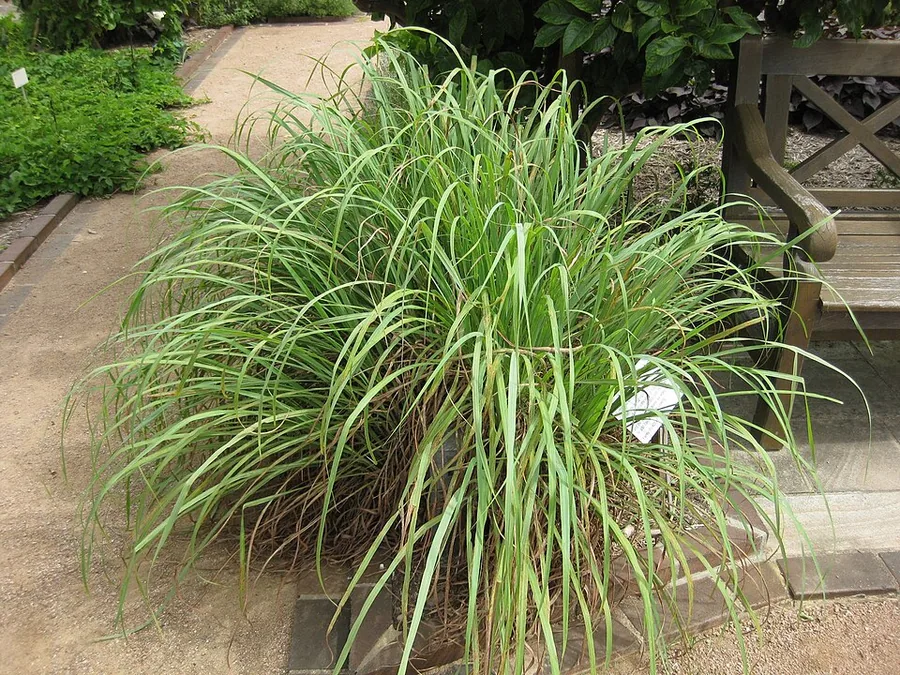
Lemongrass is a tropical clumping grass cultivated for the lemon-scented, thickened stalk bases that season much of Southeast Asian cuisine. It builds a dense clump of arching blades that reaches 3 to 6 feet, and its fast growth rate makes short work of the season once soil temperatures climb. The lemon fragrance, carried in the leaf oils, releases the moment the foliage is brushed.
Its tropical origin explains its intolerance of cold. In the mild winters of zones 9 to 11 the crown survives in the ground and the plant performs as a true perennial. Beyond those zones the crown cannot endure freezing, so growers run it as an annual or contain it in a pot that moves indoors ahead of the first frost.
Its requirements reduce to sun, warmth, and steady moisture. Held moist and fed through the growing season, a single division tillers into a full clump within a few months. Deny it water or expose it to frost, however, and the blades brown and the clump stalls, because both stresses interrupt the plant at the tissue level.
Care
The short version: site it in full sun, keep the soil evenly moist and never bone dry, hold it warm, and feed monthly through the growing season, moving it indoors before frost in cold climates.
Light
Lemongrass performs best in full sun, where high light drives the dense, upright growth and concentrates the aromatic oils in the stalks. It tolerates a little afternoon shade, but reduced light thins the clump and weakens the lemon scent, so an open exposure is the better choice.
Water
Keep the soil evenly moist and never let the pot dry out fully, because this tropical grass has no drought reserve to draw on. Water every 2 to 4 days in warm weather, more under heat or in a container where the root zone dries faster, and mist the blades where ambient humidity is low.
Soil
Grow it in fertile, loamy soil that drains freely yet retains moisture, amended with organic matter to buffer both water and nutrients. It accepts a wide pH span from 5.0 to 7.5, so soil reaction is rarely the limiting factor.
Temperature
The plant is most active across 50°F to 95°F (10°C to 35°C) and reaches peak growth near the upper end where its enzymatic processes run fastest. Growth slows as temperatures approach 50°F, and a frost kills the tissue outright.
Humidity
Reflecting its humid tropical origin, lemongrass favors ambient humidity of 50% to 80%, which keeps transpiration in balance with uptake. In dry air or a heated room, misting the blades or standing the pot on a humidity tray raises local moisture enough to prevent tip browning.
Feeding
As a vigorous grass it draws heavily on nitrogen, so a monthly feed through spring and early fall sustains the leafy canopy. Use a balanced soluble fertilizer weighted toward nitrogen, the nutrient most directly tied to blade production.
Pruning
Remove the dead or browned outer leaves to keep the clump clean, and harvest the thickened outer stalks by cutting at ground level where the flavor concentrates. In cold climates, cut the foliage back before moving the clump indoors to overwinter.
Repotting
Repot once a year and divide the clump every 1 to 2 years, since its fast tillering fills a pot quickly. Roots circling the pot, a clump heaving upward, or water draining straight through all signal that the root-to-soil ratio has tipped and division is due.
Size & spacing
A mature clump reaches 3 to 6 feet (90 to 180 cm) in height and 24 to 35 inches (60 to 90 cm) in spread. Allowing that footprint keeps air moving through the blades, which lowers disease pressure, and gives the clump room to reach full size.
When to plant
Lemongrass depends on warmth across its whole cycle and is lost to the first frost. Plant divisions or rooted stalks only after the last spring frost, once night temperatures hold above 50°F (10°C), which lets the clump establish and yield harvestable thickened stalks about 3 to 4 months later. Lift or bring it indoors before returning cold, since the crown will not survive a freeze.
Northern hemisphere
Southern hemisphere
Typical months for a temperate climate: start earlier in warm zones, later where spring frosts linger.
- Plant: After the last spring frost, once soil and nights are warm (above about 10°C / 50°F)
- Harvest: Rarely flowers in cool climates; harvest the thickened stalks once the clump is established, about 3-4 months after planting
Hardiness
USDA hardiness zones: 9–11
Temperature: down to -7°C
Troubleshooting
Lemongrass registers stress on its blades first, whether the cause is dry air, a fungal pathogen, or cold, so the foliage serves as an early diagnostic. Reading those signs promptly lets you correct the underlying condition before the whole clump declines. Match the symptom below to identify the cause, then treat it while intervention still counts.
Blades discoloring and collapsing after cold exposure
Lemongrass is frost-tender, and its tropical tissues lose function once temperatures fall below about 50°F (10°C), with freezing rupturing the cells outright. Damage that appears in the hours after a cold night, rather than spreading over days, points to the temperature rather than a pathogen. Move potted plants indoors ahead of frost, remove the collapsed foliage, and hold the clump warm and bright through winter so it can regrow in spring.
Fix:
- Move potted plants indoors before frost
- Cut back damaged foliage and overwinter the clump in a warm, bright spot
Rapid pot dry-down, slowed growth, and a container crowded with roots
Because lemongrass grows fast and multiplies by tillering, the clump quickly outstrips its container and becomes rootbound, so roots displace the soil that would otherwise hold water and reserves for the plant. Water that drains straight through and a clump lifting itself above the rim are the visible signs of that ratio tipping too far. Divide the clump into fresh, moisture-holding soil or move it up a pot size, and the restored root-to-soil volume returns it to vigorous growth.
Fix:
- Divide the clump and repot into fresh soil
- Move up to a larger container
Leaf tips and margins turning brown and desiccating
As a plant of the humid tropics, lemongrass needs 50% to 80% humidity at the leaf surface, and when the surrounding air falls below that the tips lose moisture faster than the roots replace it and desiccate. Letting the pot dry between waterings interrupts that supply the same way, and dissolved fertilizer salts left in the soil pull water back out of the roots and scorch the margins. Hold the soil evenly moist, mist in dry weather, and periodically flush the pot to leach the accumulated salts.
Fix:
- Keep soil evenly moist
- Raise humidity or mist regularly in dry climates
- Flush the soil to remove salts and reduce feeding
Raised orange rust pustules erupting along the foliage
The pustules are the fruiting bodies of rust, a fungal pathogen whose spores germinate on foliage that stays wet, so a crowded clump with poor airflow keeps the leaves damp long enough for infection to take hold. Rubbing a blade releases the powdery spores onto your fingers, which confirms the diagnosis over a simple leaf stain. Remove the infected leaves to cut the spore load, open the clump so it dries faster after rain, and water at the base to keep the foliage dry.
Fix:
- Remove and destroy affected leaves
- Improve air circulation around the clump
- Water at the base rather than overhead
Toxicity
For people lemongrass is a safe, widely used culinary herb, but its profile for animals differs. The ASPCA lists it as toxic to cats, dogs, and horses, since the essential oils and cyanogenic glycosides in the tissue irritate the digestive tract. Cats warrant the closest attention, both because they metabolize the oils poorly and because a large ingested mass of the fibrous blades can, in rare cases, obstruct the gut.
Toxic to
Cats · Dogs · Horses · Rabbits · Livestock · Birds
Safe for
People
Cats Mild
The citral essential oils in the blades irritate the gut, producing drooling, vomiting, and reduced appetite. Cats metabolize these oils poorly, so a concentrated lemongrass oil affects them disproportionately, and because the blades are highly fibrous a large ingested mass can, in rare cases, obstruct the digestive tract.
Dogs Mild
Ingestion of the leaves or stems by a dog generally provokes only mild gastrointestinal upset, with transient vomiting or loose stool that resolves without treatment.
Horses Mild
A horse grazing the grass typically shows no more than mild digestive upset at the modest quantities most will consume.
Rabbits Mild
The essential oils that affect cats and dogs can equally disturb a rabbit's sensitive digestive system, so the plant is best limited to an infrequent nibble rather than a routine forage.
Livestock Caution
Grazing livestock tolerate small amounts, but the cyanogenic glycosides accumulate with intake, making a large feed of the foliage the exposure of real concern.
Birds Caution
Birds are notably sensitive to plant essential oils, and the citral content of lemongrass may not be well tolerated, so pet birds are best kept away from the leaves as a precaution.
People Culinary herb safe
For people lemongrass is a culinary staple, and the tender stalk bases are safe to cook and eat. The blades are excluded for their tough, fibrous texture rather than any toxicity, so they are trimmed for palatability, not for safety.
Small culinary amounts of the stalk are typically low risk; concentrated lemongrass essential oil is the bigger hazard, especially for cats, which do not metabolize the oils well.
Helpline numbers

United States
ASPCA Animal Poison Control: (888) 426-4435 (fee applies)

United Kingdom
Animal PoisonLine: 01202 509000 (fee applies)

Australia
Animal Poisons Helpline: 1300 869 738
Varieties
Lemongrass is cultivated almost exclusively as a single culinary type, the one carried in kitchens and garden centers alike.
West Indian lemongrass
This is the standard culinary species, identified by its blue-green blades and the swollen, lemon-scented stalk bases used in cooking, and because it rarely sets seed it is propagated vegetatively by division.
How to propagate
Lemongrass propagates readily by vegetative means, whether by dividing an established clump or rooting a stalk sourced from the grocery store.
DivisionEasy
Spring, once growth resumes and temperatures are warm · 2-4 weeks to root and resume active growth
Divide in spring when the clump resumes growth and warmth returns, separating it into sections that each retain roots and shoots, then replanting them immediately so the roots stay hydrated. Each section reestablishes and pushes new growth within 2 to 4 weeks. Rooted grocery-store stalks offer a second route: stand them in water until roots emerge, then pot them on.
Myths
Because people eat lemongrass, the plant poses no hazard to animals.
Culinary use does not equal pet safety: the ASPCA lists lemongrass as toxic to cats, dogs, and horses, and ingestion of the leaves induces gastrointestinal upset. The principal hazard is concentrated lemongrass oil, especially for cats, whose limited capacity to metabolize the oils raises their exposure risk.
An established lemongrass clump can survive a freezing winter in the ground.
It is a frost-tender tropical hardy outdoors only in zones 9 to 11. Anywhere colder, grow it as an annual or lift the clump and overwinter it under cover until temperatures rise.