Vegetable · Cucurbitaceae
Honeydew Melon
Cucumis melo
Given full sun, warm soil, and a long season, honeydew accumulates the sugars that ripen into sweet, cooling fruit by late summer.
Full sun
Every 7–10 days
70–90°F · 21–32°C
80–110 days
Overview
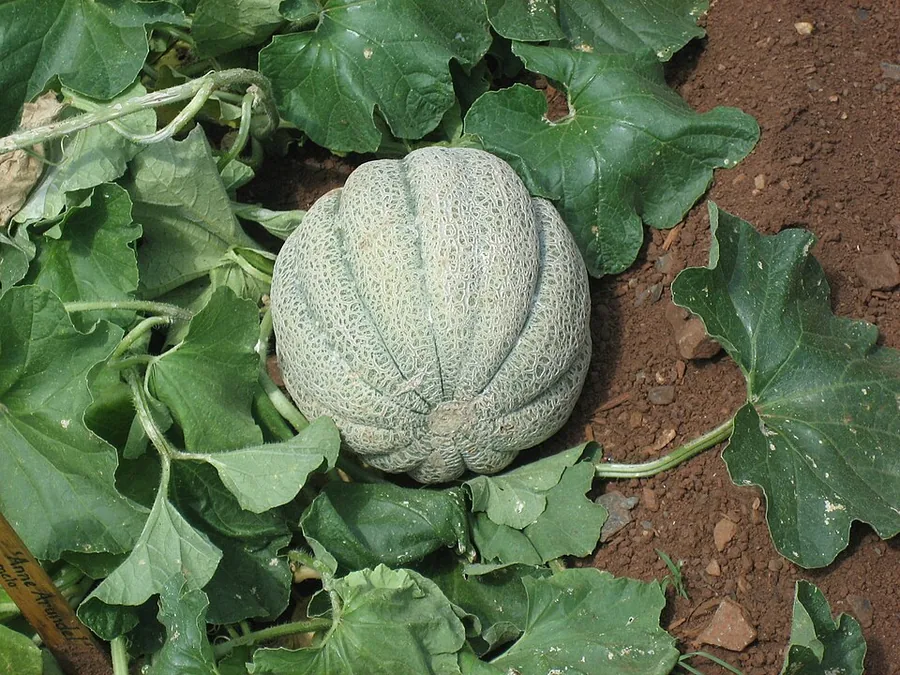
Honeydew is the smooth, pale melon of late summer, with a creamy rind over sweet green flesh. It is a warm-season cucurbit vine, the same species as cantaloupe yet distinct in eating quality: where cantaloupe is netted and musky, honeydew is waxy-smooth and clean in flavor, a reflection of its placement in the Inodorus group.
Two traits govern how it performs. It requires a long, warm season of 80 to 110 days to complete sugar accumulation, and it is non-slip, meaning the fruit never abscises from the vine as a cantaloupe does. That second trait misleads new growers, who wait for detachment and harvest past the peak. The reliable indicators are a rind that turns creamy and a blossom end that softens under thumb pressure.
None of this makes honeydew difficult, but it does reward patience and steady conditions. Allow the vines room to sprawl, irrigate deeply but infrequently, and site the crop in an open, sunny position where air moves freely. Crowding and persistent leaf wetness create exactly the microclimate the mildews and vascular wilts exploit to shorten a melon crop.
Care
The short version: full sun and warm, fertile, well-drained soil, with deep watering of about 1 to 2 inches a week that is cut back in the final week so the sugars concentrate. Allow each plant ample room and a long, warm season to ripen fully.
Light
Honeydew requires full sun, and more direct hours yield a better crop. Light drives the photosynthesis that builds the fruit's sugars, so a shaded plant produces watery, flavorless melons even when every other factor is correct.
Water
Irrigate deeply but infrequently, roughly 1 to 2 inches a week, letting the soil dry somewhat between applications rather than staying saturated. The decisive step comes at the end: withhold water in the last week before harvest, because late uptake dilutes the sugars already laid down in the flesh.
Soil
Grow honeydew in fertile, well-drained sandy loam amended with organic matter. A slightly acidic pH of 6.0 to 6.5 suits the crop, and sharp drainage keeps the roots and crown out of the saturated conditions that favor the rots.
Temperature
Honeydew develops best in sustained warmth of 70°F to 90°F (21°C to 32°C). It has no frost tolerance at either end of the season, and cool, cloudy periods slow ripening and leave the fruit bland by limiting sugar accumulation.
Humidity
Ambient outdoor humidity is adequate, so no target figure applies. Airflow is the variable that matters, because the still, humid air that settles around crowded foliage is the microclimate powdery and downy mildew require to establish.
Feeding
Incorporate a balanced fertilizer such as 5-10-10 into the bed before planting, then side-dress with a nitrogen source like 21-0-0 as the vines begin to run. Sustained feeding through the vining phase builds the vegetative frame that will support and fill the fruit.
Pruning
Honeydew is not routinely pruned. The vine tips may be pinched to contain a sprawling plant within the bed, and late in a short season removing the newest blossoms redirects the plant's energy into ripening the fruit already set before frost.
Repotting
Repotting does not apply, since honeydew is an annual direct-sown or transplanted a single time. Where seed is started early, sow into biodegradable pots and plant the intact pot, because the roots resent disturbance and transplant shock sets the crop back.
Size & spacing
The vines run 6 to 9 feet (183 to 274 cm) and need corresponding room. Space plants 18 to 24 inches (45 to 60 cm) apart with wide aisles between rows to accommodate the runners and maintain the airflow that suppresses foliar disease.
When to plant
Honeydew has no frost tolerance and needs a sustained run of warmth to accumulate sugars. Start seed indoors a few weeks before the last frost, transplant only after the soil has warmed, and harvest from late summer into early fall as the rinds turn creamy.
Northern hemisphere
Southern hemisphere
Typical months for a temperate climate: start earlier in warm zones, later where spring frosts linger.
- Sow: start in biodegradable pots 2 to 4 weeks before the last frost; melons resent root disturbance
- Plant: transplant or direct-sow after frost once soil is 60 to 70°F (16 to 21°C)
- Harvest: harvested late summer into early fall when the rind turns creamy and the blossom end softens
Hardiness
USDA hardiness zones: 3–11
Temperature: down to -40°C
Troubleshooting
Most honeydew disorders register on the foliage and vines before the occasional failure appears in the fruit at harvest. Identifying the early signs allows intervention before a fungus or a beetle claims the whole crop. Match the symptom below, then act while control is still practical.
Wilting vines despite adequate soil moisture
A vine that wilts while the soil stays moist points to bacterial wilt (Erwinia tracheiphila), which cucumber beetles introduce as they feed and which plugs the vascular tissue so water cannot rise. Confirm it by cutting a wilted stem and drawing the cut ends slowly apart, watching for the bacterial ooze to string out in sticky white strands. The infection cannot be cured, so remove and destroy the vine and control the beetle vectors before they inoculate the rest.
Fix:
- Remove and destroy infected vines
- Control cucumber beetles promptly
One-sided yellowing and dieback along the runners
A runner that yellows and dies one side at a time is classic Fusarium wilt, a soilborne fungus that colonizes and blocks the vascular strands, which is why the decline follows individual vines rather than the whole crown at once. Split a wilting stem to expose the brown vascular streaking that confirms it. No cure exists, so remove the plant without composting it, then rely on resistant cultivars and a 3 to 4 year rotation to lower inoculum in the bed.
Fix:
- Remove affected plants; there is no cure
- Do not compost diseased vines
Sunken stem cankers weeping amber gum
Reddish-amber gummy exudate from stem cankers marks gummy stem blight (Didymella bryoniae), a warm, wet-weather fungus that also produces the fruit-rotting black rot phase. Look for tan foliar lesions and the small black fruiting bodies embedded in the tissue to confirm it. Excise and destroy infected vines, apply a labeled fungicide, and rotate away from other cucurbits, since cucumbers and squash host the same pathogen.
Fix:
- Remove and destroy infected vines and debris
- Apply a labeled fungicide
- Rotate away from cucurbits
Chalky white colonies advancing on the foliage
The powdery white coating is powdery mildew (Podosphaera xanthii), a fungus favored by warm weather and the still, humid air that collects around crowded foliage. Widen the spacing so air circulates and dries the leaf surface the pathogen depends on, remove the most heavily colonized leaves, and apply a labeled fungicide only if colonies keep advancing.
Fix:
- Improve spacing and air flow
- Remove badly infected leaves
- Apply a labeled fungicide if severe
Vein-bounded yellow lesions on the leaves
Angular yellow lesions squared off by the veins are the signature of downy mildew (Pseudoperonospora cubensis), which advances under cool, wet, humid conditions and sporulates as gray to purple growth on the leaf underside. Because the pathogen requires prolonged leaf wetness, water early in the day to shorten it, improve airflow and drainage, and apply a labeled fungicide if the disease spreads.
Fix:
- Improve airflow and drainage
- Water early so leaves dry fast
- Apply a labeled fungicide if severe
Ragged feeding damage with beetles on the foliage
The yellow beetles marked with black stripes or spots are cucumber beetles, and their feeding matters less than their role as vectors of bacterial wilt. Exclude them from young plants with floating row covers until bloom opens the crop to pollinators, supplement with hand-picking, and reserve a labeled insecticide for heavy pressure.
Fix:
- Cover young plants with floating row covers until bloom
- Hand-pick beetles
- Apply a labeled insecticide if numerous
Distorted foliage glazed sticky and blackened by mold
Curled foliage glazed with a sticky film and blackened by sooty mold indicates melon aphids, which colonize the leaf undersides and excrete honeydew that the mold then grows upon. A strong jet of water dislodges most colonies, insecticidal soap handles the survivors, and lady beetles and lacewings provide biological control. Suppressing ants matters too, because they tend and defend the aphids to harvest that honeydew.
Fix:
- Spray plants with a strong jet of water
- Apply insecticidal soap
- Encourage lady beetles and lacewings
Fruit finishing bland with poor sugar development
A bland honeydew almost always reflects harvest before the fruit finished accumulating sugars. Wait for the rind to turn creamy and the blossom end to soften under thumb pressure, since honeydews are non-slip and give no abscission cue the way cantaloupes do. Reduce irrigation in the final week as well, because water taken up late dilutes the sugars already in the flesh.
Fix:
- Leave fruit on the vine until the rind turns creamy and the blossom end gives slightly
- Reduce watering during the last week before harvest
Toxicity
For pet-owning households the record is reassuring: no part of the honeydew plant is toxic, and the ripe flesh is a safe, refreshing treat. The only meaningful cautions are practical ones, since the fibrous rind and hard seeds are difficult to digest and are best withheld from animals.
Safe for
People · Cats · Dogs · Horses · Rabbits · Livestock · Birds
Cats None
A small portion of ripe flesh is harmless. Excess tends to produce loose stool only, since the feline gut is poorly adapted to fruit sugar.
Dogs None
Ripe honeydew serves as a sound occasional treat. Hold portions small, because a large volume of sweet flesh can provoke mild gastrointestinal upset.
Horses None
A slice of the flesh presents no problem for a horse. Withhold the rind, which is fibrous and a choking risk.
Rabbits None
The flesh is safe in minimal amounts, though it is rich and high in sugar for a rabbit. A thumbnail-sized piece on occasion is the sensible limit.
Livestock None
Goats, sheep, and cattle can consume melon scraps without harm and generally take to them. The vines and foliage likewise contain nothing toxic.
Birds None
Chickens and other backyard birds readily eat ripe honeydew and the seeds. No part of the plant carries a toxin of concern.
People None
Ripe honeydew is a sweet, refreshing fruit consumed worldwide and safe for everyone, children included.
Offer only small amounts of ripe, seeded flesh; rind and seeds are tough to digest and can cause stomach upset or choking.
Varieties
Honeydew cultivars separate chiefly by time to maturity and by flesh color. These are the ones worth knowing when selecting seed.
Honey Dew (Green Flesh)
This is the type-defining winter melon, its smooth waxy rind maturing from cream to pale green over sweet, pale green flesh, and being non-slip it remains attached until cut from the vine.
Earlidew
A green-fleshed honeydew selected for early maturity, which suits gardens with a short growing season.
Temptation
An early hybrid bred to develop sugars quickly in cooler, shorter-season conditions that would otherwise yield a bland honeydew.
Orange-fleshed honeydew
It carries the same smooth pale rind as a green honeydew but bears salmon-orange flesh within.
How to propagate
Honeydew is grown from seed and nothing else, so the entire task reduces to sowing at the correct soil temperature and protecting the disturbance-sensitive roots.
SeedEasy
Start indoors 2 to 4 weeks before the last frost, or direct-sow after soil reaches 60 to 70°F (16 to 21°C) · Germinates in about 4 to 10 days at 70 to 90°F (21 to 32°C)
Honeydew is propagated from seed alone. Sow indoors 2 to 4 weeks before the last frost, or direct-sow once the soil reaches 60°F to 70°F (16°C to 21°C), at which warmth the seed germinates in 4 to 10 days. Because the species resents root disturbance, sow into biodegradable pots and set the intact pot into the ground so the taproot is never broken.
Myths
A mature honeydew abscises from the vine as a cantaloupe does.
Honeydew is a non-slip melon. The fruit forms no abscission layer and has to be cut from the vine, so waiting for it to detach only carries it past its peak into overripeness. Read ripeness instead from the rind turning creamy and the blossom end softening.
Generous irrigation in the final days raises fruit sugar.
The effect runs the other way. Water absorbed in the final week of ripening dilutes the fruit and washes out the sweetness rather than adding to it. Sugars accumulate from full ripening under sun, which is precisely why irrigation is tapered as harvest approaches.
A honeydew amounts to nothing more than a type of cantaloupe.
Both belong to the single species Cucumis melo, yet they fall into separate horticultural groups. Honeydew is a smooth-skinned winter melon in the Inodorus group, whereas cantaloupe and muskmelon carry the netted rind of the Reticulatus group, and the two differ in how they ripen and detach from the vine.