Tree · Cupressaceae
Hinoki Cypress
Chamaecyparis obtusa
Give it acidic soil, steady moisture, and shelter from harsh wind, and this slow evergreen holds its shape for a lifetime.
Full sun
Every 5–10 days
USDA 4–8
50–75 ft · 15.2–22.9 m
Overview
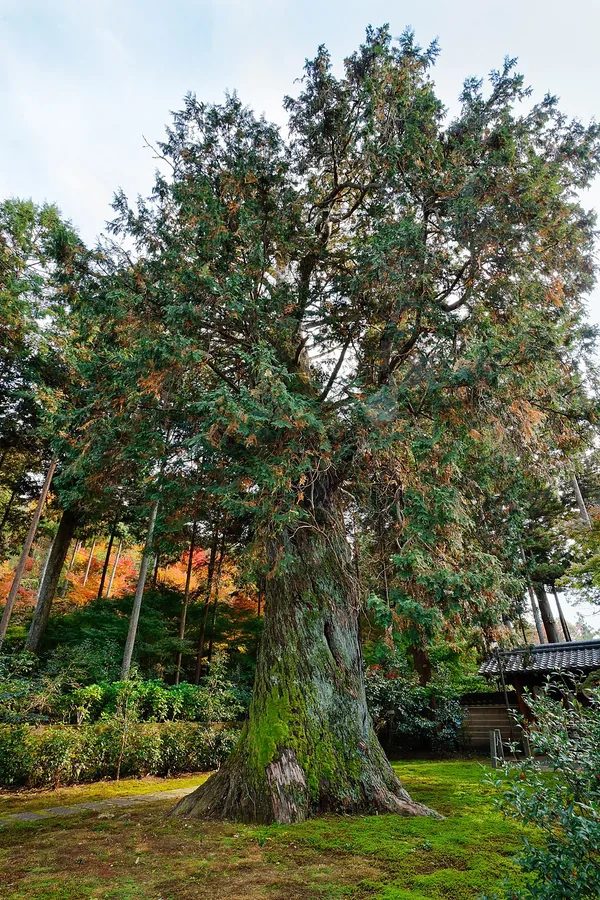
The Hinoki cypress is a slow-growing, long-lived evergreen native to the mountain forests of Japan, where wild trees attain considerable age and stature. Botanically it sits in the false cypress genus, Chamaecyparis, separated from the true cypresses by its scale-like foliage arranged in flat, fanning sprays. Handle that foliage and it releases the resinous scent for which the species' timber has long been valued.
The wild form is rarely planted; gardens grow its cultivars instead. Selection from the species has produced dwarfs, golden-foliaged forms, and congested, contorted shapes, which is why a single species can present as a knee-high bonsai or a slender 20-foot column. As a landscape plant it functions as a year-round structural evergreen, retaining foliage in every season and reliably hardy across USDA zones 4 to 8.
Its slow growth rate and modest maintenance make it undemanding once established, but one physiological limit governs its care: it will not regenerate from bare old wood, so removed foliage is not replaced. Sited in acidic, well-drained soil with adequate sun and wind shelter, it delivers decades of consistent form.
Care
The short version: full sun to part shade in moist, acidic, well-drained soil, held evenly moist but never waterlogged, with only light pruning and shelter from drying winter wind.
Light
The species performs best in full sun, which maintains dense growth and develops the strongest color in the golden cultivars. It tolerates partial shade, but under insufficient light the canopy opens and thins, and the lower branches decline first as they are shaded out.
Water
Hold the soil evenly moist but never waterlogged, watering on the order of every 5 to 10 days and more frequently in dry spells. Attention matters most during establishment, when consistent moisture supports new root growth. Saturated soil is the single condition it will not tolerate.
Soil
Plant it in fertile, acidic, well-drained loam with a pH of 5.0 to 6.5. Drainage is the critical factor, since the roots rot under standing water, so amend heavy clay with organic matter or raise the planting position to shed excess moisture.
Temperature
The tree is cold- and heat-tolerant across a broad band, hardy from about -29°F to 100°F (-34°C to 38°C) and rated for USDA zones 4 to 8. It withstands severe cold well, though young plants exposed to harsh winter wind are prone to foliar scorch.
Humidity
Ambient outdoor humidity is adequate, so no target level applies. The more relevant factor is air movement and shelter from drying wind, which in winter can remove moisture from the foliage faster than roots in frozen soil can restore it.
Feeding
Apply a single feeding in spring using a balanced, slow-release fertilizer formulated for acid-loving evergreens. One seasonal application suffices for so slow a grower, and an acidifying formula helps sustain deep, uniform green in the foliage.
Pruning
The tree requires little to no pruning beyond removing dead or damaged branches. The governing rule is never to cut back into bare old wood, which does not resprout, so every cut must remain within the living, green foliage.
Repotting
Container and bonsai specimens need fresh substrate and root maintenance every 2 to 3 years. Roots circling the container, emerging from the drainage holes, water passing straight through, or growth slowing to a stop all indicate the plant is due to be repotted.
Size & spacing
The full species is a large tree, reaching 50 to 75 feet (15 to 23 m) in height with a spread of 15 to 25 feet (4.6 to 7.6 m), so a landscape specimen needs generous space. Dwarf cultivars remain a small fraction of those dimensions, which suits them to compact gardens, containers, and bonsai.
When to plant
Set out a Hinoki cypress in spring or early fall, when the soil is workable and temperatures stay mild enough for the roots to establish before summer heat or hard frost. Both windows suit a slow-rooting evergreen, and because the plant is grown for form rather than a crop, there is no harvest window to time it against.
Northern hemisphere
Southern hemisphere
Typical months for a temperate climate: start earlier in warm zones, later where spring frosts linger.
- Plant: spring or early fall
Hardiness
USDA hardiness zones: 4–8
Temperature: down to -34°C
Troubleshooting
The recurring problems on Hinoki cypress trace to a few causes: soil that stays too wet, winter sun and wind desiccating the foliage, and cuts made into wood that cannot regenerate. Reading the early symptoms lets you intervene before a branch is lost. Match the sign below to its cause, then correct it while intervention still helps.
Whole-canopy browning and wilting with progressive dieback
A tree that declines uniformly while its soil stays saturated is almost always suffering root rot, frequently the water mold Phytophthora, which spreads through waterlogged ground and colonizes the roots. The mechanism is direct: rotted roots can no longer take up water, so the canopy browns and wilts despite the wet soil around it. Confirm it by lifting a few roots, which turn dark and soft rather than firm and white, then correct the drainage, stop the overwatering, and relocate any survivor to a raised, free-draining site, since a specimen held in standing water rarely recovers.
Fix:
- Improve drainage and stop overwatering
- Remove and destroy severely affected plants
- Replant in a raised or well-drained site with amended soil
Bronzed, stippled foliage with fine surface webbing
Foliage that turns dull and bronze during hot, dry stretches is the classic sign of spider mites, which feed on the foliage and multiply fastest in exactly that weather. Diagnose them by tapping a branch over a sheet of white paper and watching for minute specks that move. A forceful jet of water dislodges the colony, horticultural oil or insecticidal soap finishes the job, and keeping the cypress well watered leaves it better able to tolerate the feeding.
Fix:
- Spray plants forcefully with water to dislodge mites
- Apply horticultural oil or insecticidal soap
- Encourage natural predators by avoiding broad-spectrum insecticides
Spindle-shaped silk bags on thinning, chewed branches
The spindle-shaped cases of silk and clipped foliage hanging from the twigs are bagworms, each case housing a larva that feeds from within it and thins the branch as it grows. Handpicking through fall and winter is the surest control, since the cases are stationary and conspicuous once foliage stops moving. Where young larvae are found feeding from late spring, an application of Bacillus thuringiensis, a bacterium lethal to the caterpillars, clears them before they defoliate a branch.
Fix:
- Handpick and destroy bags in fall or winter
- Apply Bacillus thuringiensis or an approved insecticide while larvae are young in late spring to early summer
Scorched foliage emerging in late winter and early spring
Browning that appears in late winter and concentrates on the windward face is winter burn, a desiccation injury: sun and wind draw water from the foliage while the roots sit in frozen ground and cannot replace it. Delay pruning, because the buds within the scorched foliage are often still green and viable, and the true extent of loss only shows once growth resumes. Cut back only the tissue that stays dead, and prevent recurrence by watering deeply through dry fall periods before the ground freezes, so the plant enters winter fully charged with moisture.
Fix:
- Wait for new growth before pruning so you can see the true extent of damage
- Prune out branches that remain dead
- Water well during dry fall periods before the ground freezes
Permanently bare interior branches that fail to refoliate
Interior or lower branches reduced to brown wood with no capacity to refoliate have been carried past recovery, typically by cutting or heavy shading into old leafless wood. The physiology is the constraint: like most needled evergreens apart from yews, this false cypress holds no dormant buds in bare old wood, so once foliage is lost there it cannot resprout. Confine every cut to the living, green foliage and keep light reaching the lower limbs, and the branches you intend to keep will remain clothed.
Fix:
- Avoid cutting branches back beyond living foliage
- Maintain foliage on all branches you want to keep productive
Toxicity
For households with animals the verdict is favorable: the Hinoki cypress is not toxic and is absent from the lists of plants that poison cats and dogs. A pet that chews a sprig may show brief digestive upset from the fibrous, aromatic foliage, and nothing more serious. It can be planted around pets, livestock, and children without concern.
Safe for
People · Cats · Dogs · Horses · Rabbits · Livestock · Birds
Cats None
A cat that samples the foliage faces no real hazard, as the species carries no recognized toxin. The resinous needles are simply hard to digest, so a large mouthful may provoke brief drooling or a transient stomach upset that resolves without treatment.
Dogs None
Dogs coexist with a Hinoki cypress without risk. A chewed sprig of the fibrous, aromatic foliage tends to cause only mild, self-limiting gastric upset, driven by the coarse texture rather than any poison.
Horses Safe
The species is non-toxic to horses and has no record of causing poisoning in them. As with any tree outside their normal forage, an animal that consumes a large quantity of foliage may develop a passing digestive upset.
Rabbits Safe
Rabbits face no poisoning risk from this cypress. Its tough, resinous foliage falls outside their natural diet, so most sample it once and then avoid it.
Livestock Safe
Cattle, goats, and sheep may share a paddock with the tree without harm, since it contains no toxin that affects them. Grazing stock generally reject the bitter evergreen growth regardless.
Birds Safe
Birds are unharmed by the tree, and dense conifers of this kind frequently provide them shelter and nesting sites. The foliage holds nothing injurious to them.
People Safe
The species presents no poisoning hazard to people, and no part of it is consumed. Handling the foliage is safe, though the aromatic oils can irritate particularly sensitive skin.
As with any plant, nibbling foliage may cause mild stomach upset in pets even though the plant is not considered toxic.
Varieties
In cultivation the named cultivars, not the full-size species, are what gardeners actually plant, and they span from miniature bonsai dwarfs to gold-tinged columns. The following are the selections worth knowing.
Nana Gracilis
A slow-growing dwarf valued for the dense, shell-like sprays of its dark green foliage, a combination that suits it to rock gardens and bonsai.
Crippsii
A golden selection whose pendant sprays develop their most intense yellow under full sun.
Gracilis
A compact, slender pyramid of dark green foliage that matures to roughly 10 to 20 feet (3 to 6 m).
Fernspray Gold
It bears arching, fern-like golden-yellow sprays on a loose, layered framework.
Kosteri
A dwarf, spreading selection that accumulates bright green foliage in flat, horizontal fans.
Tetragona Aurea
An irregular dwarf whose congested, four-sided golden foliage produces an unusual texture.
How to propagate
Hinoki cypress can be propagated by several methods, but only cuttings and grafts reproduce a named cultivar true to type. Seed is viable for the species, though it yields variable seedlings.
Stem cuttingsModerate
Late summer to fall · Several weeks to a few months to root
Cuttings are the standard method for reproducing a named cultivar true to type, and they matter because an established specimen transplants poorly. Take semi-hardwood cuttings from late summer into fall and root them under mist, where they form roots over several weeks to a few months.
GraftingDemanding
Late winter · Weeks to months
Nurseries propagate the choicer cultivars by grafting them onto seedling rootstock in late winter, and the graft union knits over the following weeks to months. The technique demands practiced hands and is best left to experienced growers.
SeedModerate
Spring · Weeks to germinate
The straight species can be raised from seed sown in spring, with germination over a few weeks. Because the seedlings do not come true, they will not reproduce the traits of a named cultivar.
Myths
The Hinoki cypress is a true cypress.
It is classified in Chamaecyparis, the false cypress genus, which is distinct from the true cypress genus Cupressus even though both belong to the family Cupressaceae. Its alternate common name, Hinoki false cypress, records the distinction. The tree is a false cypress, not a true cypress.
An overgrown Hinoki cypress can be hard-pruned into the bare wood to rejuvenate it.
Unlike a yew, this false cypress carries no latent buds in old leafless wood, so it produces no new growth there. Any branch cut back to bare brown wood simply dies. Confine every cut to the living, green foliage.