Ornamental · Dennstaedtiaceae
Hay-scented Fern
Dennstaedtia punctilobula
A resilient native fern that fills shade with soft, hay-scented fronds and demands little of the soil.
Partial shade
Every 5–10 days
USDA 3–8
12–24 in · 30–60 cm
Overview
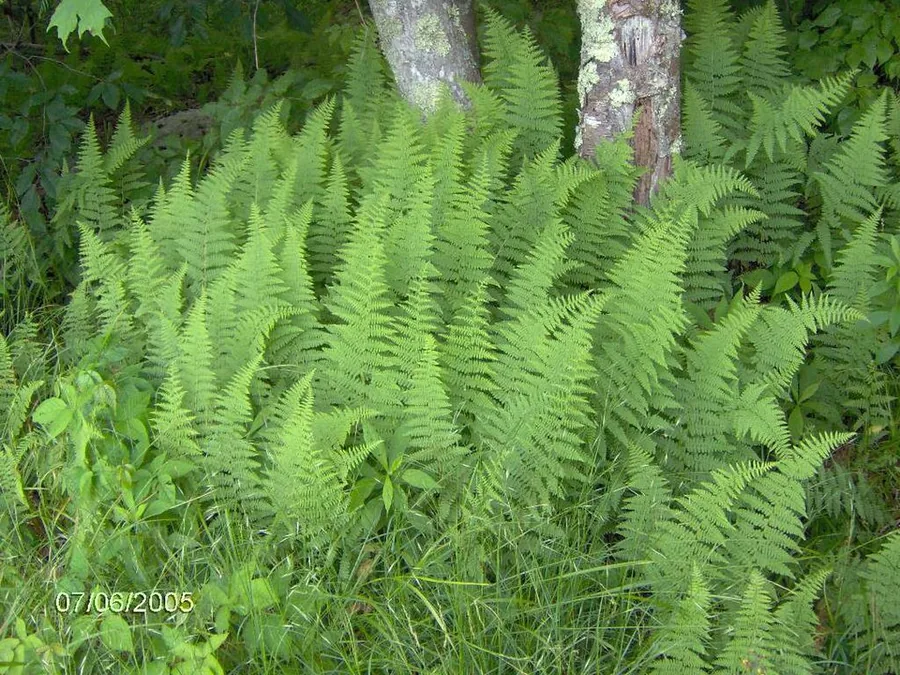
Hay-scented fern is native to eastern North America and converts a shaded, low-input corner into a broad stand of soft, lacy yellow-green fronds. The common name reflects a real trait: brush the foliage or crush a leaflet and the plant releases the scent of fresh-cut hay. Its reputation as one of the easiest ferns to cultivate rests on its tolerance of lean, rocky substrates that exclude many other species.
The defining feature is its lateral reach. Growth proceeds along shallow creeping rhizomes that consolidate into dense colonies, which makes the fern effective for stabilizing a bank, finishing a wood edge, or occupying a wide expanse of dry shade. The same rhizomatous vigor becomes a liability in a formal border, so the placement decision deserves attention before the colony establishes.
Cold hardiness is a further asset, as the plant persists through severe winters and resists the deer and rabbits that browse most companions to the crown. Supply the part shade and acidic soil it prefers and its requirements are effectively met, with fronds returning each spring under minimal management.
Care
The short version: part shade over acidic, humusy soil gives the best result, though the plant accepts the full span from full sun to full shade and poor, rocky ground. Maintain even moisture during the first year and through hot spells, after which the colony extends on its own.
Light
The species tolerates nearly the whole light spectrum, from full sun to full shade, while partial shade yields the strongest appearance. Under hot, direct sun the fronds scorch and brown unless soil moisture stays high, which is why warmer climates call for progressively deeper shade to reduce the heat load.
Water
Hold the soil evenly moist through the first growing season and during hot, dry spells, with the demand greatest at sunnier sites where evaporation runs highest. After a colony establishes it becomes fairly drought tolerant and accepts poor, rocky soil, so irrigation can be reduced for settled plantings.
Soil
The plant favors acidic, humusy loam yet adapts to poor and rocky substrates without decline. A pH across 4.5 to 7.0 is workable, and performance peaks toward the acidic end of that band.
Temperature
Cold tolerance is substantial, with the species hardy from roughly -31°F to 86°F (-35°C to 30°C). It endures severe winters and shows stress only when high summer heat coincides with a drying rootzone.
Humidity
Ambient outdoor air near 40% to 70% relative humidity is entirely adequate, so no supplementation is warranted. Sustained soil moisture during heat is the operative factor, well above atmospheric humidity.
Feeding
Nutrient demand is low, as this native is adapted to lean ground. A light spring topdressing of compost or leaf mold is the upper limit of feeding, and mineral fertilizer is unnecessary.
Pruning
Remove the faded, frost-killed fronds in late winter or early spring ahead of the emerging flush. In hot climates the declining fronds can be sheared in late summer, after which the plant reflushes the following spring. Excavating the creeping rhizomes at the colony margin restrains lateral spread.
Repotting
Container culture is uncommon, so the practical operation is division. Lift and divide crowded plantings every 2 to 3 years to rejuvenate the stand or to contain its expansion.
Size & spacing
Individual plants reach 12 to 24 inches (30 to 60 cm) in height while extending 2 to 4 feet (60 to 120 cm) laterally and continuing outward. Allow generous spacing, since the colony will otherwise close intervening gaps unaided.
When to plant
Hay-scented fern is a cold-hardy perennial rated for USDA zones 3 to 8. Establish new plants in spring once the ground is workable, supply steady moisture across the first summer, and the fronds hold their soft green from spring until frost triggers senescence.
Northern hemisphere
Southern hemisphere
Typical months for a temperate climate: start earlier in warm zones, later where spring frosts linger.
- Plant: spring
Hardiness
USDA hardiness zones: 3–8
Temperature: down to -40°C
Troubleshooting
The species presents few genuine problems, and nearly everything a grower observes reduces to two mechanisms: heat depleting frond moisture, or the colony extending past its intended footprint. Identify the pattern below and intervene early.
Colony expansion beyond the intended planting
The behavior traces to shallow creeping rhizomes that extend laterally and generate new fronds well outside the original crown. Interrupt that lateral run with a sunk root barrier or a contained bed, and lift the advancing rhizomes at the colony margin each spring before they consolidate. Because the spread readily overtops slower perennials, siting it away from choice, slow-growing plants removes the conflict before it starts.
Fix:
- Install a root barrier or grow in a contained bed
- Dig and remove rhizomes at the colony edge each spring
- Avoid planting next to choice, slow-growing perennials
Premature frond browning under midsummer heat load
Yellowing and crisping ahead of autumn points to heat and drought stress, since a sunny, quick-draining site pulls water from the fronds faster than the roots replace it. Counter it by irrigating deeply through hot spells, relocating the plant to deeper shade in warm regions to cut the evaporative load, and mulching to steady soil moisture. Read late-season browning differently, because as temperatures fall this deciduous fern simply enters normal dormancy and reflushes the following spring.
Fix:
- Provide consistent moisture during hot, dry weather
- Site in partial to full shade in warm regions
- Mulch to conserve soil moisture
- Shear off declining fronds; plants reflush the following spring
Toxicity
This is favorable ground for households with pets and children. Hay-scented fern is a true fern with no known toxins, unlisted as poisonous to any animal, and free of spines or contact irritants. The single practical concern is its rapid rhizomatous spread into dense colonies, a growth habit to manage in the landscape rather than a hazard in the home.
Safe for
People · Cats · Dogs · Horses · Rabbits · Livestock · Birds
Cats Non-toxic
As a true fern with no known toxins, this species poses no poisoning risk to a cat that samples a frond. The only plausible effect is mechanical: a large volume of any foliage can provoke mild drooling or a short bout of gastric upset.
Dogs Non-toxic
No toxin in the lacy fronds threatens a dog. Any reaction would stem from bulk rather than chemistry, since a large quantity of ingested greenery can produce a transient, mild digestive upset.
Horses Non-toxic
The species carries no toxin known to affect horses, so animals grazing near it come to no harm. At worst the fibrous roughage causes a little digestive grumbling, an effect of volume, not poisoning.
Rabbits Non-toxic
Rabbits browse the soft fronds without chemical risk, and that tolerance underlies the plant's noted resistance to rabbit damage. A casual nibble introduces no toxin to the animal.
Livestock Non-toxic
Cattle, goats, and sheep encounter no toxin that affects them in this fern. Grazing yields nothing beyond the ordinary roughage load common to any leafy forage.
Birds Non-toxic
The foliage holds nothing toxic to birds, so poultry and other backyard species forage among the plants without hazard. Pecking and scratching in the stand present no chemical risk.
People Non-toxic
The species is safe to handle and to grow around children, with no spines and no known contact irritants on the fronds. Crushing a frond releases only the characteristic fresh-cut-hay scent.
No spines or known contact irritants; fronds can be brushed or crushed to release the fresh-hay fragrance.
Varieties
Selection is effectively moot, since horticulture works with the wild species alone. It is the sole form available.
Dennstaedtia punctilobula (species)
Cultivation is limited to the wild type, distinguished by lacy, yellow-green, hay-scented fronds that build broad colonies, as no selected cultivars have entered the trade.
How to propagate
Propagation is straightforward because the plant's biology already favors expansion. The dependable method is division of an established clump, supplemented in nature by self-sowing from spores.
DivisionEasy
Spring or early fall · 1 to 2 growing seasons
Division exploits the plant's own rhizomatous habit: sever the creeping rhizome in spring or early fall into sections that each retain fronds and roots. Because those sections carry established tissue, they root quickly and consolidate into a full stand within 1 to 2 growing seasons. In the wild the fern recruits additionally from spores borne along the frond margins.
Myths
Hay-scented fern is a tidy groundcover that stays where you plant it.
Within a season or two it demonstrates otherwise. Its shallow rhizomes extend laterally in all directions to form a dense colony capable of displacing slower neighbors. Confine it to sites where that spread is acceptable, or install a root barrier.
Ferns need deep shade and soil that never dries out.
This species contradicts the generalization. It performs across the full range from full sun to full shade, and once established it withstands dry intervals and even colonizes poor, rocky ground that defeats less adaptable plants.