Shrub · Rosaceae
Grandiflora Rose
Rosa
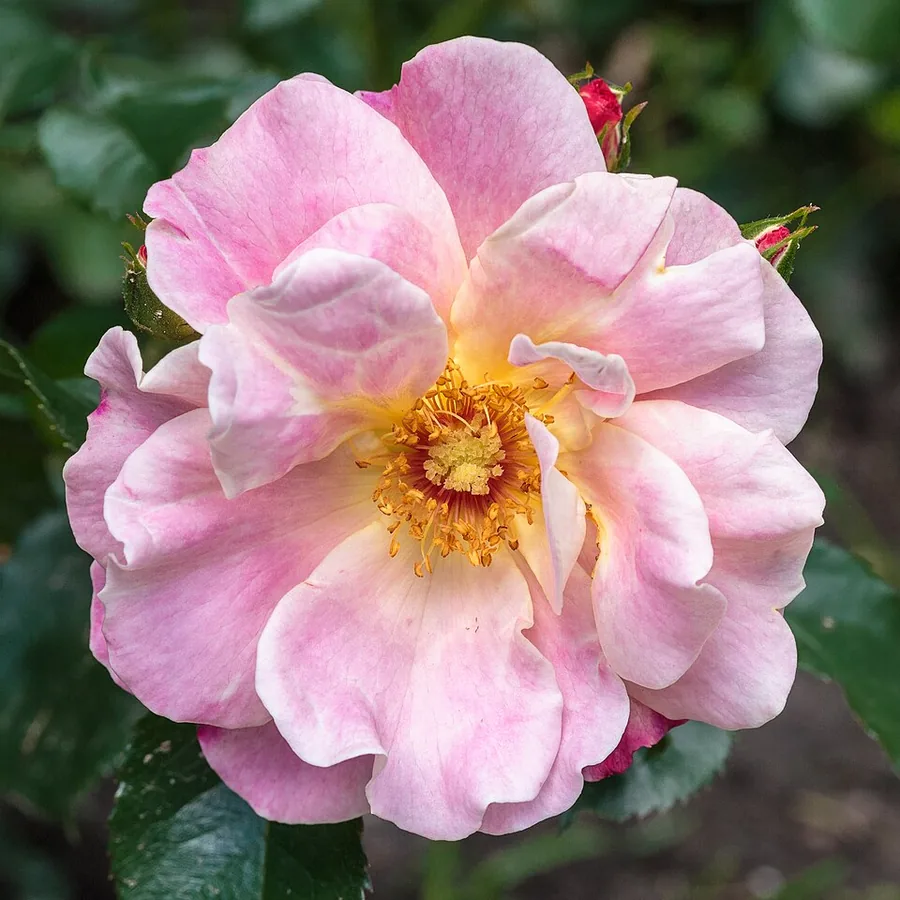
Tall, long-stemmed, and built to bloom from spring to frost, the grandiflora gives you hybrid-tea flowers on a floribunda frame.
Full sun
Every 4–7 days
USDA 5–9
4–6 ft · 1.2–1.8 m
Overview
The grandiflora ranks among the taller modern roses, a class that originated in 1954 from a deliberate cross of hybrid tea and floribunda. That parentage explains its form: it inherited the well-formed, high-centered flower of the hybrid tea and the tall, clustered habit of the floribunda, which is why one plant yields cutting-grade blooms borne singly or in full sprays. Queen Elizabeth founded the class and remains its reference cultivar.
These are full-sun shrubs that reach 4 to 6 feet and flower continuously from May to frost. Their care load is real but predictable, centered on consistent moisture delivered to the root zone and a hard renewal pruning each late winter, and the return is sustained bloom. Adequate spacing and airflow are not cosmetic; they lower canopy humidity and shorten leaf-wetness periods, which is the single most effective defense against foliar fungal disease.
The thorns warrant respect. Grandifloras carry sharp prickles along every cane, so gloves and long sleeves are standard equipment at pruning time. The plant tissue itself is safe around pets and people, carrying no toxin, so the only meaningful risk it presents is mechanical.
Care
The short version: site it in full sun for a minimum of six hours, in slightly acidic well-drained loam amended with compost, water deeply at the base each morning, feed monthly through the growing season, and renew it with a hard cutback in late winter.
Light
Grandifloras require full sun, six hours or more daily, to flower to their potential, since bloom production is driven directly by accumulated light. They tolerate light partial shade, but reduced light means fewer flowers and greater disease pressure, because shaded foliage retains surface moisture longer.
Water
Water deeply and on a regular interval, preferably in the morning so foliage dries before nightfall. Direct water to the root zone rather than the canopy, because free moisture on the leaves is what allows black spot and mildew spores to germinate. Maintain even, medium moisture every 4 to 7 days.
Soil
Plant in well-drained loam that is slightly acidic and rich in organic matter. A pH of 6.0 to 6.5 keeps nutrients available to the roots, so incorporate ample compost before planting to support deep rooting and vigorous growth.
Temperature
Grandifloras are cold-hardy, withstanding conditions from -20°F to 95°F (-29°C to 35°C) across their range. Established plants endure genuine cold, though sustained extreme summer heat stresses the flowers and shortens their display.
Humidity
Ambient outdoor humidity suffices, so no target figure applies. Air movement is the decisive factor, because stagnant, humid air within a crowded canopy creates exactly the microclimate the foliar fungi require to spread.
Feeding
Apply a balanced rose fertilizer monthly through spring and summer while growth is active. Taper feeding as the season closes, and keep nitrogen moderate, since surplus nitrogen forces the soft growth that aphids and mildew preferentially attack.
Pruning
Prune hard in late winter to early spring, reducing the canes to roughly 12 to 18 inches from the ground to force strong new wood. Remove all dead, weak, or crossing canes, then deadhead spent blooms through the season to redirect energy into fresh flowers.
Repotting
Grandifloras are grown in the ground rather than containers, so repotting seldom applies. Where one is container-grown, pot up a size when roots circle the pot or emerge from the drainage holes and bloom declines.
Size & spacing
A mature plant reaches 4 to 6 feet (122 to 183 cm) in height and 2 to 3 feet (61 to 91 cm) in spread. Space plantings so air passes freely between the canes, since that spacing is the primary structural defense against foliar disease.
When to plant
Grandifloras are governed by the seasonal cycle. Establish new plants in early spring once the danger of hard frost has passed, or in fall in mild-winter regions, and expect the initial flush in May followed by a sustained bloom period that continues until frost terminates the season.
Northern hemisphere
Southern hemisphere
Typical months for a temperate climate: start earlier in warm zones, later where spring frosts linger.
- Plant: early spring after the threat of hard frost, or fall in mild climates
- Harvest: May to frost
Hardiness
USDA hardiness zones: 5–9
Temperature: down to -29°C
Troubleshooting
The majority of rose disorders originate on the foliage and the succulent new growth, and most trace to prolonged leaf wetness or crowded plantings. Early recognition and a prompt cultural response contain a problem before it establishes. Match the presentation below, then intervene while the intervention still changes the outcome.
Dark circular lesions advancing upward from the lowest foliage
These lesions signal black spot, caused by Diplocarpon rosae, the disease that afflicts roses more than any other and colonizes the older inner leaves first. The fungus germinates on foliage that stays wet, which is why base watering in the morning matters: dry leaves deny the spores the film of moisture they need. Remove the marked leaves and any fallen debris to cut the source of reinfection, then prune to open the canopy so air and light reach every cane and shorten leaf-wetness periods. A labeled fungicide backs this up under heavy pressure.
Fix:
- Remove and dispose of infected leaves and fallen debris
- Water at the base in the morning and keep foliage dry
- Improve air circulation by proper spacing and pruning
- Apply a labeled fungicide preventively if disease pressure is high
Powdery white colonies on new shoots with distorted young leaves
The white bloom on the new growth is powdery mildew, a fungus favored by warm days paired with cool, humid nights, the conditions that let spores germinate on the upper leaf surface. Prune out the heavily infected shoots to remove the inoculum, then improve sun and air movement to raise leaf temperature and drop humidity at the canopy. Avoid excess nitrogen, since the flush of soft, thin-walled growth it drives is the tissue most easily colonized. A labeled fungicide or horticultural oil resolves an entrenched infection.
Fix:
- Prune out heavily infected shoots
- Improve air circulation and sun exposure
- Avoid excess nitrogen that pushes soft growth
- Apply a labeled fungicide or horticultural oil when needed
Colonies of soft-bodied insects on buds with a sticky honeydew film
The soft-bodied colonies massing on the tender shoots are aphids, sap-feeders that excrete honeydew, the sticky sugar film that later blackens as sooty mold colonizes it. A firm jet of water dislodges most of the colony mechanically, and insecticidal soap or horticultural oil finishes those that remain by disrupting the soft cuticle. Lady beetles and lacewings suppress populations on their own, so conserve them and hold back nitrogen, since the succulent flush it produces is precisely the growth aphids exploit.
Fix:
- Dislodge aphids with a strong spray of water
- Apply insecticidal soap or horticultural oil to affected growth
- Encourage natural predators such as lady beetles and lacewings
Toxicity
The verdict here is favorable: true roses are non-toxic to pets and people, so a nibble taken by a cat, dog, or rabbit will not cause poisoning. The petals and hips are in fact edible. The only genuine hazard is mechanical, the sharp prickles along the canes, so handle the plant accordingly.
Safe for
People · Cats · Dogs · Horses · Rabbits · Livestock · Birds
Cats None
The ASPCA classifies true roses as non-toxic to cats, so ingestion of a leaf or petal carries no poisoning risk. The prickles are the operative hazard, capable of scratching an inquisitive paw or mouth.
Dogs None
Roses present no toxic threat to dogs, and chewing the foliage produces no systemic effect. The concern is purely mechanical, namely thorn punctures to the nose or paws.
Horses None
The ASPCA rates roses non-toxic to horses, so browsing the leaves poses no metabolic harm. The prickly canes are the only issue, since they can snag on the lips.
Rabbits None
Rose leaves and petals are safe forage for rabbits, and many keepers offer them as a supplement. Remove the prickles from any cuttings before feeding.
Livestock None
Goats, sheep, and cattle can browse rose foliage without toxic consequence. The sharp prickles along the canes are the sole physical drawback.
Birds None
Roses carry no chemical risk to birds, and the hips serve as an important source of winter forage for numerous wild species.
People None
The petals and hips are edible and used in teas, jams, and syrups. The thorns constitute the only real hazard, so wear gloves during pruning.
Most grandiflora roses bear sharp thorns (prickles) on the canes that can cause scratches and puncture wounds; the hazard is mechanical, not chemical. Wear gloves and long sleeves when pruning or handling.
Varieties
Relatively few grandifloras are widely planted, and the following cultivars are the ones worth identifying by name.
Queen Elizabeth
Recognized as the first grandiflora ever introduced, it grows upright to 4 to 6 feet and bears double silver-pink flowers both singly and in long-stemmed clusters.
Gold Medal
A tall grandiflora valued for golden-yellow flowers of classic hybrid-tea form carried on long stems suited to cutting.
Tournament of Roses
A vigorous grandiflora with notable disease tolerance that produces coral-pink double flowers in abundant clusters.
Companions
Grandifloras do best beside aromatic plants that confuse pests and share their love of sun and good drainage, and worst anywhere near a black walnut.
Plant near
garlic: Aromatic alliums interplanted near roses are a traditional companion thought to help deter aphids.
lavender: Drought-tolerant, sun-loving companion that shares full-sun, well-drained conditions and attracts pollinators without crowding roots.
Keep apart
black walnut: Black walnut releases juglone, which can harm many garden plants; keep roses away from its root zone.
How to propagate
Roses can be increased by several methods that differ substantially in the skill they demand. What follows is how each one works and the timeline it entails.
GraftingDemanding
Late summer for budding onto rootstock · One growing season
Nurseries propagate named grandifloras true to type by budding, uniting a scion of the desired cultivar with a hardier, disease-resistant wild rose rootstock in late summer. The graft union knits and the plant establishes across a single growing season. The technique rewards precision and a steady hand, which is why it usually remains the domain of professionals.
Stem cuttingsModerate
Late spring through summer from semi-hardwood growth · Several weeks to a few months to root
Collect cuttings from healthy current-season stems from late spring through summer, once the wood has matured into semi-hardwood and holds its structure. Rooting spans several weeks to a few months, and the success rate varies markedly with the cultivar. Note that patented varieties may not be legally propagated.
LayeringModerate
Spring to summer while canes are flexible · One season for roots to form
While a cane remains pliable in spring or summer, bend a low one to the ground and bury a section in soil. Roots develop over one season at the point where the buried wood contacts moist soil, after which the rooted section can be severed from the parent and transplanted.
Myths
Roses are poisonous to cats and dogs.
The ASPCA classifies true roses in the genus Rosa as non-toxic to cats, dogs, and horses, so a chewed leaf or petal will not poison a companion animal. The genuine risk is a laceration from the thorns. Confusion arises with unrelated plants that carry the rose name, such as desert rose or Lenten rose, which can indeed be toxic.
Grandiflora is a botanical species of rose.
Grandiflora denotes a garden class, not a species. It originated in 1954 from a cross between hybrid teas and floribundas, combining the well-formed hybrid-tea bloom with the tall, clustered growth of the floribunda parent.