Houseplant · Gesneriaceae
Goldfish Plant
Nematanthus gregarius
Supply bright filtered light and steady warmth, and the goldfish plant produces arching stems set with small orange tubular blooms.
Bright indirect
50–81°F · 10–27°C
USDA 10–11
4–20 in · 10–50 cm
Overview
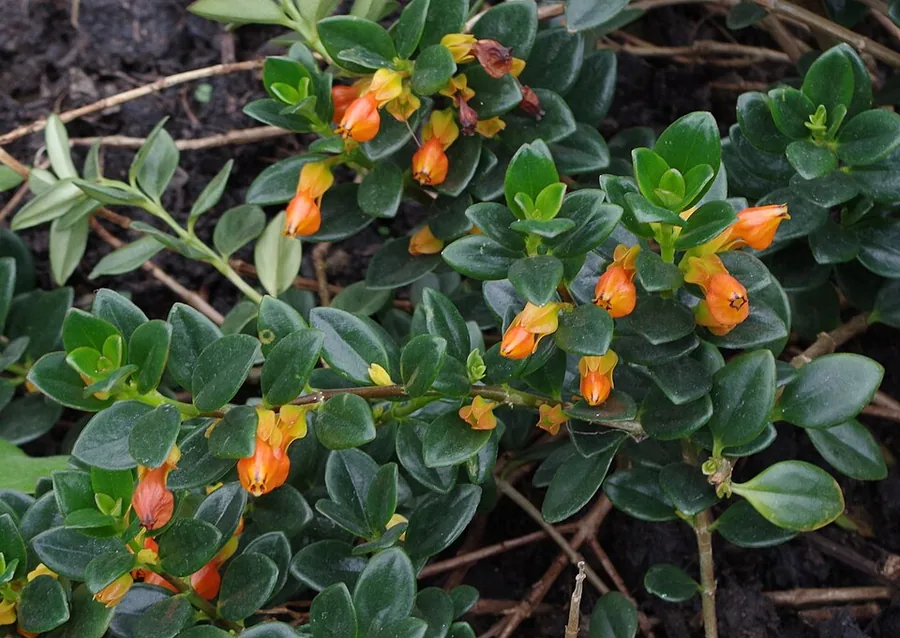
The common name reflects the pouched orange flowers, each curved and inflated in a form that resembles a small fish. The species is native to the rainforests of southeast Brazil, where it grows as an evergreen with a draping habit over branches rather than an upright one. That epiphytic tendency is why it performs so well indoors as a trailing subject for a hanging basket or a raised shelf.
Glossy dark green foliage clothes the arching, trailing stems, and flowering runs through summer against that dark ground. In cultivation the plant stays modest at roughly 4 to 20 inches (10 to 50 cm) tall, extending its spread as the stems elongate. Because the ornamental value lies in that pendent habit, position it where the stems can hang clear of an edge.
Cultural demands are light. Bright indirect light, warmth, and elevated humidity meet its needs, and a pinch after flowering maintains a full, well-branched form rather than a bare one. On safety the record is unambiguous: every part of the plant is non-toxic to cats, dogs, and other animals.
Care
The short version: provide bright filtered light out of harsh sun, warmth, and humid air. Hold the peat-free medium moist while allowing the surface to dry slightly between waterings, feed monthly through the growing season, and pinch the stems after the flowers fade.
Light
Provide bright, filtered light near a window but clear of harsh direct sun, which scorches the foliage. An east- or west-facing exposure suits it, and a south window works behind a sheer curtain that diffuses the intensity. Under insufficient light the plant continues to trail but ceases to flower, since flowering is energy-dependent.
Water
Hold the medium moist but well drained, letting the top inch or so dry before rewatering to avoid waterlogging the roots. Soft water is preferable, because the plant is sensitive to the dissolved salts in hard tap water. Reduce watering in winter, when growth slows and uptake falls.
Soil
Grow it in a loam or sand-based, peat-free medium that retains moisture yet drains freely. It tolerates a broad pH range of 5.5 to 7.5, so any reaction from slightly acidic to neutral is suitable.
Temperature
Warmth sustains active growth, with an optimum between 50°F and 81°F (10°C to 27°C). The species will not withstand chilling, so hold it well above 50°F (10°C) and clear of cold drafts and frosted glass.
Humidity
As a rainforest plant it requires high humidity. Dry indoor air stresses the foliage and suppresses bud development, so grouping with other plants, a pebble tray, or a nearby humidifier all raise the local moisture.
Feeding
Feed monthly through spring and summer during active growth with a balanced dilute liquid houseplant fertilizer, matching input to demand. Suspend feeding through the cooler months when growth is at rest.
Pruning
Pinch the stems after flowering to promote a bushy, compact habit and prevent the basal bareness that trailing stems develop. Maintenance is otherwise minimal, and the removed tips root readily as propagation material.
Repotting
Repot every 2 to 3 years, or sooner if the plant becomes crowded. As a slow to moderate grower that takes about 2 to 5 years to reach full size, it seldom needs frequent disturbance. Roots circling the drainage holes and soil that dries very quickly are the reliable indicators.
Size & spacing
Anticipate a compact plant of 4 to 20 inches (10 to 50 cm) in height, with stems trailing to a spread of 1.5 to 3 feet (50 to 100 cm). Suspend or elevate it so the stems can cascade unobstructed.
Troubleshooting
A goldfish plant is undemanding and rarely presents problems. The two that do occur register on the foliage or as reduced flowering. Read the symptom against the entries below and correct the cause before it checks the plant.
Sticky residue and soft-bodied insects massed on tender growth
The soft, pear-shaped insects colonizing the tender shoots are aphids, and the sticky sheen is honeydew, the sugary waste they excrete as they feed on plant sap. A firm stream of water dislodges the colony mechanically, and insecticidal soap applied to the affected tissue clears the survivors over repeat treatments. Because aphids spread readily between plants, isolate this one until it is clean.
Fix:
- Rinse plant with a stream of water to dislodge aphids
- Apply insecticidal soap to affected areas, repeating as needed
- Isolate the plant from other houseplants until controlled
Vegetative growth continues while flowering fails
When a goldfish plant grows leaves but withholds flowers, the limiting factor is almost always insufficient light, since this species needs bright, filtered light to fund the energy that flowering demands. Relocate it near a south, east, or west window where it receives strong light without the harsh midday sun that scorches foliage. Pinching after each flush also redirects growth into lateral shoots, which carry more of the flowering wood.
Fix:
- Move to a brighter spot with bright, filtered light (e.g., near a south-, east-, or west-facing window out of harsh direct sun)
- Pinch after flowering to encourage bushier, flowering growth
Toxicity
For a household with animals the verdict is favorable: the goldfish plant is non-toxic. The ASPCA and NC State Extension both list it as safe, so an exploratory nibble will not poison a pet. The only likely effect is the mild, self-resolving gastrointestinal upset that follows eating any houseplant.
Safe for
People · Cats · Dogs · Horses · Rabbits · Livestock · Birds
Cats None
The ASPCA classifies this species as non-toxic to cats, so no poisoning follows a chew. Any reaction is limited to transient gastrointestinal upset when a cat ingests a large quantity of foliage.
Dogs None
For dogs the ASPCA records the same non-toxic rating, meaning ingestion carries no systemic risk. A sizable mouthful may provoke brief, self-limiting digestive irritation and nothing further.
Horses None
NC State Extension lists the plant as non-toxic to horses, so an incidental grazed leaf poses no toxicological concern for equines.
Rabbits None
The plant carries no compounds documented to harm rabbits. Sound feeding practice still argues for introducing any unfamiliar green gradually so the hindgut adjusts.
Livestock None
As a tender indoor species, it rarely enters a livestock diet, and it holds no constituents known to injure grazing animals.
Birds None
No toxic tissue makes this plant a hazard to pet birds, so an occasional nibbled leaf is of no consequence.
People None
The species presents no poisoning risk to people. It is not cultivated for consumption, but a leaf sampled by a child carries no danger.
Varieties
The plain species accounts for most goldfish plants in trade, though a small number of variegated cultivars are available for growers who prefer patterned foliage.
'Golden West' (variegated)
An RHS-recognized variegated cultivar distinguished by dark leaves overlaid with creamy variegation that produces a two-toned effect.
'Variegatus'
A further RHS-listed variegated cultivar selected for its patterned foliage in place of the plain green leaf of the wild type.
How to propagate
The goldfish plant propagates readily, and stem cuttings yield new trailing specimens with only a modest wait for establishment.
Stem cuttingsEasy
Spring · Several weeks to root; reaches full size in about 2-5 years
Propagate from softwood stem-tip cuttings taken in spring, the technique documented by both the RHS and NC State Extension, when active growth speeds rooting. Root formation takes several weeks, after which the young plant develops at a slow to moderate pace and reaches full size in about 2 to 5 years.
Myths
The goldfish plant is poisonous to cats and dogs and must be kept away from pets.
The evidence contradicts this. The ASPCA classifies the plant as non-toxic to cats and dogs, and NC State Extension extends that non-toxic listing to horses. It is safe in a household with pets, with the only plausible effect being the mild gastrointestinal upset that ingesting any houseplant may cause.